

When your savings lose half their value in a single year, you don’t wait for the government to fix it. You find another way. In Argentina, that way is cryptocurrency.
Why the Peso Can’t Be Trusted
The Argentine peso has been collapsing for years, but 2023 and 2024 made it impossible to ignore. Inflation hit over 200%, meaning prices doubled in less than a year. A loaf of bread that cost 1,000 pesos in January might cost 3,000 by March. The central bank printed more money to cover deficits, which only made things worse. People lost faith. Banks started limiting how much cash you could withdraw. The official exchange rate for the U.S. dollar was set at around 950 pesos - but on the street, the "blue dollar" traded at 1,400 pesos or higher. That’s a 50% gap between what the government says the dollar is worth and what people actually pay.Official rules say you can only buy $200 a month in dollars through the bank. That’s not enough to cover rent, medicine, or school fees. So people turned to crypto - not because they believed in blockchain theory, but because it worked when nothing else did.
Crypto Isn’t Just for Speculators Anymore
Argentines aren’t buying Bitcoin to get rich quick. They’re buying it to stay alive. In 2024, Argentina recorded $93.9 billion in cryptocurrency transactions - second only to Brazil in Latin America, despite having less than one-fifth the population. The real story? Eighty-nine percent of all crypto trades on local exchanges were for stablecoins: USDT, USDC, and DAI. These are digital coins pegged to the U.S. dollar. One USDT = one dollar. No fluctuation. No surprise devaluation.Platforms like Lemon saw record spikes in stablecoin purchases during election weeks and economic announcements. On September 14, 2024, Lemon processed its highest daily volume ever - not because of a new feature, but because people panicked ahead of a political shift. They needed to lock in value before the peso dropped again. For many, crypto isn’t an investment. It’s a lifeline.
Stablecoins Are the Real Winner
Bitcoin gets the headlines, but stablecoins are doing the heavy lifting. Why? Because they’re simple. You download an app, verify your ID, send pesos, and get dollars in seconds. No bank approval. No waiting in line. No government limits. DAI stands out because its backing is publicly visible on the Ethereum blockchain. Anyone can check how much collateral supports each coin. That transparency matters when banks won’t show you their books.Businesses use stablecoins too. A small shop in Rosario can accept USDT from a customer in Buenos Aires and instantly pay suppliers in Uruguay without converting through the peso. A freelance designer in Mendoza gets paid in USDC from a client in Texas - no wire fees, no 10-day delays. Even remittances from family abroad now flow through crypto wallets instead of Western Union.
Bitcoin: The Long-Term Safe Haven
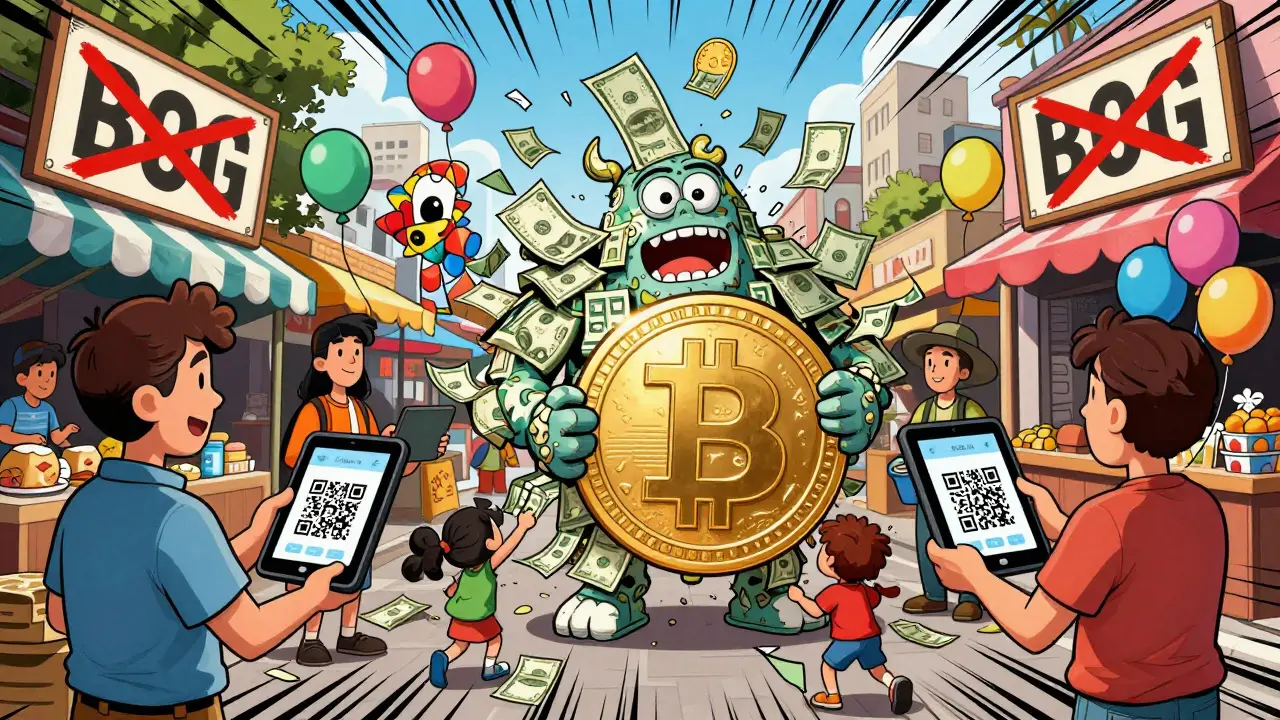
While stablecoins handle daily needs, Bitcoin is becoming Argentina’s digital gold. Lemon’s data shows more Argentines now hold Bitcoin than stablecoins on their platform. Why? Because people aren’t just trying to avoid inflation - they’re trying to preserve wealth for the next decade. Bitcoin’s fixed supply and decentralized nature make it a better long-term bet than dollars held in a bank that could freeze accounts tomorrow.It’s not about trading Bitcoin for profit. It’s about holding it like you’d hold land or gold - something you can pass down, something that won’t vanish overnight. Some users even run Bitcoin nodes at home, storing their own keys. It’s not easy. But for those who’ve lost savings before, it’s worth the effort.
How It Works in Practice
You don’t need to be a tech expert to start. Here’s how most people do it:- Download a local exchange app like Lemon, Ripio, or Binance Argentina.
- Link your bank account or use cash deposits at local kiosks.
- Buy USDT or USDC with pesos - usually takes under 10 minutes.
- Store it in the app wallet or move it to a non-custodial wallet like Trust Wallet.
- Use it to pay, save, or send money abroad.
For those who want more control, DAI can be stored on a hardware wallet or used in DeFi apps to earn small interest - something banks stopped offering years ago. Local meetups in Buenos Aires offer free Spanish-language workshops on wallet security and smart contracts. The city has become a hub for Web3 events, drawing developers from across Latin America.

The Government’s Role - And Lack Thereof
The Argentine government doesn’t ban crypto. In fact, it’s slowly legalizing it. A regulatory sandbox lets crypto firms test services under supervision. Virtual Asset Service Providers (VASPs) now need licenses - which means exchanges must follow anti-money laundering rules. That’s good. It brings legitimacy.But the government still doesn’t fix the root problem. They’ve spent $1.1 billion trying to prop up the peso. The U.S. is considering financial aid, like swap lines or debt purchases. But most Argentines don’t believe it will work. They’ve seen this movie before. Crypto doesn’t need permission. It doesn’t need approval from Washington or Buenos Aires. It just needs an internet connection.
How Argentina Compares to the Rest of Latin America
Brazil leads Latin America in crypto volume, but their use is different. Brazilians buy crypto as a speculative asset - trading Bitcoin like stocks. Argentina’s usage is survival-driven. Mexico’s crypto market is mostly about remittances from the U.S. Venezuela’s adoption exploded after its own hyperinflation crisis, but infrastructure collapse made it harder to use. Colombia has even higher stablecoin adoption than Argentina, but its economy is more stable overall.Argentina stands out because its crypto use is deeply tied to daily survival. It’s not a trend. It’s a necessity. And it’s growing.
What’s Next?
As long as the peso keeps losing value, crypto adoption will keep rising. Experts predict Argentina could become the region’s leader in crypto infrastructure - not because of policy, but because of desperation. Businesses are already building tools to accept crypto payments. Schools are teaching blockchain basics. Even some public sector workers are getting paid in USDC.The real test? What happens if inflation finally drops? Will people go back to pesos? Maybe. But once you’ve held your wealth in something that doesn’t vanish overnight, it’s hard to trust paper money again.
Crypto in Argentina isn’t about the future. It’s about today. And for millions, it’s the only thing keeping their finances from collapsing.
Why do Argentines prefer stablecoins over Bitcoin?
Most Argentines use stablecoins like USDT and USDC for daily transactions because they’re stable - one coin equals one U.S. dollar. Bitcoin is volatile, so it’s better for long-term savings. Stablecoins let people pay for groceries, rent, and bills without worrying about price swings. Bitcoin is saved for bigger goals, like buying property or sending money abroad.
Can I buy crypto in Argentina without a bank account?
Yes. Many local exchanges accept cash deposits at convenience stores, kiosks, and payment centers. You can also use peer-to-peer platforms where buyers and sellers trade directly. Some even accept payment via mobile top-ups or utility bills. The key is using a licensed exchange that supports these methods.
Is crypto legal in Argentina?
Yes. Crypto isn’t banned, and the government has started regulating it. Virtual Asset Service Providers (VASPs) must register and follow anti-money laundering rules. This gives users more protection and makes exchanges safer. While crypto isn’t legal tender, using it as payment is allowed.
How much can I realistically save using crypto?
If you convert even a portion of your monthly income to stablecoins, you can preserve 30-50% more purchasing power than if you kept it in pesos. For example, if you earn 500,000 pesos a month and convert 200,000 to USDT, you avoid losing 40-60% of that amount to inflation over the next six months. That’s thousands of dollars saved.
Are crypto exchanges in Argentina safe?
Licensed exchanges like Lemon and Ripio follow strict security rules and are audited. But scams still exist. Never share your private keys. Use two-factor authentication. For larger amounts, move crypto to a non-custodial wallet like Trust Wallet or Ledger. If it’s not in your control, it’s not truly yours.
Can I use crypto to pay bills in Argentina?
Yes. More businesses - from pharmacies to electricians - now accept USDT or USDC. Some utilities and landlords accept crypto payments directly. Platforms like Bitso and Binance Argentina also offer crypto debit cards that convert your stablecoins into pesos at the point of sale, making it easy to pay anywhere.
Is Bitcoin a better option than stablecoins for long-term savings?
For long-term wealth preservation, Bitcoin is stronger. Stablecoins protect you from peso inflation but are still tied to the U.S. dollar - which can lose value over decades. Bitcoin’s fixed supply and global network make it a more durable store of value. Many Argentines keep a portion in stablecoins for spending and the rest in Bitcoin for the future.
What happens if the government bans crypto?
A full ban is unlikely. Crypto is too embedded in daily life. Even if exchanges were shut down, peer-to-peer trading would continue. People already use Telegram groups, WhatsApp, and local meetups to trade. Bitcoin and stablecoins can be sent anywhere with internet - no bank needed. Governments can’t stop that.
This is wild 😍 I never thought crypto would be a lifeline for people, but man, Argentina’s got it right. Stablecoins are basically digital cash now. No more waiting in bank lines or losing half your rent money to inflation. I’m seriously considering moving some savings over to USDT.
I love how ordinary people are just… solving their own problems. No waiting for permission. No begging for bailouts. Just downloading an app and taking control. This is what financial freedom looks like. 🙌
The way Argentines have turned crypto from a Silicon Valley buzzword into a survival toolkit is nothing short of poetic. It’s like they took blockchain theory, threw out the whitepapers, and built a real-world cathedral of resilience. DAI on the blockchain? That’s transparency as a human right. I’m not just impressed-I’m moved.
This is not innovation. It is desperation dressed up as technological progress. The state has failed, and now people are turning to unregulated digital assets because they have no other options. This is not a triumph-it is a tragedy.
For real, if you think crypto is just for speculators, you’ve never lived through hyperinflation. The fact that 89% of trades are stablecoins tells you everything. People aren’t gambling-they’re grocery shopping. A mom in Cordoba buying milk with USDT is more revolutionary than any crypto conference in Miami.
Let’s be honest-this is just another case of people avoiding responsibility. If you can’t manage your currency, why should the world accommodate your poor fiscal decisions? Crypto doesn’t fix the root problem-it just lets you ignore it longer.
The stablecoin narrative is so overhyped. USDT is centralized. Tether’s reserves are opaque. You think you’re escaping the peso, but you’re just trusting a private company with your life savings. This isn’t decentralization-it’s rehypothecated fiat.
I feel this so deep in my soul 💔 People are literally choosing between eating or keeping their savings. And the government? Still printing money like it’s a video game. Crypto isn’t the future-it’s the only thing left standing between them and total collapse. I’m crying. Again.
I’ve lived through a few economic crashes. What’s happening in Argentina is the most organic, bottom-up financial revolution I’ve ever seen. No central bank. No lobbyists. Just people with phones and a will to survive. That’s powerful. Don’t sleep on it.
Why should we care about Argentina? The US dollar is still the world’s reserve currency. Crypto is just a fad. This is why your country is falling apart-because you let people trade in digital nonsense instead of fixing real problems.
Oh wow, so now we’re romanticizing financial chaos? How poetic. People are fleeing their own currency, and we’re calling it ‘resilience.’ I’ll stick with my FDIC-insured savings, thanks.
this is so real 😭 i had a cousin in argentina who lost her job and started using lemon to buy groceries with usdt… she said it was the first time in years she felt like she had control. i cried reading this. thank you for sharing
The structural arbitrage between official and parallel exchange rates creates a systemic incentive for crypto adoption. Stablecoins function as a non-sovereign monetary layer, effectively bypassing capital controls and currency distortion. This is not speculation-it’s monetary disintermediation.
You people act like this is some kind of moral victory. It’s not. It’s the sound of a civilization unraveling. People should be protesting in the streets, not buying USDT. This isn’t progress-it’s surrender.
You think Argentina is special? Try living in India where your salary gets wiped out every 6 months. We use crypto too. But you westerners act like this is a new trend. Newsflash: we’ve been doing this for a decade. You just didn’t notice.
Wait-so you’re saying people are using crypto to pay for rent? And that’s a good thing? What about the fact that Bitcoin is still volatile? And what if the app gets hacked? What if the government shuts down the exchange? This sounds like a house of cards made of sand!
i just read this and i’m sitting here in my apartment in texas wondering if i’m being too lazy to learn how to use crypto. like… if people in argentina can do this with no tech background, maybe i should stop saying ‘i’ll get around to it’ and just try it.
Let me be the first to say this: the US government is terrified of this. Why? Because if people in Argentina can bypass the dollar system with crypto, what’s stopping Nigeria, Brazil, or even the Philippines? This isn’t just about pesos-it’s about the end of dollar hegemony. And they know it.
As someone from India, I see parallels. Inflation is real. Trust in institutions is low. But I admire how Argentines have turned necessity into innovation. They didn’t wait for policy-they built their own system. That’s dignity.
This article is naive. You ignore the fact that stablecoins are controlled by American corporations. Tether is a Cayman Islands entity. DAI is backed by collateral that can be frozen. You think this is freedom? It’s just a new form of colonialism-with blockchain as the whip.
The whole thing is a CIA operation. Crypto is being pushed to destabilize sovereign currencies. Argentina is a test case. Soon they’ll target Europe. The Fed is already preparing digital dollar controls. This isn’t innovation-it’s a trap.
The fact that you consider this a success story reveals your ignorance. Crypto is not a solution. It is a symptom. The real solution is fiscal responsibility, not digital wallets. You’re glorifying failure.
Let’s cut the crap. 90% of these ‘stablecoin’ users are just laundering money or avoiding taxes. This isn’t financial freedom-it’s tax evasion with a blockchain veneer. And you’re celebrating it?