

Imagine your crypto wallet is a bank vault. But instead of one key, you need three keys - and at least two of them must be used to open it. That’s what a multisig wallet does. It doesn’t rely on one person, one device, or one password. It splits control across multiple parties. If one key gets lost, stolen, or hacked, your money is still safe - as long as the others are intact. This isn’t science fiction. It’s how institutions, DAOs, and serious crypto holders protect millions - and it’s easier to use than you think.
Why Multisig Wallets Are a Game-Changer
Single-key wallets are like leaving your house key under the mat. Easy to use, but easy to steal. If someone gets your private key - through phishing, malware, or a careless backup - they can drain your wallet in seconds. There’s no warning. No second opinion. Just silence and empty balances. Multisig changes that. A 2-of-3 multisig wallet means three keys exist, but only two are needed to send funds. One key could be on your phone. Another on a Ledger hardware wallet. The third on a trusted friend’s device. Even if your phone gets hacked, the thief can’t move money without the other two signatures. Same if your Ledger is lost. Or if your friend’s device is compromised. You still have two out of three. This isn’t just theory. In 2024, over $100 billion in crypto assets were managed through multisig wallets. That’s not a small number. It’s the standard for institutional custody. Companies like Coinbase, BitGo, and even Ethereum’s co-founder Vitalik Buterin use it. Why? Because it turns a single point of failure into a distributed safety net.How Multisig Works: Simple Rules, Strong Security
Multisig doesn’t need complex math. It’s just rules. You pick two things:- How many total keys you want (e.g., 3, 5, or 7)
- How many are needed to approve a transaction (e.g., 2-of-3, 3-of-5)
Top MultiSig Wallet Platforms in 2026
Not all multisig wallets are built the same. Here are the most trusted platforms right now, each with a clear focus.Safe Wallet (formerly Gnosis Safe)
Safe Wallet is the go-to for Ethereum and DeFi. It’s a smart contract-based multisig wallet, meaning it runs on-chain and can’t be shut down. Even if their website disappears, you can still access your funds using Etherscan or other tools. It supports 2-of-3, 3-of-5, or custom setups. You can link it to MetaMask, Trust Wallet, or hardware wallets like Ledger and Trezor. Over 1.2 million wallets use Safe Wallet. It’s trusted by Uniswap, Aave, and other top DeFi protocols. Key advantage: Self-custodial. You own the keys. No company can freeze your funds. Code is open-source and audited by multiple security firms.Blue Wallet Vault
If you’re holding Bitcoin, Blue Wallet Vault is one of the simplest ways to get multisig. It supports 2-of-3 and 3-of-5 configurations. You can use hardware wallets as signers - Ledger, Trezor, or even air-gapped devices. Unlike some platforms, Blue Wallet doesn’t require you to trust a third-party server. All signing happens locally. You can even set up multisig without connecting to the internet after initial setup - ideal for cold storage. It’s not as feature-rich as Safe Wallet, but for Bitcoin-only users who want security without complexity, it’s hard to beat.Electrum (Bitcoin Multisig)
Electrum has been around since 2011. It’s lightweight, open-source, and supports multisig for Bitcoin. Setup is manual - you need to exchange public keys between signers via QR code or text. That sounds old-school, but it’s also the most private way to do it. Best for: Users who want full control and don’t mind a little technical work. Not for beginners, but perfect for those who treat crypto like gold - store it, don’t trade it.Coinbase Vault
Coinbase Vault is a custodial multisig option. It’s not self-custodial - Coinbase holds the keys. But it uses a 2-of-3 system: one key with Coinbase, one with you, and one in cold storage. There’s also a 72-hour delay on withdrawals. Good for: Beginners who want institutional-grade security without managing hardware wallets. But if you don’t trust exchanges, skip this one.Casa and BitGo
Casa offers multisig with a focus on user experience. It uses a 2-of-3 setup with one key on your phone, one on a hardware device, and one with their recovery service. They handle key recovery if you lose access - but you pay for it. BitGo is the enterprise choice. Used by exchanges, hedge funds, and crypto firms. It supports multisig across Bitcoin, Ethereum, and more. Offers insurance, compliance tools, and institutional-grade audits. Not for individuals - it’s built for teams managing millions.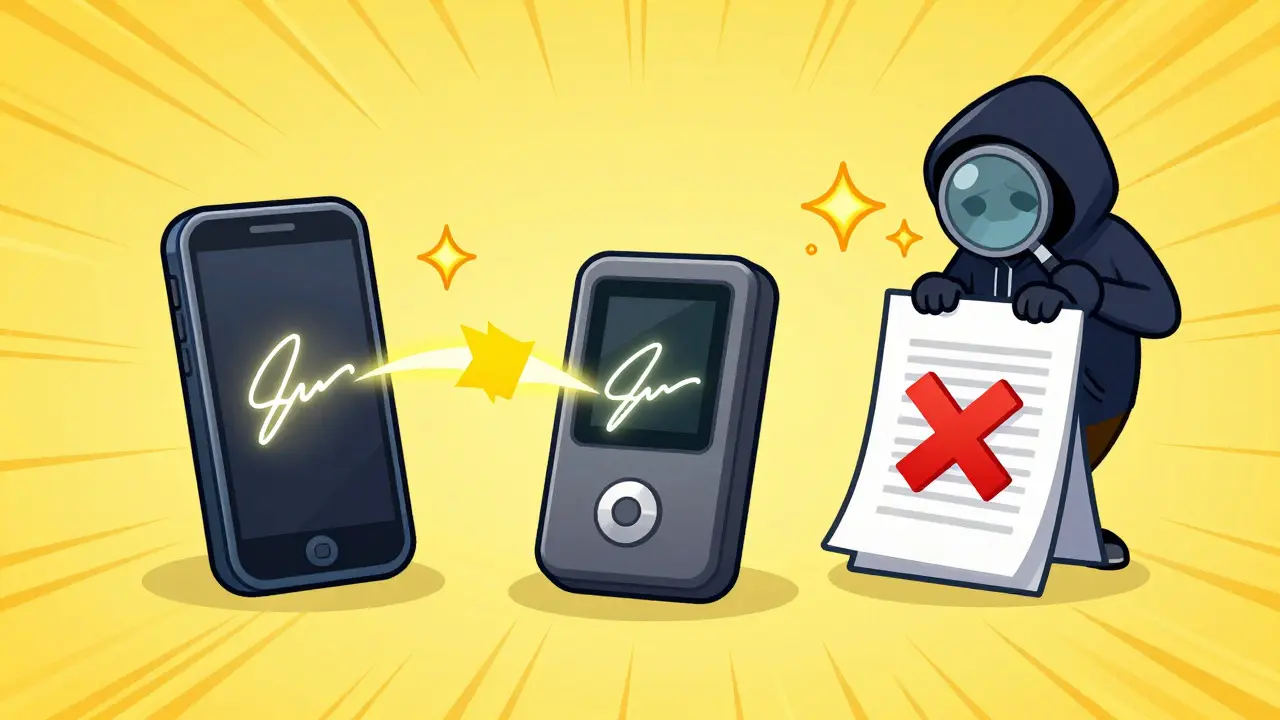
Multisig vs. MPC: Which Is Better?
You might hear about MPC (Multi-Party Computation) as an alternative. It’s different. Instead of multiple keys, MPC splits a single key into parts that never reassemble. No one ever holds the full key. It’s like cutting a password into pieces and solving it mathematically across devices. MPC is great for mobile wallets and seamless UX. But it’s newer, less battle-tested, and often centralized - the company holds the algorithm. Multisig is older, simpler, and fully decentralized. You control every key. You know exactly where they are. If you lose one, you can still recover - as long as you have the others. For most people, multisig is the safer bet. It’s proven. Transparent. Auditable. And it doesn’t require you to trust a company’s code.Real-World Use Cases
Who actually uses multisig? Here’s how it plays out in practice:- Family crypto inheritance: A 2-of-3 setup with keys held by you, your spouse, and your lawyer. If you die, they can access funds without a will.
- DAO treasury: A 3-of-5 multisig for a decentralized organization. No single member can steal funds. Proposals need broad support.
- Business crypto payroll: A company holds ETH for salaries in a 2-of-3 wallet. CFO, CTO, and accountant each hold a key. Prevents fraud.
- High-net-worth individuals: One key on a Ledger, one on a paper backup in a safe, one with a trusted friend. No single point of failure.

What to Avoid
Multisig isn’t magic. Poor setup = disaster.- Don’t use the same device for multiple keys. If your phone is hacked, and both your phone and cloud backup are on it - you’re toast.
- Don’t store all seed phrases in one place. A single USB drive, cloud folder, or notebook? That’s a target.
- Don’t skip testing. Send a tiny amount first. Make sure all signers can approve before locking in big funds.
- Don’t ignore recovery plans. Write down how to recover if one signer dies or disappears. Update it yearly.
Final Thoughts: Is Multisig Worth It?
If you’re holding under $5,000 in crypto? A single-key wallet is fine. Use a hardware wallet. Keep your seed phrase safe. You’re probably okay. But if you’re holding $10,000 or more - especially if it’s not just yours, or if you’re part of a group - multisig isn’t optional. It’s essential. The complexity is real. The fees are higher. The process takes longer. But the peace of mind? Priceless. Start with Safe Wallet for Ethereum. Start with Blue Wallet Vault for Bitcoin. Test with a small amount. Learn how it works. Then scale up. This isn’t about being paranoid. It’s about being smart. In crypto, the only thing more dangerous than losing your keys is thinking you can’t lose them.What is a multisig wallet?
A multisig wallet requires multiple private key signatures to authorize a transaction. For example, a 2-of-3 multisig wallet has three keys, but only two are needed to send funds. This spreads control across people or devices, reducing the risk of theft or loss.
Are multisig wallets safe?
Yes, when set up correctly. Multisig removes single points of failure. Even if one key is stolen or lost, funds remain secure as long as the required number of other keys are still safe. It’s the standard for institutional crypto custody.
What’s the best multisig wallet for Bitcoin?
Blue Wallet Vault is the most user-friendly option for Bitcoin, supporting 2-of-3 and 3-of-5 setups with Ledger and Trezor hardware wallets. Electrum is more advanced and fully self-custodial but requires manual key exchange.
What’s the best multisig wallet for Ethereum?
Safe Wallet (formerly Gnosis Safe) is the leading choice for Ethereum and DeFi. It’s a smart contract-based wallet that’s self-custodial, open-source, and used by major protocols like Uniswap and Aave. It supports hardware wallets and can be accessed even if the website goes down.
Can I recover my multisig wallet if I lose one key?
Yes - if your setup allows it. For example, in a 2-of-3 wallet, losing one key still leaves you with two. As long as you can get signatures from the remaining keys, you can still access your funds. That’s why planning recovery in advance is critical.
Do multisig wallets cost more to use?
Yes. Each signature adds data to the blockchain, increasing transaction fees. On Ethereum, gas costs are higher. On Bitcoin, transaction size increases, leading to higher miner fees. But for large holdings, the cost is minor compared to the security gained.
Is multisig better than MPC for security?
Multisig is more transparent and decentralized. You control each key. MPC splits a single key mathematically and never reassembles it, which can be more convenient but often relies on a third party’s software. Multisig has been battle-tested for over a decade; MPC is newer and less proven.
Next steps: If you’re ready to try multisig, start with Safe Wallet for Ethereum or Blue Wallet Vault for Bitcoin. Set up a 2-of-3 wallet with one key on your phone, one on a hardware wallet, and one stored offline. Test with $10 first. Then lock in your real holdings. Security isn’t a feature - it’s the foundation.
Bro, multisig is the only way to sleep at night. I had a friend get hacked last year - lost everything because he used a single key. Now he’s got a 2-of-3 with his wife, his Ledger, and a paper backup in a safe. He cried when he got his first transaction through. Worth every gas fee.
It’s funny how we treat crypto like it’s magic money when it’s really just math and trust distribution. Multisig doesn’t make you rich - it just stops you from being stupid. The real question isn’t whether you need it... it’s whether you’re willing to admit you’re vulnerable.
Multisig is overrated. Single key with a good hardware wallet is fine.
You know who uses multisig? People who’ve been scammed. Or people who work for governments that want to track everything. The real danger isn’t hackers - it’s the fact that every signature leaves a trail. They’re watching. Always.
If you’re holding more than $5k and you’re not using multisig, you’re not serious. Stop pretending you’re a crypto OG when you’re just holding your seed phrase in a Notes app labeled ‘my money lol’. I’ve seen this too many times. Get a Ledger. Get a phone key. Get a backup with someone you trust. Do it now. Not tomorrow. Now.
I set up a 2-of-3 with my brother and my hardware wallet last month. Took me three days because I kept messing up the QR codes. But when it finally worked? I just sat there staring at the screen for ten minutes. It felt like building a fortress out of paper and code. I didn’t even send any crypto yet. Just knowing it’s there… it’s calming. Like having a seatbelt you never need to use. But you’re glad it’s there.
I appreciate the breakdown, but I’d caution against recommending Casa. Their recovery service is convenient, but it’s still a third party. If they get bought by a bank or go under, you’re stuck. I’d rather manage all keys myself - even if it’s a pain. True self-custody means no middlemen, period.
I use Electrum for my BTC multisig. It’s clunky as hell, but I love that I can generate keys on an offline laptop, exchange pubkeys via USB drive, and never connect to the internet again. No apps. No cloud. No ‘forgot password’ button. Just me, my paper, and the blockchain. It’s 2026 and I’m still doing it the old way. And I’m proud of it.
For beginners, I always say start with Blue Wallet Vault. It’s stupid simple. You pick 2-of-3, scan the QRs, done. No smart contracts, no Ethereum fees, no confusion. I helped my mom set it up last week. She’s 68, never used crypto before. Now she says it feels like a bank vault she can carry in her pocket. That’s the win.
multisig is the real deal 🤝 i used to think i was safe with just a ledger… then i saw a guy on twitter lose 40k because his phone got stolen and he had no backup. now i got my keys split between my phone, my wife’s phone, and a usb in a fireproof box under my bed. also i named my keys. mine is ‘bruce’, hers is ‘clara’, and the usb is ‘old man ron’. it’s weird but it works 😅
I just want to say - if you’re scared of multisig because it’s ‘too complicated’ - you’re not ready for crypto. Period. This isn’t buying a coffee. This is your life savings. Take the time. Learn it. Test it. Mess up with $10 first. I did. Broke my wallet twice. Learned more in those two weeks than in six months of trading. You owe it to yourself.
I’ve been using Safe Wallet for over a year now - 3-of-5 setup with my partner, my lawyer, my accountant, and two hardware wallets (one in a safety deposit box, one with my sister). Every transaction requires a 48-hour cooldown, and I get an email, a push notification, and a text. It’s overkill? Maybe. But when the DAO treasury got targeted last year and someone tried to drain it? We caught it in 12 minutes because one of the signers was offline and flagged it. That’s not paranoia. That’s planning. And honestly? I’d rather be annoyingly safe than dead broke.
You people are delusional. Safe Wallet is a smart contract - that means it’s vulnerable to bugs. Electrum is open-source? So was the DAO. And look where that got people. Multisig doesn’t solve anything - it just makes you feel better while you’re still trusting code written by strangers. And don’t even get me started on Coinbase Vault. You think they’re protecting you? They’re just storing your keys in a vault they control. You’re not self-custodial - you’re just a customer with a fancy label.
DO IT. JUST DO IT. 💪 your future self will hug you. 2-of-3. Ledger. Phone. Paper. Test with $10. Boom. Done. You’re now in the 1% of people who actually care about security. Congrats. 🎉
Multisig is a scam for the rich. Real people don’t have three devices. Real people don’t have ‘trusted friends’. Real people have one phone and one seed phrase. If you’re not rich enough to afford multisig, stop pretending you’re a crypto investor. You’re just gambling with your rent money.
I’m from rural Kansas. I didn’t even know what a hardware wallet was until last year. Now I’ve got a 2-of-3 with my husband and my local church’s treasurer (yes, really). He’s got a Ledger in his desk drawer. We met at the diner, exchanged QR codes over coffee. It’s not tech - it’s community. And honestly? That’s the real security. Trusting people, not just code.
I can’t believe you’re still recommending Blue Wallet. It’s a toy. If you’re serious about security, you don’t use a mobile app for your life savings. You use a cold multisig with air-gapped devices and manual key exchange. Anything else is just crypto cosplay. You’re not a degenerate investor - you’re a child playing with fire.
so i tried safe wallet and somehow i signed with my phone but forgot to sign with my ledger and the tx failed and now i think i lost my funds?? can someone help?? i think i clicked the wrong button??
The assertion that multisig is ‘easier to use than you think’ is demonstrably false. The cognitive load involved in key management, signature coordination, and transaction validation exceeds the average user’s capacity for sustained attention. Moreover, the failure modes - particularly in non-technical households - are non-trivial and often irreversible. One must conclude that the promotion of multisig as a consumer-grade solution is, at best, premature, and at worst, irresponsible.
Honestly? I’m so tired of people acting like multisig is some revolutionary breakthrough. It’s just basic security. If you didn’t know this already, maybe you shouldn’t be holding crypto at all. I’ve had my 2-of-3 since 2018. I didn’t need a blog post to tell me to protect my money. And if you’re still using a single key in 2026? You’re not just naive - you’re embarrassing.