

Buying Bitcoin in Brazil used to feel like a bureaucratic nightmare. You’d wire money via TED (Teletransferência Eletrônica Disponível), hope the deposit showed up on time, and pray the exchange didn’t flag your account for manual review. Then came platforms promising instant integration with the local banking system. BitBlue is a Brazilian cryptocurrency fintech platform that claims to be the largest crypto exchange in Brazil, offering direct banking integration and multi-exchange liquidity aggregation. Founded in 2017, it positions itself as the bridge between traditional Brazilian finance and digital assets. But here’s the catch: while BitBlue has been around for nearly a decade, it operates in a shadowy space compared to giants like Binance or Mercado Bitcoin. There’s very little independent data on its security audits, customer support quality, or regulatory standing. If you’re thinking of moving your Real (BRL) into crypto through BitBlue, you need to know exactly what you’re getting into. This review breaks down the reality behind their marketing claims, so you can decide if this platform fits your trading strategy or if you should look elsewhere.
How BitBlue Works: The Banking Integration Promise
The main selling point of BitBlue isn’t just that it lets you trade crypto; it’s how it handles fiat currency. In Brazil, moving money from your bank account to an exchange often involves friction. With many international exchanges, you have to send a transfer, take a screenshot, upload it, and wait hours-or even days-for confirmation. BitBlue claims to solve this by integrating directly with the Brazilian banking system. According to their model, when you initiate a TED transfer from your bank account, BitBlue’s system automatically recognizes the deposit within minutes. No screenshots, no email confirmations, no waiting games. This automation is significant because speed matters in crypto markets where prices can swing wildly in short windows. By removing the manual verification step, they promise a smoother user experience tailored specifically for Brazilian users who rely on local banking infrastructure. However, this convenience comes with questions. Direct banking integration requires deep technical partnerships with financial institutions. While BitBlue states they are the only exchange with such direct integration in Brazil, there is no public documentation detailing which banks are supported or how the API connections are secured. For a trader, this means trusting that the backend infrastructure is robust enough to handle real-time synchronization without errors or delays.
Liquidity and Pricing: Aggregating International Markets
One of the biggest risks with smaller regional exchanges is slippage-the difference between the expected price of a trade and the price at which the trade is executed. If an exchange has low liquidity, buying a large amount of Bitcoin could drive the price up against you, costing you more than necessary. BitBlue addresses this by claiming to integrate with three major international exchanges. This multi-exchange integration allows them to aggregate liquidity from global markets. Essentially, when you buy Bitcoin on BitBlue, you might actually be pulling from order books on larger platforms abroad. They claim this provides Brazil’s highest liquidity levels, ensuring that regardless of transaction size, you get competitive pricing. As of recent data points, BitBlue displayed Bitcoin prices aligned closely with global averages, though specific spreads were not publicly detailed. For active traders, this is crucial. High liquidity means tighter spreads and faster execution. However, since BitBlue doesn’t publish real-time depth charts or detailed fee structures comparing their rates against competitors like Foxbit or Mercado Bitcoin, it’s hard to verify if these "best prices" hold true during volatile market conditions. You’re relying on their word that the aggregation algorithm works seamlessly across all connected exchanges.
| Feature | BitBlue | Mercado Bitcoin | Binance BR |
|---|---|---|---|
| Founded | 2017 | 2013 | 2018 (Global) |
| Fiat Support | BRL + 30+ others | BRL | BRL + P2P |
| Banking Integration | Direct TED Auto-Recognition | Manual/Pix | Pix/Bank Transfer |
| Liquidity Source | Aggregated (3 Exchanges) | Internal Order Book | Global Binance Network |
| Regulatory Status | Unclear/Not Publicly Verified | CVM Registered | International License |

Security and Regulatory Red Flags
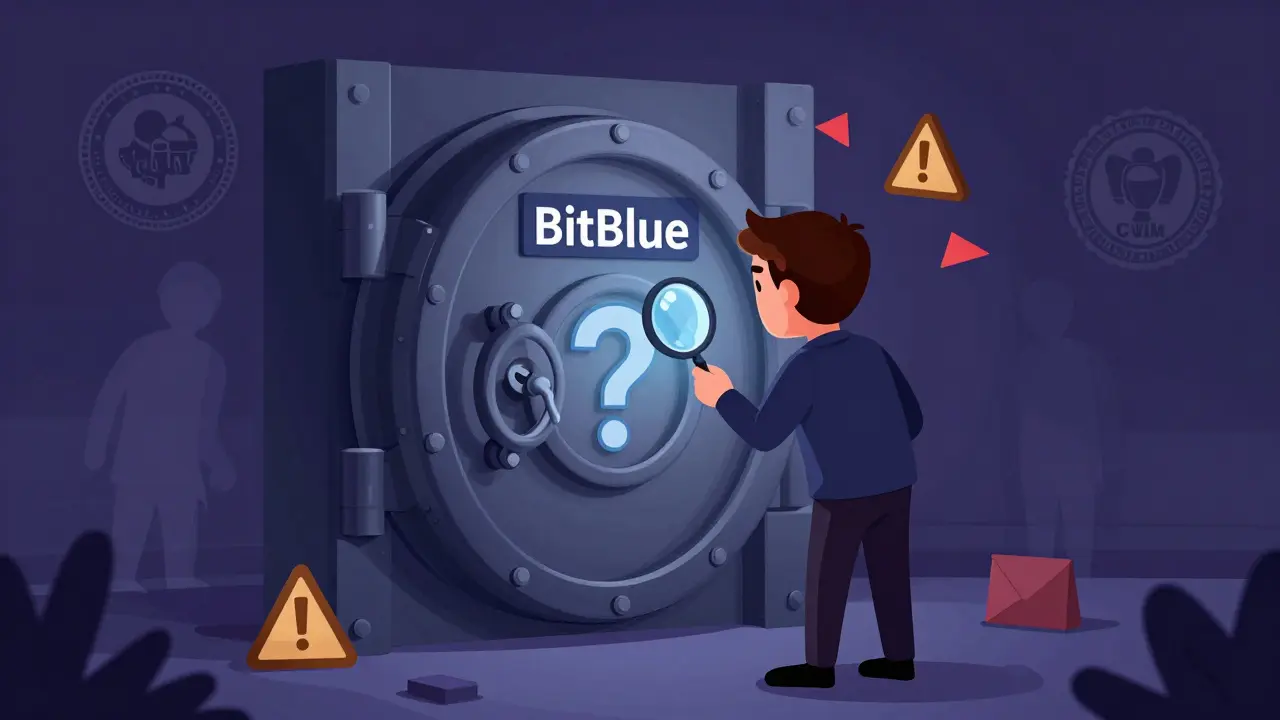
This is where things get tricky. When dealing with financial assets, especially in a jurisdiction like Brazil where regulations are evolving rapidly, transparency is non-negotiable. As of 2026, BitBlue does not prominently display information about its registration with the Central Bank of Brazil (Banco Central do Brasil) or the Securities and Exchange Commission of Brazil (CVM). Most reputable Brazilian exchanges, including Mercado Bitcoin and NovaDax, proudly showcase their compliance certificates. BitBlue’s absence from these public registries raises concerns. Are they operating under a different legal framework? Or are they unregulated? Without clear regulatory oversight, your funds may not be protected by any government-backed insurance schemes or dispute resolution mechanisms. Furthermore, there is a lack of independent security audits. We don’t know if BitBlue uses cold storage for the majority of user funds, nor do we have details on their two-factor authentication (2FA) protocols or withdrawal whitelisting features. In an industry plagued by hacks, assuming security measures are in place without evidence is risky. If BitBlue suffers a breach, will you have recourse? Currently, the answer seems to be uncertain.
User Experience and Supported Assets
BitBlue’s interface is designed primarily for Portuguese speakers, reflecting its focus on the domestic market. The platform supports over 30 fiat currencies, but in practice, it is heavily optimized for the Brazilian Real (BRL). This localization is a pro for beginners who want everything in their native language and currency, but it limits utility for international travelers or expats looking to trade in USD or EUR directly. In terms of assets, BitBlue centers its infrastructure around Bitcoin. While they may offer other cryptocurrencies, their marketing and technical architecture emphasize BTC trading. If you’re looking to diversify into altcoins like Ethereum, Solana, or newer DeFi tokens, BitBlue might not be the best fit. Their limited asset list suggests they cater to conservative investors or those strictly interested in Bitcoin adoption rather than speculative trading. Customer support is another blind spot. There are virtually no reviews on Trustpilot, Reddit, or Brazilian consumer forums discussing BitBlue’s response times or issue resolution. For a platform handling financial transactions, this silence is deafening. If you encounter a frozen withdrawal or a login issue, who do you call? The lack of community feedback makes it difficult to gauge reliability.
Who Should Use BitBlue?
BitBlue is likely suitable for a very specific type of user: a Brazilian resident who wants to buy small amounts of Bitcoin quickly using local bank transfers and prefers a localized Portuguese interface. If you value the convenience of automatic TED recognition and trust their claim of aggregated liquidity, it offers a streamlined entry point. However, it is not recommended for:
- Traders seeking high-frequency trading tools or advanced charting.
- Investors looking for a wide variety of altcoins.
- Users who prioritize regulatory transparency and insured deposits.
- International users outside of Brazil.
Final Verdict: Proceed with Caution
BitBlue has been operating since 2017, which proves some level of stability. Their innovation in automating Brazilian bank transfers is impressive on paper. But in the world of crypto, longevity alone doesn’t equal safety. The lack of regulatory disclosure, missing security audit reports, and zero independent user reviews create a risk profile that many seasoned traders would avoid. If you decide to use BitBlue, start small. Treat it as a testing ground rather than a long-term vault for your savings. Never deposit more than you can afford to lose, and always enable every available security feature on your account. Ideally, keep the bulk of your holdings in self-custody wallets or on more transparent, regulated exchanges. BitBlue might be convenient, but convenience shouldn’t come before capital preservation.
Is BitBlue regulated by the Brazilian Central Bank?
As of 2026, there is no public evidence that BitBlue is registered with the Banco Central do Brasil or the CVM. Most reputable Brazilian exchanges display their regulatory status prominently. BitBlue’s lack of transparency on this front is a significant red flag for users seeking guaranteed legal protection.
What cryptocurrencies can I trade on BitBlue?
BitBlue primarily focuses on Bitcoin (BTC). While they mention support for other assets, their infrastructure and marketing are heavily centered around BTC trading. They do not appear to offer the wide range of altcoins found on platforms like Binance or Mercado Bitcoin.
How fast are deposits on BitBlue?
BitBlue claims that deposits via TED (Electronic Transfer) are recognized automatically within minutes due to direct banking integration. This eliminates the need for manual verification, making it one of the fastest fiat-onboarding methods in Brazil.
Is BitBlue safe for large investments?
Given the lack of published security audits, unclear regulatory status, and absence of user reviews, BitBlue is not considered safe for large investments. It is advisable to use it only for small transactions and to keep the majority of your crypto in more secure, regulated environments.
Does BitBlue have a mobile app?
Information regarding a dedicated mobile application for BitBlue is scarce. Most interactions appear to be web-based. Users should verify if a legitimate app exists on official app stores before downloading anything labeled as BitBlue to avoid phishing scams.