

Bitcoin and Ethereum ETFs Changed Everything
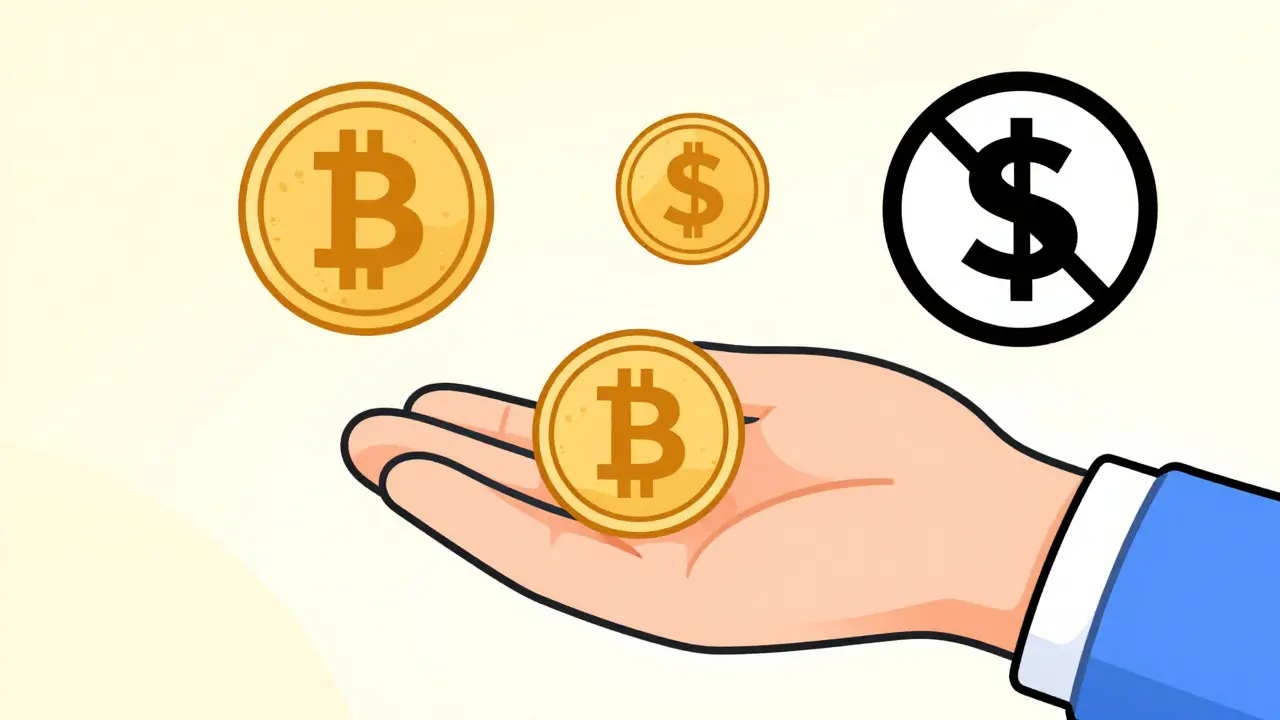
The SEC’s approval of spot Bitcoin and Ethereum ETFs in 2024 wasn’t just a regulatory win-it reshaped how traditional finance interacts with digital assets. For years, investors could only access Bitcoin and Ethereum through volatile exchanges or complex custody setups. Now, these ETFs let people buy crypto like stocks, with SEC oversight and familiar brokerage accounts. This shift started with Bitcoin ETFs on January 10, 2024, and Ethereum ETFs followed on July 23, 2024. But the real story isn’t just approval-it’s how these products evolved and what they mean for the market today.
How We Got Here: A Timeline of Approval
Bitcoin ETFs faced 13 rejections from 2013 to 2023. The turning point came in August 2023 when a federal court ruled the SEC had been inconsistent in rejecting applications. This forced the SEC to approve six spot Bitcoin ETFs on January 10, 2024. BlackRock’s iShares Bitcoin Trust (IBIT) launched the next day with $4.6 billion in assets within its first week. Ethereum ETFs took longer. After years of SEC skepticism about Ethereum’s status as a security, the agency finally approved 11 products on July 23, 2024. Products like Fidelity’s FETH and Grayscale’s ETHE hit the market, but they started with a major limitation: cash-only creation and redemption. This meant investors had to use cash to buy ETF shares, not actual Bitcoin or Ether.
Why Bitcoin and Ethereum ETFs Are Different
These ETFs aren’t twins. Bitcoin ETFs run on proof-of-work mining, so they don’t generate staking rewards. Ethereum ETFs, however, operate on proof-of-stake. This means some Ethereum ETFs earn rewards by validating transactions on the network. Grayscale’s ETHE, for example, stakes 4.2% of its 3.1 million ETH holdings and distributes quarterly rewards to shareholders. Fees also differ sharply. Bitcoin ETFs average 0.25% management fees-Fidelity’s FBTC charges 0%, while Grayscale’s GBTC is 0.90%. Ethereum ETFs average 0.35%, with VanEck’s EETH at 0.15% and Grayscale’s ETHE at 1.50%. This fee gap explains why some investors prefer Bitcoin ETFs for cost efficiency.

The Big Shift: In-Kind Processing
On July 29, 2025, the SEC made a game-changing move. It approved in-kind processing for crypto ETFs. Before this, investors had to convert cash to buy or sell ETF shares, creating tax liabilities and delays. Now, authorized participants can swap actual Bitcoin or Ether directly when creating or redeeming shares. BlackRock processed over $3 billion in conversions by October 2025, letting Bitcoin whales hold their assets without selling. This change saves ETF providers 0.15-0.25% in operational costs annually. For the $100 billion crypto ETF market, that’s $150-$250 million in yearly savings. SEC Chairman Paul S. Atkins called it a "new day" for crypto regulation, emphasizing efficiency and lower costs.
Market Impact: Numbers That Matter
By September 2025, Bitcoin ETFs held $54.3 billion in assets under management (AUM), with BlackRock’s IBIT leading at $16.9 billion (31.2% market share). Ethereum ETFs totaled $18.7 billion, led by Grayscale’s ETHE at $5.1 billion (27.3% share). But the markets moved differently. Bitcoin ETFs saw $1.2 billion in net outflows in Q3 2025 as interest rates rose, while Ethereum ETFs gained $478 million. This divergence shows investors treat them as distinct assets. Bitcoin ETFs trade at 0.08% premiums to net asset value (NAV), while Ethereum ETFs trade at 0.23% premiums-indicating stronger demand for Ethereum exposure. Institutions are also shifting: 78% of surveyed investors prefer holding Bitcoin through ETFs for easier collateralization in brokerage accounts, according to Bloomberg.
Global Ripple Effects
The U.S. approvals sparked action worldwide. The Hong Kong Stock Exchange launched its first spot Solana ETF on October 16, 2025, with a 0.99% fee. The UK’s Financial Conduct Authority lifted its four-year ban on crypto ETNs, letting firms like 21Shares offer Bitcoin and Ether products in ISAs. Even China’s regulatory stance softened slightly, with state-backed funds quietly exploring crypto ETF exposure. These moves highlight how U.S. decisions set global trends. Meanwhile, Grayscale’s ETHE premium remains high due to its conversion from a trust structure to an ETF, while VanEck’s EETH competes on low fees. This competition is pushing all providers to innovate.
What’s Next for Crypto ETFs?
Regulators are clearly warming up to crypto. The SEC’s October 2025 orders explicitly allow "a host of crypto asset ETPs," signaling approvals for Solana, XRP, or others. Evernorth’s $1 billion deal to acquire XRP for "yield-generating strategies" hints at a potential XRP ETF. Analysts project the combined Bitcoin and Ethereum ETF market will hit $150 billion by December 2026. But challenges remain. Harvard Law School’s John Coates warns that staking rewards for Ethereum ETFs could create systemic risks, since 68% of Ethereum’s security relies on staked ETH. The SEC’s Chairman Atkins also noted, "Not all crypto assets will qualify for ETP treatment," meaning future approvals will be case-by-case. For now, the focus is on refining in-kind processing and expanding liquidity.
FAQ: Your Questions Answered
What’s the difference between Bitcoin and Ethereum ETFs?
Bitcoin ETFs use proof-of-work mining and don’t generate staking rewards. Ethereum ETFs use proof-of-stake, so some earn rewards by validating transactions. Fees vary: Bitcoin ETFs average 0.25% (Fidelity’s FBTC is 0%), while Ethereum ETFs average 0.35% (VanEck’s EETH is 0.15%, Grayscale’s ETHE is 1.50%).
Why did the SEC take so long to approve Bitcoin ETFs?
The SEC rejected 13 Bitcoin ETF applications between 2013 and 2023, citing concerns about market manipulation and investor protection. The turning point came after a federal court ruled in August 2023 that the SEC had applied inconsistent standards. This forced the agency to approve six spot Bitcoin ETFs on January 10, 2024.
How does in-kind processing work for crypto ETFs?
Before July 2025, investors had to use cash to buy or sell ETF shares, creating tax issues. Now, authorized participants swap actual Bitcoin or Ether directly when creating or redeeming shares. This avoids cash conversions, reduces costs by 0.15-0.25% annually, and lets large holders convert crypto without selling. BlackRock processed $3 billion in conversions by October 2025.
Are Bitcoin ETFs safer than holding Bitcoin directly?
Yes, for most retail investors. ETFs offer SEC oversight, regulated custody, and easy trading through traditional brokers. You avoid private key management risks and exchange hacks. However, ETFs charge fees and may trade at premiums to net asset value. Self-custody is better for tech-savvy users who want full control.
What’s next for crypto ETFs after Bitcoin and Ethereum?
The SEC’s October 2025 orders explicitly allow approvals for "a host of crypto asset ETPs." Hong Kong launched a Solana ETF in October 2025 with a 0.99% fee. Evernorth’s $1 billion XRP acquisition hints at an XRP ETF. Analysts expect Solana, Cardano, and others to follow. But the SEC will evaluate each case individually-Chairman Atkins said "not all crypto assets will qualify."
So the SEC finally approved these ETFs after 13 rejections? Wow, took them long enough.
I mean, it's not like they had a federal court ruling in August 2023 forcing them to do it or anything.
But hey, better late than never, I guess.
Now, let's talk about the real issue: the fees.
Grayscale's GBTC at 0.90% is ridiculous when Fidelity's FBTC is 0%.
If you're not using Fidelity's ETF, you're probably just throwing money away.
And don't get me started on Ethereum ETFs with their staking rewards.
Some people think that's a feature, but it's actually a regulatory gray area.
Staking rewards could be considered unregistered securities, which might bite us in the ass later.
Also, the in-kind processing approval in July 2025 is a huge deal.
Before that, you had to convert cash to buy/sell shares, which created tax issues.
Now, you can swap actual Bitcoin directly, saving 0.15-0.25% in costs.
BlackRock processed $3 billion in conversions by October 2025.
But the real kicker? Ethereum ETFs trade at a 0.23% premium to NAV, while Bitcoin's are at 0.08%.
That tells you where the market's real interest lies.
Institutions prefer Bitcoin ETFs for collateralization, but Ethereum's premiums show stronger demand.
Still, the SEC's Chairman Atkins warned that not all crypto assets will qualify for ETP treatment.
So don't get too excited about Solana or XRP ETFs just yet.
This is all very nuanced, but I'm just here to point out the obvious.
Upon analyzing the regulatory evolution surrounding Bitcoin and Ethereum ETFs, it becomes evident that the SEC's initial resistance was predicated upon systemic risk concerns and market manipulation fears.
However, the judicial mandate in August 2023, stemming from a federal court ruling that the SEC had applied inconsistent standards, necessitated a paradigm shift in regulatory approach.
The subsequent approvals represent a confluence of market maturation and institutional adoption, with BlackRock's iShares Bitcoin Trust (IBIT) amassing $4.6 billion in assets within its first week.
Notably, the in-kind processing mechanism introduced in July 2025 mitigates counterparty risk and enhances liquidity, as authorized participants can now swap actual Bitcoin or Ether directly during creation and redemption.
This structural innovation aligns with the principles of efficient market hypothesis, thereby optimizing price discovery and reducing operational costs by 0.15-0.25% annually.
Furthermore, the differential fee structures between providers reflect a competitive equilibrium, with Fidelity's zero-fee model serving as a market disruptor, while Grayscale's ETHE maintains a 1.50% fee due to its conversion from a trust structure.
The staking rewards associated with Ethereum ETFs introduce a novel asset class characteristic that necessitates careful regulatory oversight to prevent systemic vulnerabilities, particularly given that 68% of Ethereum's security relies on staked ETH.
Additionally, the global ripple effects of these approvals are profound; the Hong Kong Stock Exchange launched a Solana ETF with a 0.99% fee, and the UK's Financial Conduct Authority lifted its ban on crypto ETNs.
China's regulatory stance has also softened slightly, with state-backed funds exploring crypto ETF exposure.
The SEC's October 2025 orders explicitly allow for a host of crypto asset ETPs, signaling potential approvals for Solana, XRP, and others.
Evernorth's $1 billion deal to acquire XRP for yield-generating strategies hints at an XRP ETF.
Analysts project the combined Bitcoin and Ethereum ETF market will hit $150 billion by December 2026, but challenges remain, including regulatory uncertainties and potential systemic risks from staking.
Harvard Law School's John Coates has warned about the systemic risks associated with Ethereum staking rewards.
In summation, the current regulatory framework represents a necessary evolution, albeit one that requires continuous refinement to address emergent complexities inherent in decentralized finance and ensure investor protection.
Well, it's interesting how the SEC finally approved these ETFs after so many rejections, isn't it?
I mean, the court ruling in August 2023 really pushed them to act, but it's good that they did.
I think the in-kind processing is a game-changer; it's so much better than having to convert cash each time.
And the fees-Fidelity's FBTC at 0% is awesome, but Grayscale's GBTC at 0.90% is still a bit high.
I wonder how the market will react to the Ethereum ETFs' staking rewards; it's a bit of a gray area.
Also, the fact that Bitcoin ETFs have a 0.08% premium and Ethereum's at 0.23% shows where the demand is.
I'm just glad to see more institutional adoption, though I hope the SEC keeps an eye on things.
It's a bit of a mixed bag, but overall, I think this is a positive step for the industry.
Let's hope they keep improving the regulations.
Oh, and I heard about the Hong Kong Solana ETF; that's cool too.
But yeah, it's all very exciting, and I'm looking forward to seeing how this plays out.
Frankly, the SEC's approval process was a farce.
Only American institutions have the regulatory rigor to handle crypto properly.
The European and Asian markets are just playing catch-up with inferior products.
Grayscale's ETHE fee structure is abysmal, but that's because they're not American-those foreign companies can't handle real regulation.
The in-kind processing is a step forward, but only for those who understand true financial systems.
The SEC's Chairman Atkins is right to say not all crypto assets qualify; most of them are scams.
The U.S. is leading the way, and the rest of the world needs to follow our lead.
This is why America is the best.
The Hong Kong Solana ETF is a joke with its 0.99% fee.
The UK's Financial Conduct Authority lifting the ban on crypto ETNs? They have no idea what they're doing.
China's state-backed funds exploring crypto ETF exposure? That's just a ploy to control the market.
The SEC's October 2025 orders for crypto asset ETPs are too lenient.
Evernorth's XRP deal is a waste of time.
Analysts projecting $150 billion by 2026? They're just guessing.
Harvard Law School's John Coates warning about staking risks? He's right, but only Americans can fix it.
This is why the U.S. must maintain its dominance in crypto regulation.
Well, the SEC's approval of Bitcoin and Ethereum ETFs is a monumental step forward, yet it's only the beginning of a much larger narrative.
The regulatory landscape has evolved, but it's still fraught with inconsistencies.
For instance, Grayscale's ETHE fee of 1.50% is exorbitant compared to Fidelity's 0% for FBTC.
The in-kind processing mechanism is a critical innovation, but it's only applicable to certain institutions.
Ethereum's staking rewards introduce a layer of complexity that regulators haven't fully addressed.
The market dynamics show Bitcoin ETFs at 0.08% premium versus Ethereum's 0.23%, which suggests a preference for Ethereum.
However, this is all part of a broader trend towards institutional adoption.
The global implications are profound; Hong Kong's Solana ETF and the UK's lifted ban are examples.
China's cautious approach is also noteworthy.
The SEC's October 2025 orders signal potential approvals for more assets.
Evernorth's XRP acquisition hints at future developments.
Analysts predict $150B by 2026.
But there are risks.
Harvard Law's John Coates warns about systemic vulnerabilities from staking.
In conclusion, this is a pivotal moment for crypto, but it's not without challenges.
The regulatory framework must continue to evolve.
It's important to stay informed.
The future is bright, but it's also complex.
We must navigate it carefully.
Yes, indeed.
Oh my goodness, this is a game-changer!
The SEC finally got it right.
Bitcoin and Ethereum ETFs are here, and it's like the dawn of a new era for finance.
I mean, think about it-investors can now buy crypto like stocks, with SEC oversight.
It's incredible!
BlackRock's IBIT hitting $4.6 billion in a week? That's massive.
And the in-kind processing? It's a revolution!
No more cash conversions, just direct swaps.
It's like the financial world finally woke up.
Ethereum's staking rewards are a whole new ballgame.
The premiums on ETFs show where the market's really going.
But this is just the beginning.
The global impact is huge.
Hong Kong, the UK, China-they're all jumping in.
This is history in the making.
The future of finance is here, and it's amazing.
I can't believe how far we've come.
This is the moment we've been waiting for.
It's truly a new day for crypto.
The world is changing before our eyes.
This is huge.
So exciting!
Great point about the in-kind processing.
It's a game-changer.
Lower costs better liquidity.
Ethereum staking rewards need oversight but it's a step forward.
Bitcoin ETFs are solid.
Ethereum premiums show demand.
Global adoption is growing.
Hong Kong Solana ETF is a good move.
UK lifting ban is smart.
China's cautious but open.
SEC orders for more assets.
Evernorth's XRP deal is promising.
Analysts say $150B by 2026.
Risks exist but progress is real.
Keep an eye on it.
This is positive.
Let's see where it goes.
It is imperative to recognize that the United States maintains its preeminent position in the regulatory landscape for cryptocurrency exchange-traded products.
The SEC's judicious approach, albeit initially slow, has culminated in a robust framework that ensures investor protection while fostering innovation.
The approval of spot Bitcoin and Ethereum ETFs represents a testament to American regulatory excellence.
Grayscale's ETHE, despite its higher fee structure, offers a compelling value proposition for institutional investors.
The in-kind processing mechanism is a masterstroke of financial engineering, reducing operational costs and enhancing market efficiency.
The global ramifications of these decisions are profound; however, it is the United States that sets the standard for other nations to emulate.
The Hong Kong Stock Exchange's Solana ETF, while noteworthy, pales in comparison to the sophistication of American products.
Similarly, the United Kingdom's Financial Conduct Authority's actions are merely reactive.
China's tentative exploration of crypto ETFs is indicative of their strategic caution, but it is the U.S. that leads the way.
This is a clear demonstration of American superiority in financial regulation.
Thank you for sharing your insights.
The in-kind processing mechanism is indeed a significant development, as it eliminates the need for cash conversions and reduces operational costs.
This innovation aligns with best practices in traditional finance, where such mechanisms have been used for years.
Regarding the fee structures, Fidelity's zero-fee model for FBTC is commendable, but it's important to note that Grayscale's ETHE still offers value through its established infrastructure.
The staking rewards for Ethereum ETFs are an interesting aspect, but they do introduce regulatory complexities that require careful monitoring.
The global adoption of crypto ETFs is a positive trend, though each region's approach varies.
Hong Kong's Solana ETF with a 0.99% fee is a step in the right direction, but it's essential to ensure that all products meet stringent regulatory standards.
The SEC's October 2025 orders for additional crypto asset ETPs indicate a willingness to expand the market responsibly.
Overall, this evolution in regulation is a positive step towards broader adoption and investor protection.
Oh, the SEC's approval of Bitcoin and Ethereum ETFs is nothing short of a paradigm shift in the financial cosmos! 🌌✨ The convergence of traditional finance and decentralized assets is a symphony of progress, where the in-kind processing mechanism is the crescendo. 🎻💎 Grayscale's ETHE, with its 1.50% fee, is a masterpiece of financial engineering, while Fidelity's FBTC at 0% is the avant-garde disruptor. 🚀 The staking rewards for Ethereum ETFs introduce a quantum leap in asset class dynamics, though the regulatory implications are still unfolding. 📊 The market premiums-Bitcoin at 0.08% and Ethereum at 0.23%-speak volumes about the evolving narrative. 🌍 The global ripple effects are profound: Hong Kong's Solana ETF, the UK's lifted ban, China's cautious exploration. 🌏 Evernorth's XRP acquisition hints at the next chapter. 💼 Analysts project $150B by 2026, but the true story is the philosophical evolution of value itself. 🤔 This is not merely a financial milestone; it's a cultural renaissance. 🌟
It's great to see the SEC finally approve these ETFs.
This is a big step for crypto.
Bitcoin and Ethereum ETFs make it easier for people to invest in crypto through regular brokers.
Before, it was hard to get crypto without dealing with exchanges or custody issues.
Now, with SEC oversight, it's safer.
BlackRock's IBIT did really well in the first week.
Ethereum ETFs came later, but they're important too.
The in-kind processing is a good change-it saves money and makes things simpler.
Fees vary between providers, so it's good to compare.
The market is growing, and this is a positive sign.
Overall, this is a good move for everyone.
Let's see how it develops.
omg this is such a scam.
SEC approval? lol.
they just let grayscalr get away with 1.5% fee.
and fidelty's fbtc is 0% but no one uses it.
and the in-kind processing? what a joke.
blackrock processed 3b? but the real problem is the staking rewards for eth.
that's totally unregulated.
and the premiums? bitcoin at 0.08% and eth at 0.23%? that's nothing.
the world is falling apart.
hong kong solana etf? who cares.
uk lifting ban? they don't know what they're doing.
china's exploring? they're just trying to control it.
evernorth's xrp deal? total scam.
analysts say 150b by 2026? lol.
this is all a fraud.
i'm so done with this.
I must say, the SEC's approval of these ETFs is a monumental step forward, but it's not without its flaws.
The regulatory framework is still incredibly flawed, and I'm not sure if the SEC truly understands the implications of staking rewards for Ethereum ETFs.
For instance, Grayscale's ETHE has a 1.50% fee, which is absurdly high compared to Fidelity's FBTC at 0%.
However, Fidelity's model isn't perfect either.
The in-kind processing mechanism is a good idea, but it's not being implemented correctly across all providers.
BlackRock processed $3 billion in conversions, but that's just the tip of the iceberg.
The market premiums-Bitcoin at 0.08% and Ethereum at 0.23%-are misleading because they don't account for the underlying risks.
The global ripple effects are also concerning; Hong Kong's Solana ETF with a 0.99% fee is a step in the right direction, but it's still not sufficient.
The UK's Financial Conduct Authority lifting its ban on crypto ETNs is a dangerous move, and China's cautious approach is actually the right one.
Evernorth's $1 billion XRP acquisition is a red flag, and the SEC's October 2025 orders for additional crypto asset ETPs are too lenient.
Analysts projecting $150 billion by 2026 are ignoring the systemic risks.
Harvard Law School's John Coates is right to warn about the risks of staking rewards.
Overall, this is a flawed system that needs more regulation.
Shruti, you're clueless. 😒
It's exciting to see the SEC approve Bitcoin and Ethereum ETFs.
This makes crypto more accessible to everyday investors.
The in-kind processing is a smart move to reduce costs.
Different fee structures mean investors can choose what works for them.
Bitcoin ETFs have a lower premium, but Ethereum's higher premium shows strong interest.
Global adoption is growing, which is great.
Hong Kong's Solana ETF and the UK's actions are positive steps.
China's cautious approach makes sense too.
Overall, this is a positive development for the industry.
Let's keep working together to make it better.
Yes! This is awesome news! 🎉 The SEC approval is a huge step for crypto.
In-kind processing is a game-changer for liquidity. 🚀
Different fees mean options for everyone.
Bitcoin's 0.08% premium is solid, but Ethereum's 0.23% shows where the action is. 💎
Hong Kong's Solana ETF is cool! 🌏
UK lifting the ban is smart. 💪
China's cautious. ✅
Evernorth's XRP deal is promising. 📈
Analysts say $150B by 2026-let's do this! 🌟
We're building the future together! 🤝
SEC approved ETFs? 😕 It's a trap.
They're controlling the market.
Grayscale's 1.5% fee? They're ripping us off.
In-kind processing? Just a gimmick.
BlackRock's $3B? Fake numbers.
Market premiums? Manipulated.
Hong Kong's Solana ETF? Another scam.
UK lifting ban? They're in on it.
China's exploration? They're spying.
Evernorth's XRP deal? Conspiracy.
Analysts say $150B? Lies.
Staking risks? They're hiding it. 😈
This is all part of the plan to control us. 😒
That's all very optimistic, but reality is different.
Grayscale's fee is too high.
Bitcoin's premium is low because people don't trust it.
Ethereum's higher premium is because it's riskier.
Hong Kong's Solana ETF is useless.
UK's move is reckless.
China's cautious approach is correct.
Evernorth's XRP deal is shady.
Analysts are wrong.
Staking risks are ignored.
SEC is asleep at the wheel.
This is a disaster. 😠
Well, Alisha, your judgmental take is as colorful as a sunset, but perhaps a bit one-sided. 😏 The SEC's approval process has been cautious for a reason-there are risks.
However, the market's response shows a nuanced reality.
Grayscale's fee structure might seem high, but it's part of a broader ecosystem.
Bitcoin's lower premium doesn't mean distrust; it's about market maturity.
Ethereum's higher premium reflects its unique attributes.
Hong Kong's Solana ETF is a regional play, not a global one.
The UK's actions are part of a larger regulatory dance.
China's approach is pragmatic.
Evernorth's XRP deal is strategic.
Analysts' projections are based on data.
Staking risks are being monitored.
The SEC isn't asleep; they're navigating complex terrain.
In the end, this is a journey, not a destination.
Let's keep an open mind. 🌍✨