

Can a small business in Moscow accept Bitcoin for a coffee? The answer is no - and if they try, they risk having their bank account frozen overnight. But if that same business is exporting oil to India or selling metals to Turkey? Then yes - under strict conditions. Russia’s stance on cryptocurrency isn’t simple. It’s a maze of contradictions, where crypto is legal for some, banned for others, and tightly controlled for everyone.
Domestic Crypto Payments Are Illegal - Period
As of October 2025, Russian law explicitly prohibits businesses from accepting cryptocurrency as payment for goods or services within the country. The Bank of Russia made this crystal clear: digital assets are not money. They’re property. And using them to pay for a smartphone, a haircut, or even a delivery pizza violates Article 15.25 of the Administrative Offenses Code. Fines? Between 50,000 and 300,000 rubles ($620-$3,700). Worse, banks are required to freeze accounts of any business caught processing crypto payments domestically.
The June 2025 case of TechnoPoint, a Moscow electronics retailer, is a textbook example. After adding Bitcoin as a payment option on its website, the company’s corporate accounts were locked for 45 days. No access. No payroll. No suppliers. They lost over 20 million rubles in sales. The bank cited “non-compliance with Federal Law No. 259-FZ.” No warning. No appeal process. Just silence.
There’s One Legal Path - And It’s Only for the Ultra-Rich
There is one legal loophole: the Experimental Legal Regime (ELR). Created in 2024, this program allows select businesses to use crypto for international trade. But it’s not open to the public. To qualify, a company must:
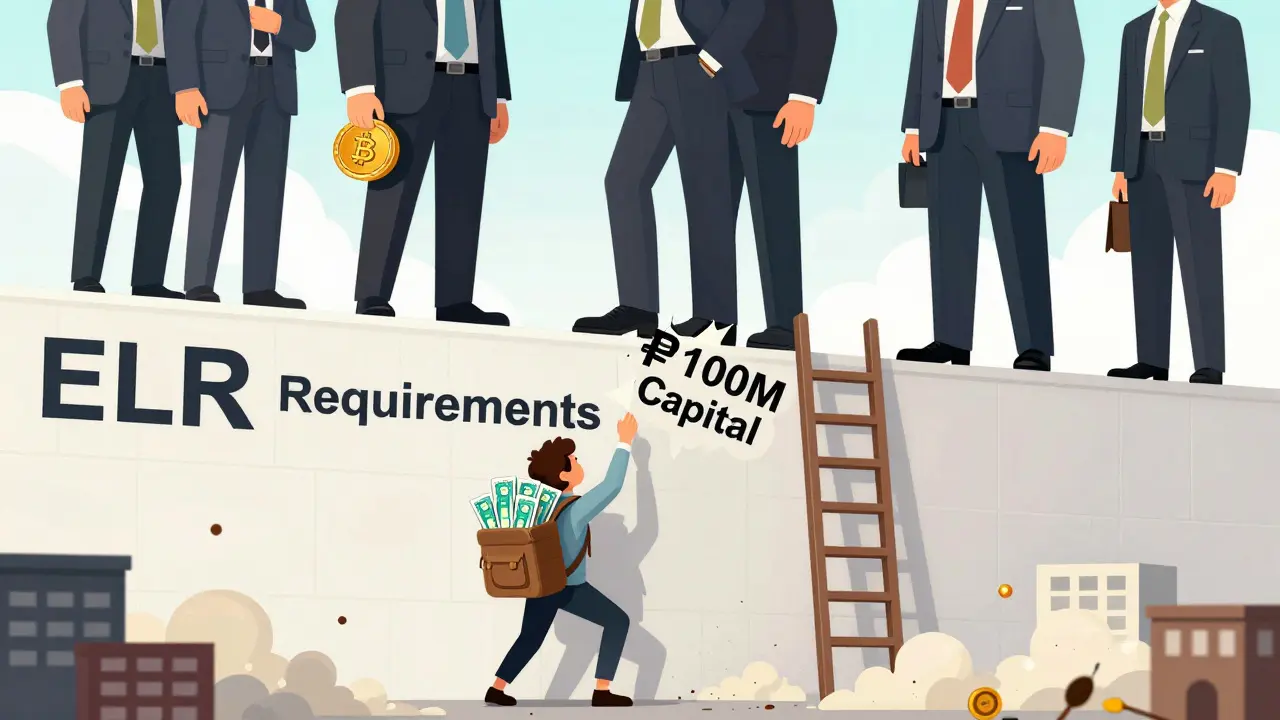
- Have at least ₽100 million ($1.24 million) in securities or bank deposits
- Prove annual income of ₽50 million ($620,000) or more
- Register as a “qualified investor” with the Bank of Russia
- Use only approved blockchain networks: Bitcoin, Ethereum, or Ripple
- Integrate with one of the 17 licensed wallet providers (like Finversity or BitRiver)
- Report every transaction over 600,000 rubles ($7,400) to the Unified State Information System (ESIS) within 5 business days
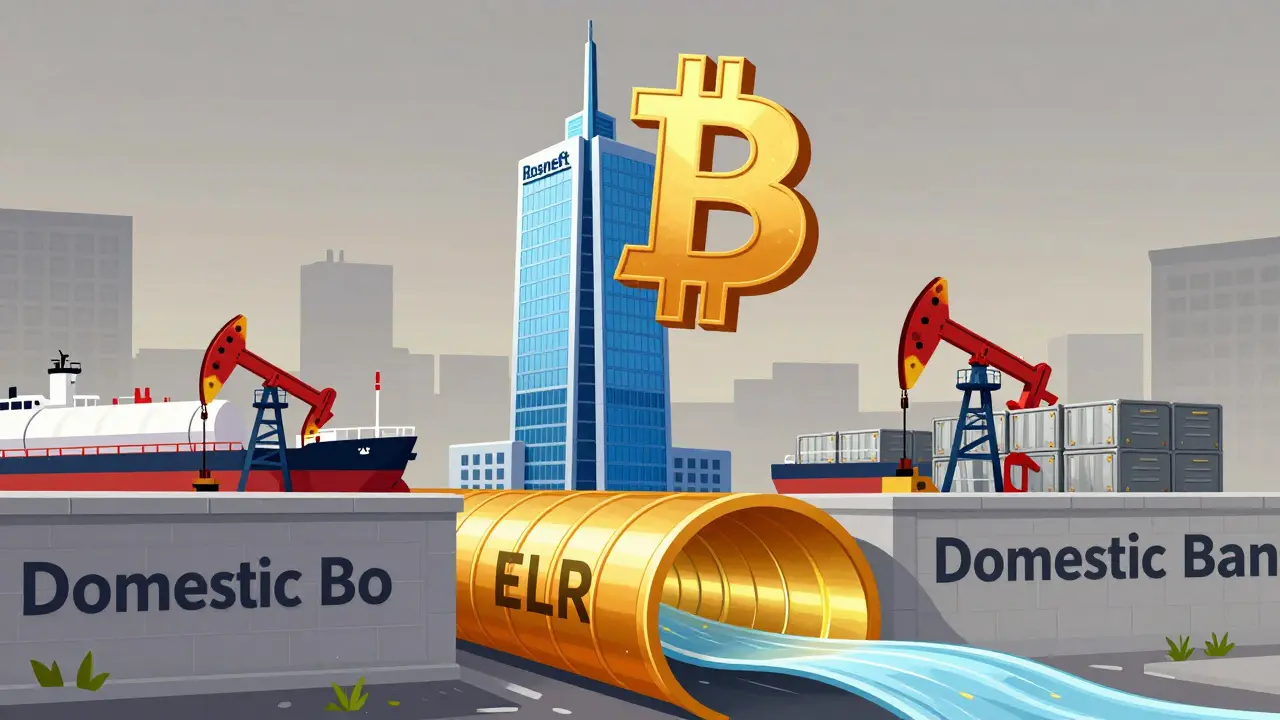
That’s not a barrier. That’s a wall. Only 247 companies in Russia met these requirements as of September 2025. Most are tied to state-owned enterprises - oil, gas, and mining giants like Rosneft and Norilsk Nickel. In Q3 2025, Rosneft settled 12% of its Asian exports in crypto. Norilsk Nickel cut payment times from 14 days to 4 hours. For them, crypto isn’t a trend - it’s survival.
Why This Double Standard Exists
Russia didn’t ban crypto because it’s dangerous. It banned it because it competes with the ruble. The Central Bank fears that if ordinary people start using Bitcoin to pay for groceries, the ruble loses value. So they created a narrow tunnel for sanctioned industries to bypass Western financial systems - without letting crypto leak into the domestic economy.
Compare that to the EU. Since December 2024, businesses across the bloc can accept crypto payments with simple tax reporting under MiCA rules. In the U.S., the IRS treats crypto as property, but businesses can accept it without legal risk. Russia? No such luck. Even advertising that you accept crypto can trigger penalties. One St. Petersburg cafe got fined for putting “BTC accepted” on its menu.
The Hidden Cost of Going Legal
Setting up an ELR-compliant system isn’t just expensive - it’s complex. Businesses must:
- Apply for qualified investor status (30-45 days processing)
- Register with Rosfinmonitoring as a virtual asset service provider
- Install blockchain analytics software (minimum cost: ₽1.2 million/year)
- Integrate with licensed wallets and implement dual-factor authentication
- Train staff on reporting rules and GOST R 57580.1-2017 security standards
- Pass quarterly compliance audits (₽350,000 per audit)
The total setup cost? Between ₽3.8 million and ₽7.2 million ($47,000-$89,000). And that’s before a single transaction. For a small business? Impossible. For a state-linked mining firm? A line item on the budget.
What Happens When You Try to Skip the Rules?
Some businesses still try. A Moscow restaurant chain called Sakhalin started accepting crypto in early 2025. They used an unlicensed wallet provider. Within 11 days, Rosfinmonitoring blocked their payment processor. They lost ₽18 million ($222,000) in sales. Their bank account stayed frozen for 67 days. Tax auditors showed up. Their owner was summoned for questioning. No charges were filed - but the damage was permanent. They closed two months later.
According to Hexn’s November 2025 report, 12 small businesses that attempted domestic crypto payments all faced account freezes. 92% of respondents in a Reddit survey from r/RussianBusiness said they’d never try it again.
Who Benefits? Who Gets Left Out?
Transparency International Russia found that 78% of ELR participants have direct ties to government officials or state-owned companies. Meanwhile, 89% of SMEs surveyed by the Russian Union of Industrialists and Entrepreneurs said the ₽100 million capital requirement was “unrealistic.”
This isn’t regulation. It’s exclusion. The system was designed to help sanctioned industries survive - not to empower entrepreneurs. The result? A two-tier economy: state-backed giants using crypto to bypass sanctions, while everyone else is forced to use cash, bank transfers, or barter.
The Future: Will This Change?
There are signs of movement. In November 2025, Deputy Finance Minister Ivan Chebeskov hinted that the “superqual” investor threshold might be scrapped. A tiered system - with lower entry points - is being considered. The Central Bank is also reviewing whether to add more blockchain networks to the approved list.
But the Bank of Russia’s leadership remains firm. First Deputy Governor Vladimir Chistyukhin said in October 2025: “Crypto should initially be available only to a very, very limited class of investors.”
If the ELR program proves stable - if cross-border crypto transactions keep flowing without triggering inflation or capital flight - then maybe, in 2027, small businesses will get a chance. But don’t hold your breath. The Central Bank’s priority isn’t innovation. It’s control.
Right now, the only businesses in Russia that can legally accept crypto are those with deep pockets, state connections, and international clients. Everyone else? They’re still stuck with rubles - and the long lines at the bank.
So Russia's basically saying crypto is fine if you're a state-owned oligarch but illegal if you're a small business owner. Classic. The ruble's a sinking ship and they're handing out life jackets only to their friends.
Lol. Just cash. Always cash.
ELR? More like ELITE-ONLY Regime. Of course the state wants crypto for exports-keeps the West guessing while keeping the ruble alive. Meanwhile, your local cafe gets fined for a Bitcoin sticker. This isn't regulation. It's propaganda with a blockchain veneer.
I've seen this before. The U.S. does the same thing with banking regulations-only big firms can afford compliance. But here? It's weaponized. Russia isn't trying to regulate crypto. They're trying to weaponize it for geopolitical leverage while pretending it's a security issue. The fact that they're using Bitcoin and Ethereum for oil deals? That's ironic as hell. They hate the decentralized nature of crypto... but they're using it to bypass the very system that decentralized finance was meant to challenge.
The ELR framework is a masterclass in regulatory arbitrage. They're not banning crypto-they're creating a gated ecosystem where only sanctioned entities with access to hard currency reserves can participate. It's essentially a state-sanctioned offshore crypto corridor. The 17 licensed wallet providers? That's not a technical requirement-it's a cartel. And the reporting threshold of 600k rubles? That's a backdoor surveillance mechanism disguised as anti-money laundering. They're not worried about illicit flows-they're worried about uncontrolled capital flight. The real innovation here? Using blockchain to bypass SWIFT without technically violating sanctions. That's not innovation. That's a geopolitical hack.
I've worked with Russian SMEs trying to go digital. This isn't just about crypto-it's about infrastructure. Even if the capital requirement dropped to 10 million rubles, most businesses couldn't handle the compliance overhead. Blockchain analytics software alone costs more than their annual IT budget. And don't forget: training staff on GOST standards? Most shop owners still use Excel for inventory. This system was never meant for entrepreneurs. It was built for state-linked corporations to outmaneuver Western sanctions. The fact that Rosneft cut payment times from 14 days to 4 hours? That's the real story. Crypto isn't changing finance-it's just replacing one bureaucratic system with another. And the winners? Still the same people.
OMG this is so extra. Like imagine being so rich you can use crypto to pay for oil but your local bodega gets fined for a QR code. I'm literally crying. Also who uses Ripple anymore??
I love how this system screams inequality but calls it regulation. The ELR isn't about security-it's about control. The same government that shuts down small businesses for accepting crypto is quietly letting state giants use it to dodge sanctions. And yet, they call it 'stability.' Funny how 'stability' always means 'keeping the power in the same hands.' I've seen this in India too-where fintech innovation gets strangled by bureaucracy unless you're connected. Crypto didn't fail here. The system failed crypto. And now it's using crypto to reinforce its own power. That's not progress. That's performance art.
The structural imbalance here is staggering. The ELR regime creates a parallel financial ecosystem that exists solely to serve geopolitical interests. While ordinary citizens are forced into ruble dependency, state-linked enterprises gain access to a global, borderless settlement layer. This isn't innovation-it's institutionalized financial apartheid. The central bank's fear of ruble depreciation is valid, but their solution is profoundly self-defeating. By locking out domestic adoption, they stifle innovation, deepen capital flight, and alienate the very entrepreneurial class that could help stabilize the economy. A tiered system with scaled compliance thresholds might have been a bridge. Instead, they built a moat.
I just want to cry. I mean, like, why? Why does this happen? Why can't we just have nice things??
I mean... if you're not rich enough to use crypto in Russia, are you even real? 🤡
This is fascinating. I wonder what happens if a small business in Vladivostok tries to accept crypto from a buyer in China using an unlicensed wallet. Would they still get frozen? Or would the border make it a gray zone? The fact that Rosneft is using crypto for Asian exports suggests there's already a de facto two-tier system-just not officially recognized. Maybe the real story isn't the ban-it's the quiet, unspoken exceptions that are already happening.
This isn't a policy. It's a psychological operation. The Russian state is using crypto as both weapon and shield. They ban it domestically to maintain ruble dominance, then weaponize it internationally to bypass sanctions-all while painting themselves as the 'cautious regulators.' The real goal? To make the West believe they're vulnerable, while quietly building a parallel financial infrastructure that no one can touch. And the cherry on top? They're using Bitcoin-the original decentralized currency-to serve the most centralized state in the world. That's not irony. That's genius. And terrifying.
The ELR is just another way to say you need to be rich and connected to play. No surprises. Russia's always been this way.
I just want to say thank you for writing this. It's rare to see someone break down the real human cost behind these policies. The 45-day account freeze for TechnoPoint? That's not a fine. That's a death sentence for a small business. And the fact that 92% of SMEs said they'd never try crypto again? That's not fear. That's resignation. This isn't about regulation. It's about crushing hope.
So the system's built so only the state-linked giants can use crypto. That's not innovation. That's rent-seeking. They've created a legal monopoly on blockchain access. The real question isn't whether crypto can work in Russia-it's whether the state will ever let anyone else use it. And honestly? I doubt it. Control is the product here. Not efficiency. Not innovation. Just control.
You know what's wild? The fact that they're using blockchain analytics software to monitor transactions. That's not security-that's surveillance. They're not worried about money laundering. They're worried about people moving money without the state knowing. And the 17 licensed wallets? That's not a technical standard. That's a loyalty program. You don't get to use crypto unless you're on their team. This isn't finance. It's a loyalty oath with a blockchain UI.
I mean, if you can't afford a million-dollar compliance system, you don't deserve to use crypto. Simple as that. The world doesn't owe you access. Get rich first. Then come back.