
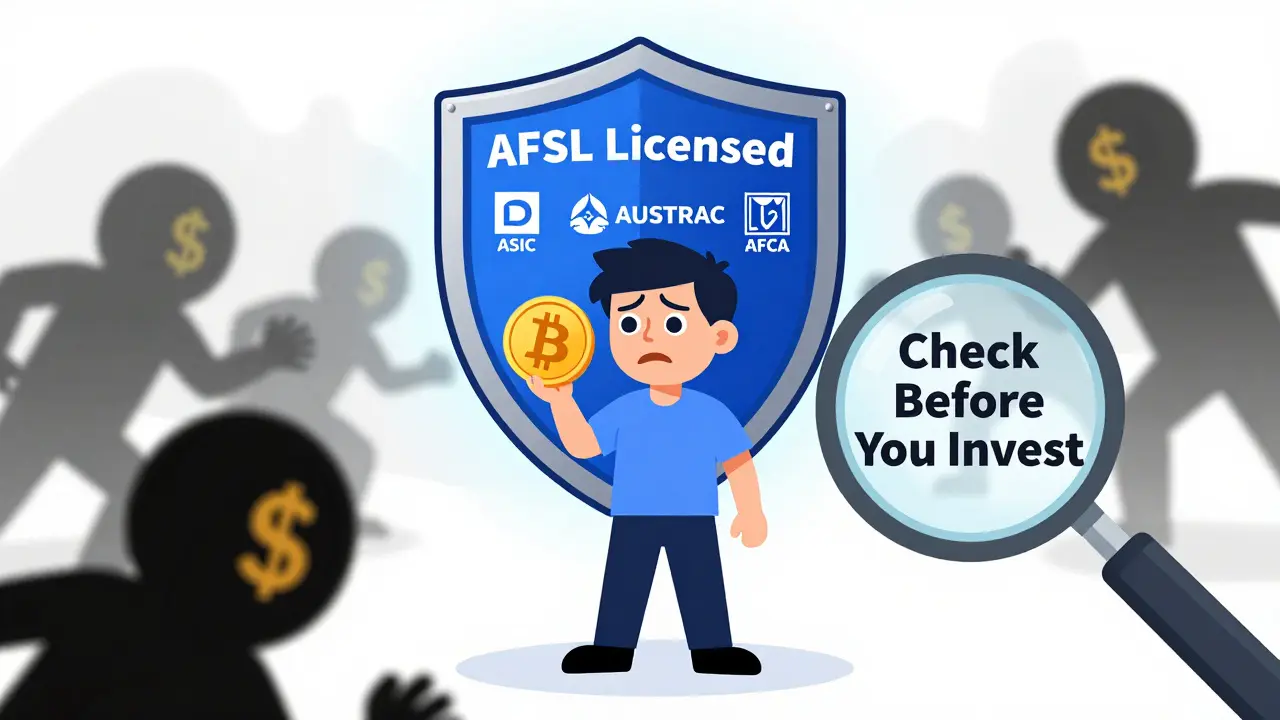
If you’ve bought Bitcoin, traded NFTs, or held stablecoins in Australia, you’ve probably wondered: who’s watching out for me? The answer used to be: not much. But that’s changing fast. As of 2026, Australia has one of the clearest, toughest consumer protection frameworks for crypto in the world-and it’s already affecting how you buy, sell, and store digital assets.
What Changed in 2025? The New Crypto Rules
The big shift came with the Treasury Laws Amendment Bill 2025: Digital Asset and Tokenised Custody. It didn’t create a whole new system. Instead, it plugged crypto into the existing financial rules that already protect people buying shares, superannuation, or insurance. That’s key. You’re not dealing with a wild west anymore-you’re dealing with the same legal backbone that protects your bank account. Under the new law, any platform that lets you trade or hold crypto-like Independent Reserve, BTC Markets, or OKX Australia-must now hold an Australian Financial Services Licence (AFSL). That’s not optional. It means these companies have to follow strict rules: they can’t mislead you, they must manage conflicts of interest, they need trained staff, and they have to have a clear way to handle complaints. If they break the rules, they could face fines of over $16.5 million.What’s Covered? Bitcoin, NFTs, Stablecoins-and What’s Not
The law doesn’t just cover Bitcoin. It includes:- Commodity-like assets (Bitcoin, Ethereum)
- Tokenised securities (digital versions of stocks or bonds)
- Stablecoins (like USDT or AUD-backed tokens)
- NFTs sold as investment products
How You’re Protected Right Now
Even before the 2025 law, you weren’t completely unprotected. Australia’s consumer laws have always banned misleading and deceptive conduct. That means if a crypto company tells you “guaranteed 100% returns” or “risk-free investment,” they’re breaking the law-even if the asset isn’t technically a financial product. The Australian Securities and Investments Commission (ASIC) has already taken action against companies making false claims. In 2024, ASIC fined a crypto influencer $200,000 for pushing a token with fake testimonials. Another firm was forced to pull ads claiming their app was “ASIC-approved”-it wasn’t. Then there’s AUSTRAC. Since 2018, every crypto exchange operating in Australia must register with them. That means they have to verify your identity (KYC), monitor your transactions, and report anything suspicious. No more anonymous wallets on local exchanges.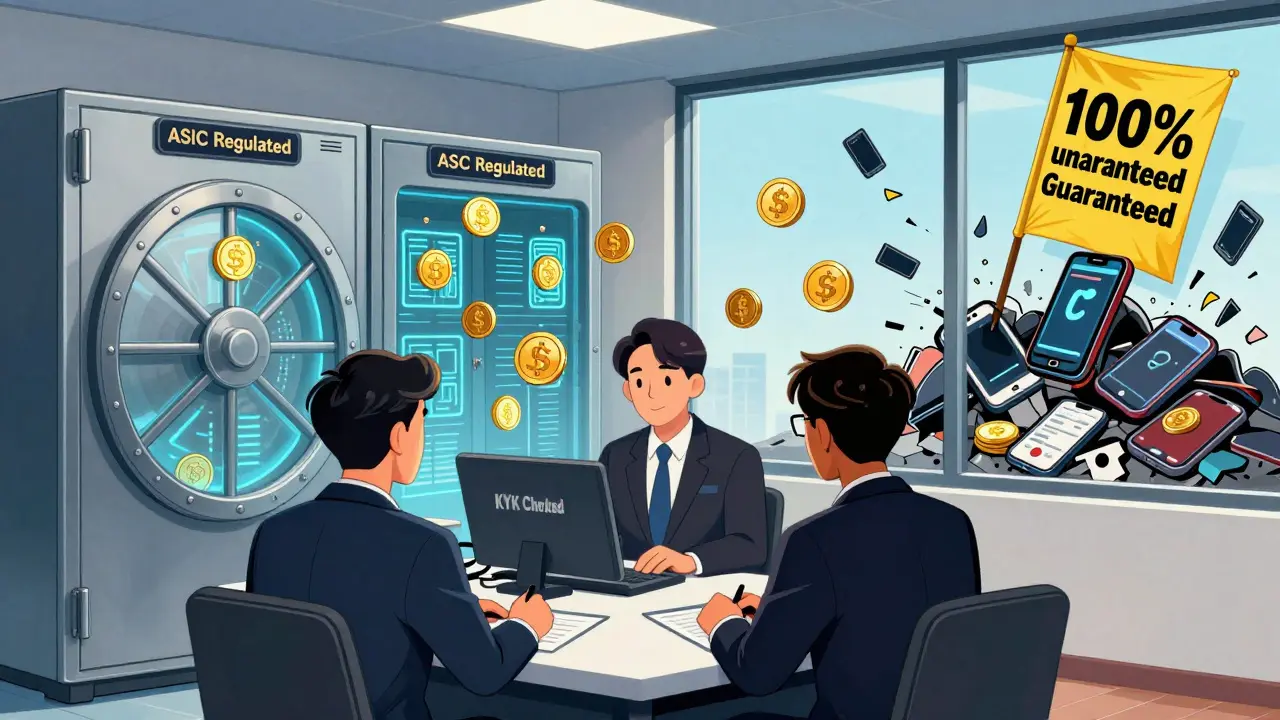
Why FTX Still Matters
The collapse of FTX in 2022 wasn’t just a global shock-it was a wake-up call for Australia. Hundreds of Australians lost money. Many didn’t even know their funds weren’t protected. That’s what pushed the government to launch the token mapping exercise in 2023 and start drafting these new rules. Before FTX, the system was messy. AUSTRAC handled money laundering. ASIC handled financial products. But if your crypto wasn’t classified as a financial product? You were in a gray zone. No licensing. No clear rules. No recourse if things went wrong. Now, there’s no gray zone. If you’re trading crypto on a platform in Australia, that platform is regulated. And if it’s not? You should walk away.What This Means for You as a Consumer
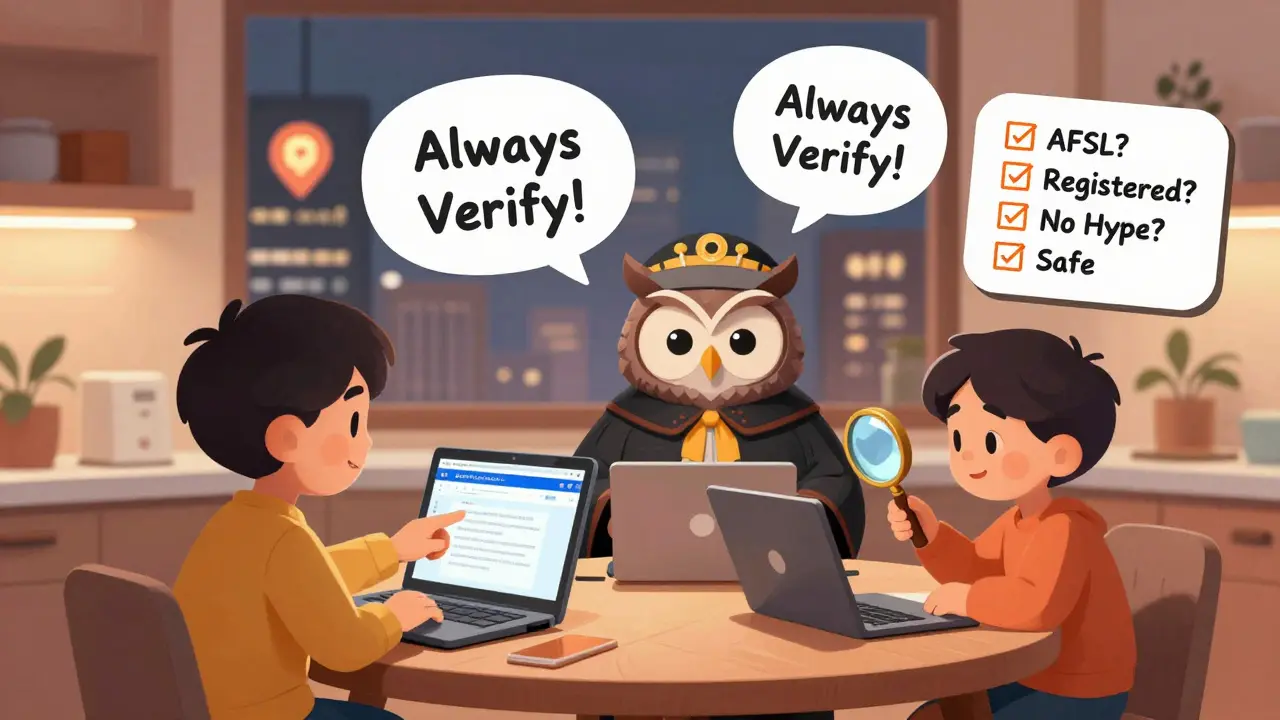
Here’s what you need to do differently in 2026:- Check if your exchange is licensed. Look for the AFSL number on their website. If it’s not there, don’t use it.
- Don’t trust hype. If a campaign promises “double your money in 30 days,” it’s a red flag. ASIC has cracked down on this repeatedly.
- Use only registered platforms. The list of licensed crypto platforms is public on ASIC’s website. Bookmark it.
- Know your rights. If a platform refuses to return your funds or blocks your withdrawal, you can file a complaint with ASIC or the Australian Financial Complaints Authority (AFCA).
What’s Still Missing?
The law doesn’t cover everything. For example:- It doesn’t regulate token issuers directly-only the platforms that trade them.
- It doesn’t require platforms to insure your holdings. So if a licensed exchange gets hacked, you might still lose your crypto.
- It doesn’t force platforms to offer cold storage by default. Some still keep most funds online.
So now I gotta check ASIC’s website before I even open my wallet? Cool. Guess I’ll just stick to buying coffee with crypto instead of risking my life savings on some ‘regulated’ exchange that still gets hacked tomorrow.
I’ve been holding Bitcoin since 2017 and never once trusted a platform. The law doesn’t change the fact that private keys are your only real protection. If you’re relying on a license to keep your crypto safe, you’re already behind.
For anyone new to crypto in Australia, this is actually huge. Before 2025, you had zero recourse if a platform vanished. Now, if they mislead you or freeze your funds, you can go to ASIC or AFCA and actually get help. It’s not perfect, but it’s a massive step from ‘buyer beware’ to ‘here’s how to fight back.’
Very informative post. The distinction between NFTs for utility versus investment is crucial. Many people don’t realize that buying a digital sneaker for a game is not the same as buying an NFT hoping to flip it. This clarity will protect many from scams.
Honestly? I’m glad they’re finally cleaning this up. I used to tell my cousins not to touch crypto because it was a free-for-all. Now I can say ‘use licensed platforms’ and actually mean it. Small win for real users.
ASIC-approved? LOL. You think they care about you? They’re just trying to control the narrative so Big Finance can absorb crypto into their monopoly. You’re not protected-you’re being groomed for surveillance. Cold storage? Nah. They want your keys. They want your data. They want your soul.
Let’s be real-the FTX collapse didn’t just wake up Australia, it woke up the entire Western world. What’s impressive here isn’t the law itself, but the fact that regulators didn’t just react with panic. They took a methodical approach: plug crypto into existing frameworks, avoid reinventing the wheel, and enforce with teeth. That’s governance, not fear-driven overreach.
Still no insurance requirement? Still no cold storage mandate? So the ‘protected’ exchange can still lose all your ETH because their IT guy used ‘password123’? Sounds like a fancy prison with a license.
For those worried about the lack of insurance: use hardware wallets. The regulation protects you from scams and fraud-not from bad tech or hacks. Your responsibility doesn’t end when you click ‘buy.’ Store your keys offline. It’s not hard, and it’s the only real safety net.
YES. Finally someone says it. If you’re using an unlicensed exchange, you’re playing Russian roulette with your life savings. And if you’re buying NFTs to use in a game? Cool. Just don’t pretend you’re investing. 🙌
What’s wild is how much this mirrors what happened with online banking in the early 2000s. People thought it was too risky. Then came regulation, clear rules, and suddenly everyone was doing it. Crypto’s just going through the same growing pains. This is a good sign.
They say stablecoins are covered but not the issuers? That’s a joke. If Tether can print more USDT without oversight, the whole thing is a house of cards. You think ASIC is going to stop them? Please. They’re too busy chasing TikTok influencers to stop global banks
This is a landmark development for the global crypto ecosystem. Australia has demonstrated that regulation and innovation are not mutually exclusive. Other nations should take note and adopt similar frameworks to ensure investor confidence and market integrity.
Check the AFSL. Always. I’ve seen too many people assume ‘Australian company’ means ‘safe.’ It doesn’t. I once lost a friend’s money because they trusted a ‘local’ exchange that had zero license. Don’t be that person. Verify. Then verify again.
I’m so proud of Australia for getting this right! 🌏✨ It’s not about stopping crypto-it’s about making sure people don’t get crushed by the same old greed and lies. This is how you build trust. And trust is the real currency.
Regulation is just the first step toward control. They’ll come for your privacy next. Then your wallet. Then your identity. They call it protection. I call it colonization of finance. Wake up.
Why do they exempt small platforms under $10M? That’s where most scams hide. Small operators don’t have compliance teams. They just copy-paste a website and vanish with your ETH. This loophole will be exploited.
Finally, someone understands that NFTs for games aren’t investments. I bought a virtual sword for my son’s game last year. My friend tried to sell it on OpenSea and got scammed. He thought it was ‘crypto.’ It was just a sword. This law helps separate the fun from the fraud.
Good stuff. The key is education. Most people don’t know what AFSL means. Maybe the government should run simple ads-like ‘Don’t use unlicensed exchanges’-on Instagram and TikTok. That’s where the new users are.
Oh wow, Australia’s ‘tough’ rules. Let me guess-this is just a way to force everyone onto centralized exchanges so the government can track every transaction. Brilliant. Now we’re not just taxed-we’re monitored. Welcome to the crypto police state.
Big win for Aussie crypto users. I used to cringe when my cousin asked if she should invest in some meme coin. Now I can say ‘check ASIC’s site’ and actually feel good about it. Thanks for the clear guide.
So you’re telling me the same people who let FTX happen are now the ones policing crypto? Give me a break. They didn’t stop FTX. They didn’t stop Terra. They didn’t stop Celsius. Why would they stop the next one? This is theater, not protection.
They say stablecoins are covered-but what if the AUD-backed token is just a front for a Ponzi? What if the issuer is offshore? The law doesn’t touch that. They’re regulating the middleman, not the fraud. Classic move.
How dare Australia think it can regulate crypto better than the U.S.? We have the best tech, the most innovation, and zero rules. You’re turning your market into a museum. By 2030, all the real crypto action will be in Singapore, Dubai, and yes-even Texas. Australia is choosing bureaucracy over freedom.
Dear regulators, if you truly wanted to protect consumers, you would ban all crypto. The entire system is built on deception. You think licensing a platform makes it trustworthy? You think ASIC can audit every blockchain? This is a fantasy. The only safe crypto is the crypto you never touch.