
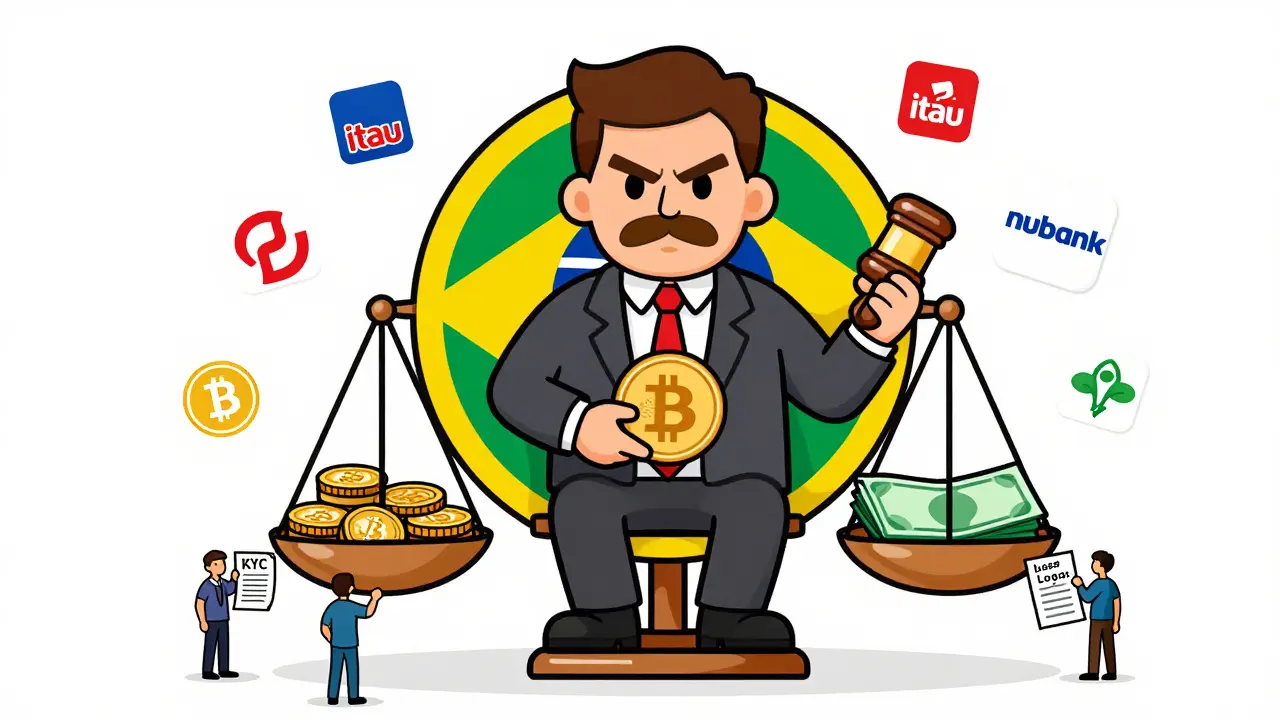
Brazil Crypto Transaction Calculator
Brazil's Central Bank has imposed a $10,000 per transaction limit for crypto transfers. This calculator shows how many transactions you'll need to split transfers over the limit and estimated additional fees.
Results
Brazil RegulationEnter your transfer amount to see results
Brazil isn’t banning crypto. It’s licensing it. And that changes everything for exchanges, traders, and investors. If you’re using a crypto platform in Brazil-or even just sending money overseas-you need to understand what’s really happening under the hood. This isn’t about whether crypto is legal. It’s about who controls it, how much you can move, and what paperwork you’ll need to keep up.
There’s No ‘Crypto License’-But You Still Need One
You won’t find a form called ‘Crypto Exchange License’ on the Central Bank of Brazil’s website. That’s not because the rules are loose. It’s because they’re woven into something bigger. Since June 2023, Law No. 14.478/2022 made it mandatory for any company offering crypto services-trading, custody, swaps, on-ramps-to register with the Central Bank (BCB). This isn’t optional. It’s a legal requirement to operate.Think of it like opening a bank branch. You don’t need a special ‘checking account license.’ You need to meet banking regulations. Same here. Crypto firms are treated as Virtual Asset Service Providers (VASPs), and they’re forced to play by the same anti-money laundering and know-your-customer rules as banks. That means identity checks on every user, transaction logs going back years, and regular audits. No gray area. No loopholes.
The Central Bank Isn’t Just Watching-It’s Controlling the Pipes
Here’s where it gets real. In September 2024, the BCB dropped a proposal that didn’t mention crypto once-but hit exchanges harder than any crypto-specific rule could. The new rules targeted electronic foreign exchange (eFX) platforms. And guess what? Any crypto exchange that lets users convert Bitcoin to USD, or send BRL to a foreign wallet, now falls under this same umbrella.Three big changes are coming:
- $10,000 per transaction cap-No individual can send more than $10,000 in a single transfer, no matter how many times they try in a day. This applies to crypto-to-fiat swaps, cross-border trades, even peer-to-peer transfers routed through licensed platforms.
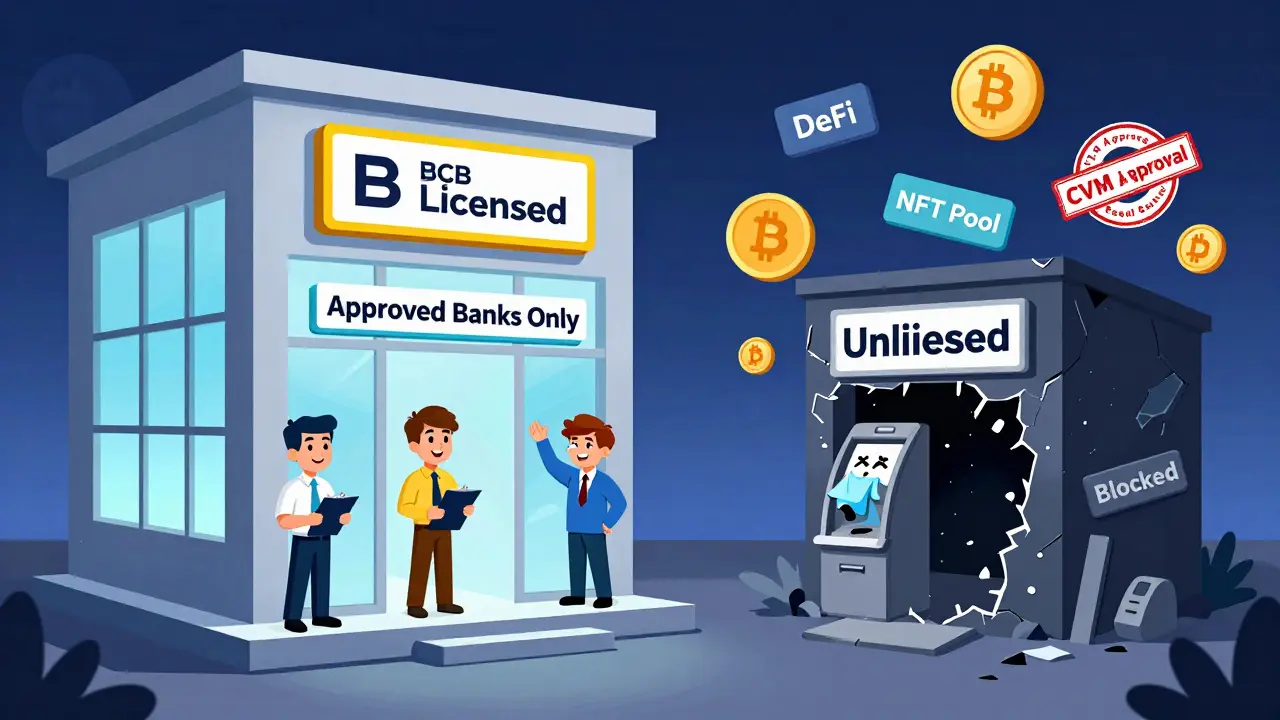
- Only approved channels-You can’t deposit BRL from just any bank account. Exchanges must tie deposits and withdrawals to pre-approved financial institutions. Think: Itau, Bradesco, Nubank. No more anonymous crypto-to-bank transfers via third-party payment processors.
- Full cost transparency-Every fee, spread, or hidden charge must be shown upfront. No more ‘$500 Bitcoin, $5 fee’ hiding a 3% spread. You see the total cost before you click ‘Confirm’.
These rules were meant for forex platforms. But crypto exchanges that move money across borders? They’re being pulled in. If you’re using Binance, Kraken, or a local platform like Foxbit, and you’re sending money out of Brazil-you’re affected.
What This Means for Traders and Investors
If you’re a retail trader buying a few hundred bucks of Bitcoin every month? You’ll barely notice. The $10,000 limit won’t touch you. But if you’re doing anything bigger, it’s a different story.High-frequency traders who rely on arbitrage between Brazilian and international markets? They’re stuck. A $15,000 arbitrage opportunity? Split into two transactions? That doubles the fees, delays execution, and increases risk. Institutional investors? Forget moving $50,000 in ETH in one go. They’ll need to break it into five separate transfers, each with its own compliance check and waiting period.
Even simple things like paying for a service overseas with crypto just got harder. If you’re a freelancer getting paid in USDT and want to convert it to BRL and send it to your local bank? You’ll hit the cap fast. And if your exchange doesn’t have a direct link to your bank? You’re blocked until they get approved.

Global Exchanges Are Being Forced to Choose
Big platforms like Coinbase and Binance aren’t sitting still. They’re either building local compliance teams in Brazil-or pulling back. Some have already started restricting Brazilian users from certain features. Others are partnering with local banks to create compliant on-ramps. But it’s expensive. Setting up the reporting systems, hiring local compliance officers, integrating with approved financial channels-it’s not cheap.Smaller exchanges? Many won’t survive. The cost of licensing and compliance could be 30% of their revenue. If you’re a startup trying to launch a crypto exchange in Brazil today, you’re looking at six to nine months of legal work and $200,000+ in setup costs just to get started. That’s why you’re seeing consolidation. The market is cleaning house.
The CVM Isn’t Sitting Out Either
While the Central Bank handles the money side, the Securities and Exchange Commission of Brazil (CVM) watches the assets. If a token acts like a stock-offering profit shares, voting rights, or investment promises-it’s classified as a security. That means it needs CVM approval before being traded. This hits DeFi tokens, NFT-based investment pools, and tokenized real estate projects hard.So now, a crypto project in Brazil has to clear two hurdles: BCB for the money flow, CVM for the asset itself. Two agencies. Two sets of rules. Two compliance teams. It’s not just regulation-it’s a double-layered system designed to make it nearly impossible to operate without full transparency.
What’s Next? No Final Rules Yet-But Time Is Running Out
The public consultation for the forex rules ended in November 2024. The Central Bank hasn’t released the final version yet. But industry insiders say the changes won’t be watered down. They’re expecting the $10,000 cap and approved channel rules to go live in early 2026. Some say April. Others say June. Either way, exchanges have less than six months to adapt.One thing’s clear: Brazil isn’t trying to stop crypto. It’s trying to control it. The goal? Bring crypto into the same financial system as banks, credit cards, and wire transfers. No more anonymous flows. No more offshore loopholes. Everything tracked. Everything reported. Everything capped.
What Should You Do Right Now?
If you’re using a crypto exchange in Brazil:- Check if your platform is registered with the BCB. Look for their registration number on the website or in the app’s ‘Legal’ section.
- Know your bank’s connection to your exchange. If you can’t deposit from Itau or Bradesco, you might be on an unlicensed platform.
- Avoid large, single transfers. If you need to move $15,000, plan for three separate transactions. Space them out. Document everything.
- Read the fee breakdown before every trade. If it doesn’t show the full cost-including spreads-you’re being misled.
- Keep records. Every transaction, every ID upload, every receipt. The BCB will audit exchanges. And if they find gaps, they’ll come after users too.
If you’re a business or investor: Start talking to your compliance team. If you’re moving crypto across borders, assume the $10,000 cap is already in place. Plan accordingly. Don’t wait for the official announcement. The rules are coming. And they’re not optional.
Why Brazil’s Approach Matters Globally
Brazil isn’t alone in regulating crypto. But it’s one of the first major economies to tie crypto regulation directly to its foreign exchange controls. Most countries either ban crypto or create separate rules. Brazil is doing something smarter: it’s treating crypto like any other cross-border financial activity.This model could spread. Argentina, Colombia, and even India are watching closely. If Brazil’s system works-reducing money laundering, increasing transparency, and keeping capital within the banking system-it could become the blueprint for emerging markets.
For users, it’s not perfect. The caps are frustrating. The bureaucracy is heavy. But at least you know where you stand. No more guessing. No more hidden risks. Just rules. And if you follow them? You’re not just compliant. You’re protected.
This is ridiculous. $10,000 caps? You’re punishing people for having money.
I get why they’re doing this, honestly. I’ve seen too many people get scammed with crypto because no one tracked where the money went. Now at least there’s a paper trail. Yeah, it’s annoying to split up big transfers, but I’d rather be safe than sorry. My cousin lost $20k to a fake exchange last year - no recourse, no trace. This feels like the first real step toward protecting regular folks, even if it’s clunky.
Brazil is setting a precedent here. Most countries either ban crypto or ignore it. But Brazil is saying: 'We don’t need to fear it - we need to manage it.' The $10k limit isn’t about stopping people. It’s about stopping money laundering through fake trades. And the approved bank channels? That’s smart. No more shady payment processors hiding behind shell companies. It’s not perfect, but it’s the most responsible approach I’ve seen.
This is actually good news for legit traders
Why are we letting the gov control everything? In America we’d never put up with this. Crypto is freedom. This is socialism with blockchain stickers.
BCB + CVM = double the paperwork 😩💸 But honestly? I’m glad they’re finally treating crypto like finance and not a wild west meme. Also 🤖✨ #ComplianceIsCool
I don’t trust any government to regulate anything. They’ll just use this to track citizens.
You’ve got options. Stay compliant, keep records, and don’t panic. This isn’t the end - it’s just the start of real crypto adoption.
I mean… if they’re gonna make me do 5 transfers for $50k… why not just hodl? 😭 Why does everything have to be so… regulated? I just wanted to buy some ETH and chill. Now I need a lawyer and a spreadsheet? 🥲
I lived in São Paulo for a year. The banking system there is already super strict. This just extends that to crypto. Honestly? It’s kind of refreshing. No more sketchy exchanges promising 500% returns. People are actually starting to treat this like money.
You’re all missing the point. If you can’t move money freely, you don’t own crypto. You own a government-controlled IOU.
I’ve been watching this unfold for months. The real win here is that retail traders are finally being protected. No more hidden spreads. No more fake liquidity. The $10k cap? It’s not a punishment - it’s a firewall. I used to trade on unlicensed platforms. I got burned. This? This is the kind of structure that keeps people like me from losing everything.
Okay but WHY does every single transfer need to go through Itau?? What if I bank with Nubank? And why are they acting like crypto is a foreign currency?? It’s not. It’s digital money. This feels like they’re trying to force it into a box it doesn’t fit in!!
This is just another way to extract fees. They’re not protecting you - they’re monetizing your movement.
I’m not a trader, but I’ve been holding Bitcoin since 2021. I just want to be able to cash out without getting flagged. This feels like a step toward making that possible - even if it’s slow. At least now I know who to trust. That’s worth something.
LMAO they think $10k is a cap? I’ve seen people move $200k in crypto through P2P with cash in parking lots. This does nothing but hurt honest people.
I love how they’re requiring full cost transparency. I’ve been burned so many times by 'low fee' exchanges that had 4% spreads. Finally someone’s calling BS.
Oh wow. So now we’re treating crypto like a utility? How quaint. The future belongs to decentralized systems - not bureaucratic red tape.
So let me get this straight - you can’t send $15k in one go, but you can send $10k, wait 2 hours, then send another $5k? That’s not regulation, that’s a glitch in the matrix.
This is actually a win for long-term holders. Less speculation, more stability. The market needed this.
I’ve been in crypto since 2017, and I’ve seen so many countries panic and ban, or ignore entirely. Brazil is doing the hard work - the messy, slow, bureaucratic work - to build something that lasts. It’s not sexy. But it’s real. And honestly? I respect that more than any ‘freedom’ slogan.
I used to hate the idea of KYC. But after seeing friends get hacked and drained because exchanges had zero security? I’d rather fill out a form than lose everything. This isn’t perfect, but it’s the least bad option we’ve got.
In India we’re watching this closely. If Brazil can make this work without killing innovation, maybe we can too. The key is making compliance easy for small players - not just the giants.
The Central Bank's approach is methodical and grounded in systemic risk mitigation. The integration of VASP regulations under existing financial infrastructure ensures regulatory continuity and reduces fragmentation. The $10,000 threshold aligns with FATF recommendations for high-risk transactions, while mandatory fee disclosure enhances consumer protection. This is not overreach - it is prudent governance.
Let me be clear - this is a catastrophic failure of financial sovereignty. The BCB is not regulating - it is colonizing digital finance. By forcing exchanges to tie into state-approved banks, they are creating a centralized surveillance network under the guise of compliance. This is not progress. This is the death of financial privacy. And the CVM’s dual-layered control? That’s not oversight - it’s entrapment. The only winners here are the banks and the bureaucrats.