
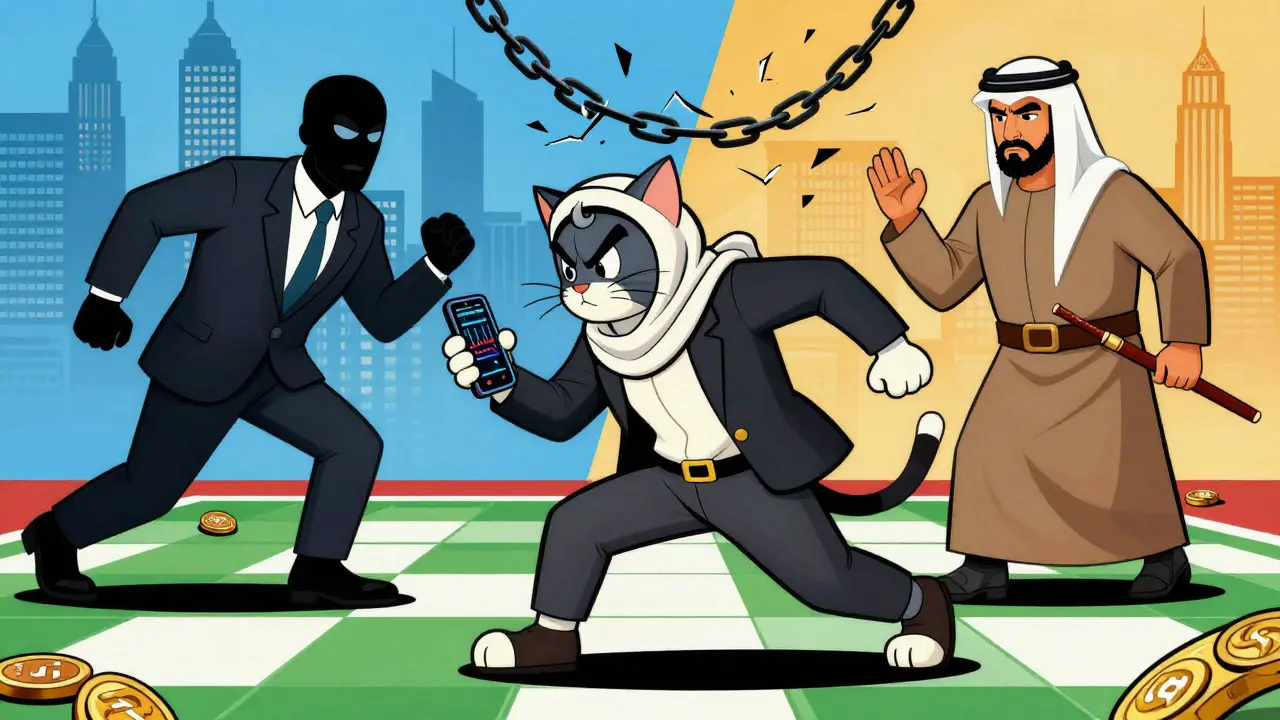
Trying to trade cryptocurrency from Iran is a high-stakes game of regulatory cat-and-mouse where international sanctions collide with domestic control measures. If you are wondering which specific platforms are off-limits, the answer isn't a simple list. Instead, it is a complex web of forced blocks by global giants like Tether is the issuer of USDT, a stablecoin widely used for trading and remittances globally and strict new laws imposed by the Iranian government itself.
In 2025 and early 2026, the landscape shifted dramatically. It is no longer just about avoiding detection; it is about navigating a system where your funds can be frozen overnight by foreign entities complying with US Treasury orders, or capped by local authorities trying to monitor capital flight. This guide breaks down exactly which exchanges are blocked, why they are blocked, and how the current rules affect traders on the ground.
The International Blocklist: US Sanctions and OFAC
The most immediate barrier for anyone holding an Iranian IP address or identity is not a ban from Tehran, but a block from New York. The US Treasury's Office of Foreign Assets Control (OFAC) is the agency responsible for enforcing economic and trade sanctions against targeted foreign countries and regimes has made it clear that major cryptocurrency service providers must cut ties with sanctioned jurisdictions to avoid losing access to the US banking system.
This means that virtually all top-tier centralized exchanges have effectively "banned" Iranian users. You won't find a public page titled "Exchanges Banned in Iran," but if you try to sign up using Iranian identification or connect from a local IP, you will likely face instant suspension. Key platforms affected include:
- Binance: While once more lenient, Binance now strictly enforces KYC (Know Your Customer) rules that flag Iranian residency, leading to account freezes.
- Coinbase: Has long excluded Iran from its list of supported countries due to compliance risks.
- Kraken: Similarly restricts access for residents of sanctioned nations.
- Bittrex: Previously froze accounts, leading to lawsuits from Iranian users who lost millions during bull runs because they couldn't withdraw their assets.
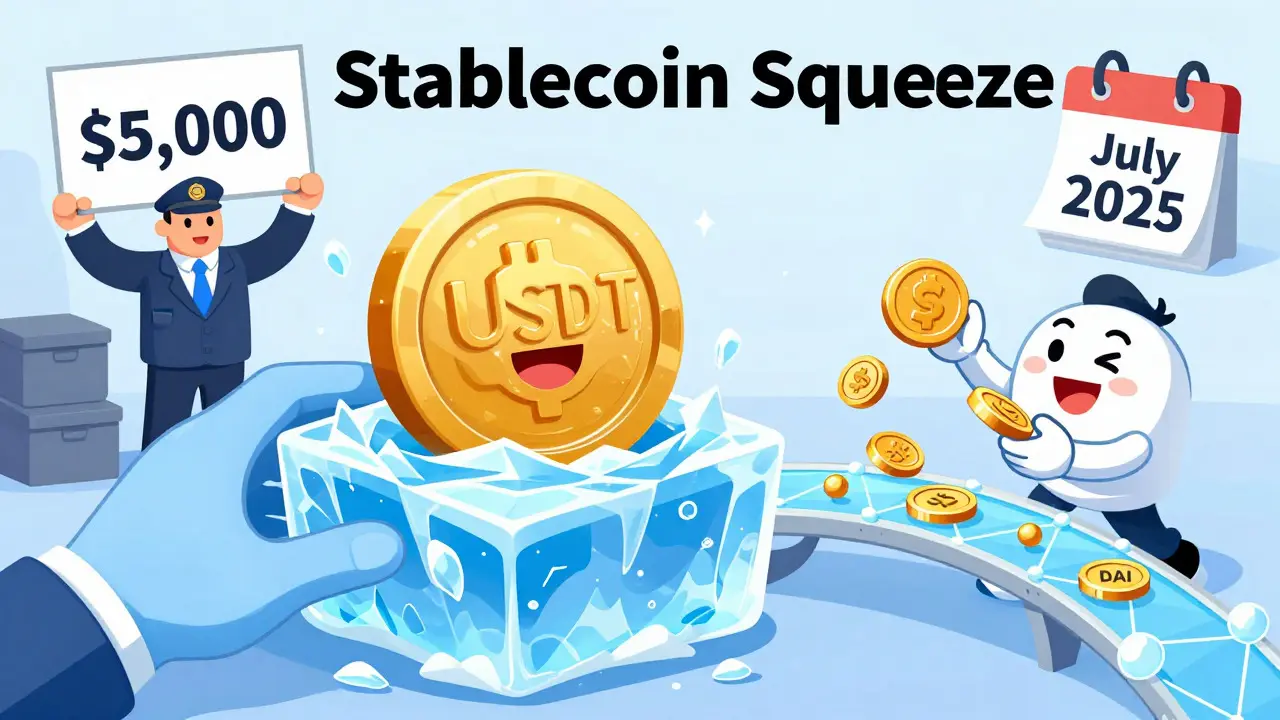
The risk here is severe. It is not just about being unable to trade; it is about having your existing funds locked indefinitely. In July 2025, this became a reality for many when Tether executed its largest-ever freeze of Iranian-linked funds, targeting 42 cryptocurrency addresses connected to major exchanges. This action disrupted transaction flows to Nobitex is Iran's largest domestic cryptocurrency exchange, often scrutinized for links to state-affiliated entities, forcing users to scramble for alternative settlement methods.
Domestic Restrictions: The Central Bank's Tight Grip
While the world shuts the door, the Iranian government is busy building walls inside the house. On December 27, 2024, the Central Bank of Iran implemented sweeping restrictions blocking all cryptocurrency-to-rial payments through internet websites within the country. This was a fundamental shift from tolerance to active restriction.
However, the story didn't end there. By January 2025, the bank began selectively unblocking certain trader exchanges, but with a catch: only those operating with the government's own API system. This system provides full access to user data, creating a controlled environment where every transaction is visible to the state. If an exchange does not integrate with this government API, it is effectively banned from facilitating fiat conversions for Iranian users.
This creates a two-tier system:
- Government-Approved Exchanges: Platforms like Nobitex and Wallex operate under heavy surveillance. They allow trading but report all user activity to authorities.
- Unapproved Platforms: Any platform attempting to facilitate direct Rial-Crypto pairs without the API integration faces internet throttling or complete blocking by the Ministry of ICT.
The Stablecoin Squeeze: Limits on USDT and DAI
Stablecoins have been the lifeline for Iranians looking to preserve wealth against inflation. However, recent moves have tightened this lifeline significantly. On September 27, 2025, just before the reinstatement of UN sanctions, the Central Bank announced strict limits on stablecoins.
Deputy Governor Asghar Abolhasani established hard caps: individuals and legal entities can purchase a maximum of $5,000 worth of stablecoins annually, and hold no more than $10,000 in their balance at any time. These limits apply primarily to transactions routed through the regulated banking channels. For users trying to move larger amounts, the path is fraught with difficulty.
Furthermore, Tether’s aggressive compliance actions mean that even if you hold USDT, your wallet could be flagged if it interacts with addresses linked to the Islamic Revolutionary Guard Corps (IRGC) is a powerful military and political force in Iran, frequently targeted by international sanctions. Tasnim News Agency reported that thousands of Iranian accounts were blocked by Tether, warning that domestic investors' capital remained at risk of freezing.
Advertising Bans and Information Control
In February 2025, the regime launched a comprehensive ban on all cryptocurrency advertising, both online and offline. This unprecedented move aimed to limit adoption by restricting information flow. Crypto influencers, news sites, and even educational content faced censorship. The goal was clear: reduce retail interest and make it harder for new users to enter the market without going through official, monitored channels.
This information blackout complements the financial restrictions. Without easy access to unbiased market analysis or exchange reviews, users are pushed toward the few remaining approved platforms, further consolidating state oversight.
Workarounds and Alternative Routes
Faced with these dual pressures, Iranian users have become highly adaptive. Here are the common strategies observed in 2025-2026:
- Swapping to Non-Tether Stablecoins: After the July 2025 Tether freezes, many users moved their holdings to DAI is a decentralized stablecoin pegged to the US dollar, often seen as a censorship-resistant alternative to USDT via the Polygon network. DAI is less likely to be frozen by a single corporate entity.
- Using Turkey as a Gateway: Turkey has emerged as a key haven. Its large, dollarized crypto economy and flexible residency options make it a safe harbor. Many Iranians use Turkish intermediaries or travel to Turkey to access global exchanges like Binance or Coinbase.
- Peer-to-Peer (P2P) Trading: With centralized fiat gates closed, P2P markets have grown. Users trade directly with each other, using escrow services on platforms that may still allow limited access, though this carries higher counterparty risk.
- Decentralized Finance (DeFi): Increasingly, users are bypassing exchanges entirely, using wallets like MetaMask to interact with DeFi protocols. This avoids KYC requirements but requires technical expertise and exposes users to smart contract risks.

Taxation and Legal Risks
Don't forget the tax man. In August 2025, Iran enacted the Law on Taxation of Speculation and Profiteering, imposing capital gains tax on cryptocurrency trading for the first time. Crypto is now treated alongside gold, real estate, and forex. This means that even if you successfully navigate the bans and blocks, you owe taxes on your profits. Failure to declare can lead to severe penalties, especially since the government API tracks transactions on approved exchanges.
| Restriction Type | Enforcing Body | Impact on Users |
|---|---|---|
| Global Exchange Bans | US OFAC / Individual Exchanges | Account freezes, inability to KYC, loss of funds |
| Fiat Gate Closure | Central Bank of Iran | No direct Rial-Crypto pairs on unapproved sites |
| Stablecoin Caps | Central Bank of Iran | $5k annual buy limit, $10k holding limit |
| Advertising Ban | Ministry of ICT | Reduced information access, censored content |
| Capital Gains Tax | National Tax Administration | Tax liability on profits, tracked via API |
Conclusion: Navigating the Fragmented Ecosystem
There is no single "banned exchange" list because the bans are systemic. International players block you due to fear of US sanctions, while domestic players restrict you due to government mandates. The result is a fragmented ecosystem where trust is scarce and risk is high.
If you are trading from Iran, your best defense is diversification. Don't keep all your eggs in one basket-literally. Use multiple wallets, consider non-custodial solutions, stay informed about Tether's compliance updates, and be aware of the changing tax laws. The situation remains fluid, with new directives emerging regularly. Stay vigilant, verify sources, and prioritize security above convenience.
Are all crypto exchanges banned in Iran?
Not explicitly by name in a single law, but effectively yes for most global platforms. Major exchanges like Binance, Coinbase, and Kraken block Iranian users due to US sanctions. Domestically, only exchanges integrated with the Central Bank's API are allowed to process fiat transactions.
Why did Tether freeze Iranian accounts?
Tether froze accounts to comply with US Treasury sanctions and avoid penalties. In July 2025, they targeted addresses linked to Iranian exchanges and IRGC-affiliated entities, disrupting transaction flows and forcing users to seek alternatives like DAI.
Can I use Binance in Iran?
Technically, you might access the website, but completing KYC with Iranian ID will likely result in account suspension. Many users rely on P2P features or third-party intermediaries, though this carries significant risk of fund loss.
What are the limits on buying stablecoins in Iran?
As of late 2025, the Central Bank limits individuals to purchasing $5,000 worth of stablecoins per year and holding a maximum of $10,000 in their balance at any given time, provided they use regulated banking channels.
Is crypto mining still legal in Iran?
Yes, mining remains legal and is recognized as an industry, though it is heavily regulated and subject to energy quotas. However, the sale of mined coins is subject to the same exchange restrictions and taxation laws as traded assets.
Look, I know this looks like a dead end, but it is actually an opportunity for those who are smart enough to adapt! You have to stop thinking like a victim and start thinking like a strategist. The sanctions are just noise if you know how to use the tools available to you right now. Keep your head up and keep learning because knowledge is power in this game! 💪🔥
Oh, wonderful! Another country where the government decides your wallet belongs to them 🙄. It is absolutely hilarious that they think blocking internet ads will stop people from wanting freedom of finance. Please tell me you are all using DAI by now? Because if you are still holding USDT, you are basically handing your money to the first guy with a freeze button 😂.
The nuance here is often missed by the casual observer. While the headline screams 'ban', the reality is a sophisticated layering of compliance hurdles designed to make friction so high that only the most desperate or technical survive. The shift from outright bans to API integration requirements is particularly insidious because it creates a false sense of security. Users think they are trading freely, but every transaction is a data point feeding into a surveillance state algorithm. It is not just about losing money; it is about the erosion of privacy as a fundamental human right in the digital age. One must consider the long-term implications of these centralized choke points on global financial sovereignty.
it is all part of the grand plan. OFAC is just the tip of the iceberg. They want to control the narrative through the blockchain itself. look at the IRGC links mentioned. its not about sanctions its about resource extraction via digital means. the central bank api is a backdoor for total economic domination. trust nothing. especially not tether. they are laundering state secrets while freezing your assets. wake up sheeple.
This is such a drag. Why does it always have to be so complicated? 😞 Just want to trade without getting frozen.
It makes one ponder the nature of value when a currency can be turned off like a light switch by a distant bureaucrat. We are witnessing the final death throes of fiat trust. When the gatekeepers close the gates, the gardeners must learn to grow their own food. Decentralization is not just a tech trend; it is a philosophical imperative for free societies. How do we maintain community trust when the institutions meant to protect us are actively dismantling our autonomy?
Hey everyone, let's stay positive! Every challenge has a solution. The fact that Iranians are adapting so quickly shows incredible resilience. Turkey is a great option, and DeFi is opening up new worlds. Let's support each other in finding these workarounds. We are stronger together! ✨
I've been watching this unfold from afar. It feels like living in a sci-fi dystopia where your digital identity is your biggest liability. The way they throttle internet access to unapproved sites is just chilling. It reminds me of the old days of dial-up but with higher stakes. Honestly, it makes you appreciate the quiet hum of a working router even more.
the problem is that people dont understand the deeper matrix of control. its not just laws its psychological conditioning. by making crypto hard they make you feel powerless. but really you are the node. stop letting the central bank dictate your liquidity. use the polygon network. its cleaner. less eyes on your soul.
One must observe the sheer audacity of the Western hegemony disguised as 'sanctions'. It is nothing more than economic warfare conducted via code. The US Treasury plays god with individual livelihoods while preaching freedom. It is laughable. The Iranian user is trapped between two wolves: the imperialist banker and the authoritarian local proxy. Neither side cares about the common man. Only the system survives.
From a strictly logical perspective, the current regulatory framework in Iran represents a classic case of unintended consequences. By attempting to stifle capital flight, the Central Bank has inadvertently accelerated the adoption of decentralized technologies among the tech-savvy demographic. This creates a bifurcated market: one for the compliant masses and another for the informed elite. The question remains whether the surveillance overhead costs outweigh the revenue generated from these controlled exchanges.
You guys are missing the obvious. Tether isn't evil, they are just following rules. If they didn't freeze accounts, the whole system would collapse under the weight of illicit flows. It is better to have some restrictions than no order at all. People need to take responsibility for their own security instead of blaming the platforms. 🤷♀️
its simple really. the elites want to keep the poor poor. crypto threatens that hierarchy so they crush it. the iranian government is just doing what washington tells them to do. its all connected. the tax laws are just a way to squeeze the last drop out before the system resets. dont buy into the hype. stay cash. stay safe. stay hidden.
Ugh, reading all this makes my head hurt. Why is everything so stressful lately? I just want to invest without worrying about getting arrested or having my money vanish into thin air. It feels like the world is against us ordinary folks trying to save a little bit. Can't we just have a break from the drama? 😩
Let's try to find the silver lining here. This situation is forcing innovation in ways we never imagined. P2P networks are becoming more robust, and DeFi protocols are being stress-tested like never before. Instead of fighting each other, maybe we can share tips on how to navigate these waters safely. Peace and patience are key. 🕊️
Exactly! And remember, every expert was once a beginner. Don't let the complexity scare you off. Break it down step by step. First, secure your wallet. Second, diversify your stablecoins. Third, educate yourself on DeFi basics. You got this! 🚀