
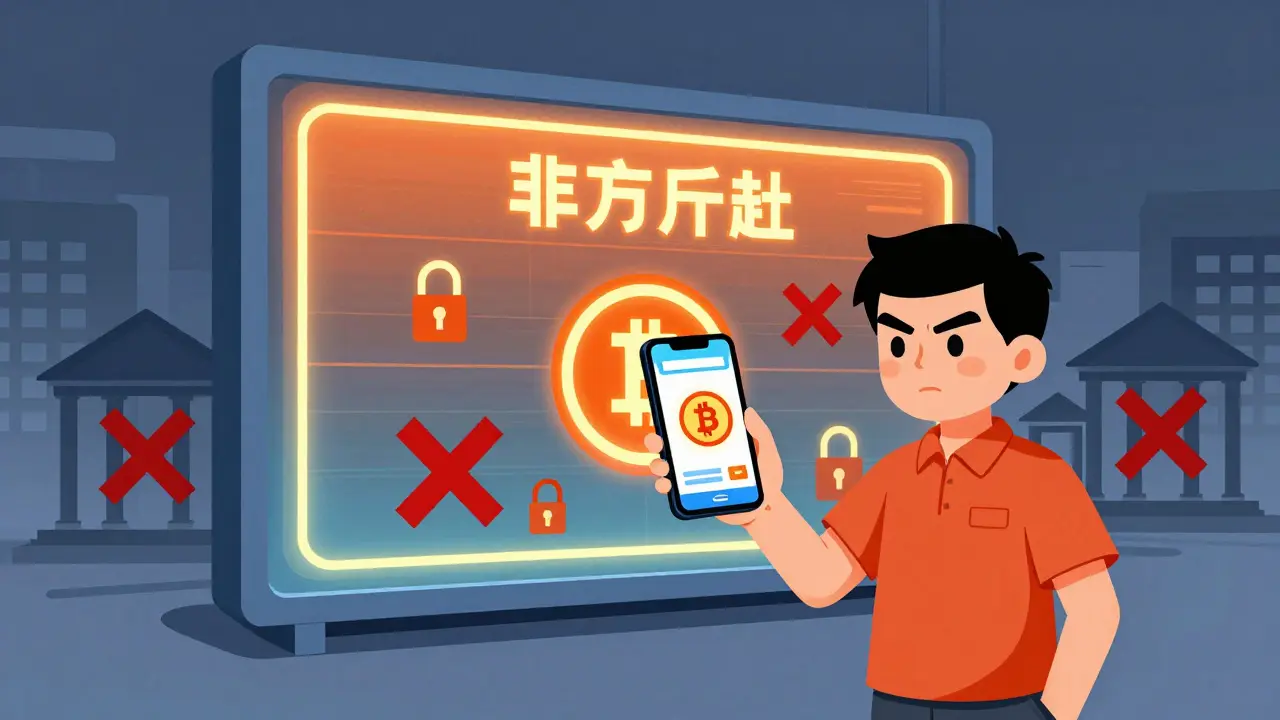
Buying cryptocurrency as a citizen of Mainland China is not illegal under criminal law, but it is strictly prohibited by financial regulations. The People's Bank of China (PBOC) has declared all crypto-related financial services invalid and illegal since 2017, intensifying this stance with a comprehensive ban on transactions and mining in 2021. This means no domestic bank will process your payment, no local exchange can legally operate, and using Alipay or WeChat Pay for crypto purchases will get your accounts frozen.
So, how do millions of Chinese citizens still trade? They don't use local systems. Instead, they navigate a complex web of offshore platforms, peer-to-peer (P2P) networks, and the separate regulatory framework of Hong Kong. If you are looking to buy Bitcoin or Ethereum from China in 2026, you need to understand which platforms accept international IDs, how to bypass IP restrictions safely, and why Hong Kong-licensed exchanges are becoming the new standard for compliant access.
The Reality of Accessing Crypto in Mainland China
You cannot simply download an app and sign up with your Chinese ID card. Most major global exchanges, including Coinbase is a US-based digital asset exchange that strictly complies with local regulations, block users from Mainland China entirely. According to Coinbase’s updated Acceptable Use Policy in late 2024, they restrict access from 179 jurisdictions, including China, to avoid legal liability.
This creates a two-tier system. On one side, you have the Great Firewall and strict capital controls preventing direct fiat on-ramps. On the other, you have offshore exchanges that technically serve global markets but require workarounds for Chinese users. The key challenge isn't just finding an exchange; it's passing Know Your Customer (KYC) verification without a Chinese National ID, which most platforms reject due to compliance risks.
Most successful traders in China rely on three methods:
- Offshore Exchanges via VPN: Using platforms like Binance or Bybit while masking their location.
- Hong Kong Licensed Platforms: Utilizing the Special Administrative Region's separate legal framework.
- Peer-to-Peer (P2P) Trading: Buying directly from other individuals using bank transfers or cash, often through built-in exchange marketplaces.
Top Offshore Exchanges Still Accessible to Chinese Users
Despite the bans, several large exchanges remain popular among Chinese citizens because they offer robust features, high liquidity, and flexible KYC policies. However, accessibility changes frequently as regulators tighten rules. Here is how the major players stand in mid-2026.
| Exchange | Access Status | KYC Requirement | Key Feature |
|---|---|---|---|
| Binance is the world's largest crypto exchange by volume, known for its wide range of assets | Blocked IPs; accessible via VPN | International Passport/HK ID | P2P marketplace with CNY pairs |
| Bybit is a Singapore-based exchange focusing on derivatives and spot trading | Accessible via VPN | International Passport/HK ID | High liquidity, Mandarin support |
| Huobi (HTX) is a legacy Asian exchange with deep roots in the Chinese community | Accessible via VPN | International Passport/HK ID | Strong Asian user base, low fees |
| Crypto.com is a diversified crypto ecosystem offering cards and trading | Restricted; requires non-CN ID | International Passport | User-friendly interface, Visa card |
| Kraken is a US-based exchange known for security and transparency | Strictly Blocked | N/A | Not recommended for CN residents |
Binance remains the most widely used platform despite blocking Chinese IP addresses. You must use a reliable Virtual Private Network (VPN) to connect. Once connected, you can verify your account using a passport from another country or a Hong Kong ID. Binance’s P2P section allows you to buy USDT or BTC directly with CNY via bank transfer, acting as an escrow service to protect both parties.
Bybit has gained significant traction, especially after applying for a Hong Kong license in 2025. It offers 24/7 Mandarin customer support, which is rare among offshore exchanges. Like Binance, it requires a VPN and non-Chinese identification for full KYC. Its trading fees are competitive at 0.1% for makers, making it attractive for active traders.
Huobi (now HTX) was founded in Beijing before relocating to Seychelles. It retains a massive user base in Greater China, with reports indicating 35% of its active users originate from the region. It is highly familiar to Chinese speakers and supports many altcoins popular in Asia. However, it faces increasing scrutiny, so diversification across multiple exchanges is wise.
The Hong Kong Advantage: A Legal Loophole?
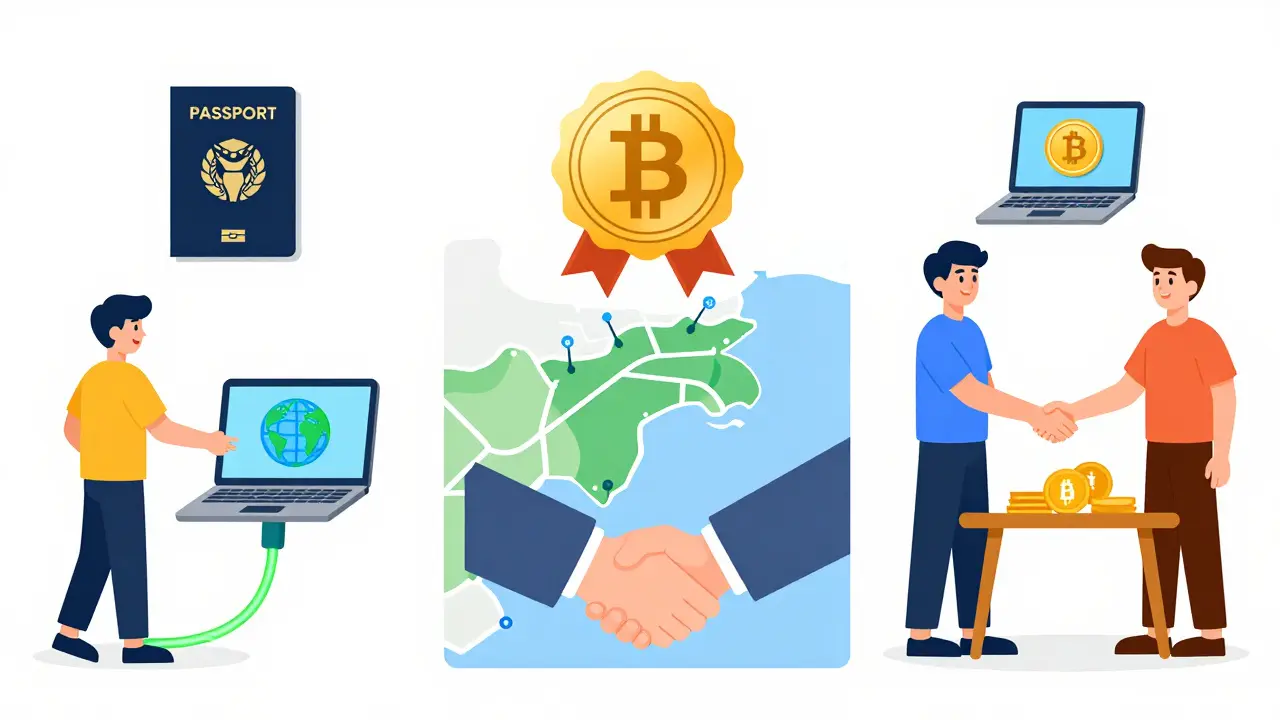
Hong Kong is not Mainland China. It operates under a "One Country, Two Systems" framework, meaning it has its own financial regulations. In 2023, Hong Kong introduced the Virtual Asset Trading Platform (VATP) licensing regime, administered by the Securities and Futures Commission (SFC). As of June 2025, eleven platforms hold these licenses.
This creates a unique opportunity. While Mainland citizens cannot legally trade crypto domestically, they can potentially access Hong Kong-licensed platforms if they have the right documentation. OSL Exchange is the first fully licensed digital asset platform in Hong Kong accepts international clients, including Chinese citizens who possess a Hong Kong ID or residence permit. OSL offers lower fees (0.2%) and higher regulatory protection than offshore entities.
Other major players like Crypto.com and Bybit have established Hong Kong entities or applied for licenses. Bernstein analysts project that Hong Kong could capture 65-75% of Chinese crypto demand by 2027 if current trends continue. For Chinese citizens with ties to Hong Kong-such as students, workers, or investors-this is the safest and most compliant route.
How to Buy Crypto from China: Step-by-Step
If you are determined to trade, here is the practical workflow most experienced users follow. Note that this involves navigating gray areas and carries risk.
- Secure Alternative Identification: You cannot use a Chinese National ID. You need a valid international passport or a Hong Kong/Macau ID. If you don’t have one, some users obtain second passports through investment programs, though this is costly and complex.
- Set Up a Reliable VPN: Major exchanges block Chinese IPs. Services like NordVPN or ExpressVPN are commonly recommended in crypto forums. Ensure you connect to a server in a supported country (e.g., Singapore, Japan, or the US) before opening the exchange app.
- Establish International Banking: Domestic Chinese banks will flag and block crypto-related transfers. Many users open accounts with HSBC Hong Kong or Standard Chartered, which are more crypto-friendly. Alternatively, you can use P2P channels where buyers send CNY directly to your personal bank account, and the exchange holds the crypto in escrow.
- Verify Your Account (KYC): Submit your international ID. Expect delays; verification for Chinese-associated users can take up to 72 hours due to enhanced scrutiny. Have clear photos and proof of address ready.
- Use P2P for Fiat On-Ramp: Avoid direct credit card purchases. Use the exchange’s P2P marketplace to buy USDT (Tether) with CNY. Then, swap USDT for Bitcoin or Ethereum on the spot market.
Risks and Pitfalls to Avoid
Trading crypto from China is not without danger. The primary risk is regulatory enforcement. The PBOC actively monitors bank accounts for suspicious transactions. If your bank detects frequent transfers to known crypto merchants or P2P traders, they may freeze your account and report you to authorities.
Another significant risk is fraud. Peer-to-peer platforms lack the buyer protection of regulated exchanges. In May 2025, a widely shared case on Reddit detailed a $15,000 loss due to P2P fraud on LocalBitcoins. Always use exchanges with built-in escrow services like Binance P2P or Huobi P2P, and never release crypto until you confirm funds are in your bank account.
Account freezes are also common during periods of heightened regulatory activity. When Beijing announces new crackdowns, exchanges often suspend withdrawals for users with Chinese-linked IPs or IDs. To mitigate this, keep your holdings in cold storage (hardware wallets) rather than leaving them on exchanges.
The Future: Decentralized Exchanges and Digital Yuan
The landscape is shifting. With centralized exchanges tightening compliance, Chinese users are increasingly turning to Decentralized Exchanges (DEXs) like Uniswap or PancakeSwap. DEXs do not require KYC and cannot block IP addresses easily. In 2024, usage of DEXs by Chinese users jumped 210%, according to Dune Analytics. However, getting crypto onto a DEX still requires buying it somewhere first, bringing us back to the P2P problem.
Meanwhile, the People’s Bank of China is aggressively expanding the Digital Yuan (e-CNY). Some analysts speculate that future regulations might allow e-CNY to be used for specific blockchain-based services, excluding speculative trading. Until then, the ban remains absolute for financial institutions.
For now, the strategy for Chinese citizens is clear: use offshore exchanges with strong P2P markets, leverage Hong Kong’s regulatory sandbox if eligible, and prioritize security over convenience. The underground market is worth an estimated $18.4 billion annually, proving that demand persists despite restrictions. But remember, you are operating outside the protection of local consumer laws. Proceed with caution.
Is it illegal for Chinese citizens to own cryptocurrency?
Owning cryptocurrency is not explicitly criminalized for individuals in Mainland China. However, all cryptocurrency-related financial activities, including trading, exchanging, and mining, are banned by the People's Bank of China. This means you cannot legally use banks or payment processors to buy or sell crypto, and contracts related to crypto trades are considered void.
Can I use Binance if I live in China?
Yes, but with restrictions. Binance blocks Chinese IP addresses, so you must use a VPN. Additionally, you cannot verify your account with a Chinese National ID. You need an international passport or a Hong Kong/Macau ID to pass KYC. Many Chinese users access Binance via its P2P marketplace using these alternative IDs.
What is the safest way to buy crypto in China?
The safest method depends on your eligibility. If you have a Hong Kong ID or residence permit, using a Hong Kong-licensed exchange like OSL is the most compliant option. For Mainland residents, using major offshore exchanges like Binance or Bybit with a VPN and P2P trading is the most common approach, though it carries regulatory and fraud risks. Always use escrow services and avoid direct bank transfers to unknown sellers.
Will my Chinese bank account be frozen for crypto trading?
There is a significant risk. Chinese banks monitor transactions for suspicious activity linked to crypto. If you receive payments from known P2P traders or make transfers to crypto merchants, your account may be frozen temporarily or permanently. To reduce risk, many users maintain separate bank accounts specifically for crypto-related P2P transactions and avoid large, sudden sums.
Are there any crypto exchanges based in Mainland China?
No. All domestic cryptocurrency exchanges were shut down in 2017 following the PBOC ban. Any platform claiming to be a registered crypto exchange within Mainland China is likely a scam or an unregulated entity. Legitimate services for Chinese users are either offshore (like Binance, Bybit) or located in Hong Kong (like OSL).