
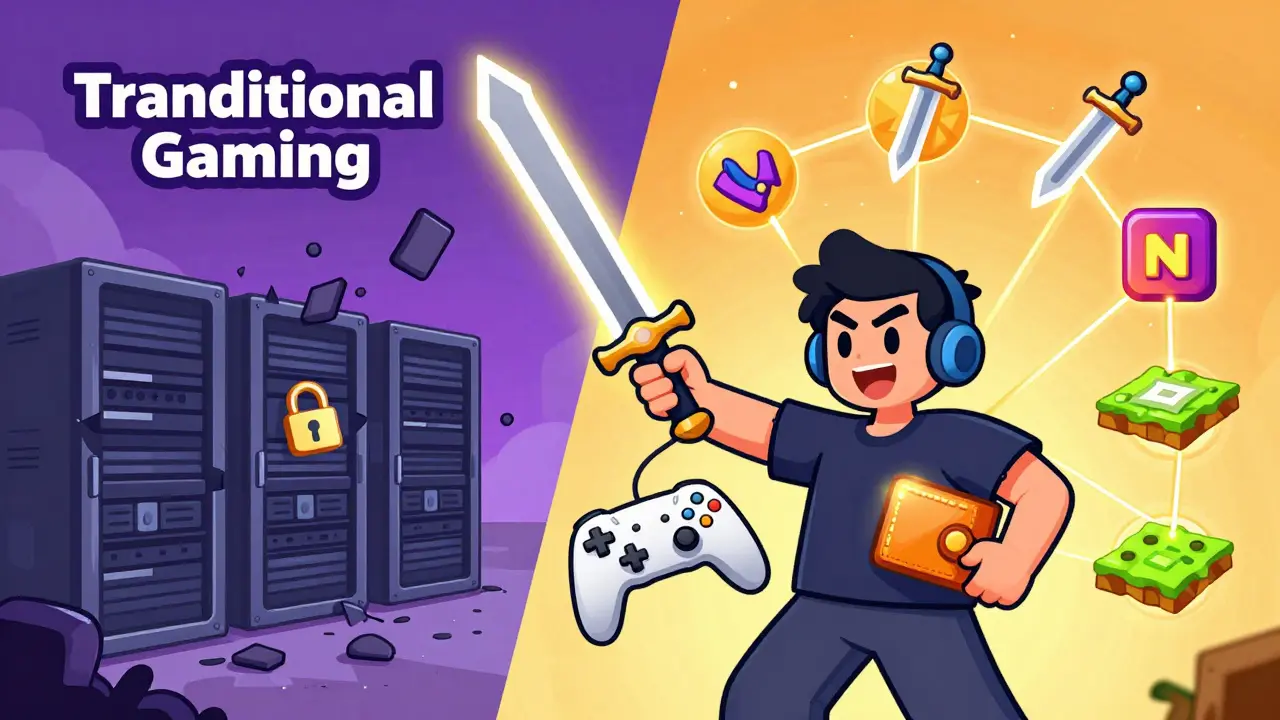
Remember when you spent hundreds of hours grinding in World of Warcraft or farming rare skins in Fortnite, only to lose everything when the server shut down or you got banned? That’s the reality of traditional gaming: you don’t own your stuff. Not really. You’re just borrowing it from a company that can take it away anytime. Decentralized gaming platforms change that. They use blockchain to give you real, verifiable ownership of your in-game items - swords, skins, land, even characters. And for the first time, you can sell them, trade them, or take them to another game - if the system lets you.
What Exactly Is a Decentralized Gaming Platform?
A decentralized gaming platform runs on blockchain, not a company’s server. That means no single corporation controls the game. Instead, rules are coded into smart contracts - self-executing programs that run exactly as written, without human interference. Your character, your weapon, your virtual land - all of it exists as an NFT (non-fungible token) on the blockchain. That’s not just a fancy digital badge. It’s a unique, tamper-proof record that proves you own it, no matter what happens to the game’s website or company.
Early examples like CryptoKitties in 2017 showed this was possible. People were buying, breeding, and selling digital cats with real money, and the cats stayed theirs forever. That sparked the whole Web3 gaming movement. Today, platforms like Axie Infinity, The Sandbox, and Gods Unchained are leading the pack. These aren’t side projects. They’re full games with active communities, economies, and even professional tournaments.
How It Works: From Wallet to Gameplay
Getting into decentralized gaming isn’t like downloading an app from the App Store. It’s more like opening a bank account and learning to use a new kind of ATM. Here’s the basic flow:
- Create a Web3 wallet (like MetaMask or Trust Wallet)
- Buy cryptocurrency (usually ETH, SOL, or BNB)
- Connect your wallet to the game platform
- Buy starter assets - often NFTs like a character or tool
- Start playing and earning
Every action you take - fighting, trading, building - is recorded on the blockchain. That’s why these games can’t be hacked in the traditional sense. The game state is distributed across thousands of computers, not stored on one company’s server. But there’s a trade-off: transactions are slower. While a regular game like Call of Duty handles 10,000+ actions per second, most decentralized games manage 15 to 50. That’s fine for turn-based strategy or idle games, but it kills fast-paced shooters. CryptoShooter, a blockchain-based FPS, failed in 2024 because players couldn’t react in real time.
Play-to-Earn: Real Money From Game Time
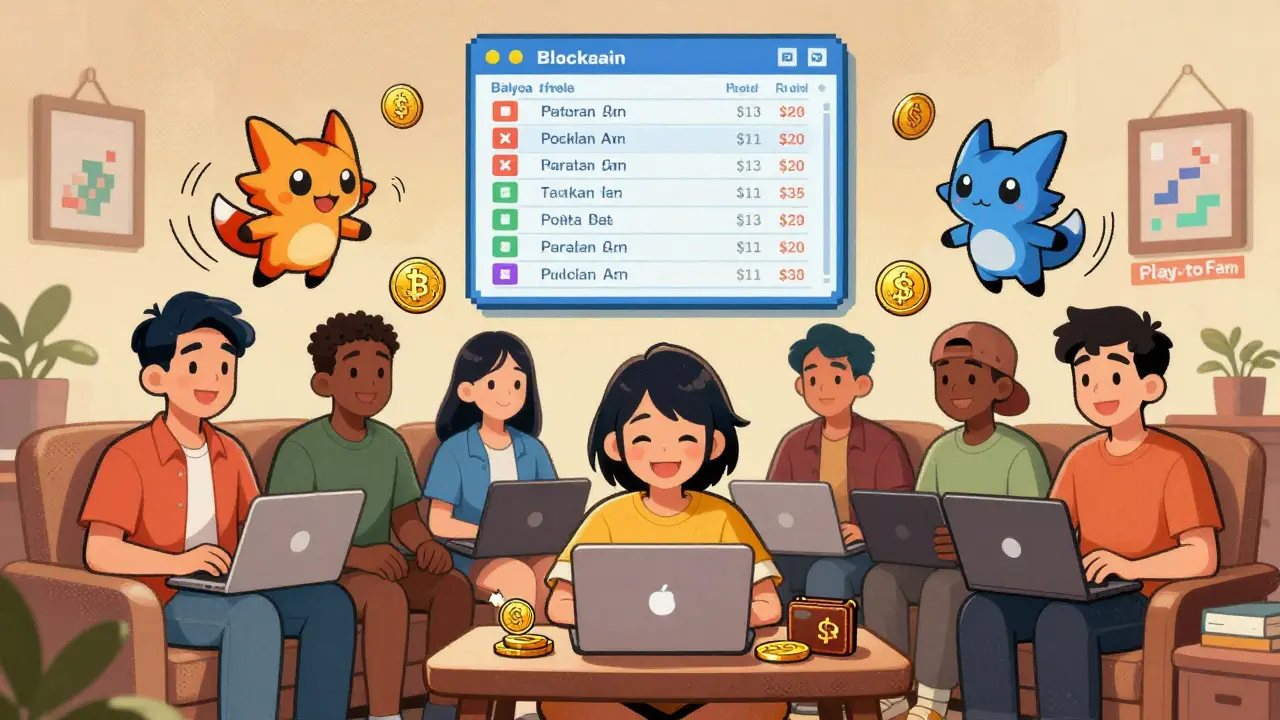
This is the biggest draw - and the biggest controversy. In traditional games, you earn XP, levels, or cosmetic items. In decentralized games, you earn cryptocurrency. In Axie Infinity, players earn Smooth Love Potion (SLP), a token that can be sold for cash. A 2025 study by Coinfantasy.io found players in the Philippines, Vietnam, and Thailand regularly earn $50 to $500 a month just by playing. For many, it’s not a side hustle - it’s a primary income source.
The Axie Scholar program lets players borrow Axies (the game’s creatures) from owners in exchange for sharing earnings. Over 17,000 Filipino players used this model during the pandemic. That’s real economic impact. But here’s the catch: most of these economies are built on a Ponzi-like structure. New players pay to enter, and their money funds payouts to early players. When new players stop joining, the system collapses. GameFi Zoo lost 99% of its token value in three months in 2024, leaving 12,000 players with worthless assets.
Stanford’s Dr. Michael Johnson found that 68% of play-to-earn token economies fail within 18 months. The ones that survive - like Axie Infinity after its 2024 Origin update - did so by cutting costs, reducing token supply, and shifting from pure earning to balanced gameplay.
Ownership vs. Control: The Real Difference
Traditional games lock you in. You can’t sell your Fortnite skin. You can’t move your Call of Duty loadout to another game. The company owns everything. Decentralized games flip that. Your NFTs are yours. You can list them on OpenSea. You can trade them with friends. You can even use them in other games - if they’re built on compatible standards.
That’s why interoperability is the next big frontier. The Sandbox’s VoxEdit 3.0, released in January 2025, lets you export 3D assets built in the game to other Web3 platforms. Imagine building a castle in one game, then flying it into another. That’s not sci-fi anymore. It’s happening.
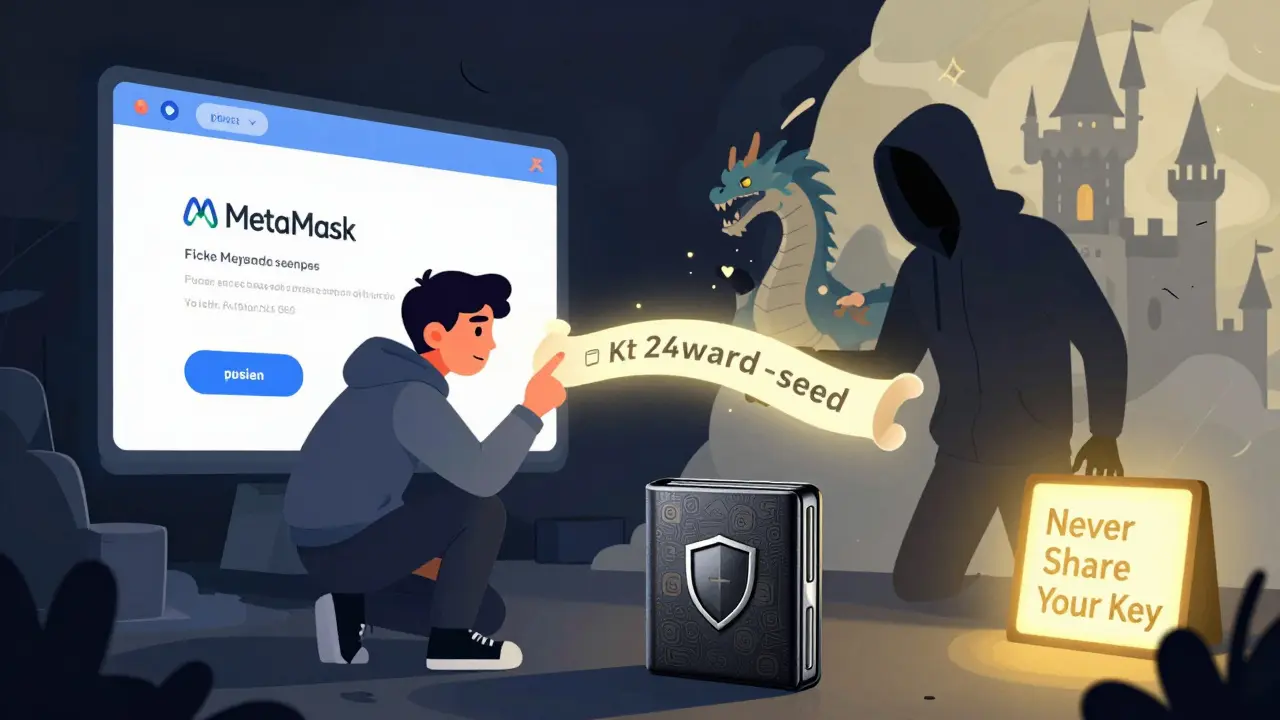
But ownership doesn’t mean freedom. You still need to understand gas fees, wallet security, and tax rules. Selling an NFT for $1,000 might trigger a capital gains tax. Losing your private key means losing everything. There’s no customer service line to call.
Why Most People Still Avoid It
Despite the hype, 90% of gamers still stick with traditional platforms. Why? Three big reasons:
- Too complicated: Setting up a wallet, buying crypto, connecting it - it’s a barrier. Trustpilot reviews show 67% of negative feedback is about wallet issues and confusing tokenomics.
- Too slow: If you’re playing a competitive shooter or racing game, 15 TPS feels like a frozen screen.
- Too risky: 78% of decentralized games have critical smart contract bugs, according to Dr. Sarah Chen’s 2025 IEEE research. In 2024 alone, players lost $412 million to exploits and scams. Most of those losses? Not from hackers - from users clicking fake links or giving away their private keys.
One Reddit user lost $1,200 in Axies after falling for a phishing scam. That’s not the game’s fault. It’s the user’s lack of knowledge. And that’s a systemic problem. There’s no “forgot password?” button when your entire game life is tied to a 24-word phrase.
Who’s Building This Future?
It’s not just indie devs. Big names are watching. Ubisoft tried with Quartz in 2021 - only 42,000 users joined. Square Enix tested NFTs in a mobile game. Neither stuck. But now, rumors are swirling: Steam is planning blockchain integration by late 2025. Epic Games is testing an NFT marketplace for August 2025. Even Nintendo filed a patent in March 2025 for blockchain-based item verification.
These aren’t full dives into Web3. They’re cautious experiments. But they signal something: the industry sees value in digital ownership. Even if they don’t want to go fully decentralized, they want to give players more control.
Meanwhile, the core Web3 platforms are evolving. Axie Infinity slashed transaction fees by 87% with a layer-2 solution. The Sandbox improved its asset tools. Gods Unchained added offline play. They’re fixing the pain points - slowly.
Is It Worth It?
Should you jump in? It depends.
If you’re looking for a quick way to make money - forget it. Most games are not profitable. The ones that pay well are saturated. You need skill, time, and luck.
If you care about owning your digital stuff - yes. If you like building, trading, and being part of a community that actually controls the game - yes. If you’re okay with learning new tech, managing security, and accepting that you might lose money - yes.
But if you just want to play a fun game without worrying about wallets, gas fees, or crypto prices - stick with Steam or PlayStation. Decentralized gaming isn’t for everyone. It’s for those who want more than just entertainment. It’s for those who want to own a piece of the digital world they spend hours in.
The future won’t be all centralized or all decentralized. It’ll be a mix. But one thing’s clear: players are done being renters. They want to be owners. And that shift is irreversible.
Can you really make money playing decentralized games?
Yes, but not for most people. A small percentage of players - mostly in Southeast Asia - earn $50 to $500 a month through play-to-earn games like Axie Infinity. This requires consistent play, understanding token economics, and often joining a scholarship program. Most players don’t break even after accounting for initial asset costs and gas fees. It’s not a passive income stream - it’s a job with high risk.
Are decentralized games safe?
Not always. While the blockchain itself is secure, most attacks happen through user error. Phishing scams, fake websites, and stolen private keys caused 42% of all crypto losses in gaming in 2024, according to Immunefi. Smart contracts also have bugs - 78% of Web3 games have at least one critical vulnerability. Always double-check URLs, never share your seed phrase, and use hardware wallets for large holdings.
Do I need to know how to code to play these games?
No. Players don’t need to code. But you do need to understand basic crypto concepts: wallets, tokens, gas fees, and NFTs. Most platforms walk you through setup, but if you’re confused by terms like “staking” or “liquidity pool,” you’ll struggle. Think of it like using a bank app - you don’t need to know how banking works to use it, but you should know how to avoid scams.
Can I use my NFTs in other games?
Only if the games are designed to work together. Right now, interoperability is rare. The Sandbox’s VoxEdit 3.0 lets you export assets to other compatible platforms, but most games still lock NFTs to their own ecosystem. True cross-game use is still experimental and limited to a handful of projects. Don’t assume your rare sword from one game will work in another.
What’s the difference between blockchain games and regular games with NFTs?
Big difference. Games like Fortnite or Call of Duty sell skins as digital items - you buy them, but you don’t own them. The company can remove them. Blockchain games issue NFTs that are stored on a public ledger. You control the private key. Even if the game shuts down, your NFT still exists and can be traded on marketplaces. It’s ownership, not a license.
What happens if the game company goes bankrupt?
Your NFTs remain on the blockchain. You still own them. But the game might stop working. If the servers shut down, you can’t log in or play - but you can still sell your NFTs on third-party marketplaces. Think of it like owning a vinyl record: if the band breaks up, you still have the record. You just can’t hear new music from them.
Are decentralized games legal?
It depends on where you live. 28 countries, including the U.S., Canada, and Germany, are creating specific rules for blockchain gaming assets. 41 others have issued warnings. In some places, earning crypto through gameplay may be considered gambling or securities trading. Always check your local regulations before investing time or money.
What’s the best decentralized game to start with?
There’s no single “best” game. For beginners, Gods Unchained is a good entry point - it’s a card game with low entry cost and clear rules. The Sandbox is great for creators who want to build. Axie Infinity has the biggest community but requires a higher upfront investment. Start with free-to-play options, learn the wallet system, and never spend more than you can afford to lose.
Decentralized gaming is a step forward for digital rights. Many players don’t realize they’re renting their items. Owning your gear means you’re not at the mercy of a company’s decision. It’s simple: if you put in the time, you should own the reward.
Man I’ve been playing Axie since 2022 and honestly it changed my life. I’m not rich but I made enough to help my sister pay for her meds. Yeah the system’s messy and yeah some people get scammed but that’s not the tech’s fault. It’s like learning to drive a car - if you don’t check your mirrors you crash. But the road? It’s wide open. And the best part? My NFT dragon is still mine even if Axie shuts down tomorrow. That’s power. That’s freedom. That’s what gaming should be.
Oh great another blockchain fantasy for people who think MetaMask is a new Netflix genre. You don’t own anything. You just own a reference to a file that could vanish if the IPFS node dies. And don’t get me started on gas fees eating your profits. This isn’t innovation it’s a crypto bro fever dream dressed up as progress.
Why do Americans keep pretending this is about ownership when it’s just another way to extract money from poor countries? You think a kid in Manila earning $80/month is playing for fun? No he’s surviving. And you’re the one cashing out on his labor while sipping your oat milk latte in Brooklyn. This isn’t liberation it’s digital colonialism
I tried Gods Unchained. The game is fine. But I lost my seed phrase after a phone update. No refunds. No help. Just silence. I spent 3 months grinding and now it’s gone. I don’t blame the devs. I blame myself. But still… it hurts.
Everyone’s so excited about ownership until they realize they have to learn what a private key is. Most people can’t even set up two-factor auth on their email. Now you want them to manage a 24-word phrase like it’s a grocery list? This isn’t the future. It’s a tech literacy test no one asked for
Just wanna say I started with The Sandbox last month and it’s been awesome. Took me 2 days to get comfy with the wallet but now I’m making little pixel art and selling it. I didn’t even know I could be creative like this. And no one’s telling me what I can or can’t do with my stuff. That feels weirdly empowering. Also I typoed ‘wallet’ as ‘walley’ like 5 times. Sorry
78% of Web3 games have critical bugs? Then why are we celebrating this like it’s the second coming? You wouldn’t drive a car with a 78% failure rate. This isn’t innovation. It’s gambling with extra steps and no dealer.
Let me guess next they’ll say blockchain is the solution to climate change. First they told us NFTs were art then they said they were identity then they said they were ownership. Now they’re saying they’re the future of gaming. But every time they change the story the price crashes. This isn’t evolution it’s a bait and switch with more gas fees
Steam is planning blockchain integration? That’s not a coincidence. They’re scared. The big players know the old model is dying. They’re not embracing decentralization they’re trying to control it. This isn’t progress it’s a hostile takeover wrapped in Web3 glitter
Big respect to the devs fixing gas fees and adding offline play. That’s the real win. Not the hype. Not the moon. Just making the game actually playable for normal people. If you’re building something that works for grandma and the 14-year-old who just got their first phone - you’re doing it right
Ownership is a myth. Your NFT is just a pointer to a JPEG hosted on a server you don’t control. The blockchain doesn’t store your sword it stores a hash. If the image goes down your ownership is just a digital ghost. You think you own something but you’re just trusting someone else’s cloud
Decentralized gaming is a failed economic model built on speculative tokenomics. The only winners are the early investors and the developers who cashed out before the rug pull. The rest? They’re the collateral damage of a system designed to enrich the few at the expense of the many. This isn’t a revolution. It’s a pyramid scheme with better graphics
The paradigm shift here is non-trivial. By leveraging immutable distributed ledger technology, we’re transitioning from licensed digital entitlements to cryptographically verifiable asset sovereignty. This redefines the producer-consumer dynamic in interactive media. The implications for intellectual property and user agency are profound
Y’all are so worried about scams and fees but what about the joy? 🎮 I built a castle in The Sandbox and my niece visited it from her iPad. She didn’t care about gas fees. She just screamed ‘I made this!’ 😊 That’s what matters. Let’s not forget why we play. It’s not about money. It’s about creation. And that’s beautiful.
Why are we letting Americans dictate the future of gaming? Canada’s been doing digital rights right for years. We don’t need your crypto chaos. Your ‘ownership’ is just another way to monetize addiction. We’ve got real innovation here - not blockchain hype wrapped in NFT glitter
I’ve seen so many people get crushed by this system but I’ve also seen people who were broke find their voice. One friend in Ukraine started making art NFTs after her city got bombed. She sold 3 pieces and bought a generator. This isn’t perfect. But it’s real. And sometimes real things are messy. Let’s not throw the baby out with the blockchain bathwater
Let’s be honest - this is just capitalism with more buzzwords. You’re trading one corporate walled garden for another. Now instead of Epic controlling your skins, you’re controlled by tokenomics, liquidity pools, and wallet fees. The power shifted from one set of CEOs to a bunch of anonymous devs with Discord mods. That’s not liberation. That’s rebranding
Why do we keep pretending this is about freedom? You think a Filipino player grinding Axie is free? He’s enslaved to a token economy designed by Silicon Valley VCs. This isn’t ownership. It’s indentured servitude with better UI
My mom asked me to help her buy an NFT for her birthday. I spent an hour walking her through MetaMask. She didn’t understand gas fees. She didn’t care. She just wanted to feel like she was part of something new. And when she got her digital flower, she cried. That’s the real story here. Not the money. Not the tech. The feeling.
Why do you think the big studios are waiting? Because they know this is the future. They’re not scared of decentralization. They’re scared they’re too late. You think they want players to own their items? No. They want to license NFTs so they can charge you every time you trade. This isn’t freedom. It’s a subscription model with more steps
Steam’s integration? That’s not a partnership. That’s a takeover. They’re going to make NFTs mandatory. You’ll have to pay to opt out. They’ll call it ‘premium ownership’ but it’ll be a paywall. And when they do - don’t say you weren’t warned. This isn’t progress. It’s the end of gaming as we know it
You say you own your NFTs but you don’t. You own a token that only works if the game servers stay up. If the company vanishes your sword becomes a digital paperweight. And if you lose your key? You’re not a victim. You’re just bad at tech. This isn’t ownership. It’s a liability with a fancy name
One thing no one talks about - this tech lets disabled players earn income through play. My cousin with cerebral palsy makes more from Gods Unchained than from her part-time job. That’s not hype. That’s dignity.