
Most people searching for DojoSwap are trying to figure out if this platform is a safe place to park their crypto or just another project that fizzled out. The short answer? It’s complicated. DojoSwap isn’t your typical exchange where you sign up with an email and buy Bitcoin. It’s a specialized tool built specifically for the Injective blockchain. If you aren’t already deep into that ecosystem, you might find it confusing or inaccessible. But if you are, it offers a specific type of liquidity that other platforms don’t.
The big red flag for many new users is the price data. On major centralized exchanges like Binance, the DOJO token often shows as $0 or has no volume. This doesn't necessarily mean the project is dead, but it does mean the token itself isn't liquid on mainstream venues. You need to understand the difference between the *protocol* (the app) and the *token* (the currency) before you decide if this is right for you.
What Exactly Is DojoSwap?
DojoSwap is a decentralized exchange (DEX) protocol that operates as an automated market-maker (AMM) inspired by Uniswap. Also known as DojoSwap Protocol, it was developed to provide on-chain trading capabilities specifically within the Injective network.
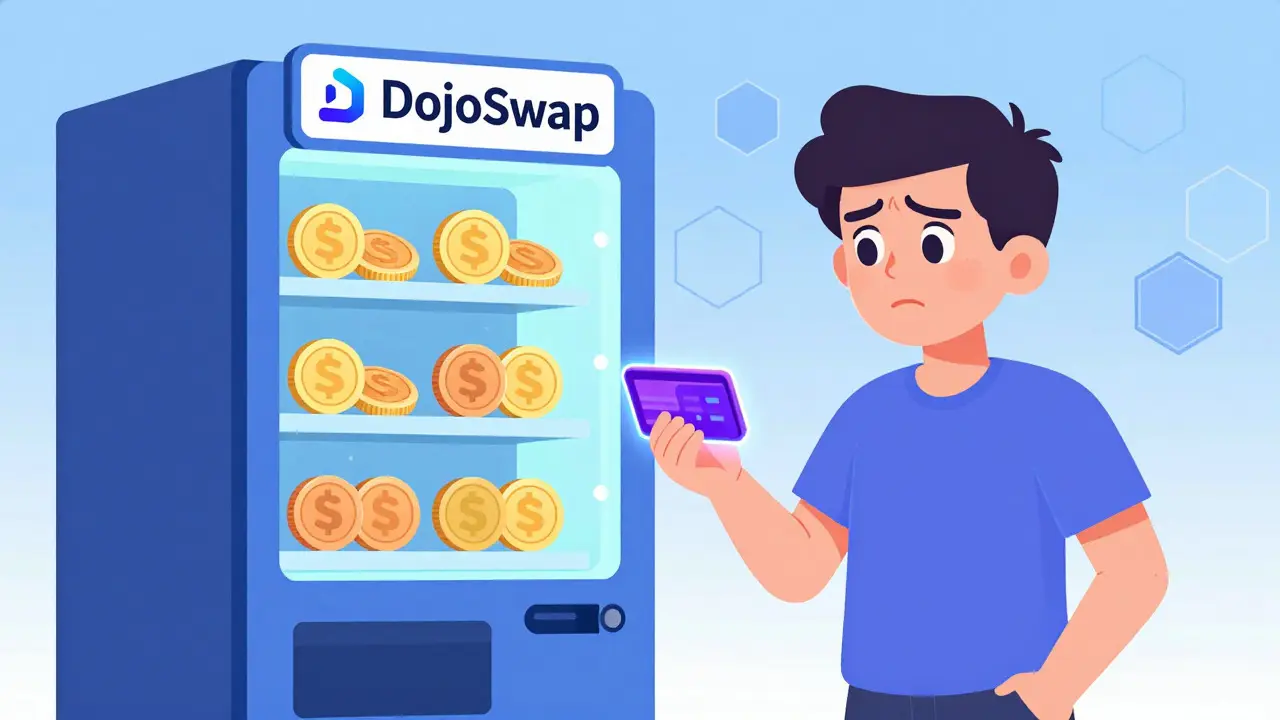
To break that down: unlike a traditional stock exchange where buyers and sellers meet via an order book, DojoSwap uses liquidity pools. Think of it like a vending machine. You put tokens in, and anyone can take them out by paying the equivalent value plus a small fee. This mechanism allows trades to happen instantly without needing a counterparty at that exact second.
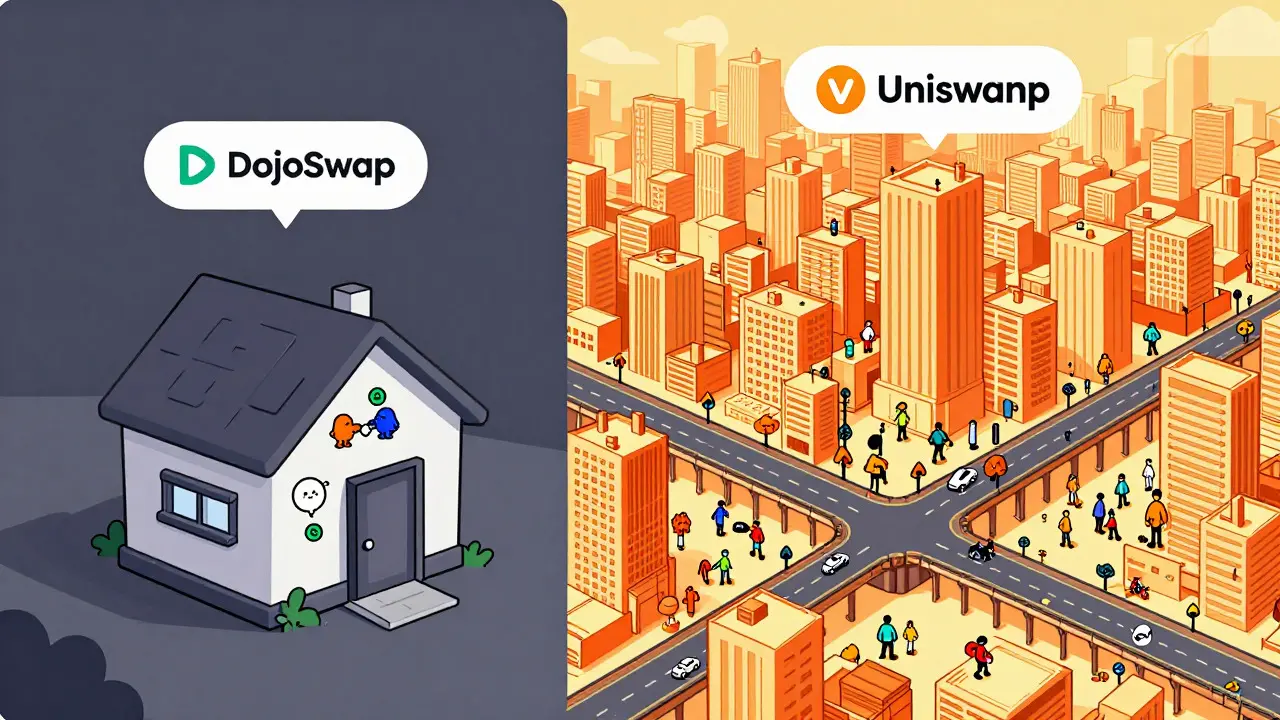
However, DojoSwap is not multi-chain. It lives and dies by the Injective blockchain. This is a critical distinction. While giants like Uniswap operate across more than 11 different blockchains (including Ethereum, Polygon, and BNB Chain), DojoSwap is confined to one. This makes it a niche player rather than a general-purpose exchange.
How Does the Technology Work?
At its core, DojoSwap relies on smart contracts deployed on the Injective chain. These contracts hold pairs of assets (liquidity pools). When you want to swap Asset A for Asset B, you interact directly with these contracts.
The key attributes of this setup include:
- Decentralization: No central company controls your funds; they stay in your wallet until you trade.
- Automated Pricing: Prices are determined by the ratio of assets in the pool, not by human market makers.
- Blockchain Specificity: It only works if you have access to the Injective network and its native gas token.
This architecture means there is no customer support team to call if you make a mistake. If you send the wrong token or approve too much spending power, you’re on your own. That’s the trade-off for self-custody.
Market Status and Liquidity in 2026
Here is where things get tricky for potential users. As of early 2026, DojoSwap does not appear in the top rankings of major financial publications like Money.com or gfmreview.com. These sources typically highlight established players like Kraken, Coinbase, or aggregator tools like Swapzone and ChangeNOW.
The absence from these lists suggests that DojoSwap hasn’t achieved mass-market visibility. More concerning is the data regarding the DOJO token. Listings on major centralized exchanges show a price of $0 USD or negligible volume. This usually indicates one of two things: either the token has been delisted from those primary venues, or liquidity has dried up completely on those specific markets.
Does this mean the exchange is broken? Not necessarily. Many DEXs thrive on their native chains even if their governance tokens struggle on CEXs. However, it does signal that you shouldn’t expect easy entry or exit points for the DOJO token itself. If you plan to use DojoSwap, you likely need to acquire assets via the Injective ecosystem first, not by buying DOJO on Binance.
DojoSwap vs. Major Competitors
To understand where DojoSwap fits, we need to compare it to the leaders in the space. The table below highlights the stark differences in scale and accessibility.
| Feature | DojoSwap | Uniswap | Swapzone (Aggregator) |
|---|---|---|---|
| Type | Single-Chain DEX | Multi-Chain DEX | CEX/DEX Aggregator |
| Supported Chains | Injective Only | 11+ Chains (Ethereum, Polygon, etc.) | 18+ Providers / Multiple Chains |
| Asset Variety | Limited to Injective Ecosystem | Thousands of Tokens | 1,600+ Assets |
| User Accessibility | Requires Injective Wallet & Gas | High (Multiple Entry Points) | High (Simple Interface) |
| Market Visibility (2026) | Niche / Low | Very High | High |
As you can see, the gap is significant. Uniswap is the default choice for most DeFi users because of its depth and reach. DojoSwap serves a very specific purpose: providing liquidity for assets that are primarily traded on Injective. If you hold INJ (the native token of Injective) or other Injective-native projects, DojoSwap might be the most efficient way to swap them without bridging to Ethereum.
Risks and Limitations You Need to Know
Before you dive in, keep these risks front of mind:
- Liquidity Risk: Because the ecosystem is smaller than Ethereum or Solana, some trading pairs may have thin liquidity. This can lead to higher slippage (getting a worse price than expected) when you make large trades.
- Token Volatility: With the DOJO token showing $0 on major CEXs, holding it carries high risk. It may be illiquid, making it hard to sell quickly if the market turns.
- Smart Contract Risk: Like all DEXs, you are trusting code. If there’s a bug in the contract, funds could be lost. While audits help, they don’t guarantee safety.
- Gas Fees: Trading on Injective requires INJ for gas. If you don’t have this, you can’t transact. This adds a barrier to entry compared to simpler platforms.
Also, note that there is little public user feedback on platforms like Trustpilot or Reddit specifically praising DojoSwap’s reliability. The silence isn’t necessarily negative, but it means you’re entering a quieter corner of the crypto world.

Who Should Use DojoSwap?
DojoSwap isn’t for everyone. Here is a quick guide:
You should consider it if:
- You are already active in the Injective ecosystem.
- You hold INJ or other Injective-native tokens and want to swap them efficiently.
- You are comfortable using a non-custodial wallet and managing your own gas fees.
- You want to avoid bridging assets to Ethereum or other major chains for simple swaps.
You should probably skip it if:
- You are a beginner looking for a simple, one-click experience.
- You want to trade major coins like BTC or ETH (use a CEX or Uniswap instead).
- You rely on customer support for help with transactions.
- You need high liquidity for large institutional-sized trades.
Final Verdict
DojoSwap is a functional, niche tool for the Injective community. It works well for what it does: facilitating swaps within that specific blockchain. However, it lacks the breadth, liquidity, and mainstream recognition of competitors like Uniswap or aggregated services like Swapzone.
If you are deep in the Injective ecosystem, it’s a viable option. If you are just starting out in crypto, you’ll likely find better experiences on larger, more established platforms. Always check current liquidity pools before trading, and remember that the DOJO token’s status on major exchanges remains a point of caution.
Is DojoSwap a centralized or decentralized exchange?
DojoSwap is a decentralized exchange (DEX). It uses smart contracts on the Injective blockchain to facilitate trades without a central intermediary holding your funds.
Why does the DOJO token show a price of $0 on Binance?
A price of $0 or zero volume on a centralized exchange like Binance usually indicates that the token has low liquidity, has been delisted from that specific venue, or that trading activity has moved entirely to decentralized venues within the Injective ecosystem.
Can I use DojoSwap to buy Bitcoin?
Not directly with fiat currency. You would need to bridge Bitcoin to the Injective network first, which is complex and costly. For buying Bitcoin, a centralized exchange or a multi-chain DEX like Uniswap is much more practical.
What wallet do I need to use DojoSwap?
You need a wallet compatible with the Injective blockchain, such as Keplr or MetaMask configured for the Injective network. You must also hold the native INJ token to pay for transaction fees.
Is DojoSwap safer than a centralized exchange?
It eliminates the risk of a company going bankrupt or being hacked centrally, but it introduces smart contract risk and user error risk. Since you control your keys, you are responsible for security, but you also bear the burden of any mistakes made during transactions.