
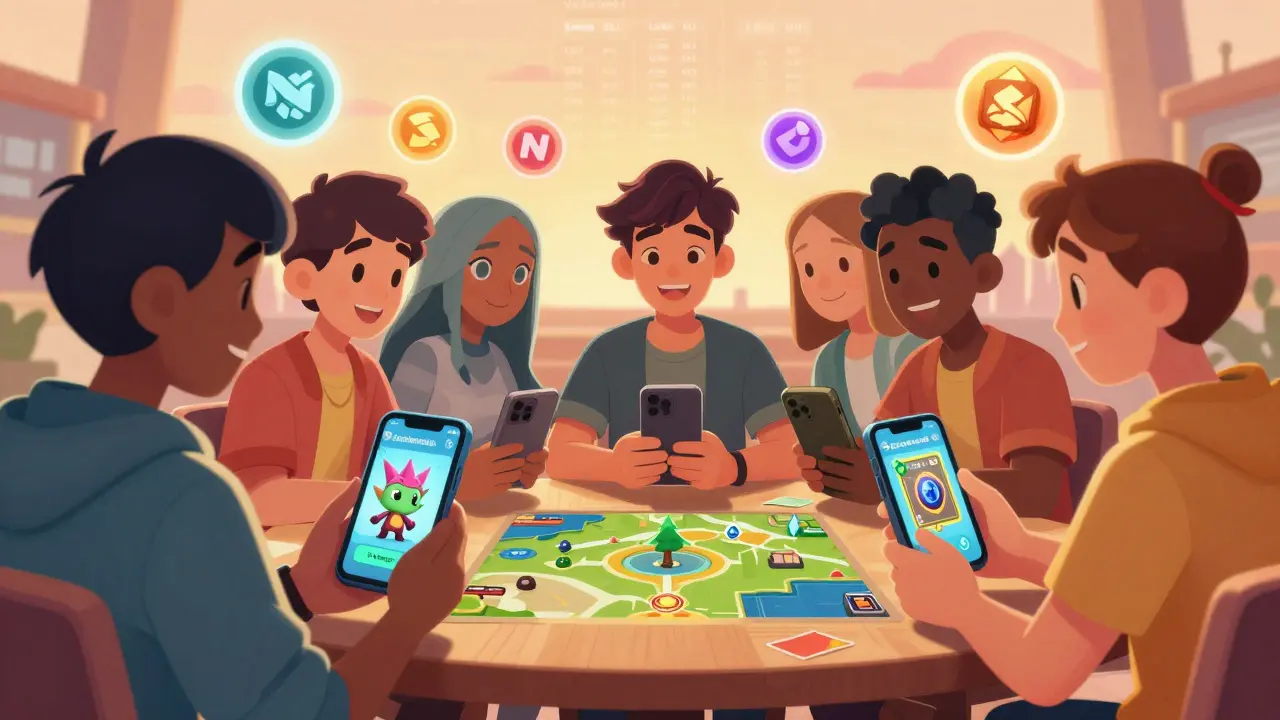
Think about the last time you spent hours grinding in a game, only to have everything you earned vanish when the server shut down. That’s the reality for millions of players in traditional games. But what if your hard-earned sword, skin, or virtual land wasn’t just a digital file locked inside a company’s server? What if you could sell it, trade it, or even use it in another game? That’s not sci-fi anymore. In 2026, blockchain gaming and the metaverse are no longer fringe experiments - they’re building the foundation for a new kind of digital economy.
What Blockchain Gaming Actually Means
Blockchain gaming isn’t just games with flashy NFTs. It’s about ownership. When you buy a weapon in Fortnite or a car in GTA Online, you’re renting it. The company can take it away, ban you, or shut down the game entirely. In blockchain games, your items are stored on a public ledger - not a company’s database. That means no one can delete them, alter them, or lock you out. You control them. Period. Take Axie Infinity a blockchain-based game where players breed, battle, and trade digital creatures called Axies, each represented as a unique NFT. In 2021, it hit a peak with over 2.8 million daily active users. Even after its token crashed, players didn’t lose their Axies. They still own them. Some are still playing, trading, and earning. That’s the power of decentralized ownership.The Metaverse Isn’t Just a Headset
The word "metaverse" gets thrown around like a buzzword. But in 2026, it’s clearer than ever: the metaverse is a network of persistent, interconnected virtual worlds where you can play, work, socialize, and earn. And blockchain gaming is the engine driving it. Platforms like Decentraland a blockchain-based virtual world where users buy, build, and monetize virtual land using MANA tokens and Roblox a user-generated content platform that began integrating blockchain-based virtual land ownership in February 2025 aren’t just games. They’re economies. In Decentraland, virtual land parcels now average $2,850. People are building shops, art galleries, and even virtual offices on them. In January 2025, Roblox started letting creators sell limited-edition digital items using blockchain, giving players true ownership for the first time.Play-to-Earn: Real Money From Gameplay
The biggest shift? You can now earn real income from playing games. It’s not hype. It’s documented. In the Philippines, where average monthly wages hover around $300, players of Splinterlands a blockchain-based digital card game that rewards players with SPS tokens for winning battles are making $300-$400 a month by playing competitively. A Reddit post from February 2025 detailed how one player replaced their part-time job with Splinterlands. That’s not a fluke. Alien Worlds a blockchain game where players mine resources and compete in battles using WAX blockchain tokens reports 1.2 million monthly active users who earn an average of $18.75 per week - enough for lunch, gas, or a phone bill. This isn’t about getting rich overnight. It’s about turning downtime into income. For millions in emerging economies, blockchain gaming is a lifeline. For others, it’s a side hustle with real value.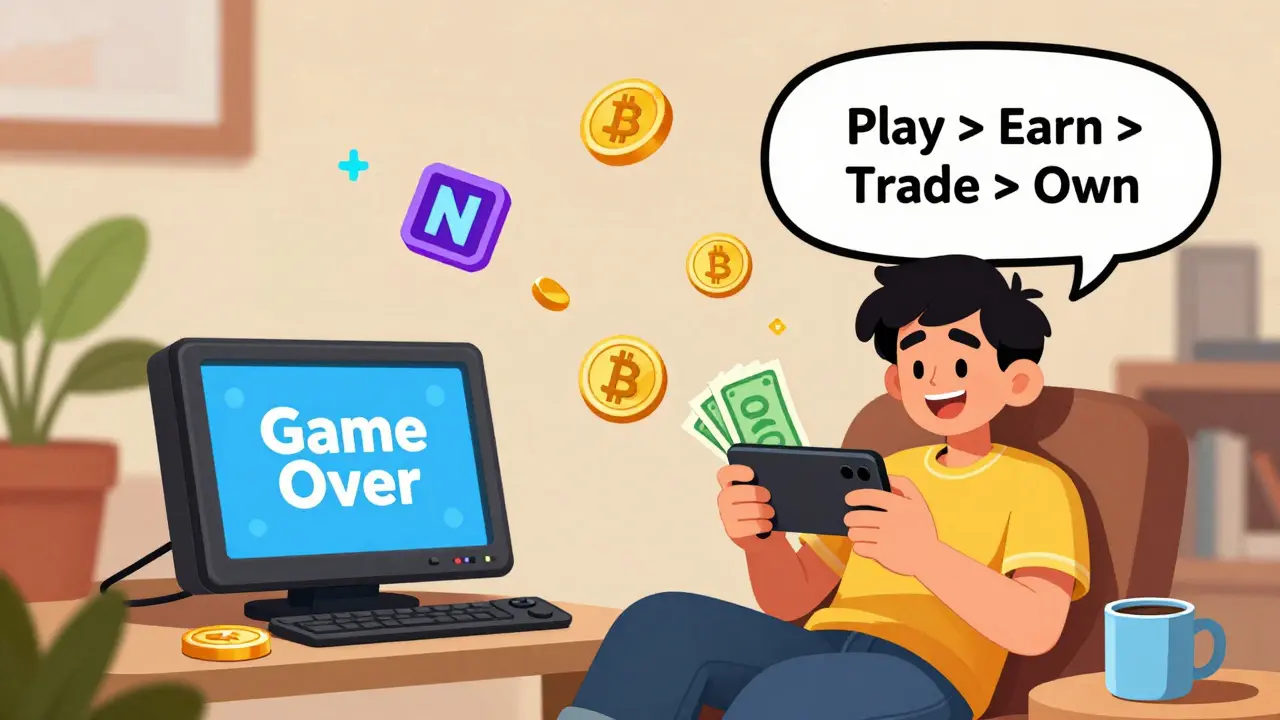
Why Most Blockchain Games Still Fail
Don’t get fooled by the headlines. Most blockchain games don’t last. A 2024 report from CoinGecko found that 63% of play-to-earn games launched between 2021 and 2022 are now dead. Why? Bad tokenomics. Many projects flooded their games with tokens, paid players to join, then ran out of money. When new players stopped coming in, the economy collapsed. The token value crashed. Players lost money. And they walked away. The real winners? Games that focus on gameplay first. Star Atlas a space-themed blockchain game built on Solana that experienced a 98% token price drop after its 2021 peak had amazing graphics and ambition, but its token model was unsustainable. It collapsed in 2023. Meanwhile, games like Dark Forest a blockchain-based strategy game that rewards players with tokens for exploration and conquest and The Sandbox a voxel-based metaverse game where users create, own, and monetize virtual assets are thriving because they’re fun to play - even if you don’t care about earning.The Tech Is Getting Better - Fast
Early blockchain games were slow, clunky, and expensive to play. Gas fees on Ethereum could cost $20 just to move a single NFT. That’s not gaming - that’s a tax. Now? Layer 2 networks like Polygon and Arbitrum are handling transactions at 15-30 per second - a 500% improvement since 2022. That’s still slower than traditional games, but it’s enough. Mobile gaming is leading the charge. Over 67% of blockchain gaming activity happens on phones. No expensive PC. No VR headset. Just a phone, a wallet, and a game. Hardware is dropping too. Meta’s Quest 3 headset now costs $499.99 - down 35% since 2022. More people are trying VR. More developers are building for it. And with Epic Games the developer of Fortnite and Unreal Engine, which launched a blockchain-agnostic platform in January 2025 supporting multiple NFT standards opening its doors to NFTs in early 2025, the floodgates are opening.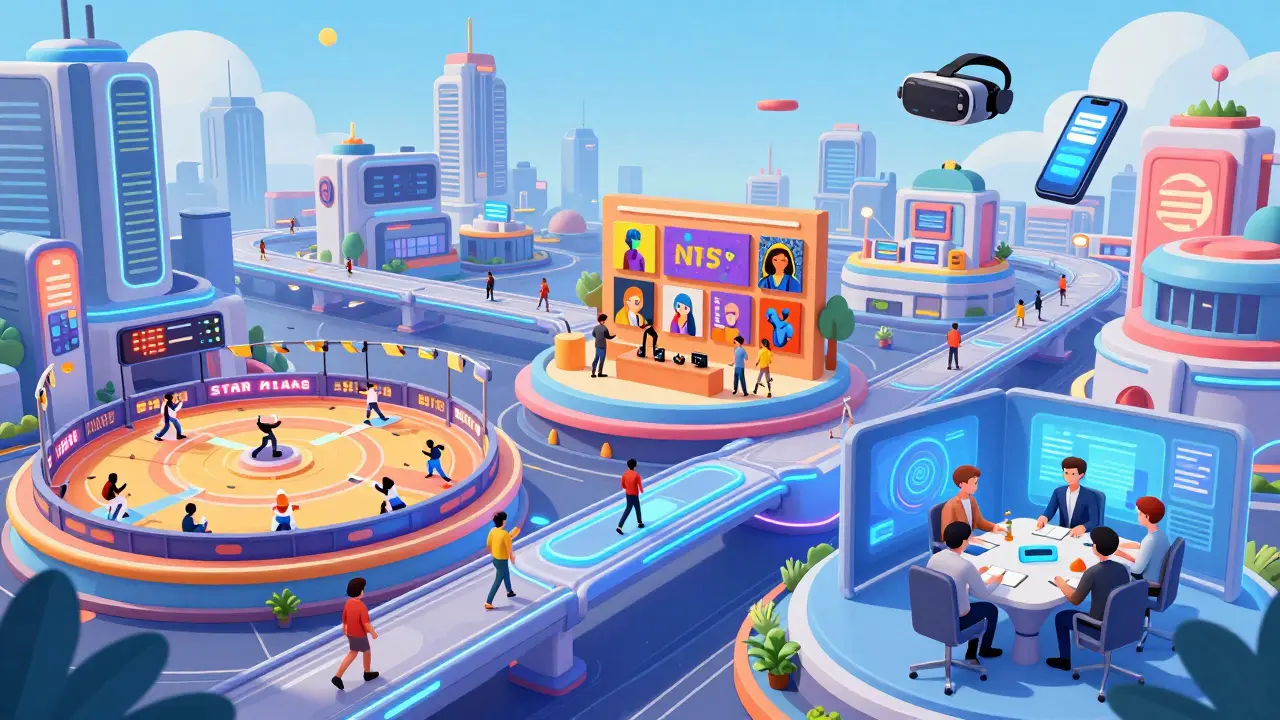
What’s Holding It Back?
Let’s be honest: the user experience is still rough. A Udonis Blog study of 5,000 new users in January 2025 found that 73% of negative reviews mentioned "excessive steps to connect wallets." Setting up a wallet, backing up a seed phrase, buying crypto, transferring it - it’s a 45-minute process for most people. And if you mess up? You lose everything. No customer service. No refunds. Security is another nightmare. In Q4 2024, 17% of compromised blockchain game accounts were due to phishing scams. Fake Discord admins, fake minting sites, fake wallet apps - they’re everywhere. And most players don’t know how to spot them. Plus, the learning curve is steep. Only 38% of new users complete their first transaction without help. You need to understand gas fees, wallets, tokens, and blockchain basics just to play. That’s why mobile apps with built-in wallets - like Immutable X a Layer 2 scaling solution for NFTs on Ethereum, used by major blockchain games to reduce fees and improve speed - are the future.Where It’s Headed: 2027 and Beyond
The World Economic Forum predicts that by 2027, 10% of global GDP will be stored on blockchain. That’s not a guess. It’s based on current trends. We’re seeing three big shifts:- Interoperability is coming. Polygon’s zkEVM now lets assets move between 12 major games. You’ll soon be able to take your sword from one game and use it in another.
- DAO governance is growing. 38% of top blockchain games now let players vote on updates, rules, and even revenue splits. You’re not just a player - you’re a co-owner.
- Work and play are merging. Gartner’s Q1 2025 report found 62% of metaverse platforms now include professional collaboration tools. Imagine attending a virtual meeting in a game you own.
What You Should Do Right Now
If you’re curious:- Start with mobile games like Splinterlands or Alien Worlds. They’re free to play, no wallet needed to start.
- Don’t invest money until you’ve played for at least a week. Learn how the economy works.
- Use trusted wallets like MetaMask or Trust Wallet. Never share your seed phrase.
- Join Discord communities. The best tutorials come from players, not websites.
Is blockchain gaming just a scam?
No - but many projects are. The technology itself is real: blockchain provides verifiable ownership, transparency, and decentralized control. However, over 60% of early play-to-earn games failed because they relied on unsustainable token inflation. The difference now is that surviving games focus on gameplay first, rewards second. Look for games with strong communities, clear tokenomics, and proven track records - not hype.
Can I really make money playing blockchain games?
Yes - but not like a lottery. Most players earn small, consistent amounts: $10-$50 per week. Top players in competitive games like Splinterlands or Axie Infinity can earn $300+ monthly. This is supplemental income, not a job replacement. Success requires time, strategy, and understanding of the game’s economy. Treat it like a side hustle, not a get-rich-quick scheme.
Do I need a crypto wallet to play?
Not always. Many mobile games let you play for free without a wallet. But if you want to own your items, trade them, or cash out earnings, you’ll need one. Start with MetaMask or Trust Wallet. They’re free, secure, and widely supported. Never store your seed phrase online. Write it down on paper and keep it safe.
Are NFTs in games just overpriced JPEGs?
Some are. But not all. In blockchain games, NFTs represent functional items - weapons, land, characters - that have utility within the game and can be used across platforms. Their value comes from scarcity, demand, and functionality, not just art. A rare sword in a game with 10 million players has real value because it helps you win. That’s different from a JPEG of a monkey.
What’s the difference between blockchain gaming and traditional gaming?
In traditional gaming, the company owns everything. You’re just a user. In blockchain gaming, you own your items. They’re stored on a public ledger, not a company’s server. You can sell them, trade them, or move them to other games. You also have a say in how the game evolves - many use DAO voting. Traditional games are closed ecosystems. Blockchain games are open economies.
Is blockchain gaming safe?
It’s as safe as you make it. The blockchain itself is secure - transactions can’t be altered. But scams are everywhere. Fake websites, phishing Discord admins, and fake wallet apps target new players. Always verify URLs, never share your seed phrase, and use trusted wallets. If something looks too good to be true - it probably is.
Will blockchain gaming replace traditional games?
No - but it will change them. Big studios like Epic Games and Roblox are already integrating blockchain features. The future isn’t blockchain games vs. traditional games. It’s games with true ownership vs. games without it. Players who value control over their digital items will naturally move toward blockchain-enabled experiences. Traditional games will adapt or lose relevance.
This is just crypto masquerading as gaming. They’re not selling ownership-they’re selling gambling with extra steps. I’ve seen this movie before. It always ends with people losing everything and crying on Reddit.
I tried Axie Infinity last year 😅 honestly? It felt like a part-time job… but I made enough to cover my Netflix bill. Not rich, but not broke either. 🌱🎮
The ontological rupture between centralized game economies and blockchain-native asset sovereignty is not merely technical-it’s epistemological. You’re not just owning an NFT; you’re participating in a post-capitalist mode of digital production. The gas fees? Just the friction of liberation.
So... you're telling me I need to learn how to use a wallet... just to play a game? And if I mess up? I lose everything? No. Just... no. This isn't gaming. This is tech support hell with extra crypto.
You call this innovation? I’ve seen more innovation in a 2010 Angry Birds update. This is just Wall Street’s latest Ponzi with a blockchain filter. And don’t even get me started on the environmental cost. You people are embarrassing.
I’ve played a few blockchain games. Some are trash. But Dark Forest? That one’s genius. It’s like chess meets sci-fi and the token rewards are just a bonus. You don’t need to care about crypto to love it. Just play. The rest follows.
I’m just here for the memes. But honestly? I’ve seen way more people lose money than make it. Still, the idea of owning your stuff? Kinda cool. I’m not investing, but I’ll keep playing for fun.
So let me get this straight… I spend 20 hours a week grinding in a game, and if I’m lucky, I make $15? That’s less than minimum wage. And I have to pay gas fees to cash out? Are we sure this isn’t a trap?
You think this is about ownership? No. It’s about control. The blockchain doesn’t empower you-it just moves the gatekeepers from corporations to anonymous devs with whitepapers. And now you’re their debt slaves.
I read this whole thing. Then I went to play Stardew Valley. It’s free. No wallet. No scams. Just me, my chickens, and my tomato farm. Why are we doing this to ourselves?
I started with Splinterlands last month. Zero investment. Just played. Now I’ve got a few cards I can sell. Made $20. Not life-changing, but hey-I turned my boredom into cash. 🙌
The assertion that blockchain gaming constitutes a paradigm shift in digital ownership is, in fact, empirically unsound. The majority of NFT-based assets remain locked within proprietary ecosystems. True interoperability remains a theoretical construct. Furthermore, the environmental and economic externalities are neither addressed nor mitigated.
Let’s be real. The only people winning are the devs who dumped their tokens before the crash. The players? They’re the new serfs. Paying fees to own digital trash while the rich buy land in Decentraland. This isn’t the future. It’s feudalism with better UI.
NFTs are JPEGs. Stop lying.
I’ve been burned twice. First by Axie, then by Alien Worlds. Now I’m supposed to believe this time it’s different? LOL. You’re not building an economy. You’re running a pyramid. And I’m not your next mark.
I didn’t believe it until I played The Sandbox. I made a tiny island, put up a coffee shop, and someone actually bought it with $5. It felt weird… but kind of magical? Like, I made something real. Even if it’s just pixels. 🤗
I’m a mom of three. I play Splinterlands during nap time. I’ve made enough to buy my kid a new pair of shoes. It’s not a job. It’s a lifeline. Don’t act like this is just crypto bros playing with toys. Real people are using this to survive.
All this talk about ownership? Please. The games still ban you. The tokens still crash. The devs still change the rules. You don’t own anything. You’re just renting from a new landlord.
If you’re playing to earn, you’re already losing. Play because you love it. If money comes? Good. But don’t turn joy into a paycheck. That’s how you burn out.
The infrastructure is improving. Layer 2 solutions are reducing costs. Mobile adoption is accelerating. And interoperability protocols are now live. This is not a bubble. It is a transition. And those who resist will be left behind.
I’m from the South. We don’t do crypto. But I tried a blockchain game last week. I won a virtual guitar. I traded it. Got a hoodie. Then I bought real coffee with the cash. I’m not smart. But I’m not dumb either. This works. For some.
I used to hate wallets. Now I have one. I backup my seed phrase on paper. I don’t click random links. I check URLs. It’s not hard. It’s just… different. And honestly? It feels better knowing my sword isn’t just a file on a server. It’s mine. 🤝
You think this is about fairness? It’s about who controls the narrative. The people who built the games don’t care about you. They care about their exit strategy. And you? You’re just fuel.