
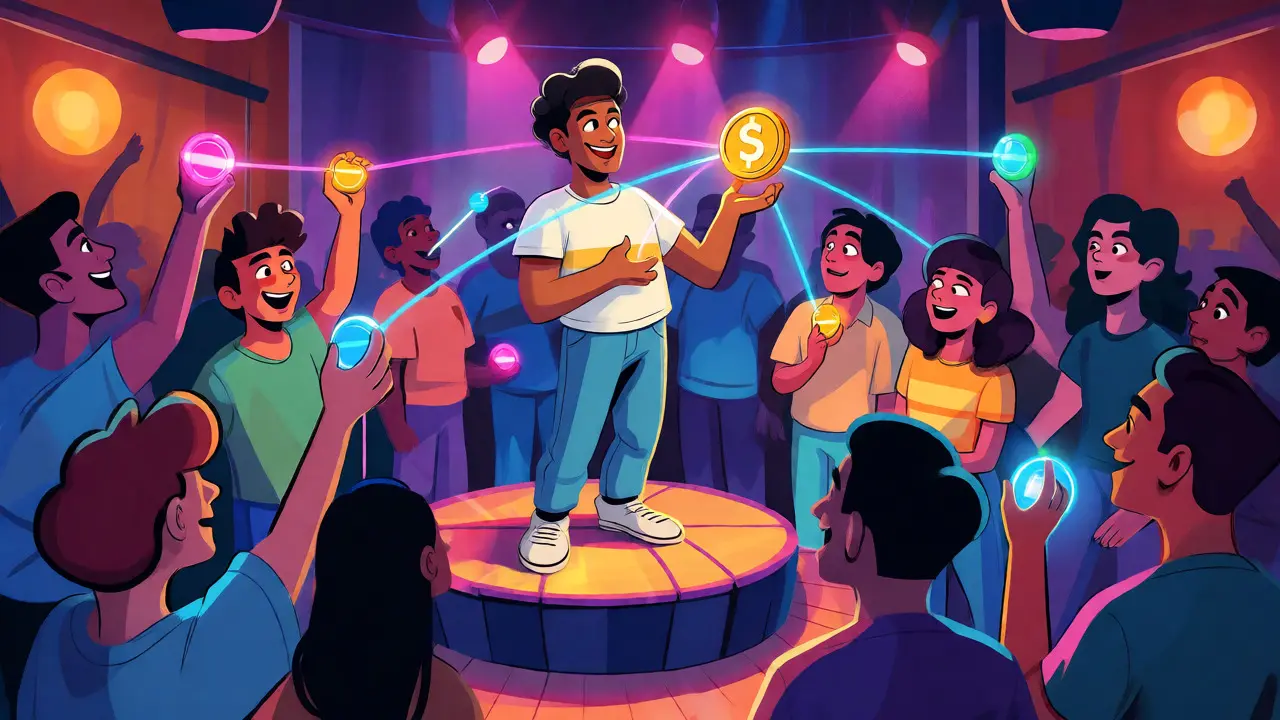
You’ve probably heard the buzz about social tokens being the next big thing in the creator economy. But what does that actually mean for you? If you’re a musician, artist, or podcaster with a loyal following, social tokens aren’t just crypto jargon-they’re a tool to turn your fans into partners. Imagine if your audience didn’t just buy your album but owned a piece of your brand’s growth. That’s the core promise here.
This isn’t about getting rich quick from meme coins. It’s about building a direct relationship with your audience, cutting out the middlemen who take 30-50% of your revenue, and creating a community that has skin in the game. As of late 2026, while the hype cycle has cooled, the utility remains real for those who understand how to use it. Let’s break down exactly how creators are using these digital assets today.
What Are Social Tokens Exactly?
Before we get into the "how," let’s clear up the "what." A social token is a fungible digital asset issued by a creator, influencer, or community leader. Unlike an NFT (Non-Fungible Token), which represents unique ownership of a specific item like a piece of art, a social token is interchangeable-like a dollar bill. One $RAC token is worth the same as another $RAC token.
These tokens typically live on blockchains like Ethereum, Polygon, or Solana. They function as both a currency within a creator’s ecosystem and a membership card. When you hold a creator’s token, you’re signaling support and often gaining access to perks that non-holders don’t get. Think of it less like stock market speculation and more like a dynamic loyalty program where the points can be traded.
The Three Main Ways Creators Deploy Tokens
Creators aren’t just slapping their name on a coin and hoping for the best. There are three distinct strategies dominating the space right now.
- Access and Utility: This is the most common use case. The token acts as a key. For example, holding 100 units of a creator’s token might unlock exclusive Discord channels, early access to merch drops, or private video calls. Musician RAC used his $RAC token to give top holders quarterly voice chats, creating a tight-knit inner circle.
- Governance and Community: Here, the token gives fans a vote. Should the next podcast episode cover topic A or B? Should the artist collaborate with X or Y? Holders decide. This transforms passive listeners into active stakeholders, fostering a sense of shared ownership.
- Financial Speculation: Some creators treat their token as an investment vehicle. Early supporters buy low, betting that the creator’s fame will drive the price up. While this generates immediate cash flow, it’s risky because it ties fan sentiment directly to market volatility.
Why Ditch Traditional Platforms?
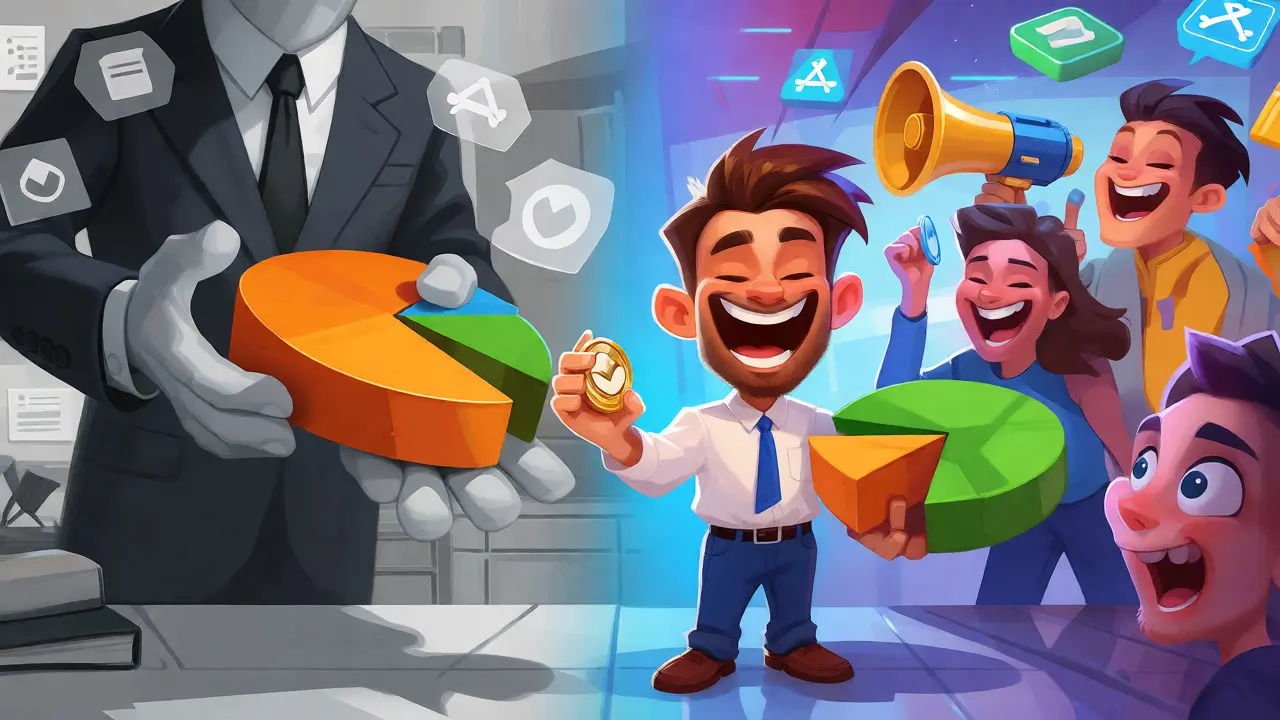
If you’re posting on YouTube or Spotify, you know the pain: high fees, algorithm changes, and little control over your data. Social tokens flip this model. By moving transactions on-chain, you eliminate intermediaries. No more 30% cut taken by app stores or streaming services. You keep the lion’s share of the value your community creates.
Moreover, traditional platforms treat your audience as users; social tokens treat them as investors. When fans buy your token, they have a financial incentive to promote you. They want your project to succeed because their own portfolio depends on it. This alignment solves the classic "free rider" problem in communities.
Technical Setup: What You Actually Need
Don’t panic about coding. You don’t need to be a developer to launch a token anymore. Platforms like Roll, Coinvise, and Mintgate allow creators to deploy ERC-20 tokens with no-code interfaces. However, there is still a learning curve.
| Platform | Best For | Cost Range | Onboarding Difficulty |
|---|---|---|---|
| Roll | Solo creators wanting simple access controls | $500 - $1,500 setup | Low |
| Coinvise | DAOs and complex governance structures | $1,000 - $5,000 | Medium |
| Mintgate | NFT-focused communities adding token layers | Variable (often free tier) | High |
You’ll also need a compatible wallet like MetaMask for yourself and ideally for your fans. To help fans who hate crypto complexity, many creators integrate fiat on-ramps like MoonPay, allowing users to buy tokens with credit cards without ever seeing a seed phrase.
The Risks: Volatility and Regulation
It’s not all sunshine. The biggest complaint from fans is volatility. If your token price crashes because Bitcoin dipped, your superfans might feel cheated, even if the utility hasn’t changed. Successful creators mitigate this by emphasizing utility over price. If the token grants access, its value is stable regardless of market swings.
Then there’s regulation. In the US, the SEC has cracked down on tokens that look too much like securities. If you promise profits solely based on your efforts, regulators might view your token as an unregistered security. The trend toward "Constitutional Token Models" helps here by separating governance rights from financial instruments, keeping things compliant while maintaining community power.
Who Is Doing It Well?
Adoption is concentrated among creators with highly engaged niches. Musicians lead the pack, accounting for roughly 32% of implementations, followed by visual artists and podcasters. Why? Because music and art lend themselves well to exclusive experiences.
Take the case of independent musicians who launched tokens before signing major label deals. They raised millions in direct fan funding, bypassing label advances that come with strings attached. Conversely, creators with broad, shallow audiences struggle. If only 12% of your followers bother setting up a wallet, the liquidity dries up, and the token becomes useless. Depth beats breadth every time.
Steps to Launch Your Own Social Token
If you’re ready to test the waters, here is a practical roadmap:
- Audit Your Audience: Do you have at least 5,000 highly engaged followers? If your comments are mostly bots or generic emojis, wait.
- Define Utility First: Decide what the token *does* before you mint it. Access? Voting? Discounts? Don’t sell empty promises.
- Choose Your Blockchain: Ethereum offers prestige but high gas fees ($5-$50 per transaction). Polygon or Solana offer near-zero fees, better for micro-transactions.
- Set Up Legal Structure: Consult a lawyer specializing in Web3. Budget $2,500-$7,500 for compliance advice to avoid SEC headaches later.
- Launch Softly: Start with a limited supply to create scarcity. Offer incentives for early adopters, like lifetime access badges.
Remember, the goal isn’t to replace your Patreon or YouTube channel immediately. It’s to layer a new economic engine on top of your existing content. Treat it as an experiment. If 10% of your super-fans convert, you’ve already beaten the status quo.
Do I need to be a tech expert to manage social tokens?
No, you don't need to code. Platforms like Roll and Coinvise provide user-friendly dashboards similar to Shopify. However, you do need basic literacy about wallets and gas fees to guide your fans through the initial setup.
How do social tokens differ from NFTs?
NFTs are unique, one-of-a-kind assets representing ownership of specific items like art or collectibles. Social tokens are fungible, meaning each unit is identical and interchangeable, functioning more like currency or shares within a community ecosystem.
Is it legal to sell social tokens?
It depends on your jurisdiction and structure. In the US, if tokens promise profit primarily from others' efforts, they may be classified as securities. Many creators use utility-based models or consult legal experts to ensure compliance with SEC guidelines.
What happens if my token price crashes?
If your token's value is tied strictly to speculation, a crash hurts holder confidence. However, if the token provides tangible utility (access, voting, discounts), the price fluctuation matters less because the functional value remains intact regardless of market conditions.
Can fans sell their tokens back to me?
Typically, no. Once sold on secondary markets like Uniswap, tokens trade peer-to-peer. You don't usually act as the buyer of last resort unless you specifically set up a buyback mechanism, which requires significant capital reserves.