
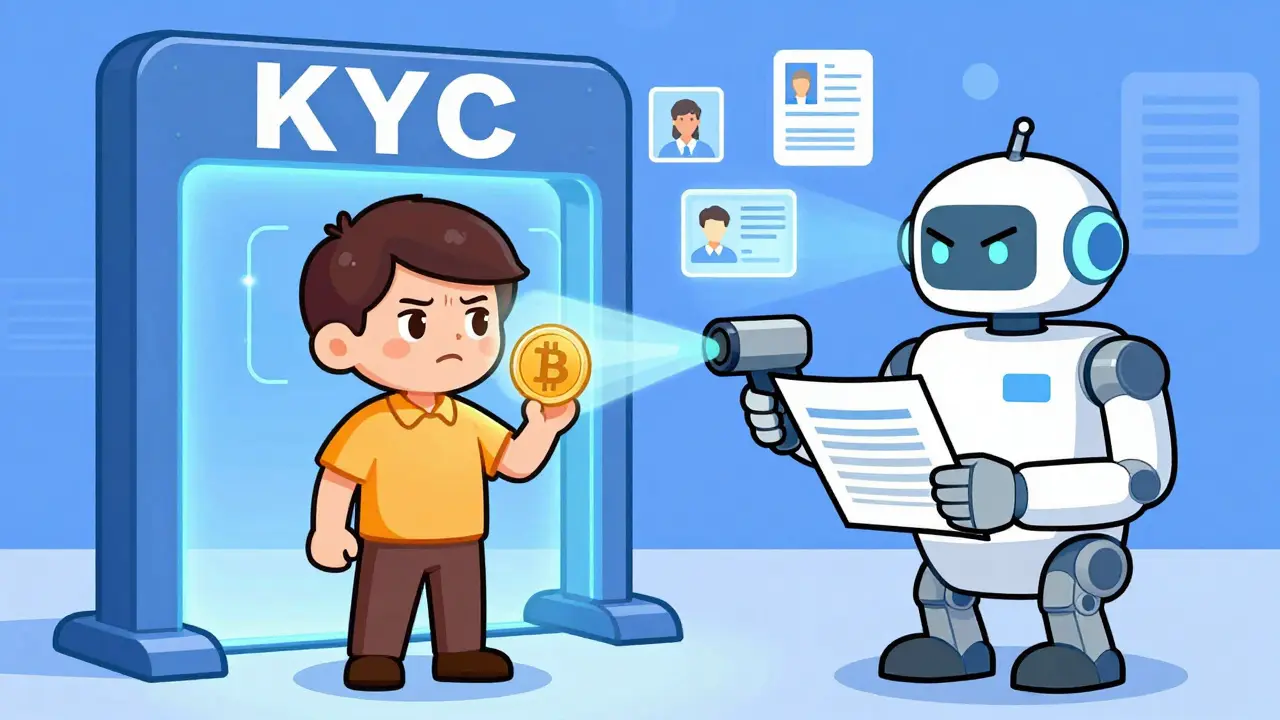
When you buy Bitcoin on a crypto exchange, you might think it’s just a simple trade. But behind the scenes, a complex web of checks, scans, and alerts is running to make sure your money isn’t tied to a drug cartel, a hacker, or a sanctioned regime. This is AML - anti-money laundering - and it’s now mandatory for every major crypto exchange operating legally. It’s not optional. It’s not a suggestion. It’s the law.
Why AML Matters in Crypto
Cryptocurrencies were built on the idea of privacy and decentralization. But that same privacy made them attractive to criminals. Drug traffickers, ransomware gangs, and fraudsters used Bitcoin and other coins to move money without banks watching. That changed in 2019. The U.S. government - through FinCEN, the SEC, and the CFTC - officially declared that crypto exchanges are financial institutions. That meant they had to follow the same rules as banks: report suspicious activity, verify users, and keep records. No more hiding behind "it’s just tech." The global standard comes from the Financial Action Task Force (FATF), an international group that sets rules to fight financial crime. They gave crypto exchanges three core jobs: Know Your Customer (KYC), monitor transactions, and report anything fishy. Get any of these wrong, and you could be fined millions - or worse.Know Your Customer (KYC): The First Line of Defense
Before you can trade on most exchanges, you have to prove who you are. This isn’t just uploading a photo of your ID. It’s a full risk-based identity check. Exchanges collect your full name, date of birth, government-issued ID, and sometimes a selfie with your ID to confirm it’s really you. Facial recognition and liveness detection stop people from using stolen IDs or deepfake videos. But it’s not just about checking your name. Exchanges screen you against global databases. Are you on a sanctions list? Are you a Politically Exposed Person (PEP) - like a government official or their family member - who poses a higher risk? Are you linked to any news stories about fraud or corruption? Adverse media monitoring tools scan thousands of sources daily, in dozens of languages, looking for red flags. One exchange found a user had used a fake name in Spanish that was a transliteration of his real name. Without linguistic screening, he would’ve slipped through. The system doesn’t treat everyone the same. A student in Germany buying $500 worth of Ethereum gets a low-risk rating. A business owner in Nigeria sending $50,000 to a new wallet gets flagged for extra review. Risk scoring adjusts automatically based on location, transaction size, and behavior history.Transaction Monitoring: Watching the Money Flow
KYC only tells you who started the transaction. Monitoring tells you what happened after. Every single crypto transaction on an exchange is tracked in real time. The system doesn’t just look at one transfer - it follows the money trail across multiple wallets and blockchains. There are three main ways exchanges do this:- Deny lists: Block transactions from wallets known to be linked to thefts, scams, or darknet markets. For Bitcoin, exchanges check if a coin (UTXO) ever passed through a bad address - even if it’s been mixed or moved 10 times. If it did, the exchange freezes it.
- Allow lists: Only permit transactions to or from wallets that have passed KYC. This is stricter, like a bank only allowing transfers between verified accounts. Some exchanges use smart contracts to enforce this automatically.
- Pattern detection: Look for behavior that doesn’t match the user’s profile. A user who normally sends small amounts suddenly sends $200,000 to 15 different wallets in 10 minutes? That’s a classic layering pattern - a hallmark of money laundering. The system flags it and alerts compliance officers.

Reporting and Response: When Something Goes Wrong
Monitoring isn’t enough if no one acts. When an alert triggers, compliance teams step in. They might contact the user directly - asking, "Why did you send this amount to this wallet?" They might request additional documents. Or they might simply freeze the funds and file a Suspicious Activity Report (SAR) with FinCEN or the local financial intelligence unit. These reports aren’t optional. Failing to file one can lead to massive penalties. In 2021, a crypto derivatives exchange paid $100 million to settle AML violations. Three founders of another company each paid $10 million in fines and avoided jail only because they cooperated. That’s not a cost of doing business - it’s a warning. Exchanges must keep records for at least five years. Every KYC document, every transaction, every alert, every report. Regulators can demand them at any time. If you can’t produce them, you’re in violation - even if you didn’t break the law.Global Rules, Local Challenges
There’s no single global AML rulebook. The EU’s 5AMLD demands stricter identity verification than the U.S. Bank Secrecy Act. Singapore requires exchanges to report all cross-border transfers over $15,000. Japan mandates real-name verification for every wallet. An exchange operating in 20 countries can’t use one system. They need a modular, configurable platform that adapts to each jurisdiction’s rules. This means hiring compliance teams with legal expertise - not just coders. These teams must track changes in laws across dozens of countries. A new rule in South Korea can force an exchange to update its entire KYC flow overnight. Staff training isn’t a yearly seminar - it’s continuous. One mistake in interpreting a regulation can cost millions.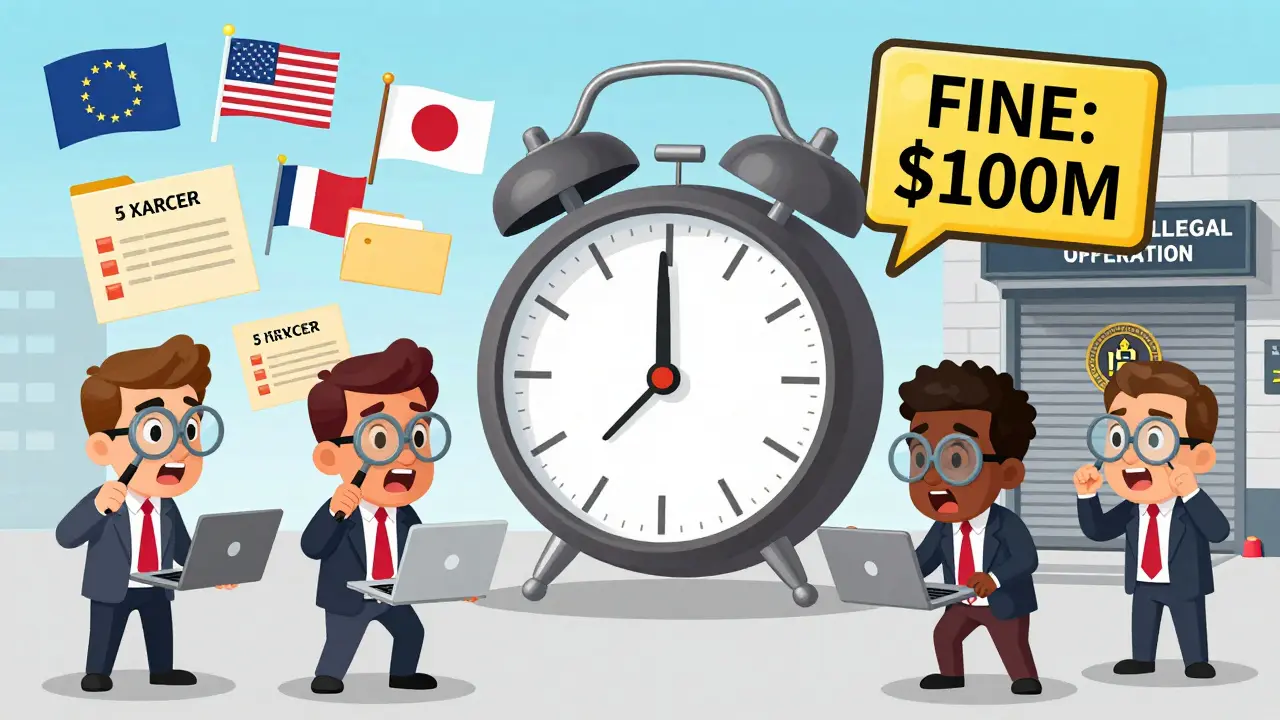
so like... i just wanted to buy dogecoin to meme my rent money away and now i have to submit my birth certificate AND a selfie w/ my cat? 🤡
This is why crypto will never be mainstream. 😒 They turn every platform into a DMV with blockchain. I just want to trade, not fill out Form 47B-Δ in triplicate.
government control disguised as safety they are watching every transaction even your grandma sending 50 dollars to her grandson in nigeria is flagged as suspicious this is not compliance this is surveillance capitalism
Honestly? I get it. I used to think KYC was overkill, but after seeing how many scams use fake IDs, I’m glad they’re doing this. Just wish the process wasn’t so slow 😅
You’re all missing the point. This isn’t about safety. It’s about control. They want to own your money. Period.
It’s kinda wild how much work goes into this. I never thought about how many people are actually watching those alerts 24/7. Hats off to the compliance teams-they’re the unsung heroes.
AML? More like AML-itis. The compliance overhead is crippling innovation. We’re building a decentralized future but shackling it with legacy banking bureaucracy.
I get that it’s necessary... but why does it feel like they’re treating every user like a criminal? It’s exhausting. Maybe just flag the high-risk ones and leave the rest alone?
We say we want freedom... but we also want to use platforms that won’t get shut down by the Feds. It’s a paradox. Maybe the real innovation isn’t in the tech-it’s in finding balance. 🤔
So if I move my ETH from Binance to Coinbase and then to a non-KYC wallet... is that a crime? Or just a loophole they haven’t patched yet? 🤔
i used to think crypto was for rebels but now it feels like i'm just another customer in a bank that uses blockchain instead of paper. and the worst part? i still have to wait 3 days for withdrawals. 😭
In India, we see this daily-scammers using fake IDs to drain accounts. KYC isn’t perfect, but without it, we’d be swimming in fraud. I’ve seen families lose everything. This is protection, not oppression.
They say 'privacy' but what they really mean is 'anonymity for criminals.' I don’t want to be a detective every time I trade-but I also don’t want my wallet used to launder drug money. Compromise? Maybe. But necessary.
The fact that AI can now trace a Bitcoin through 12 mixers and still flag it? That’s wild. It’s like watching a detective novel written by a machine. Respect.
You think this is bad? Wait till the Nigerian tax authorities start demanding blockchain transaction logs. We’re already getting calls from the FIRS asking for proof of crypto income. This is the new normal.
Too much bureaucracy. Slow. Inefficient.
They call it compliance. I call it surrender. You traded freedom for convenience and now you’re surprised when they own your data?
The notion that AML is 'the foundation' of crypto is a delusion. It is the antithesis of its original ethos. This is not evolution-it is assimilation.
I work in compliance for a fintech startup. The tools we use-Chainalysis, Trulioo-they’re amazing. But the real win? When a user gets flagged, we call them. Not freeze. Not report. Call. Ask why. Most times, it’s just a mistake. Human touch still matters.