
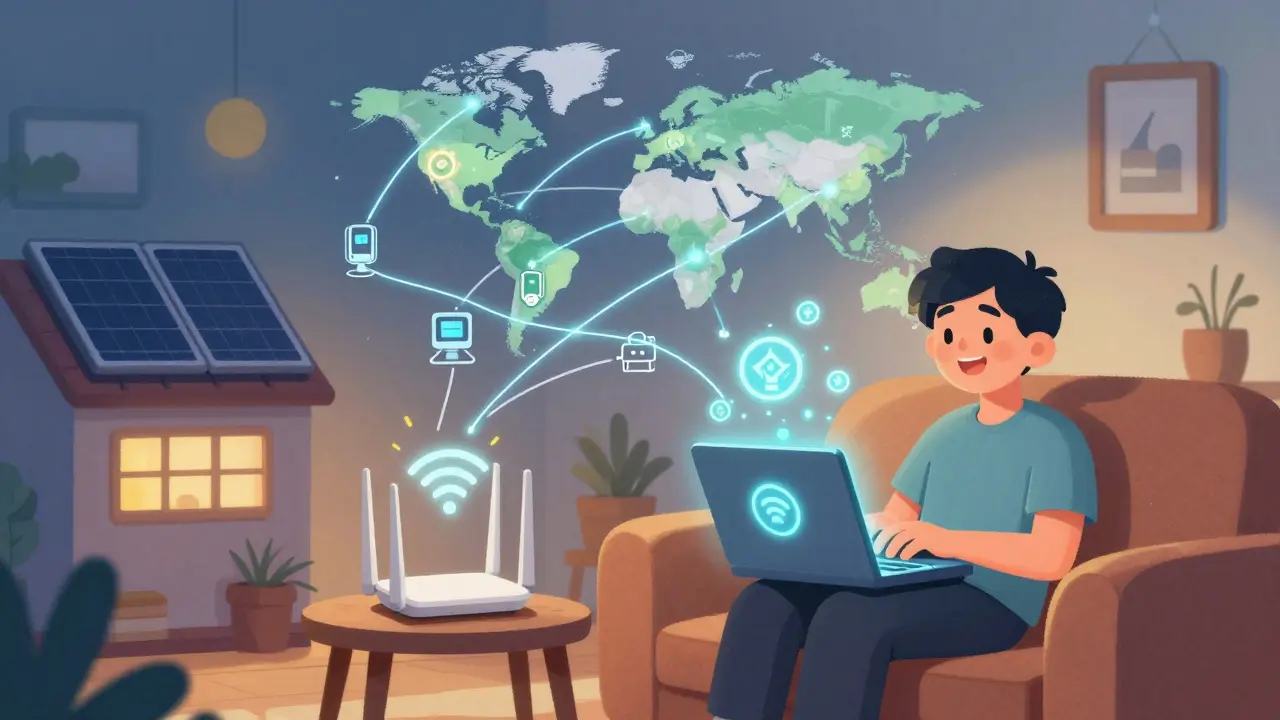
Imagine a world where your Wi-Fi router, solar panels, or unused phone storage aren’t just sitting idle-they’re earning you cryptocurrency. That’s the core idea behind DePIN projects: turning everyday hardware into part of a global, decentralized infrastructure network. Unlike traditional companies that build cell towers or cloud servers in secret, DePIN lets anyone contribute and get paid for it-with no middleman.
What Exactly Is DePIN?
DePIN stands for Decentralized Physical Infrastructure Networks. It’s not just another crypto buzzword. It’s a working system where real-world hardware-like routers, sensors, energy generators, and storage devices-is connected to a blockchain network. Participants earn tokens for providing these physical resources, and users pay in crypto to access the services they create. Think of it like Airbnb for infrastructure. Instead of renting out your spare room, you’re renting out your internet bandwidth, your extra computing power, or the energy your solar panels produce. The blockchain keeps track of who contributed what, who used it, and who gets paid. No corporation owns it. No single server controls it. It runs on code and community.How DePIN Works: The Three Core Pieces
There are three moving parts that make DePIN function like a well-oiled machine:- Smart contracts-These are self-executing programs on the blockchain. They automatically reward you when your device shares bandwidth, stores data, or generates energy. They also block users who don’t pay or try to cheat the system.
- Tokenization-Your physical resource (like 1GB of storage or 10 hours of Wi-Fi) becomes a digital token. That token can be traded, spent, or held. It’s how the network measures value without needing banks or invoices.
- Distributed network-There’s no central office. No headquarters. The network lives on thousands of devices spread across cities, towns, and even rural areas. If one device goes offline, the rest keep running. No single point of failure.
This setup turns infrastructure from a corporate monopoly into a public utility anyone can help build.
Two Types of DePIN Networks
Not all DePIN projects are the same. They fall into two clear categories based on what kind of resource they use:Physical Resource Networks (PRNs)
These rely on hardware tied to a specific location. You can’t move them around like files on a hard drive. Examples include:- Cellular hotspots (like Helium) that provide wireless coverage
- EV charging stations powered by solar energy
- Weather sensors placed on rooftops to collect local climate data
These networks are location-dependent. If you install a hotspot in rural Montana, it serves people in Montana. The value comes from filling gaps where big telecoms won’t go. That’s why many DePIN projects thrive in places with poor internet or no cell service.
Digital Resource Networks (DRNs)
These use resources that aren’t tied to geography. They’re fungible-meaning one unit is the same as another, no matter where it comes from. Examples:- Unused hard drive space for decentralized cloud storage (like Filecoin)
- Idle GPU power for AI training or rendering (like Render Network)
- Bandwidth from home internet connections
These networks work globally. A computer in Tokyo can lend processing power to a researcher in Brazil. The blockchain handles the payment and tracking, no matter the distance.
How Do People Get Paid?
There are three main ways participants earn tokens in a DePIN network:- Sharing excess resources-If your home solar panels produce more electricity than you use, you can feed it into a DePIN energy grid and get paid in tokens. Same with Wi-Fi, storage, or computing power you’re not using.
- Building new infrastructure-Some networks pay you to install hardware. For example, Helium rewards people who buy and set up wireless hotspots. You pay upfront for the device, but you earn tokens over time as others use your coverage.
- Providing services-You might be asked to run a small computation task, verify location data, or store a piece of encrypted file. Each task pays a small amount, but it adds up.
The Helium network is the most famous example. Since 2019, over 2 million hotspots have been installed worldwide. People bought them for $500, set them up at home, and now earn HNT tokens every time someone uses their network to send IoT data. Some users make $50-$200 a month just by leaving a device plugged in.
Why DePIN Is Better Than Traditional Infrastructure
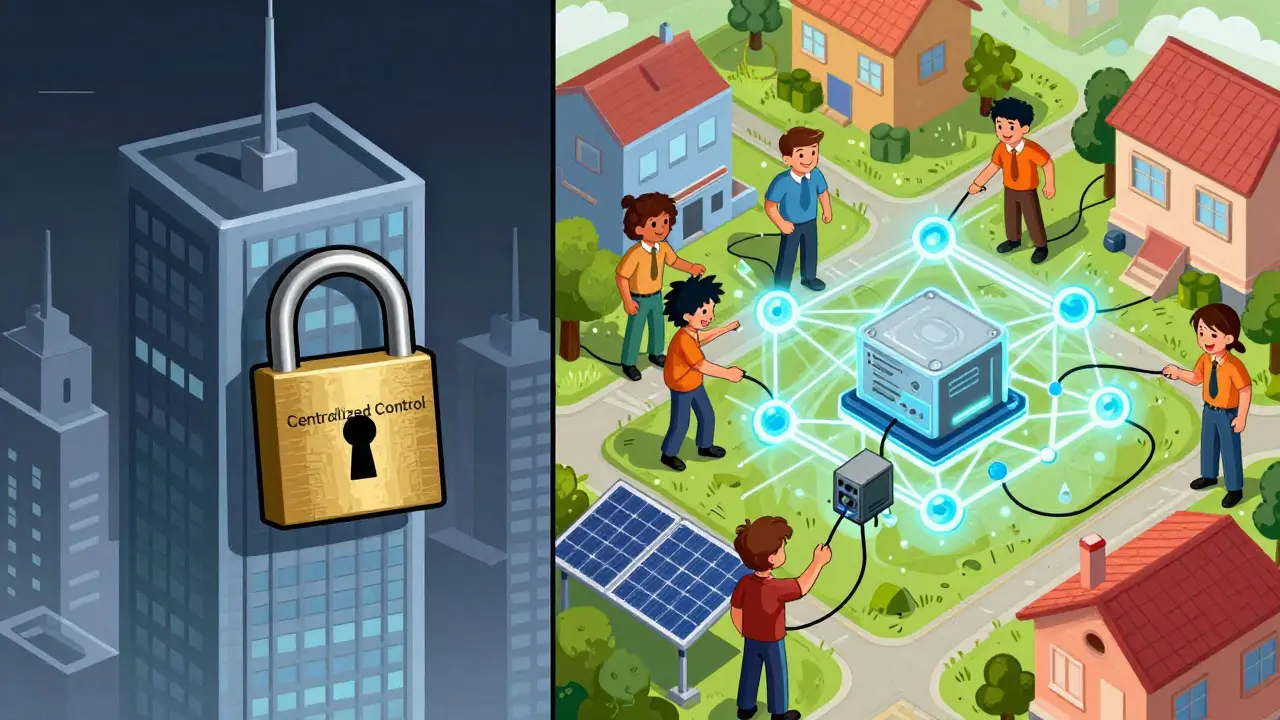
Traditional infrastructure-cell towers, cloud servers, power grids-is controlled by a handful of companies. That means:- High prices (you pay what they say)
- Slow upgrades (they decide when to improve)
- Vulnerable to outages (one server crash = nationwide downtime)
- Hard to access in poor areas (no profit = no service)
DePIN flips this. Because it’s decentralized:
- Security improves-No single point to hack. Even if 100 devices go down, the rest keep working.
- Cost drops-No corporate overhead. No shareholder pressure. Prices are set by supply and demand, not profit margins.
- Access expands-In Nigeria, India, or rural Mexico, people are setting up DePIN hotspots because no telecom will invest there. Now, they get internet and earn money at the same time.
- Ownership is real-You’re not a customer. You’re a co-owner. If the network grows, your tokens gain value.
This isn’t theory. In Kenya, DePIN-based solar microgrids now power entire villages. In Spain, people are sharing unused bandwidth to create a decentralized internet that works even when ISPs shut down service during protests.
Decentralized Governance: Who Decides What?
Who gets to change the rules? In a traditional company, it’s the CEO. In DePIN, it’s the community.Most DePIN networks use token-based voting. If you hold tokens, you can vote on upgrades, fee structures, or new features. The more tokens you hold (or stake), the more voting power you have. But even small contributors can participate.
This prevents corporate capture. No single entity can take over. If a group tries to push a bad update, others can reject it. The code runs on the blockchain-it doesn’t change unless the community agrees.
Real Projects You Can Use Today
You don’t need to wait for DePIN to become mainstream. These are live, working networks:- Helium-Decentralized wireless networks for IoT devices. Earn HNT by running hotspots.
- Filecoin-Decentralized cloud storage. Rent out your hard drive space and earn FIL.
- Render Network-Share your GPU power for 3D rendering and AI tasks. Earn RNDR tokens.
- Power Ledger-Peer-to-peer solar energy trading. Sell excess power to neighbors.
- StormX-Earn crypto by completing small tasks on mobile apps, backed by DePIN infrastructure.
All of these have active user bases, real token economies, and open participation. You can join any of them with a smartphone, a router, or an old laptop.
The Future of DePIN
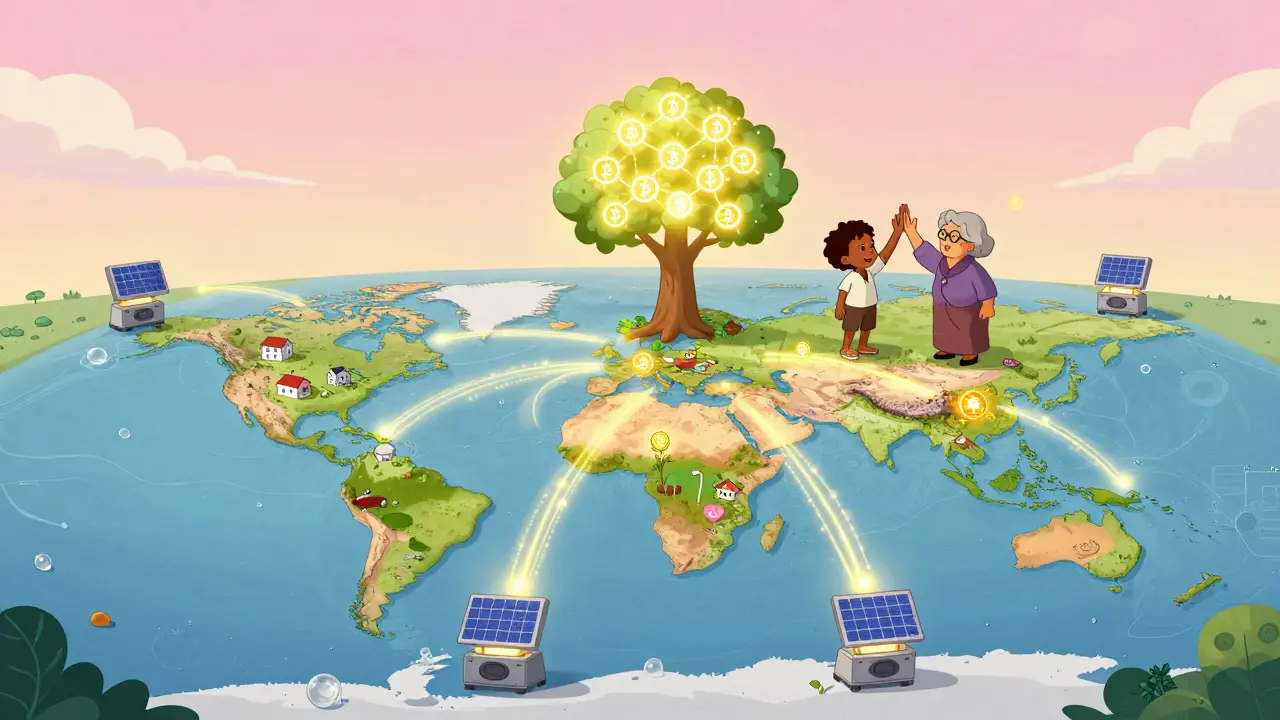
DePIN isn’t just about crypto rewards. It’s about rebuilding the physical world’s backbone-internet, energy, computing, transportation-without relying on monopolies.By 2030, analysts estimate over 40% of global IoT infrastructure could run on DePIN networks. Why? Because it’s cheaper, faster, and fairer. A farmer in Indonesia can now sell his unused bandwidth to a startup in Berlin. A grandmother in Ohio can earn tokens by letting a weather sensor sit on her porch.
The biggest shift? People are no longer just consumers. They’re builders. And every time you plug in a hotspot, share your storage, or feed energy into the grid, you’re not just using a service-you’re helping create the future.
Frequently Asked Questions
Do I need special equipment to join a DePIN project?
It depends on the network. For digital networks like Filecoin or Render, you can use a regular computer or even a Raspberry Pi. For physical networks like Helium, you’ll need a dedicated hotspot device, which costs $200-$600. Some networks let you rent hardware instead of buying it. Always check the project’s official site for hardware requirements.
Is DePIN safe? Can I lose money?
The blockchain itself is secure-your contributions and payments are recorded on a tamper-proof ledger. But you can lose money if the token price drops, or if you invest in a project that fails. Some DePIN projects are still experimental. Only invest what you can afford to lose. Stick to well-established networks like Helium, Filecoin, or Render if you’re new.
How much can I realistically earn from DePIN?
Earnings vary by location, device type, and network demand. Helium hotspot owners in high-traffic areas make $50-$200/month. Storage providers on Filecoin might earn $10-$50/month per TB of space. It’s not get-rich-quick, but it’s passive income with real utility. The key is consistency-keep your device online and updated.
Do I need to understand blockchain to use DePIN?
No. Most DePIN apps have simple mobile or desktop interfaces. You don’t need to know what a smart contract is to plug in a hotspot or rent out storage. The app handles the blockchain side. Think of it like using Uber-you don’t need to know how the app connects drivers to riders. You just use it.
What happens if the internet goes down in my area?
If your device loses internet, it stops earning until it reconnects. Some networks, like Helium, allow devices to store data locally and sync later. But for most DePIN systems, you need a stable connection to report usage and receive payments. It’s not designed for offline use-yet.
Next Steps
If you’re curious, start small. Pick one DePIN project that matches what you already have:- Got an old laptop? Try Filecoin for storage.
- Have a spare router? Check out Helium’s hotspot program.
- Live in a sunny area? Look into Power Ledger for energy sharing.
Don’t wait for someone else to build the future. Plug in. Earn. Participate. The infrastructure of tomorrow doesn’t need a CEO-it needs you.
This is wild. I just plugged in my Helium hotspot last week and already made $35. No joke. My router is now my side hustle. 🚀
I love how this turns ordinary stuff into magic. My grandma’s weather sensor is now part of a global network. She thinks it’s a fancy thermometer. I think it’s beautiful. 🌞❤️
I’ve been digging into DePIN for months and honestly, the real innovation isn’t the blockchain-it’s the incentive layer. Most people think crypto is about speculation, but here, you’re literally paying people to build physical infrastructure that’s open-source and community-owned. The smart contracts are just the enforcement mechanism; the real breakthrough is that you’re aligning individual self-interest with public good. You don’t need a government or a corporation to lay fiber or power grids-you just need people who want to earn a little extra while doing something useful. And the distributed nature means it’s inherently resilient. No single point of failure. Even if 90% of nodes go down, the network adapts. That’s not just tech-that’s a new social contract. And it’s already working in places where traditional infrastructure failed. Kenya. India. Rural Appalachia. People aren’t waiting for permission. They’re just plugging in.
So let me get this straight... you’re telling me a bunch of people with routers and solar panels are going to replace Verizon and PG&E? And the government won’t step in? LOL. Next you’ll say your toaster can vote. 😏
It’s cute how you think this isn’t just another crypto pump disguised as altruism. The real utility? Selling your hardware to the highest bidder. Meanwhile, your data’s being scraped and monetized by some anonymous DAO. Wake up.
I set up a Filecoin node on an old laptop. It barely uses power. I don’t care about the money. It just feels right to help.
DePIN is the only scalable model for next-gen infrastructure. Tokenized resource allocation + zero-trust verification = paradigm shift. If you’re not staking or contributing, you’re just a spectator in the new economy. Get in or get left behind.
America built the grid. Now we’re letting strangers on the internet run it? No thanks.
You don’t need to be a tech wizard to join. I’m a teacher. I bought a Helium hotspot for $250. It sits on my windowsill. I make $80/month. My kids think I’m a crypto wizard. I just think it’s smart. Keep it simple. Plug it in. Let it run.
Okay but WAIT-what if the blockchain gets hacked? What if someone hacks 10,000 hotspots at once? What if the tokens crash? What if the DAO gets taken over by a Chinese syndicate? WHAT IF THE MOON IS A HOAX?!?!?!?!?!?!
In the UK, we’ve got DePIN hotspots popping up in Manchester and Glasgow. People are using them to bypass ISP throttling. It’s grassroots tech at its best. No corporate gatekeeping. Just people helping each other get online. Simple. Effective. Beautiful.
I’m skeptical but curious. I tried Filecoin. My drive filled up. I uninstalled it. Didn’t earn much. But I’m not done. I’ll try again.
I run a Render Network node on my gaming rig. Used to idle 80% of the time. Now it’s earning RNDR while I sleep. 200% ROI on my GPU. And I didn’t have to sell my soul to Nvidia. 🤖✨
The concept is sound. The execution varies. Some projects are transparent. Others feel like vaporware. Due diligence is essential.
Start small. Really. Don’t buy a $600 hotspot if you’re just testing. Rent one first. Try Filecoin with your spare drive. See if you like it. If you do, then go bigger. No rush. This isn’t a race-it’s a movement.
I’ve been in DePIN since Helium’s early days. Saw people lose money. Saw people make life-changing money. What matters most isn’t the token price-it’s the community. The people who show up, update their firmware, and keep the network alive. That’s the real value.
I live in a town with no broadband. My hotspot gives me internet and pays me. No one else in my county has this. I’m not rich. But I’m connected.
I’ve read every whitepaper. I’ve analyzed the tokenomics. I’ve cross-referenced the node distribution maps. The risk/reward ratio is still skewed toward early adopters. But the infrastructure is real. And it’s growing. I’m in for the long haul.
Let’s be honest. This is a tax evasion scheme disguised as innovation. You’re avoiding utility fees, avoiding regulation, and exploiting regulatory gray zones. And you call it ‘decentralization’? It’s just arbitrage with Wi-Fi.
They say DePIN is free. But who controls the blockchain? Who holds the private keys? Who really owns the nodes? The same elites who own the banks. It’s all a game. The blockchain is just the new casino floor.
I turned my old PC into a Filecoin miner. Now I’m helping store medical data for clinics in Peru. My hard drive is saving lives. That’s cooler than any NFT. 💪💾