

Imagine you just made a profit on Bitcoin. You want to cash out, but instead of celebrating, you’re worried about whether the government will freeze your account or slap you with a surprise fine. For years, that was the reality for many in Southeast Asia. But if you are in Indonesia is the world's largest archipelago and a rapidly growing digital economy where cryptocurrency trading is now strictly regulated as a financial asset, the rules have changed dramatically.
As of mid-2026, trading crypto in Indonesia is not only legal-it’s heavily structured. The days of the wild west are over. The Financial Services Authority (OJK) is the primary regulatory body overseeing crypto assets in Indonesia since January 2025, replacing BAPPEBTI has taken the reins from the commodity regulator, treating crypto like stocks rather than mere commodities. This shift means you can trade safely, provided you follow the specific path laid out by the new laws.
This guide cuts through the noise. It explains exactly how to trade legally, which platforms are safe, what taxes you actually owe under the new PMK 50/2025 is Minister of Finance Regulation No. 50 of 2025 governing VAT and Income Tax on crypto transactions, and how to avoid the common traps that cost traders money. Whether you are a beginner buying your first Ethereum or an experienced trader managing a portfolio, understanding these mechanics is non-negotiable.
The Legal Status: Investment vs. Payment
First, let’s clear up the biggest misconception. Can you use crypto to buy coffee at Warung Kopi? Absolutely not.
In Indonesia, digital assets are legally recognized as tradable financial instruments for investment purposes only. They are explicitly prohibited as a method of payment. This rule is enforced by Bank Indonesia is the central bank of Indonesia which enforces the Rupiah as the sole legal tender under Regulation No. 20/6/PBI/2018 and the 2023 Payment Systems Law. If you try to pay for goods or services using Bitcoin or USDT, you are violating the law. The Indonesian Rupiah remains the only legal tender.
However, buying, selling, and holding crypto for capital appreciation is fully legal. The government views this as part of the broader financial sector, similar to stocks or bonds. This distinction is crucial because it dictates who regulates you. Since 2025, the OJK oversees the market, ensuring that exchanges meet strict security and capital requirements. This move was designed to protect retail investors from scams and market manipulation, creating a safer environment compared to the unregulated past.
Step-by-Step: How to Start Trading Legally
To trade legally, you cannot just sign up for any global exchange. You must use a platform licensed by the OJK. As of mid-2026, there are approximately 22 licensed exchanges operating in the country. Here is the exact process you need to follow:
- Choose a Licensed Exchange: Stick to major players like Indodax is Indonesia's largest crypto exchange with millions of registered users, Tokocrypto is a leading Indonesian exchange acquired by Huobi, or Pintu is a popular user-friendly crypto trading app in Indonesia. These platforms hold the necessary licenses and integrate with national monitoring systems.
- Prepare Your Documents: You will need your National Identity Card (KTP) and your Tax Identification Number (NPWP). Without an NPWP, you cannot complete the verification process for significant trading volumes.
- Complete KYC Verification: Under OJK Regulation No. 27/2024, exchanges must perform robust Know Your Customer checks. This includes facial recognition and document submission. Be prepared for this to take 3-7 business days, which is longer than before due to stricter security protocols.
- Pass the Financial Literacy Test: Before you can withdraw funds or trade freely, you must pass a mandatory test covering 15 questions about crypto risks. You need a minimum score of 80%. This ensures you understand that prices can drop to zero.
- Link a Local Bank Account: Connect a bank account registered with Bank Indonesia. This allows you to deposit and withdraw Indonesian Rupiah (IDR) directly. Avoid using third-party payment apps that aren't linked to a verified bank account.
Once these steps are done, you are compliant. Any attempt to bypass this by using unlicensed offshore platforms puts your funds at risk and complicates your tax situation.
Taxation Changes: Understanding PMK 50/2025
The most significant change for traders in recent years is the tax framework. Effective August 1, 2025, the Minister of Finance introduced Regulation No. 50/2025 (PMK 50/2025). This regulation replaced older rules and simplified how taxes are collected.
Here is what you need to know about your wallet:
- No More VAT: Value Added Tax (VAT) has been eliminated on crypto transactions. Crypto is no longer treated as a commodity for tax purposes but as a financial asset.
- Final Income Tax (Article 22): A final income tax is applied at the point of transaction. The rate depends on where you trade.
| Transaction Channel | Tax Rate | Who Collects It? |
|---|---|---|
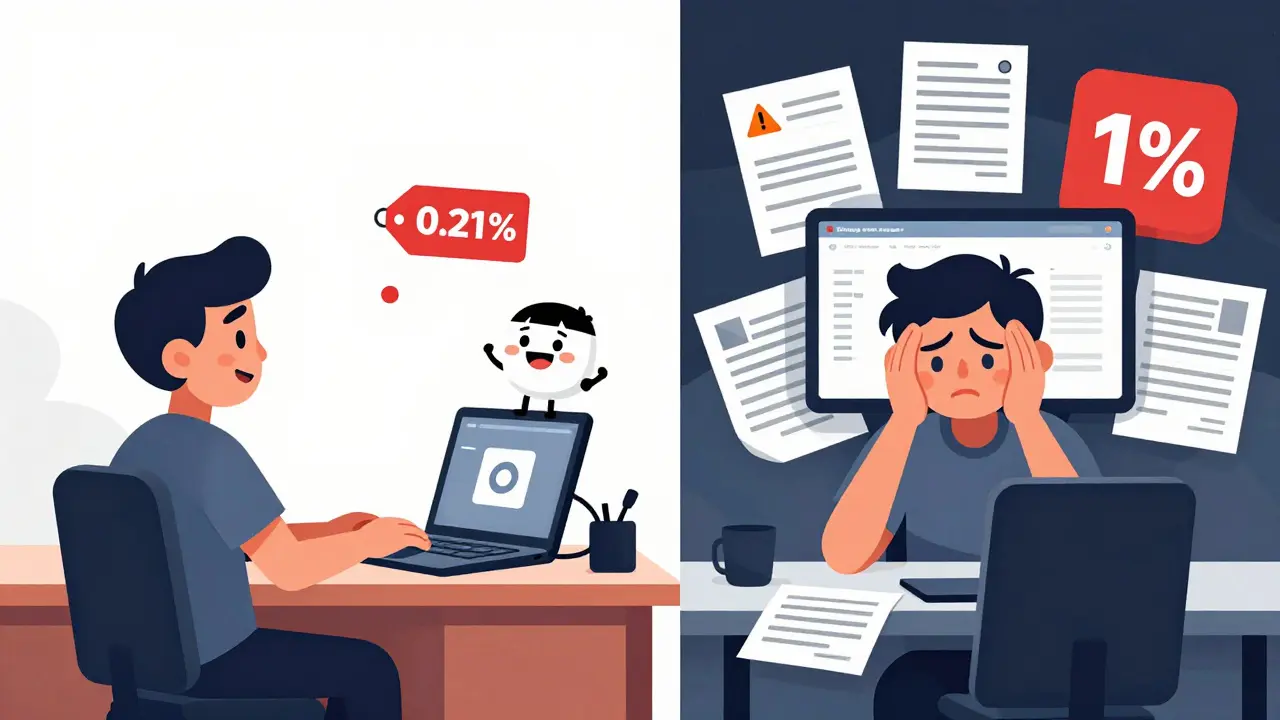
| Licensed Domestic Exchanges (e.g., Indodax, Tokocrypto) | 0.21% | The Exchange (withheld automatically) |
| Foreign Platforms / Self-Reported Transactions | 1.00% | You (must self-report to DGT) |
Notice the difference? Trading on a local, licensed exchange costs you significantly less in taxes-just 0.21%. If you choose to trade on a foreign platform like Binance Global (if accessible) or Coinbase, you are responsible for paying a 1% final income tax yourself. You must report this to the Directorate General of Taxes (DGT). Many traders mistakenly believe the 1% is optional or a suggestion; it is not. Failure to report can lead to audits and penalties.
Exchanges are required to remit these taxes within 72 hours of the transaction and provide you with quarterly tax statements by the 10th business day of the following quarter. Keep these records. They are your proof of compliance.
Why Use Local Exchanges Instead of Foreign Ones?
You might be tempted to use international platforms because they offer more coins or better interfaces. However, the regulatory structure in Indonesia makes this risky and expensive.
First, there is the tax penalty. Paying 1% versus 0.21% adds up quickly if you trade frequently. Second, there is the issue of fund security. Licensed Indonesian exchanges must maintain minimum operational capital of IDR 5 billion (approx. USD 325,000) and adhere to ISO/IEC 27001 cybersecurity standards. They are also subject to real-time monitoring by the OJK’s Digital Financial Innovation Monitoring System (SIM-LKD).
If a foreign exchange collapses or bans Indonesian users, you have little recourse. With a local exchange, you are protected by consumer protection laws and the OJK’s oversight. While some users complain about slower customer service or stricter withdrawal limits, the trade-off is safety. In Q2 2025, we saw a temporary dip in domestic volume as traders experimented with foreign platforms, but many returned after realizing the complexity of self-reporting taxes and the risk of frozen accounts.

Common Pitfalls to Avoid
Even when trying to do the right thing, traders often stumble. Here are the most common mistakes:
- Ignoring the Financial Literacy Test: Don’t rush through it. If you fail, your account remains restricted. Read the materials provided by the exchange.
- Mixing Personal and Business Accounts: If you trade as a hobby, the 0.21% final tax covers it. If you trade as a business (professional trader), you may need to declare profits differently. Consult a tax advisor if your volume is high.
- Using Unverified P2P Buyers: When using Peer-to-Peer (P2P) features on local exchanges, only transact with users who have high completion rates and verified identities. Scammers still operate here, targeting those who send crypto before receiving bank transfers.
- Overlooking Cross-Border Limits: Sending large amounts of crypto abroad (exceeding IDR 100 million) requires special approval from the OJK. Do not assume you can freely move wealth overseas without triggering alerts.
The Future of Crypto in Indonesia
The landscape is evolving. By early 2026, the OJK plans to mandate proof-of-reserves audits for all licensed exchanges. This means you will be able to verify that the exchange actually holds the assets it claims to have. Additionally, there are discussions about allowing select stablecoins for cross-border remittances, which could revolutionize how Indonesians send money to family abroad.
For now, the message is clear: stay local, stay licensed, and stay compliant. The system is designed to encourage participation while protecting the integrity of the national currency. By following these steps, you ensure that your crypto journey is profitable, secure, and above all, legal.
Is cryptocurrency legal in Indonesia in 2026?
Yes, trading cryptocurrency for investment purposes is legal in Indonesia. However, using crypto as a payment method for goods or services is illegal. The Indonesian Rupiah is the only legal tender.
Which agency regulates crypto in Indonesia?
The Financial Services Authority (OJK) regulates cryptocurrency trading in Indonesia. They took over this responsibility from BAPPEBTI in January 2025.
What is the tax rate for crypto trading in Indonesia?
Under PMK 50/2025, the final income tax rate is 0.21% for transactions on licensed domestic exchanges. For transactions on foreign platforms or self-reported trades, the rate is 1%.
Do I need an NPWP to trade crypto?
Yes, you need a Tax Identification Number (NPWP) to complete full verification (KYC) on licensed Indonesian exchanges. This is required for tax reporting purposes.
Can I use Binance in Indonesia?
Binance does not hold a license to operate as a crypto exchange in Indonesia. Using it means you are trading on a foreign platform, subjecting you to a 1% self-reported tax and lacking OJK consumer protections. It is recommended to use licensed local exchanges like Indodax or Tokocrypto.
What happens if I use crypto to buy coffee?
It is illegal. Bank Indonesia regulations prohibit the use of crypto as a payment method. Merchants who accept crypto for payments risk fines, and users violate the law regarding legal tender.
Are there any fees for withdrawing crypto?
Exchanges charge network fees for withdrawals, which vary by blockchain. There are no additional government withdrawal fees, but the 0.21% tax is applied to the sale/trade transaction, not the withdrawal itself.
How long does KYC verification take?
Due to stricter OJK regulations, KYC verification typically takes 3 to 7 business days. Ensure your documents are clear and match your KTP details to avoid delays.