
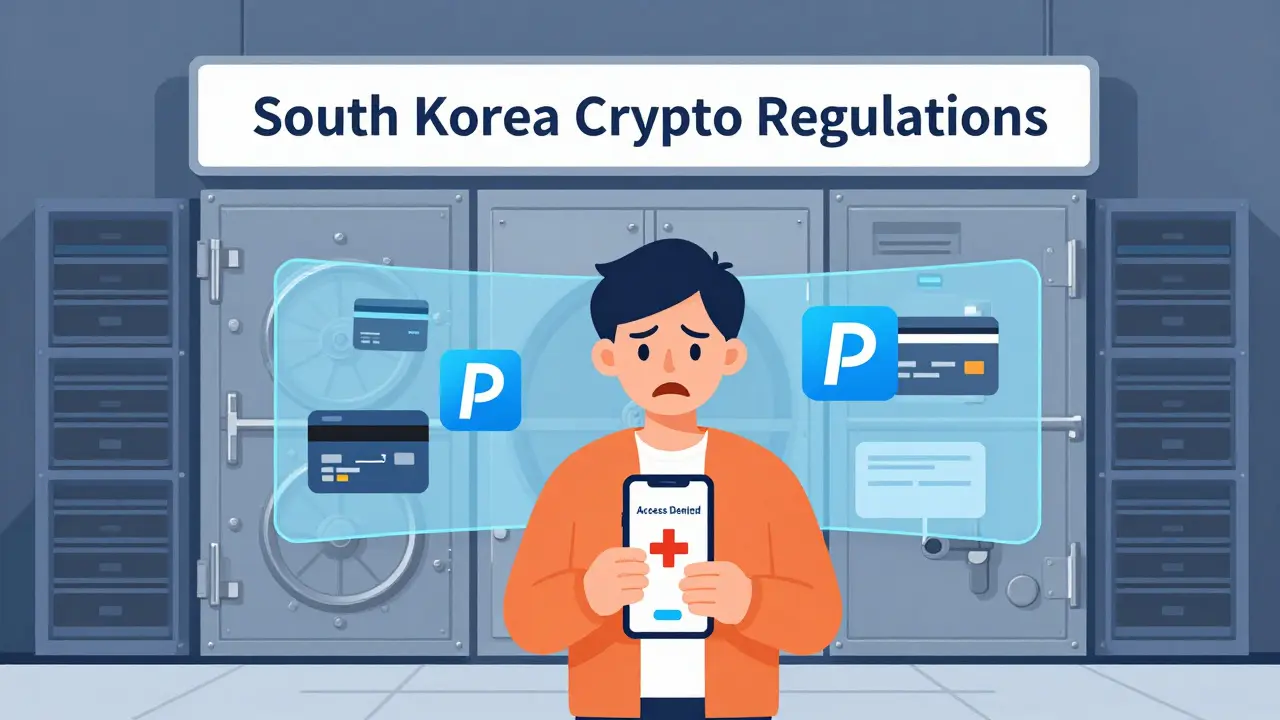
Imagine trying to buy a digital asset but being blocked because your bank account doesn't match the exchange's partner list. That is the reality for many people looking to trade cryptocurrency in South Korea. The country has built one of the strictest regulatory walls in the world around digital assets. At the heart of this system is the requirement for real-name bank accounts. This rule means you cannot just sign up with an email and start trading. You must prove who you are, link that identity to a local bank, and ensure that bank works directly with the exchange you want to use.
If you are a South Korean citizen, this process is annoying but manageable. If you are a foreigner without permanent residency, it might be impossible. As of mid-2026, the landscape remains rigid. Only a handful of exchanges have the green light from regulators to operate with these direct banking links. Let’s break down how this system works, why it exists, and what it means for you if you are trying to navigate the Korean crypto market.
The Core Mechanism: How Real-Name Verification Works
To understand the restriction, you first need to understand the mechanism. In most countries, you can deposit money into an exchange via wire transfer, credit card, or third-party payment processors like PayPal. In South Korea, none of that applies for domestic Won (KRW) transactions on regulated platforms. The system relies on a closed loop between specific banks and specific exchanges.
Here is how the flow actually looks for a trader:
- Identity Verification (KYC): You provide your legal name, ID number, and other personal details to the exchange. This isn’t optional. It matches the data held by the government.
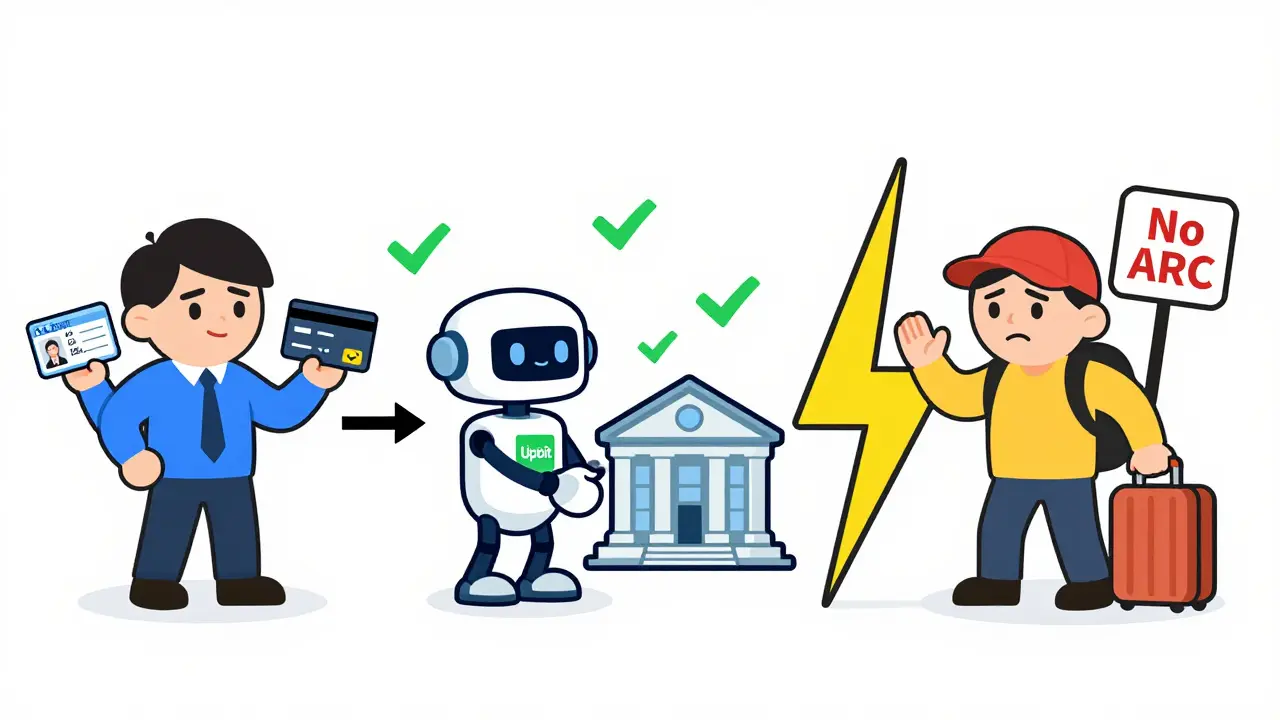
- Bank Account Linkage: You must have a bank account at one of the few banks partnered with major exchanges. For example, if you use Upbit, you generally need an account with K-Bank. If you use Bithumb, you need Kookmin Bank.
- Closed-Loop Transfer: When you deposit Korean Won, the money moves from your bank account to the exchange’s corporate account at the same bank. The exchange credits your wallet only after confirming the source of funds matches your verified identity.
This setup eliminates anonymity. Every transaction is traceable back to a specific individual. The Financial Intelligence Unit (FIU) oversees this to stop money laundering. While this protects the market from illicit activity, it creates a massive barrier for anyone who does not fit the standard profile of a resident citizen.
The Exchange-Bank Partnerships: A Limited Menu
You might think any major exchange would work. You would be wrong. The approval process is so stringent that as of April 2025, only five cryptocurrency exchanges had issued verified real-name bank accounts. While more Virtual Asset Service Providers (VASPs) have filed for registration, getting full operational status with banking integration is rare.
This limitation forces traders to choose their platform based on their existing banking relationships, not just fees or coin selection. Here is the current breakdown of the major players:
| Exchange Platform | Partner Bank | Status & Notes |
|---|---|---|
| Upbit | K-Bank | Largest volume; requires K-Bank account for seamless KRW deposits. |
| Bithumb | Kookmin Bank | One of the oldest platforms; tightly integrated with Kookmin. |
| Korbit | Shinhan Bank | Popular among users with Shinhan accounts; strong security reputation. |
| Coinone | Kakao Bank | Digital-first bank partnership; appeals to younger demographics. |
If you do not have an account with one of these specific banks, opening a new one solely for crypto trading adds another layer of friction. Banks often ask for proof of income, employment, or residential history. This is where the system starts to filter out casual investors and non-residents.
The Foreigner Barrier: Why It Is Nearly Impossible Without Residency
Let’s talk about the elephant in the room: foreign users. If you are visiting South Korea, working on a short-term contract, or living there without permanent residency, the real-name system effectively locks you out of the local market.
To open a real-name bank account in Korea, you typically need:
- An Alien Registration Card (ARC) or equivalent long-term visa documentation.
- A local Korean mobile phone number for two-factor authentication.
- Proof of address within South Korea.
Even if you manage to open a bank account, many banks will flag your account if they see frequent transfers to cryptocurrency exchanges. They may freeze the account pending investigation. This is part of the anti-money laundering (AML) protocols enforced by the FIU.
International exchanges like Binance or Coinbase do not offer direct KRW pairs. You cannot link a Korean credit card to them easily due to local banking blocks. So, foreigners are left with two bad options: use peer-to-peer (P2P) markets, which carry high scam risks and potential legal gray areas, or use international banking wires, which are slow, expensive, and often flagged by both sending and receiving banks.
Why Did South Korea Build This Wall?
It helps to look back at January 2018. Back then, the South Korean government was considering a total ban on cryptocurrency trading. Justice Minister Park Sang-ki threatened severe crackdowns. But public outcry was massive-over 220,000 citizens signed petitions demanding access. The government compromised. Instead of banning crypto, they decided to regulate it heavily.
The result was the real-name system. The goal was transparency. By tying every trade to a real person and a real bank account, the government could track capital flows. This helped stabilize the market during the wild volatility of the late 2010s. It also gave institutional investors confidence that the market wasn’t just a haven for criminals.
Today, the Financial Services Commission (FSC) views this system as a success story for consumer protection. However, it comes at the cost of accessibility. The trade-off is clear: safety and compliance over freedom and ease of entry.
Upcoming Changes: The 2027 Tax Shift
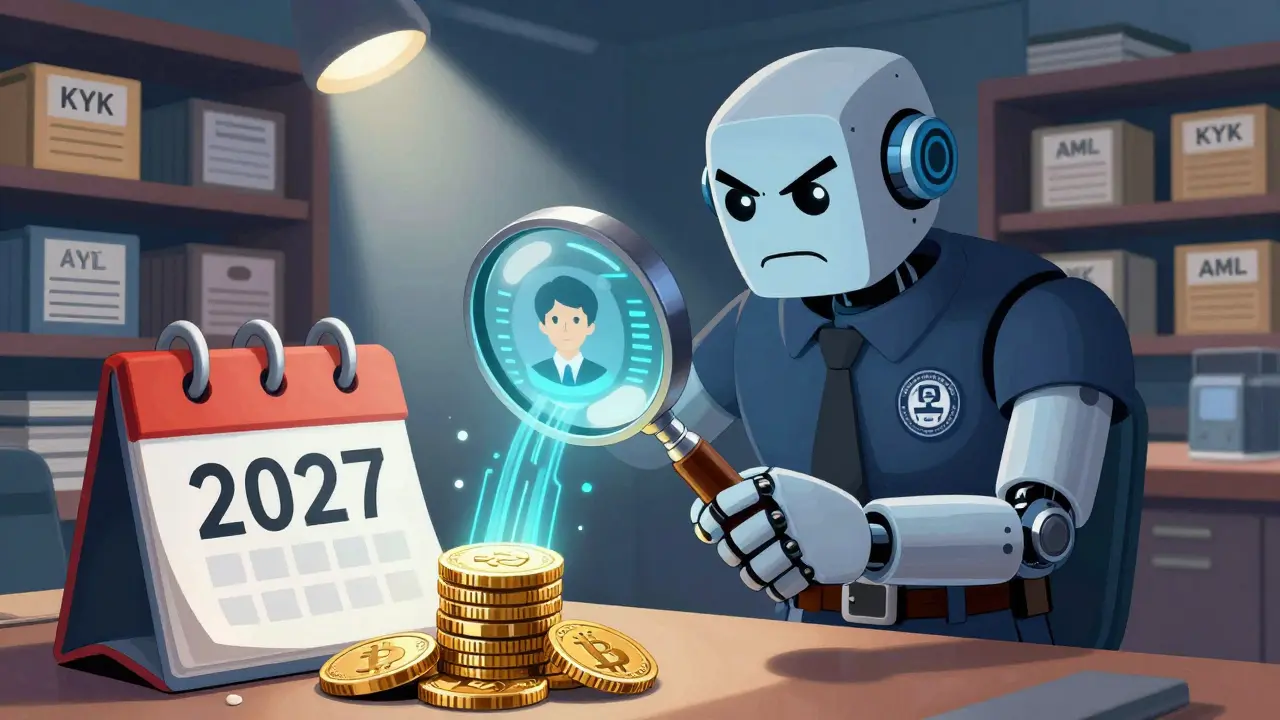
The rules aren’t static. As we move through 2026, traders are bracing for a major shift starting in 2027. The Income Tax Act has been amended. From 2027 onward, individuals will be taxed on profits from digital asset trading.
This changes the dynamic significantly. Previously, crypto gains were largely untaxed for individuals. Now, the real-name system makes tax collection easy. Because every transaction is linked to your identity and bank account, the National Tax Service can automatically track your gains and losses.
For corporations, the Corporate Tax Act now categorizes income earned by foreign corporations as domestic source income if generated within Korea. This closes loopholes that some offshore entities previously exploited.
Expect to see more scrutiny on your accounts. Banks will likely share even more detailed transaction data with tax authorities. If you are holding significant amounts of crypto, you need to prepare for proper record-keeping. The days of flying under the radar are over.
Navigating the System: Practical Steps for Residents
If you are a resident with the right documents, here is how to get started efficiently:
- Check Your Bank First: Don’t pick an exchange randomly. Check which bank you already use. If you use Shinhan, go with Korbit. If you use Kookmin, go with Bithumb. This saves you the hassle of opening new accounts.
- Complete KYC Thoroughly: Upload clear photos of your ID and face scan. Poor quality images lead to delays. Some exchanges require video verification calls.
- Start Small: Make a small initial deposit to test the speed. Most transfers take under 30 minutes, but issues can arise if your bank flags the transaction type.
- Monitor Regulatory Updates: Join community forums (mostly in Korean) to stay updated on sudden policy changes. The FSC can issue warnings that affect liquidity overnight.
Support on these platforms is primarily in Korean. English support is limited and often slow. If you don’t speak Korean, consider using translation tools or finding a bilingual friend to help verify terms and conditions.
Is There Any Loophole?
Many foreigners ask if there is a way around this. The short answer is no, not legally and safely. Peer-to-peer (P2P) trading exists, where you send cash to a person and they send crypto to your wallet. But this is risky. Scams are common. More importantly, using P2P to bypass real-name requirements can be seen as violating the Foreign Exchange Transaction Act (FETA). If caught, you could face fines or account freezes.
Some users try to use offshore exchanges with USD or EUR pairs, then convert those to KRW later. But bringing large sums of crypto-derived fiat back into Korea still triggers reporting requirements. The net worth calculation for tax purposes includes global assets, so hiding overseas holdings is increasingly difficult.
Conclusion: Safety vs. Access
South Korea’s real-name bank account system is a double-edged sword. It has created one of the safest and most transparent crypto markets in Asia. It has attracted billions in legitimate investment and protected retail users from many scams. But it has also built a fortress that keeps outsiders out.
For residents, it is a necessary inconvenience. For foreigners, it is a wall. As the 2027 tax laws kick in, expect the system to become even more rigid. The era of anonymous crypto trading in Korea is dead. If you want to play in this market, you must follow the rules, show your ID, and link your bank.
Can I trade crypto in South Korea without a local bank account?
No. To trade on regulated Korean exchanges like Upbit or Bithumb, you must have a real-name bank account linked to the exchange's partner bank. International exchanges do not accept KRW deposits directly from Korean banks due to regulatory blocks.
What happens if I am a tourist or short-term visitor?
You likely cannot open a real-name bank account required for crypto trading. Banks require long-term visas or Alien Registration Cards. Tourists should avoid attempting to use P2P markets as they carry high fraud risk and potential legal issues.
Will my crypto gains be taxed in 2027?
Yes. Starting in 2027, individual income from cryptocurrency trading will be subject to taxation in South Korea. The real-name system ensures the government can track these transactions accurately.
Which banks are best for crypto trading?
Your choice depends on the exchange. Use K-Bank for Upbit, Kookmin Bank for Bithumb, Shinhan Bank for Korbit, and Kakao Bank for Coinone. Having an account with one of these banks simplifies the deposit process significantly.
Is it safe to use peer-to-peer (P2P) markets instead?
P2P markets are risky. While they allow trading without direct bank-exchange links, they lack buyer protection. Scams are common, and using P2P to circumvent real-name regulations may violate the Foreign Exchange Transaction Act.
They say it is for security but we all know the real reason is control. The government wants to track every single satoshi you move so they can tax you into oblivion before the 2027 deadline hits. It is not about safety, it is about surveillance capitalism on steroids. They built this wall to keep the little guy out and the big banks in.
Man I miss the wild west days of crypto lol. Now you need a PhD in banking just to buy some Bitcoin in Seoul. Crazy times.
The regulatory framework described here is fundamentally flawed from an economic efficiency standpoint. The rigid coupling of specific VASPs with legacy financial institutions creates artificial monopolies that stifle innovation. It is quite amusing how regulators pretend this is consumer protection when it is clearly market manipulation by entrenched banking cartels. The jargon-heavy compliance requirements are merely barriers to entry designed to exclude sophisticated retail investors who understand liquidity dynamics better than these bureaucrats ever will.
I think there is value in the transparency though. It makes the market safer for everyone in the long run. We have to trust the process even if it feels slow right now.
You are completely missing the point!!! This system is a disaster for foreign talent!!! Why would anyone want to work in Korea if they cannot even access basic financial tools??? It is discriminatory!!! And inefficient!!! And frankly!!! Stupid!!!
Everyone here is acting like this is new or unique. Every country does this eventually. You complain about the rules because you don't want to follow them. The real-name system works perfectly fine for the residents. If you are a foreigner complaining, maybe you should just go home instead of whining on Reddit. It is not their problem that you are unbankable.
I see both sides honestly. On one hand, the friction is real and annoying for expats. On the other hand, after the 2018 crash, something had to be done. Maybe it is too strict, but at least the market didn't collapse entirely. Just waiting to see what happens with the 2027 taxes.
The matrix of financial control tightens its grip like a python around the neck of freedom. These digital leashes are not mere regulations; they are the chains of the new feudalism. The banks are the lords, the exchanges are the serfs, and you? You are the livestock being herded into the slaughterhouse of taxation. Wake up sheeple. The real name is just the first step in erasing your soul from the ledger of humanity.
i tried to open an account last year and it was such a pain. took forever to get approved. wish it was easier tbh
It is truly pathetic how uneducated people react to basic AML protocols. The concept of 'financial sovereignty' is a myth perpetuated by those who lack the intellectual capacity to understand systemic risk. The Korean model is actually quite sophisticated compared to the chaotic free-for-all in other jurisdictions. Your outrage is misplaced and demonstrates a fundamental misunderstanding of macroeconomic stability mechanisms.
Korea knows what it is doing. Unlike the US where banks are too scared to touch crypto anyway, Korea has a structured approach. Foreigners need to respect local laws. If you cant handle the bureaucracy, dont come here. Simple as that. Our system protects our citizens from scammers and criminals. Deal with it.
We must remember that cultural differences play a huge role here. In many Western nations, individual liberty is paramount, but in East Asian cultures, collective security and social harmony often take precedence. While the restrictions feel harsh to outsiders, they reflect a societal consensus on risk management. Perhaps instead of judging, we should seek to understand the philosophical underpinnings of this regulatory approach. It is not necessarily malicious, just different.
While I appreciate the detailed breakdown of the banking partnerships, it is important to consider the broader implications for international mobility and the ease of doing business in the region. The requirement for specific bank accounts creates a siloed ecosystem that may inadvertently discourage foreign investment and talent acquisition, which could have long-term negative effects on the local economy's competitiveness in the global digital asset space.
This article is boring. Nothing new here. Everyone knows Korea is strict. Can we talk about something else?
There is a profound irony in using technology meant to liberate finance while simultaneously building the most restrictive walls imaginable. It is like putting a Ferrari engine in a prison bus. The potential is there, but the cage is impenetrable. One wonders if this rigidity will ultimately break under the weight of decentralized innovations that bypass traditional banking entirely.
Hey guys! Just a friendly reminder that if you are stuck, try using a bilingual friend to help with the KYC process. It saves so much time! Also, keep an eye on the 2027 tax changes. Stay positive and stay compliant! 🚀
Typical American whining. You want free money without rules. Korea has order. We have chaos. Guess which one produces results? The fact that Upbit and Bithumb are thriving proves the model works. Stop crying about your inconvenience and look at the data. The market volume speaks for itself. Your freedom fetish is getting old.
I am just saying, if you are smart enough to trade crypto, you are smart enough to figure out the banking stuff. But seriously, the P2P risks are insane. I saw someone get scammed out of $5k last week. Stick to the regulated exchanges if you want to sleep at night. It is not that hard.
For those struggling with the bank selection, just check which bank you already use for daily expenses. If you use Shinhan, Korbit is your best bet. It simplifies everything. No need to overcomplicate it by opening new accounts unless necessary. Hope this helps!