
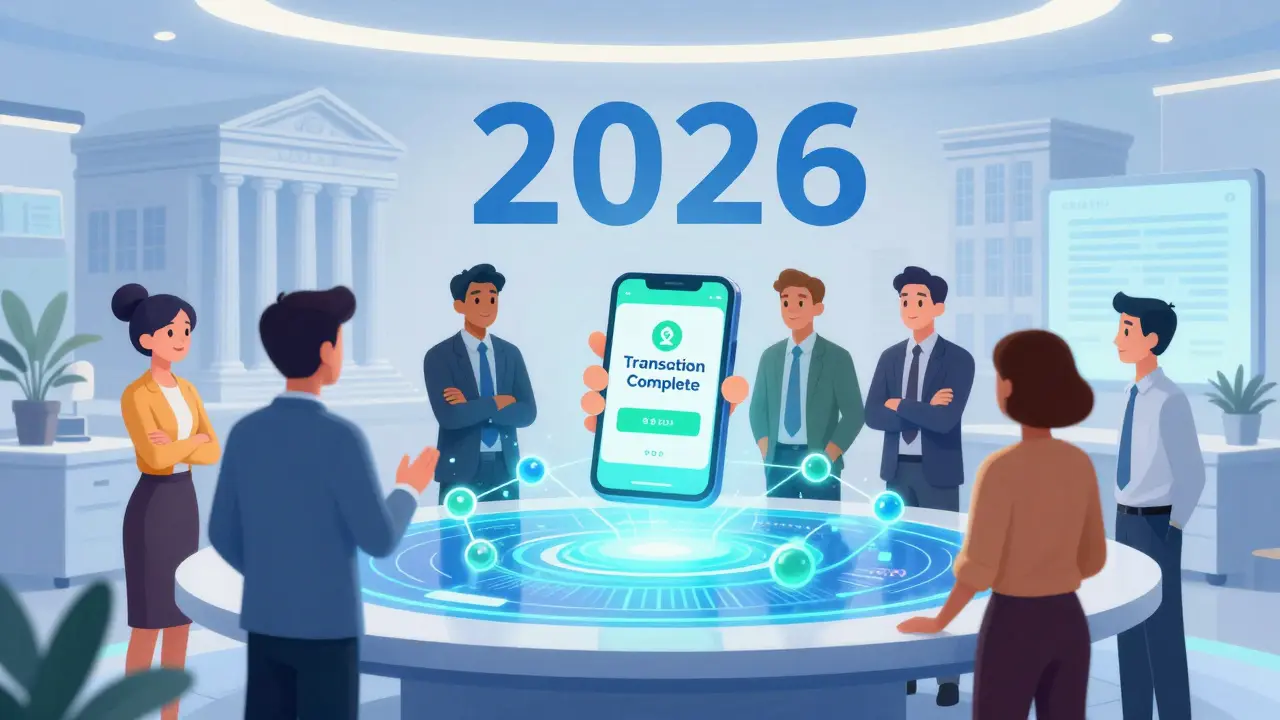
Remember when sending money across borders felt like filing your taxes? You’d fill out forms, wait three to five business days, and hope the exchange rate didn’t tank while your funds sat in limbo. Fast forward to mid-2026, and that friction is vanishing. Blockchain technology is no longer just a buzzword for crypto enthusiasts; it has quietly become the backbone of how value moves globally. But is it truly the future of digital transactions, or are we still chasing hype?
The short answer is yes, but not in the way you might think. It’s not about Bitcoin replacing your credit card at the grocery store tomorrow. It’s about the infrastructure behind the scenes shifting from legacy banking rails to decentralized ledgers. As of July 2026, the conversation has moved past "if" blockchain will be adopted to "how fast" it will replace outdated systems. With transaction costs on networks like Ethereum dropping to less than one cent and settlement times shrinking to seconds, the economic case for blockchain is undeniable. Yet, significant hurdles remain in regulation, user experience, and integration with old-school enterprise software.
The Shift from Hype to Infrastructure
Back in 2008, Satoshi Nakamoto introduced the concept primarily to enable peer-to-peer electronic cash. Today, blockchain is a foundational layer for trust in the digital economy. According to data from late 2025 and early 2026, 78% of surveyed enterprises report active blockchain deployments. This isn't experimental anymore; it's operational.
The biggest driver of this shift is cost and speed. Traditional systems like SWIFT rely on a network of intermediary banks, each adding fees and delays. Blockchain eliminates these middlemen. For instance, settlements that once took days now complete in under three minutes, available 24/7. This efficiency is why financial services dominate the market, contributing 40% of global blockchain revenue. Companies like Mastercard have launched projects like the Multi-Token Network, testing live transfers with major banks such as Standard Chartered. These aren't theoretical models; they are stress tests for the future of finance.
However, the transition isn't seamless. While the technology works, integrating it with legacy systems remains a headache for many corporations. The learning curve for basic payment integration is manageable-taking 2-4 weeks for tech-savvy teams-but enterprise-grade supply chain implementations can take six to nine months. The gap between potential and execution is where most businesses currently struggle.
Layer 2 Solutions: Making Blockchain Usable
If you’ve ever tried to use Ethereum during a busy period, you know the pain of high gas fees. In 2021, a simple transaction could cost $24 or more. That was a dealbreaker for everyday digital transactions. Enter Layer 2 solutions.
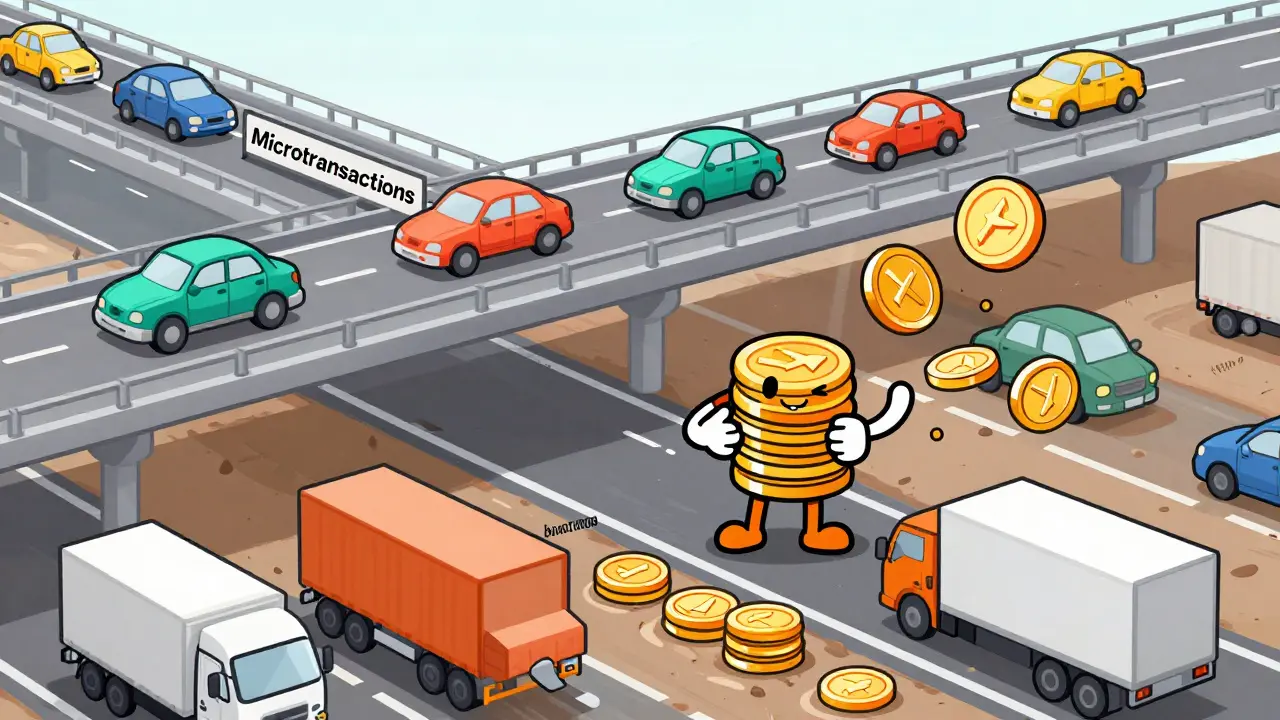
Networks like Arbitrum, Base, and Optimism have solved the scalability issue by processing transactions off the main chain and then settling them back on it. By 2025, 87% of Ethereum’s economic activity had migrated to these Layer 2 platforms. The result? Transaction costs plummeted to fractions of a cent. This makes blockchain-linked blockspace cheap and abundant, finally making microtransactions viable.
Interoperability has also improved drastically. Bridges like LayerZero allow different blockchains to talk to each other seamlessly. Hyperliquid’s canonical bridge, for example, processed $74 billion in volume in the first half of 2025 alone. This connectivity means users don’t need to stick to one ecosystem; they can move assets freely across networks without losing value or waiting hours for confirmations.
| Feature | Traditional Systems (SWIFT/Banks) | Blockchain Networks (L2/Stablecoins) |
|---|---|---|
| Settlement Time | 3-5 Business Days | < 3 Minutes |
| Availability | Banking Hours (Mon-Fri) | 24/7/365 |
| Average Cost | $15-$50+ per transfer | < $0.01 (on L2) |
| Transparency | Opaque (Private Ledgers) | Public & Immutable |
| Chargebacks | Supported (Consumer Protection) | None (Final Settlement) |
The Rise of Stablecoins in Commerce
You can’t talk about the future of digital transactions without mentioning stablecoins. These cryptocurrencies are pegged to fiat currencies like the US Dollar, offering the speed of blockchain without the volatility of Bitcoin.
The growth has been explosive. Stablecoin supply jumped from $5 billion to over $305 billion by late 2025. In September 2025 alone, $772 billion in stablecoin transactions settled on Ethereum and Tron, representing 64% of all volume on those networks. Visa reported that payment-specific volumes reached approximately $5.7 trillion in 2024.
Why do businesses love them? Predictability. When you send USD via blockchain, you receive USD. There’s no surprise fee deduction halfway through the process. More importantly, there are no chargebacks. For merchants, this eliminates the risk of fraud-related revenue loss that plagues traditional credit card processors. However, this finality is a double-edged sword for consumers who are used to disputing erroneous charges. Until regulatory frameworks catch up, this lack of recourse remains a barrier to mainstream retail adoption.
Privacy, Security, and the Zero-Knowledge Revolution
Early blockchain critics pointed out that public ledgers expose every transaction to anyone. If privacy is paramount, how can blockchain be the future? The answer lies in zero-knowledge proofs (ZKPs).
ZKPs allow one party to prove to another that a statement is true without revealing any underlying information. Imagine proving you’re over 18 without showing your birthdate. In 2025, interest in crypto privacy surged 320%. Projects like Zcash saw their shielded pool grow significantly, and new protocols like Railgun processed over $200 million monthly in private transactions.
This isn't just for hiding illicit activity. Corporations need to verify identities and compliance without exposing sensitive customer data. Google implemented a ZK identity system in 2025, and the Ethereum Foundation formed a dedicated privacy team. As regulations like GDPR tighten, the ability to maintain an immutable audit trail while keeping personal data private becomes a critical feature, not a bug.
Regulatory Fragmentation: The Biggest Roadblock
Technology moves fast; laws move slow. As of mid-2026, only 32 of 195 countries have comprehensive crypto regulatory frameworks. This fragmentation creates uncertainty for global businesses. The EU finalized its MiCA regulations in early 2025, providing clarity for European firms. The U.S. passed the Clarity for Payment Stablecoins Act in July 2025, which helped legitimize stablecoin usage. Meanwhile, emerging markets like Nigeria banned private cryptocurrencies while launching their own Central Bank Digital Currencies (CBDCs).
This patchwork landscape forces companies to navigate complex compliance maps. Sixty-three percent of enterprises cite regulatory compliance as their top challenge in blockchain implementation. Without global standards, cross-border blockchain transactions still face legal gray areas, limiting widespread consumer adoption despite the technical readiness.

Who Is Ready for Blockchain Transactions?
Not every business needs blockchain today. To decide if it’s right for you, consider your specific use case:
- Cross-Border B2B Payments: If you regularly send large sums internationally, blockchain offers immediate savings and speed. The ROI is clear.
- Supply Chain Tracking: Industries needing provenance verification (food, pharmaceuticals) benefit from immutable records. Healthcare is projected to grow at a 52.3% compound annual rate in blockchain adoption due to data protection needs.
- Retail Consumer Payments: Still risky. Only 28% of global merchants accept cryptocurrency directly. Consumer familiarity and dispute resolution mechanisms are lacking.
- High-Frequency Microtransactions: Ideal for Layer 2 networks where fees are negligible. Great for gaming, content tipping, or IoT device payments.
If you’re a small local shop selling coffee, stick to Visa or Mastercard. If you’re a multinational corporation managing supplier payments in Asia and Europe, start piloting blockchain solutions now.
The Verdict: A Hybrid Future
Is blockchain the future of digital transactions? Absolutely. But it won’t look like a total replacement of current systems overnight. Instead, expect a hybrid model. Your bank app will likely continue to exist, but underneath, it will settle transactions using blockchain rails. Stablecoins will act as the digital cash layer, while zero-knowledge protocols protect your privacy.
The technology has matured. Costs are down, speeds are up, and privacy tools are robust. The remaining barriers are human: regulation, education, and inertia. As Gartner predicts, by 2027, blockchain will underpin 30% of cross-border payment infrastructure. The question is no longer whether it will happen, but whether your organization will be ready when it does.
Is blockchain safer than traditional banking?
Blockchain offers cryptographic security that makes unauthorized alterations nearly impossible, unlike centralized databases that can be hacked. However, user error (losing private keys) and smart contract bugs pose risks. Traditional banks offer insurance and fraud recovery, which blockchain currently lacks for individual users.
How much does it cost to integrate blockchain payments?
For basic API integration, expect 2-4 weeks of development time. Enterprise-level supply chain implementations can take 6-9 months. Costs vary widely depending on complexity, but transaction fees on Layer 2 networks are often less than one cent, significantly lower than traditional interchange fees.
What are stablecoins, and why are they important?
Stablecoins are cryptocurrencies pegged to stable assets like the US Dollar. They combine the speed and low cost of blockchain with the price stability of fiat currency, making them ideal for everyday digital transactions and cross-border remittances without exposure to crypto volatility.
Can I get a refund if I make a mistake with a blockchain transaction?
Generally, no. Blockchain transactions are immutable and final. Unlike credit cards, there is no built-in chargeback mechanism. This protects merchants from fraud but places the burden of accuracy entirely on the sender. Always double-check wallet addresses before confirming transfers.
Is blockchain environmentally friendly?
Modern blockchains are much greener than early versions. Proof-of-Stake consensus mechanisms, used by Ethereum and others, consume 99.95% less energy than Proof-of-Work systems. As of 2025, proof-of-stake powers 78% of transaction volume, addressing major sustainability concerns.