

Russia doesn’t ban cryptocurrency - but it doesn’t let you use it like cash either. If you’re wondering whether you can buy Bitcoin, pay for groceries, or trade crypto legally in Russia, the answer isn’t simple. It’s a system built on contradictions: crypto mining is encouraged, trading is restricted to the ultra-rich, and using it to buy anything locally is illegal. Here’s how it actually works in 2026.
Buying Crypto Is Legal - But Only for the Very Wealthy
You can legally own Bitcoin, Ethereum, and other cryptocurrencies in Russia. But there’s a catch. The only way to trade them through regulated channels is under the Experimental Legal Regime (ELR), which opened in March 2025. And to qualify, you need to be rich.
To access this system, you must meet one of two financial thresholds: either have over 100 million rubles ($1.2 million) in securities and bank deposits, or earn at least 50 million rubles ($600,000) in annual income. That’s not a typo. These aren’t suggestions - they’re hard cutoffs. Only about 0.01% of Russian households meet this standard.
Once you’re in, you can trade crypto derivatives like futures and options through approved platforms. Sberbank and the Moscow Exchange now offer these products. In the first month alone, Russians bought $16 million in Bitcoin futures. But if you don’t hit those numbers? You’re locked out of the legal market.
Using Crypto to Pay for Things Is Still Illegal
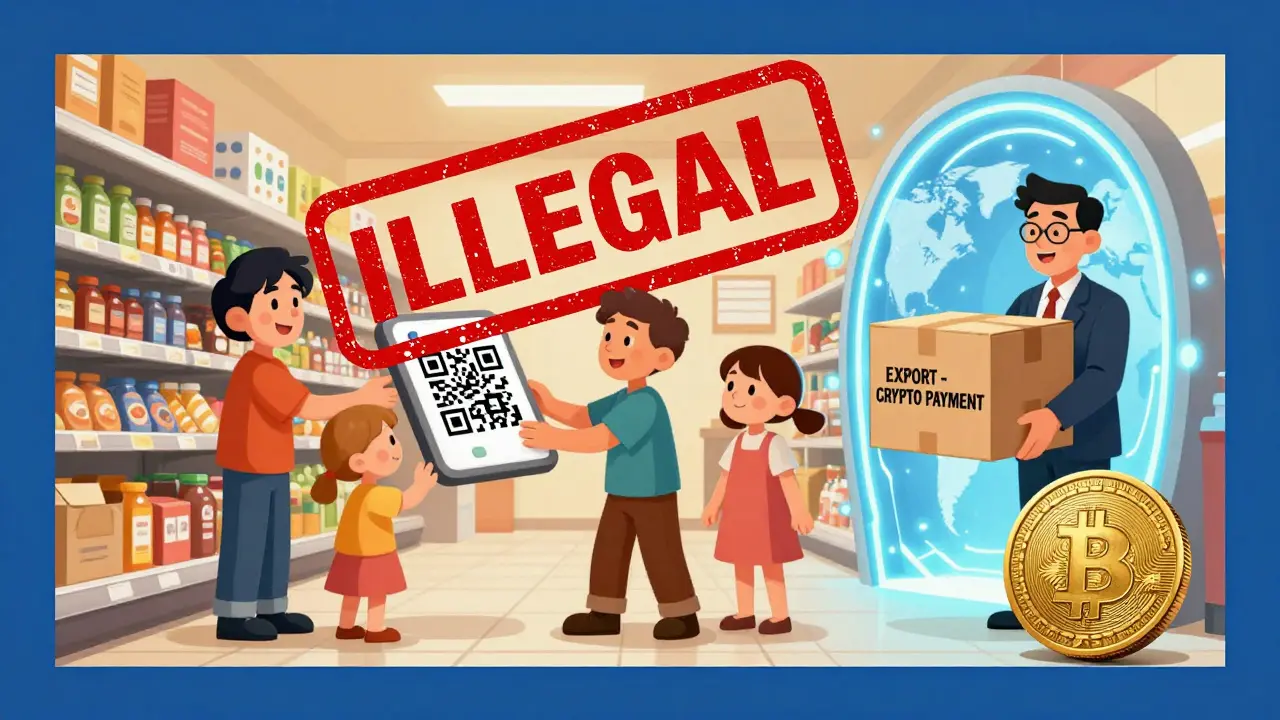
Since January 2021, it’s been illegal to use Bitcoin or any other cryptocurrency to pay for goods or services inside Russia. That means no buying coffee with Ethereum, no paying rent in Dogecoin, no ordering food from a restaurant that accepts crypto. The law is clear: digital assets can be owned, but not spent.
This rule hasn’t changed - even as the world moves toward crypto payments. The government’s goal isn’t to stop crypto entirely. It’s to control it. By keeping ordinary people from using crypto as money, regulators avoid destabilizing the ruble and prevent money laundering through everyday transactions.
But here’s the twist: there’s one major exception. Companies can use crypto for international trade. In 2024, new rules allowed Russian exporters and importers to settle cross-border deals in digital assets. By mid-2025, this channel had already processed over 1 trillion rubles ($12 billion) in trade. For businesses facing Western sanctions, crypto isn’t a workaround - it’s a lifeline.
Crypto Mining Is Not Just Legal - It’s Encouraged
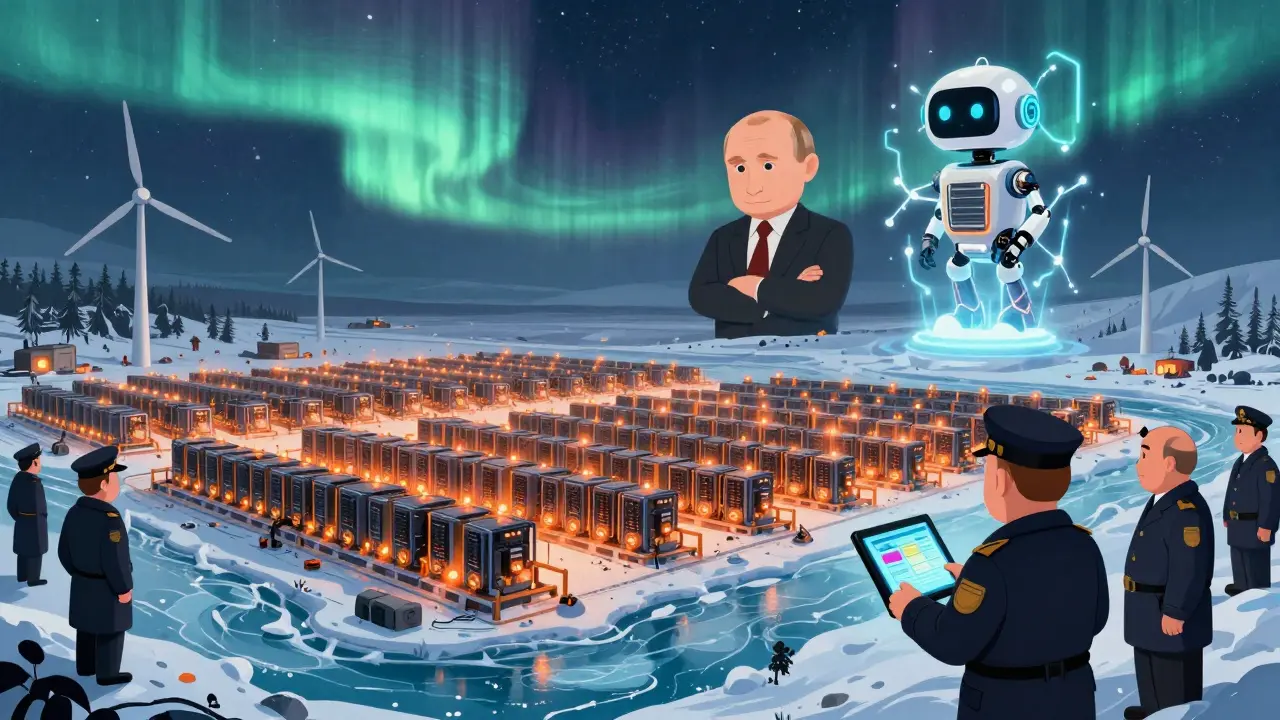
While regular Russians can’t spend crypto, Russia is one of the world’s top crypto mining countries. Why? Because mining uses electricity - and Russia has a lot of it.
The government actively promotes mining, especially in regions with cheap, underused power. Siberia and the Far East now host massive mining farms. The state even keeps a registry of legal mining operations and taxes them as a formal business activity.
But mining isn’t just about Bitcoin. President Putin’s advisors see it as infrastructure for the future. Boris Titov, Putin’s aide on business development, says mining rigs can be repurposed for artificial intelligence tasks. With Russia’s AI market expected to hit $100 billion by 2030, mining is being treated like a strategic asset - not just a financial one.
The Digital Ruble Is Russia’s Real Crypto Bet
Russia isn’t betting on Bitcoin. It’s betting on its own digital currency: the Digital Ruble.
Launched in August 2023, the Digital Ruble is a central bank digital currency (CBDC) - not a cryptocurrency. It’s issued by the Bank of Russia, runs on a controlled ledger, and can only be used within Russia’s financial system. Over 100,000 transactions have already been processed through 2,500 wallets.
The government sees the Digital Ruble as the future of payments - and a way to bypass Western financial sanctions. By linking it with global crypto networks, Russia aims to build a parallel international payment system. Imagine sending money to India or China using a Russian digital ruble that’s settled on a blockchain - no SWIFT, no dollar, no U.S. interference.
This is why Russia’s crypto strategy looks so strange. It’s not about freedom. It’s about control. The state wants to own the digital money system - not let private coins like Bitcoin replace it.
Who’s Really Using Crypto in Russia?
Despite the restrictions, Russians hold more than $25 billion in crypto. Where’s it all coming from?
Most of it is bought on foreign exchanges - Binance, Bybit, Kraken - using peer-to-peer (P2P) platforms. People use Russian bank cards or cash transfers to buy crypto from traders overseas. The Bank of Russia tracks these transactions as suspicious activity and has cracked down on banks that facilitate them. But enforcement is uneven. Many people still do it.
This creates a two-tiered system: a small, elite group trading legally through Sberbank’s crypto derivatives, and millions of ordinary Russians using unregulated, offshore platforms. The government knows this is happening. It just doesn’t have the power - or the will - to stop it completely.
What’s Changing in 2026?
The Experimental Legal Regime is set to expire in March 2028. Before then, the government must decide whether to make it permanent - and who gets in.
The Finance Ministry wants to lower the income and asset thresholds. Alexey Yakovlev, a top official there, says they’re actively discussing making it easier for more people to join. But the Central Bank is pushing back. Their job is to protect the financial system - not open the floodgates to risky investments.
One likely outcome: crypto derivatives will become available to investment funds in 2026. That means pension funds, asset managers, and hedge funds will be allowed to buy Bitcoin futures. Regular people? Still locked out.
Meanwhile, mining will keep growing. The Digital Ruble will expand. And international trade in crypto will keep rising - because sanctions haven’t gone away, and Russia needs alternatives.
Bottom Line: Crypto in Russia Is a Game of Rules, Not Freedom
Is crypto regulated in Russia? Yes - but not for you.
If you’re rich, you can trade futures legally. If you’re a company, you can use crypto to pay for imports and exports. If you’re a miner, you’re part of the national strategy. But if you’re an average person trying to buy Bitcoin to save money or send cash abroad? You’re in a gray zone - technically illegal, but widely practiced.
Russia’s approach isn’t about banning crypto. It’s about controlling it. The state wants to profit from mining, use crypto to bypass sanctions, and build its own digital currency - while keeping ordinary citizens away from the risks of volatile assets. The result? A system that works for banks, corporations, and the government - but leaves most people on the outside.
Can I legally buy Bitcoin in Russia in 2026?
Yes, but only if you qualify under the Experimental Legal Regime. You need over 100 million rubles ($1.2 million) in assets or 50 million rubles ($600,000) in annual income. Otherwise, you can still buy Bitcoin on foreign exchanges using P2P platforms - but that’s not officially regulated.
Can I use crypto to pay for groceries or rent in Russia?
No. Since January 2021, using cryptocurrency for domestic payments has been illegal. You can’t pay for food, utilities, or services with Bitcoin, Ethereum, or any other digital asset inside Russia.
Is crypto mining legal in Russia?
Yes, and it’s actively encouraged. The government tracks mining operations through a national registry and taxes them as a business. Russia is one of the top mining countries due to its low-cost energy and supportive policies.
Can Russian businesses use crypto for international trade?
Yes. Since mid-2024, Russian companies can legally use cryptocurrencies to settle cross-border trade deals. Over $12 billion in crypto trade was recorded in the first half of 2025, largely as a workaround for Western sanctions.
What is the Digital Ruble, and how is it different from Bitcoin?
The Digital Ruble is Russia’s official central bank digital currency (CBDC), issued and controlled by the Bank of Russia. Unlike Bitcoin, it’s not decentralized - it’s a digital version of the ruble. It’s meant for domestic payments and future international transactions, not speculation. Bitcoin is a private cryptocurrency; the Digital Ruble is state-controlled money.
Will Russia ever let regular people trade crypto legally?
Possibly - but not soon. The Finance Ministry wants to lower the income and asset requirements for the Experimental Legal Regime. But the Central Bank is resisting, fearing risks to average citizens. Any changes will likely be slow and limited - perhaps opening access to investment funds first, not individual retail investors.
Why does Russia allow crypto mining but ban crypto payments?
Mining uses Russia’s excess energy and creates infrastructure that can be reused for AI and other tech. It’s a strategic industry. Crypto payments, on the other hand, threaten the ruble’s stability and could enable sanctions evasion by ordinary people. The state wants to control the technology - not let it bypass its financial system.
Bro this is wild 😳 I thought crypto was supposed to be about freedom but in Russia it’s like a VIP club where you need a million bucks just to get in the door. Meanwhile I’m over here trying to buy a slice of pizza with BTC and getting kicked out of the cafe. The system is rigged.
They’re not regulating crypto they’re weaponizing it. The state lets miners run wild because they’re basically powering the AI army. And the Digital Ruble? That’s not money - it’s a surveillance ledger with extra steps. They want your data before your dollars. The elites trade futures while the rest of us are stuck buying BTC on P2P like smugglers. Classic Orwell meets Wall Street.
Man I’ve been following this for a while and honestly? It makes sense. Mining = good for the economy. Digital Ruble = control without chaos. And yeah, rich folks get to play with futures - but at least it’s not a total ban. Kinda like how some countries let gambling but only in casinos. You don’t have to like it… but it’s not stupid either. 🤷♂️
They’re using mining to fund the military industrial complex and the Digital Ruble is just a backdoor for sanctions evasion. The whole thing is a psyop. The Central Bank doesn’t care about stability - they’re building a parallel financial empire to replace the dollar. And you think you’re just buying Bitcoin? Nah bro you’re funding a new cold war. The Feds already know. They’re just waiting to strike.
Okay but imagine being the person who just wants to buy groceries without handing over your bank details to a foreign exchange. This system is so messed up it’s almost poetic. The fact that Russia lets miners thrive but bans coffee payments? That’s not regulation - that’s performance art. I’m not mad, I’m inspired. 🌱
Controlled freedom. That’s the real crypto. Not decentralization. Not rebellion. Just power choosing who gets to play.
so like… you can mine but not spend? that’s so extra. why not just let people use it? its not like rubles are doing great anyway. also why does the gov care if i pay my rent in doge?? 😭
Interesting how they treat mining like infrastructure. It’s not just about crypto - it’s about energy surplus and tech sovereignty. Kinda reminds me of how China built solar and EVs first before letting citizens use them. Strategy over speed.
THIS IS A JOKE RIGHT?? I mean like… 100 million rubles?? who even has that?? its like saying you can vote but only if you own a yacht. the gov is so out of touch they think this is fair. i bet the ministers are all holding ETH in their offshore wallets while the rest of us are stuck with rubles that lose value every week. 😤
Okay but let’s be real - the only reason they allow mining is because it’s the one thing Russia actually excels at. Everyone else is trying to be Silicon Valley. Russia? Nah. They’re the world’s biggest Bitcoin power plant. And the Digital Ruble? That’s just their way of saying ‘we’re not anti-crypto, we’re pro-us’. Drama queen energy. I love it.
It’s frustrating but also… kind of smart? They’re not trying to stop innovation. They’re trying to own it. Like, if you can’t beat them, join them - but only on your terms. Maybe that’s the lesson here: freedom isn’t always about access. Sometimes it’s about who gets to build the rules.
I’ve been researching CBDCs globally and Russia’s approach is actually one of the most transparent. They’re not hiding the Digital Ruble - they’re promoting it as a sovereign alternative. The fact that they’re allowing international crypto trade for businesses? That’s a quiet revolution. Sanctions forced them to innovate, and they did. Not perfect, but not the dystopia some make it out to be.
It is fascinating how the Russian state has transformed what was once seen as a decentralized threat into a centralized instrument of economic resilience. The mining infrastructure serves dual purposes - energy utilization and technological advancement. The Digital Ruble, while not a cryptocurrency, represents a sovereign vision of financial autonomy. This is not suppression - it is strategic reorientation. The world must recognize that regulation, when purposeful, is not the enemy of innovation but its architect.
Wake up sheeple. The whole thing is a front. The mining farms are just cover for military-grade AI training. The Digital Ruble? That’s the real surveillance tool. And the 100 million ruble threshold? That’s not a barrier - it’s a filter. Only loyalists get in. The rest of us are being used as fuel. The Bank of Russia isn’t protecting the system - they’re protecting the regime. And you’re still buying BTC like it’s a game. It’s not. It’s a trap.
Man I live in Australia and we’re still debating whether to tax crypto like property. Russia’s system is insane but at least they’ve got a plan. Mining = jobs. Digital Ruble = control. P2P = survival. It’s messy but it’s working. I respect that. Not saying I’d want to live there… but I’d definitely invest in their mining ETF.
So if I’m understanding this right - regular people can’t spend crypto but companies can use it for global trade? That’s basically saying ‘you can’t use this to escape the system, but we will’. It’s so contradictory it’s almost genius. I feel like this is the future everywhere - crypto as a corporate tool, not a personal one.
100 million rubles?? Bro that’s like 10x the average salary. This isn’t regulation this is class warfare dressed up as finance. The rich get to gamble with Bitcoin futures while the rest of us are stuck buying Dogecoin from some guy on Telegram who might be a cop. The government is laughing all the way to the bank while we’re the ones getting audited. Wake up people
They’re not banning crypto they’re just making sure only the people who already have money can play. Classic. Meanwhile the miners are running on Siberian hydro power like it’s a national park. It’s not hypocrisy - it’s capitalism with a Russian accent.
so they let you mine but not buy coffee with it? that’s like letting someone own a Ferrari but only drive it on a racetrack. and the digital ruble? yeah sure. sounds like the government just wants to be the only one who gets to print digital money. genius. 🙄
They’re building the future and you’re stuck arguing about whether you can pay for ramen in Bitcoin. The miners are the new oil barons. The Digital Ruble is the new SWIFT. Get over yourself. This isn’t about you.
While the regulatory framework appears restrictive, it is grounded in macroeconomic prudence. The exclusion of retail participants from derivative markets mitigates systemic risk. Simultaneously, the institutionalization of mining and the strategic deployment of the Digital Ruble align with long-term national objectives. This is not censorship - it is sovereign financial engineering. The challenge lies not in the regulation, but in the global perception of its intent.
That’s actually kind of beautiful. The state is using crypto’s energy to power its own digital future - while letting the people find their own way around the edges. It’s not perfect, but it’s real. Like a garden where the weeds are still growing, but the roses are being tended with care. 🌹