

Imagine spending a million dollars and two years of your life just to get a "yes" from a regulator. That is the reality for any company trying to launch a Japan crypto licensing framework compliant exchange. While many countries are still arguing over whether Bitcoin is a security or a commodity, Japan has already built a high-walled garden. It is a system that prioritizes safety over speed, which is exactly why it is the third-largest crypto market in the world with over 12 million registered accounts as of early 2025.
Quick Summary: The State of Japanese Crypto Regulation
- Regulator: The Financial Services Agency (FSA) is the primary authority.
- Key Shift: Oversight is moving from the Payment Services Act (PSA) to the Financial Instruments and Exchange Act (FIEA) by Q2 2026.
- Safety First: Exchanges must keep 95% of user funds in cold storage.
- Self-Regulation: Most licensed platforms follow the stricter rules of the Japan Virtual Currency Exchange Association (JVCEA).
- Barriers: High capital requirements and a rigorous 18-24 month application process.
The Shift from PSA to FIEA
For years, the Payment Services Act (PSA) treated crypto mainly as a tool for payment. But let's be honest: crypto has evolved into a complex investment vehicle. Because of this, the FSA announced a massive regulatory shift on September 2, 2025. They are moving crypto asset oversight into the Financial Instruments and Exchange Act (FIEA).
Why does this matter? It means the government is finally treating crypto assets based on how they actually behave in the market. If a token acts like a security, it gets regulated like a security. This removes the confusing gap between "payment tokens" and "security tokens" that has caused so much legal drama in the US. By March 2026, Japan aims to have a unified framework where traditional stocks and digital assets live under the same regulatory roof.
How to Actually Get a License in Japan
Getting a license isn't as simple as filling out a web form. It is a grueling process that usually takes 18 to 24 months and can cost between $500,000 and $1 million. If you are planning to enter this market, you need to prepare for several non-negotiable hurdles.
First, you can't just be a foreign entity with a website. You must form a kabushiki-kaisha (a joint-stock company) under Japanese law. This requires a physical office in Japan and a resident manager who is personally on the hook for any regulatory failures. If things go south, the FSA doesn't just fine the company; they hold the manager accountable.
Then there is the money. You need a minimum capital of 10 million yen (roughly $68,000) and positive net assets. While that amount seems small compared to the total cost of entry, it's the baseline to prove you aren't an undercapitalized operation that will collapse at the first sign of a market dip.
Before you ever go live, the FSA requires a "shadow operation" period. For six months, your systems must process simulated transactions without a single error. It's essentially a high-stakes dress rehearsal for your entire technical infrastructure.
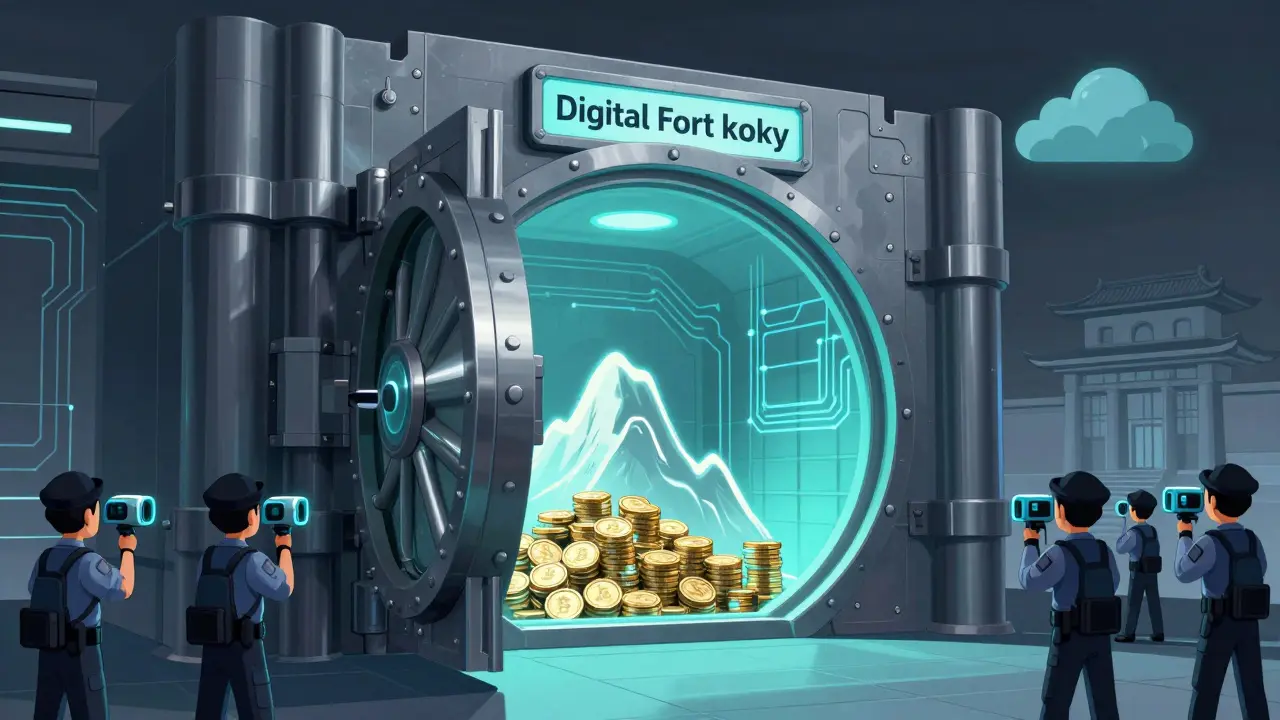
The "Fort Knox" Approach to Security
Japan learned the hard way that "trust me" doesn't work in crypto. After the 2018 Coincheck hack, where $534 million in NEM tokens vanished, the government stopped playing around. Now, the rules are incredibly strict. Every licensed exchange must keep at least 95% of user assets in offline cold wallets.
This is a double-edged sword. On one hand, it's a lifesaver. For instance, a trader on Reddit recently noted that their BTC stayed safe during a March 2025 security incident specifically because Bitbank followed these cold storage rules. On the other hand, it's a nightmare for capital efficiency. Some critics argue that this creates a single point of failure and that exchanges should be allowed to use institutional custody solutions instead of managing their own massive cold vaults.
Beyond wallets, your tech stack must be a tank. You need DDoS protection that can handle attacks over 1 Tbps and a security response team that can react within 15 minutes of an incident. If you can't prove this via a JVCEA security audit, you aren't getting in.

The Role of the JVCEA: The Regulator's Regulator
While the FSA sets the laws, the Japan Virtual Currency Exchange Association (JVCEA) handles the day-to-day policing. Think of them as a self-regulatory body that often sets the bar even higher than the government does. Most licensed exchanges are members because it gives them a stamp of legitimacy.
The most controversial part of the JVCEA is the Token Listing Committee. In other markets, like Singapore, an exchange can decide which tokens to list on its own. In Japan, the JVCEA's 17-member committee has to pre-approve new tokens. This process is notoriously slow and strict; in the second quarter of 2025, they rejected 72% of the 147 applications they received.
This is why Japanese users often complain that they can't trade trending tokens until months after the rest of the world. It's the price they pay for not waking up to find their exchange has been rugged by a meme coin that hadn't been vetted.
| Feature | Japan (FSA/JVCEA) | Singapore (MAS) | USA (SEC/CFTC) |
|---|---|---|---|
| Token Listing | Strict Pre-approval | Self-Certification | Case-by-Case / Legal Battles |
| Cold Storage | 95% Mandatory | Risk-based | Varies by state/provider |
| Compliance Cost | Highest (~25% of revenue) | Moderate (~15% of revenue) | High (Legal fees) |
| Leverage Limit | Max 2x | Strict for retail | Varies / High for offshore |
The Trade-off: Security vs. Profitability
Japan's framework is an absolute win for the retail investor. According to a 2025 FSA report, 87% of users feel secure using licensed exchanges. Compare that to only 63% in unregulated markets. You don't have to worry about your exchange disappearing overnight when the government has already vetted their capital, their managers, and their wallets.
But for professional traders, it's a different story. The restriction on margin trading-which was cut from 4x to 2x leverage in 2023-has driven people away. Some estimates suggest a 15% drop in active day traders on Japanese platforms because they can't get the leverage they find in hubs like Dubai, where 100x leverage is sometimes possible. If you're a high-frequency trader, Japan feels like a straitjacket.
What's Next for the Japanese Market?
We are currently in a transition period. The most exciting development is the potential entry of the "megabanks." For years, Japanese banks were basically forbidden from touching crypto. However, new consultations suggest that groups like the Mitsubishi UFJ Financial Group might be allowed to register as licensed exchange operators.
If the big banks enter the fray, we'll see a massive surge in institutional adoption. The catch? The FSA isn't letting them in for free. They'll likely require capital buffers of 30% against crypto holdings and mandatory stress tests to ensure the bank doesn't collapse if Bitcoin drops by 80% in a week.
How long does it take to get a crypto license in Japan?
On average, the process takes between 18 and 24 months. This includes the time needed to establish a local company, set up compliant internal controls, and complete a six-month shadow operation period required by the FSA.
What is the minimum capital requirement for a Japanese exchange?
Applicants must have at least 10 million yen in capital and maintain positive net assets to be considered for registration by the Financial Services Agency.
Why are there so few altcoins on Japanese exchanges?
Most Japanese exchanges belong to the JVCEA, which requires a strict pre-approval process for every new token. The Token Listing Committee rejects a high percentage of applications to protect users from high-risk or fraudulent assets.
What is the 95% cold storage rule?
It is a security mandate requiring exchanges to keep 95% of all customer assets in offline wallets (cold storage) to prevent large-scale thefts from online hacks.
Will banks be allowed to trade Bitcoin in Japan?
The FSA is currently reviewing rules that could allow bank groups to register as exchange operators, though they will likely face strict capital buffer requirements (around 30%) and rigorous stress testing.
Next Steps and Troubleshooting
If you are a business owner looking to enter Japan, don't try to DIY your compliance. The regulatory environment is too nuanced for a general legal team. Your first step should be hiring a compliance officer with specific experience in Japanese financial law-expect to pay around ¥12 million per year for someone who actually knows how to navigate the FSA.
If you're a trader frustrated by the lack of tokens, your options are limited. You can either wait for JVCEA approval or look into non-custodial wallets, though be aware that using unregulated offshore platforms exposes you to the exact risks the Japanese framework was designed to prevent. The safest bet remains using licensed entities like Bitbank or GMO Coin, even if the product list is shorter.
The pivot from PSA to FIEA is a classic regulatory arbitrage play to bring digital assets into the fold of traditional securities law. It's basically a textbook move to reduce systemic risk by implementing a unified oversight mechanism. Definitely a sophisticated approach to market volatility.
Classic honeypot setup. They want a "physical office" and a "resident manager" who's personally liable? That's just a fancy way of saying they want a hostage for the state to squeeze when things go sideways. Wake up people, the JVCEA is just a puppet for the deep state to control the flow of liquidity and keep us off the real decentralized rails. It's all a psyop to make us feel "safe" while they build a digital panopticon. This isn't about safety, it's about the Great Reset and ensuring no one escapes the fiat system via crypto. The 95% cold storage rule is probably just a way for them to ensure they can freeze assets in bulk without any friction. Proper anarchy is the only way out of this web of lies.
Typicaly we see the US just winging it with the SEC while Japan actually has the spine to protect its peopel! Its honestly embarrassing how our governmint lets scams run wild when you could just implement a real standard like the JVCEA. If we had half the discipline of the Japanese we wouldnt be seeing billions vanish into thin air every other week because some moron invested in a dog coin. We need to stop pretending that "innovation" means letting criminals rob grandmothers and start enforcing the law with actual teeth like they do across the pond!
Safety is just a polite word for stagnation. We trade speed for security and call it progress.
Solid breakdown. It's a steady path for long-term growth.
Imagine thinking a 2x leverage limit is a
Imagine thinking a 2x leverage limit is a
Imagine thinking a 2x leverage limit is a
Imagine thinking a 2x leverage limit is an acceptable trade-off for "safety." It's a total joke. In India, we're seeing a much more dynamic approach to tech adoption. Japan is basically turning their crypto market into a museum exhibit. Who wants to trade in a straitjacket? It's pathetic that they're so scared of a little volatility that they kill the very essence of why we use crypto in the first place. Total failure of vision.
The sheer tragedy of this is almost poetic. Imagine the visceral agony of a trader watching a token moon on every exchange globally while they sit in the Japanese waiting room, begging the JVCEA for a scrap of permission. It is a bureaucratic nightmare wrapped in a velvet glove of "consumer protection." I can practically feel the desperation and the stifling air of a government office where dreams go to be filed in triplicate and then shredded. Absolutely heartbreaking!
Let's look at the silver lining here! 🌟 The focus on cold storage is a huge win for the average person who just wants to keep their savings safe. It's all about building a sustainable ecosystem for everyone 🚀. If you're new to this, just remember that the slow lane is often the safest lane! Keep learning and keep growing! 💪
It is quite evident that the lack of spiritual discipline in Western markets leads to such chaos. Japan's rigorous approach is a reflection of a more structured societal order. One must wonder if the users in other nations are simply too undisciplined to handle the freedom they crave, thus requiring the intervention of a stern regulatory body to prevent their own financial ruin.
I've worked with a few firms trying to enter the APAC region, and I can tell you that the "shadow operation" period is actually a blessing in disguise. Most people see it as a hurdle, but in reality, it forces a level of technical maturity that prevents the kind of catastrophic failures we've seen with offshore exchanges. If you can't handle a six-month simulation without a glitch, you have absolutely no business handling millions of dollars of other people's money in a live environment. It's a rigorous filter that separates the professional outfits from the overnight "entrepreneurs" who just want to flip some tokens and disappear.
Oh sure, because waiting two years for a license is exactly how you foster "innovation." Truly a brilliant strategy.
I mean, I get why they're strict, but like, who actually has 10 million yen just sitting around for a baseline? It's kind of a vibe killer for the little guys, but honestly, maybe that's the point? Only the big fish should be playing this game anyway since they're the only ones who can afford the lawyers.
Lol at the "Fort Knox" approach. It's basically just the government saying "we don't trust you to keep the keys in your pocket." But hey, at least you won't wake up to a 404 error on your balance sheet.
This is such a great example of how different cultures view risk! In some places, it's all about the rush, but here we see the beauty of a deliberate, careful approach. It's almost like a meditation on finance. We can totally learn from this balance of caution and growth to create a global standard that respects both the pioneer and the protector! ✨