
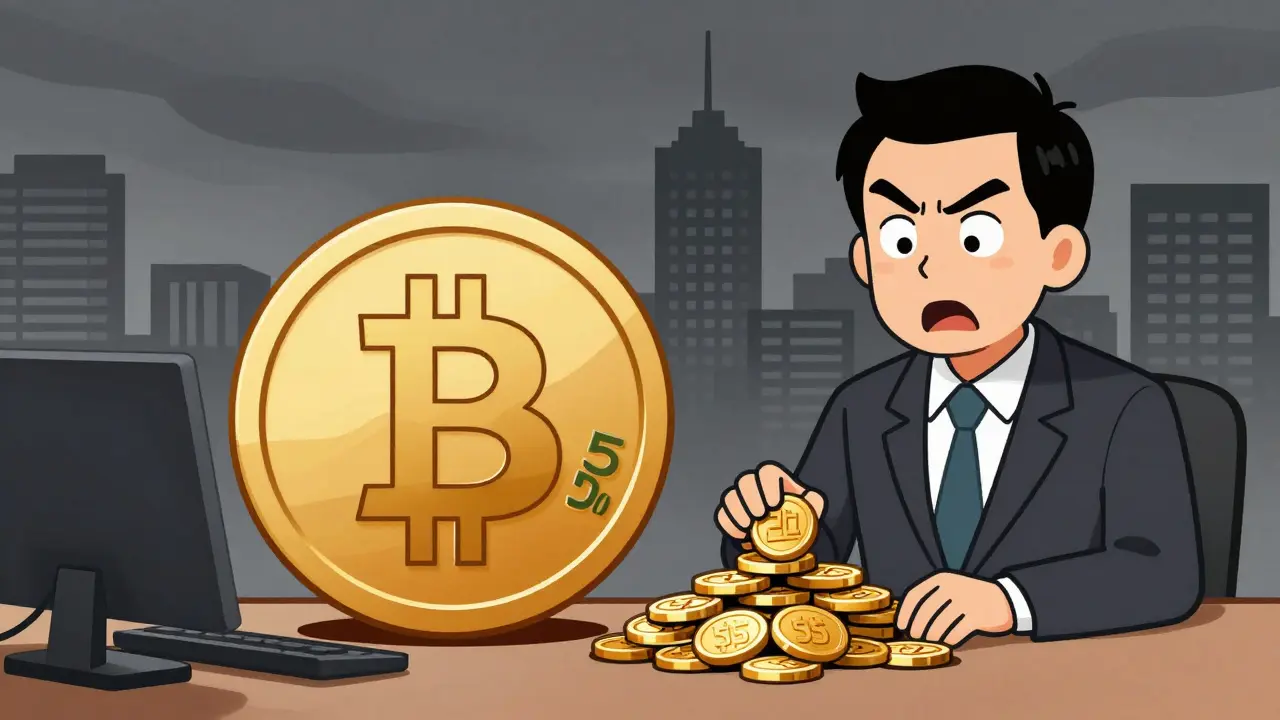
Imagine waking up to a massive windfall from a lucky Bitcoin trade, only to realize that more than half of your profit belongs to the government. For years, that has been the reality for investors in Japan. With a combined tax rate that can hit 55%, Japan has long been known as one of the most expensive places in the world to trade digital assets. But as we move through 2026, the landscape is shifting. The government is finally admitting that taxing crypto like a random side-hustle instead of an investment has driven talent and money out of the country.
The Brutal Reality of the 55% Tax Rate
To understand why people are so frustrated, you have to look at how the National Tax Agency (NTA) views your digital wallet. Unlike stocks, which are taxed at a flat 20% rate, Cryptocurrency is classified as miscellaneous income. This is a critical distinction because miscellaneous income is subject to a progressive tax scale.
Here is how the math actually works for a resident: you pay a national income tax that slides from 5% up to 45% based on how much you earn. On top of that, you're hit with a 10% inhabitant tax (split between your prefecture and your municipality). If you're a high earner, these two numbers stack up to a staggering 55%. Whether you held your Ethereum for ten years or ten minutes, the rate remains the same. There is no "long-term capital gains" discount like you'd find in the US.
| Feature | Cryptocurrency (Current) | Stocks / Equities |
|---|---|---|
| Tax Category | Miscellaneous Income | Separate Self-Assessment |
| Max Effective Rate | 55% | 20% |
| Holding Period Benefit | None | Standardized |
| Reporting Threshold | Gains > 200,000 JPY | Standard Filing |
When Does the Tax Man Actually Knock?
You don't owe tax just for buying and holding. The Payment Services Act and the Financial Instruments and Exchange Act define specific "disposal events" that trigger a taxable event. If you just move Bitcoin from an exchange to a cold wallet, you're fine. But the moment you do the following, you've triggered a tax liability:
- Selling your crypto for Japanese Yen (JPY) or any other fiat currency.
- Trading one cryptocurrency for another (e.g., swapping BTC for SOL).
- Using crypto to buy a coffee, a car, or any other good or service.
- Receiving staking rewards or earning interest through DeFi.
For most, the filing window is tight. You must report your gains from the previous calendar year between February 16 and March 15. If your gains exceed 200,000 JPY, reporting is mandatory. This high level of scrutiny is why Japan is considered one of the most vigilant states globally regarding tax compliance, closely aligned with the Financial Action Task Force (FATF) standards.

The Great Migration: Why Investors Left
When you tax an asset at 55%, people stop using that asset. Data from the last few years shows a clear trend: Japanese traders started fleeing to places like Singapore, Dubai, or Hong Kong. Chainalysis noted a 27% drop in active Japanese wallet addresses on domestic exchanges between 2022 and 2023. Why? Because it's nearly impossible to compete with global markets when more than half your profit is gone.
Traders on forums like r/CryptoJapan have shared horror stories of earning 30 million JPY and seeing an effective tax rate of over 50% after combining national and local taxes. This created a "brain drain" where the most skilled Web3 developers and investors simply moved their operations offshore to avoid the crushing tax burden.
The 2026 Pivot: A New Flat Tax?
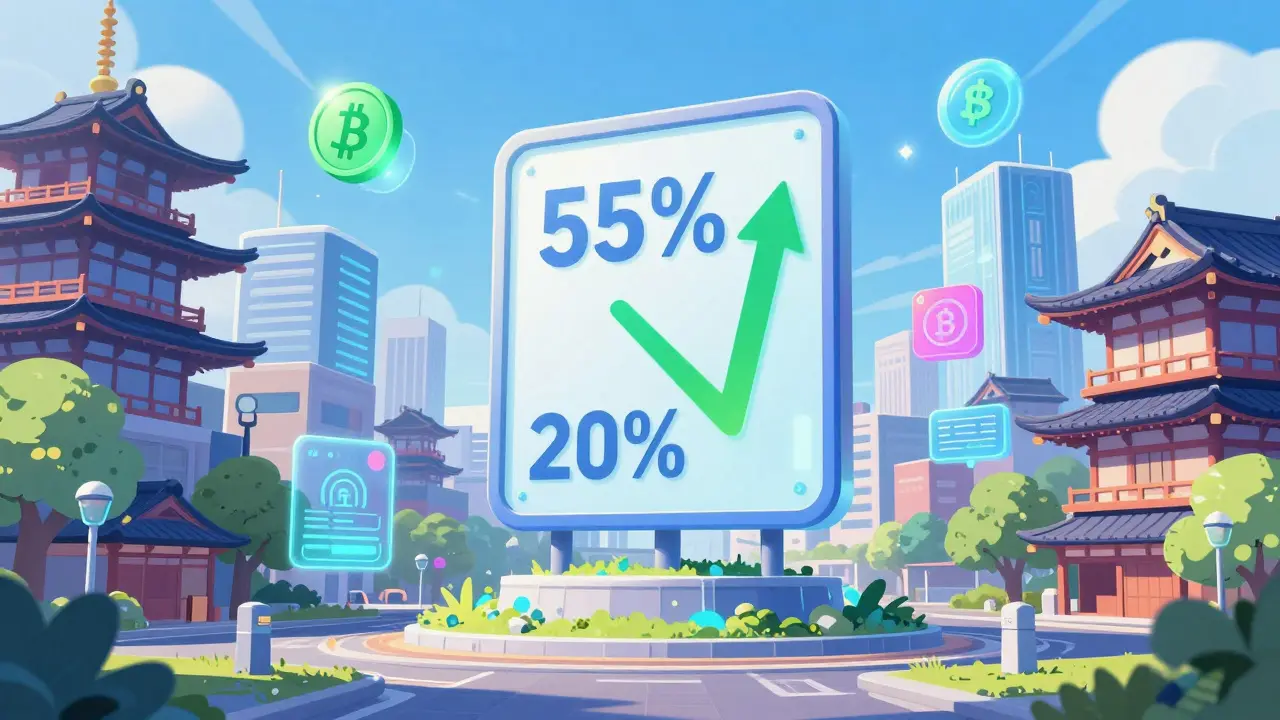
The Japanese government has finally realized that the 55% rate is a growth killer. To combat this, the Liberal Democratic Party (LDP) has pushed for a massive overhaul. The goal is to replace the progressive miscellaneous income tax with a Japanese tax on cryptocurrency flat rate of 20% by the 2026 fiscal year.
This change is designed to bring crypto in line with how stocks are taxed. If this reform holds, it will fundamentally change the risk-reward calculation for millions of investors. Furthermore, the proposed reforms include a three-year loss carry-forward provision. This means if you lose money this year, you can use that loss to offset your profits for the next three years-a feature that is currently non-existent for crypto traders in Japan.
Staying Compliant in a High-Stakes Environment
Even with the move toward a 20% rate, the NTA isn't becoming "lax." All Crypto-Asset Exchange Service Providers (CAESP) are required to keep transaction records for seven years. They share this data directly with tax authorities. If you're trying to hide trades in a private wallet, you're playing a dangerous game given the NTA's advanced tracking capabilities.
Because calculating the cost basis across multiple platforms is a nightmare, professional tax software has become a necessity. Tools like Koinly have seen a 210% surge in Japanese users because manually calculating "average cost" for every trade is a recipe for a filing error. A single mistake in your reporting can lead to audits or heavy penalties in a system that values precision above all else.
The Future: Will Japan Become a Web3 Hub?
The shift to 20% isn't just about being "nice" to traders; it's a strategic economic move. By April 2025, the Financial Services Agency (FSA) explicitly linked tax modernization to the goal of making Japan a global digital asset hub. They've seen their market share of the global crypto pie shrink from 8.2% in 2021 to just 3.7% in 2024.
Analysts from the Nomura Research Institute suggest that this tax cut could spark a 45-60% increase in the domestic market size. We're talking about potentially adding 1.8 million new retail investors and billions in institutional capital. While some experts argue that Japan still needs a separate "long-term holding" rate to truly compete with the US, a flat 20% is a massive leap forward from the 55% nightmare.
Is crypto still taxed at 55% in Japan?
Currently, the maximum combined rate (national + inhabitant tax) can reach 55% for high earners because it is classified as miscellaneous income. However, the government is transitioning toward a flat 20% rate by 2026.
What is the reporting threshold for crypto gains in Japan?
You are generally required to file and report cryptocurrency gains if they exceed 200,000 JPY for the calendar year.
Do I pay tax if I just hold Bitcoin in my wallet?
No. Simply purchasing and holding cryptocurrency is not a taxable event. Tax is only triggered when you sell, trade for another coin, or use it to buy something.
How does Japan tax non-residents?
Non-permanent residents typically face a simplified flat tax rate of 20% on cryptocurrency income earned within Japan.
Can I offset my crypto losses against other income?
Under the old system, loss carry-forwards were not available for crypto. However, new reforms are introducing a three-year loss carry-forward provision to help investors manage volatility.
A flat 20% rate would be a huge win for the local market.
The sheer inefficiency of the previous fiscal regime was a textbook example of capital flight. By categorizing digital assets as miscellaneous income, the NTA basically incentivized a massive exodus of liquidity. It's only logical that the LDP is pivoting now that the domestic market share has plummeted to an embarrassing 3.7%. This is basic economic arbitrage at a state level.
This sounds like a great move for people lookin to get into crypto in Japan. I hope it actually happens by 2026 and doesnt get delayed. It'd be so much easier to plan trades with a flat tax.
lol 20% is still way too high. why do we even pay taxes on this stuff? just use a dex and a cold wallet and they cant find it anyway
The introduction of a three-year loss carry-forward provision is a sophisticated improvement. It acknowledges the inherent volatility of the asset class and provides a necessary hedge for the investor. Such a measure will undoubtedly foster a more stable investment environment within the Japanese jurisdiction.
omg the NTA is literally just out to get everyone!! like imagine paying 55% of your money to the gov?? that's actually insane i can't even deal with that level of greed
The alignment with FATF standards is a crucial point here. Implementing a robust KYC/AML framework while lowering the tax burden is the only way to attract institutional liquidity without risking regulatory blowback. This pivot toward a separate self-assessment tax is the gold standard for Web3 adoption.
They say it's a 'strategic move' but it's really just a way to track every single transaction more efficiently. Once everyone moves back to the domestic exchanges because of the 20% rate, the government will have a perfect database of every wallet and person. Don't trust the 'nice' tax cut.
Typical. Japan spends years killing its own industry with absurd taxes and then acts like they're doing everyone a favor by bringing it down to a level that most sane countries already use. Absolute shambles of a policy.
really happy to see this change coming. it'll make things so much simpler for retail traders who just want to grow their portfolio without stressin over 50% taxes
Actually, most people don't even realize that the inhabitant tax is the real killer here. Even if national tax was lower, that 10% local tax hits you regardless. The NTA is just trying to save face after the 27% drop in active wallets. Simple math really.
For those of you who are feeling overwhelmed by the current tax laws, please remember that the most important thing is to keep detailed records of every single trade you make, even the small ones, because the NTA is incredibly thorough. If you start using software now to track your cost basis, you will be in a much better position when the 2026 reforms finally kick in, and you won't have to panic during the February filing window. It is always better to over-report than to be audited and found lacking in documentation, as the penalties in Japan can be quite severe for those who are perceived as trying to evade their responsibilities. Just take it one step at a time and stay organized!
USA is still better! 🇺🇸 Japan is just catching up to how we do things. Their old system was a joke 🤡
Let's go! 🚀 This is the spark Japan needs to actually lead in Web3. A 20% rate is fair and competitive!
It is fascinating to consider how the definition of an asset evolves in the eyes of the state. By moving crypto from 'miscellaneous income' to something akin to equities, Japan is essentially admitting that digital assets have a fundamental utility and value that transcends a mere hobby or side-hustle. This shift reflects a deeper philosophical acceptance of decentralized finance as a legitimate pillar of the modern economy, and it suggests that the boundaries between traditional finance and the new digital frontier are finally beginning to dissolve into a more inclusive systemic structure.
Imagine the alpha if people actually move back to JP exchanges. This is basically a government-sponsored pump for the domestic ecosystem. The NTA is finally realizing that their current 'fiscal strategy' is just a fancy word for 'driving away all the whales'. Sarcasm aside, a 20% flat rate is a total game changer for the ROI calculations.
I agree with the point about tax software. Using a tool like Koinly makes everything so much easier so you don't have to do the math by hand.
It's a bright new day for traders! Just keep your head up and keep your records tidy, and you'll be golden when 2026 hits.
Oh sure, because the Japanese government is just so incredibly generous and caring about us small investors. I'm sure the 20% rate is purely for 'growth' and not just to make sure they get a piece of the pie before everyone realizes they can just use mixers. How heartwarming.
this is literally a nightmare i cant even imagine having to pay 55% of my gains like who does that?? i would just leave the country immediately lol
I believe it is a fair compromise. It balances the need for state revenue with the necessity of remaining competitive in a globalized digital economy.
NTA will still find you 🙄. No matter the rate, they have the tools. Just pay it and stop dreaming 📉
Actually if you use a cold wallet the NTA has a hard time unless you link it to an exchange. Just be carefull with the off-ramps!
So glad to see things improving!