
It is June 2026, and the crypto space is buzzing with new tokens. If you are looking for details on the KangarooCake (KCAKE) airdrop, you need to be careful. Many projects pop up with catchy names like "Kangaroo" or "Cake," often trying to ride the wave of popular chains like BNB Chain or Base. But here is the hard truth: there is no widely recognized, major mainstream project called "KangarooCake" issuing a verified, large-scale airdrop in the current market cycle as of mid-2026.
This doesn't mean an opportunity doesn't exist. It means you are likely dealing with one of three scenarios: a very new micro-cap project that hasn't hit the radar yet, a community-driven meme coin launch, or-most dangerously-a phishing scam designed to drain your wallet. In this guide, we will break down how to verify if the KCAKE airdrop is real, how to safely participate if it is legitimate, and how to protect yourself from the common traps associated with obscure token drops.
Is the KangarooCake (KCAKE) Project Real?
Before you connect your wallet to any site claiming to distribute KCAKE tokens, you must establish the legitimacy of the project. In the crypto world, name similarity is a common tactic used by scammers. For example, many fake projects use names similar to PancakeSwap (the leading decentralized exchange on BNB Chain) to confuse users. You might see "KangarooCake" when you actually should be looking at something else, or it could be a completely separate entity.
To determine if KangarooCake is a legitimate venture, check these specific attributes:
- Official Documentation: Does the project have a whitepaper or litepaper hosted on a reputable domain? Legitimate projects usually publish technical details about their tokenomics, roadmap, and team.
- Social Media Presence: Look for verified accounts on X (formerly Twitter), Telegram, and Discord. Check the engagement. Are real people asking questions, or is it just bots posting "GM" and "To the moon"? Scam projects often have inflated follower counts but low genuine interaction.
- Token Contract Address: Every ERC-20 or BEP-20 token has a unique contract address. You can find this on block explorers like Etherscan or BscScan. Never trust a contract address provided only in a DM or an unverified email.
If you cannot find a clear, verifiable source for the KCAKE token contract or the KangarooCake team's identity, assume it is high-risk. As of today, major aggregators like CoinMarketCap or CoinGecko do not list a prominent "KangarooCake" token with significant market capitalization. This absence is a major red flag for a "guaranteed" airdrop.
How to Safely Participate in Obscure Crypto Airdrops
If you have done your due diligence and believe KangarooCake is a legitimate early-stage project, you need to approach the airdrop process with extreme caution. The goal is to maximize your potential reward while minimizing the risk of losing funds or private keys.
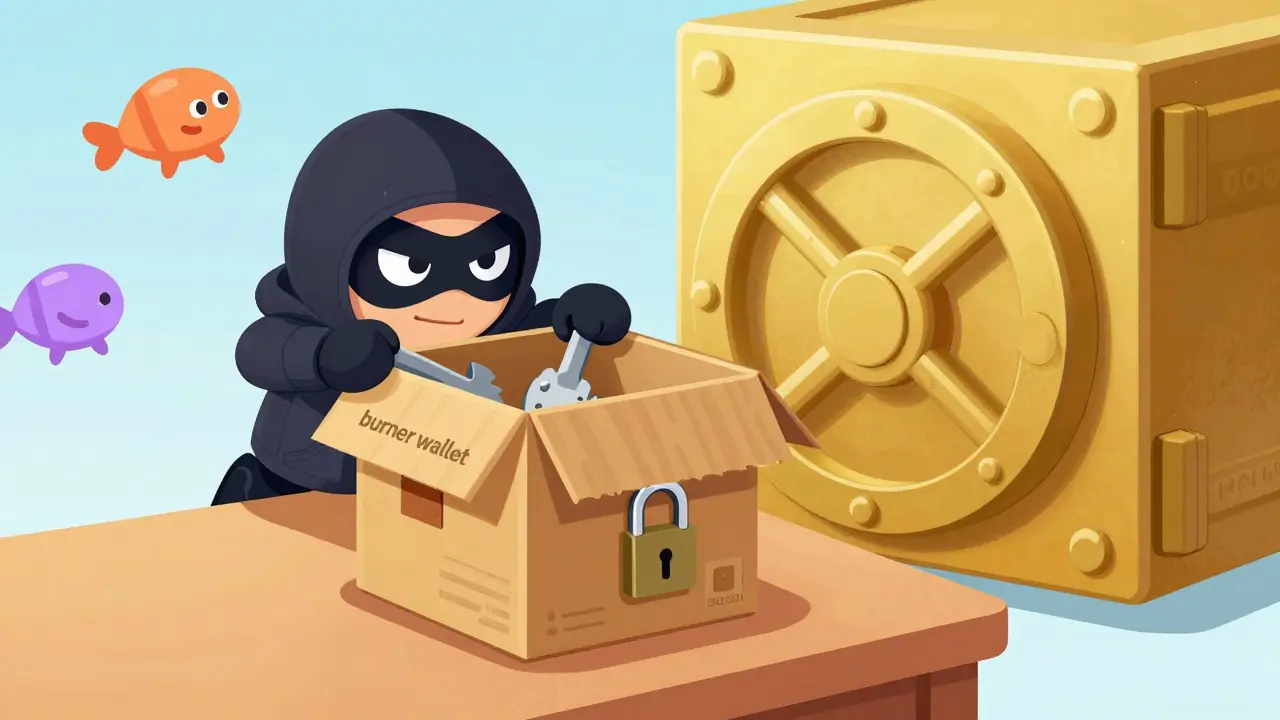
- Use a Burner Wallet: Never connect your main wallet (where you hold your long-term savings) to an unknown dApp. Create a new wallet using MetaMask, Trust Wallet, or Phantom. Fund it with a small amount of ETH or BNB-just enough to pay for gas fees if required. This isolates your risk. If the contract is malicious, your main assets remain safe.
- Verify the URL: Phishing sites look identical to official ones. Bookmark the official link from the project's verified social media channels. Do not click links from random emails or Telegram messages. Check for HTTPS and ensure the domain matches exactly what is listed on their official docs.
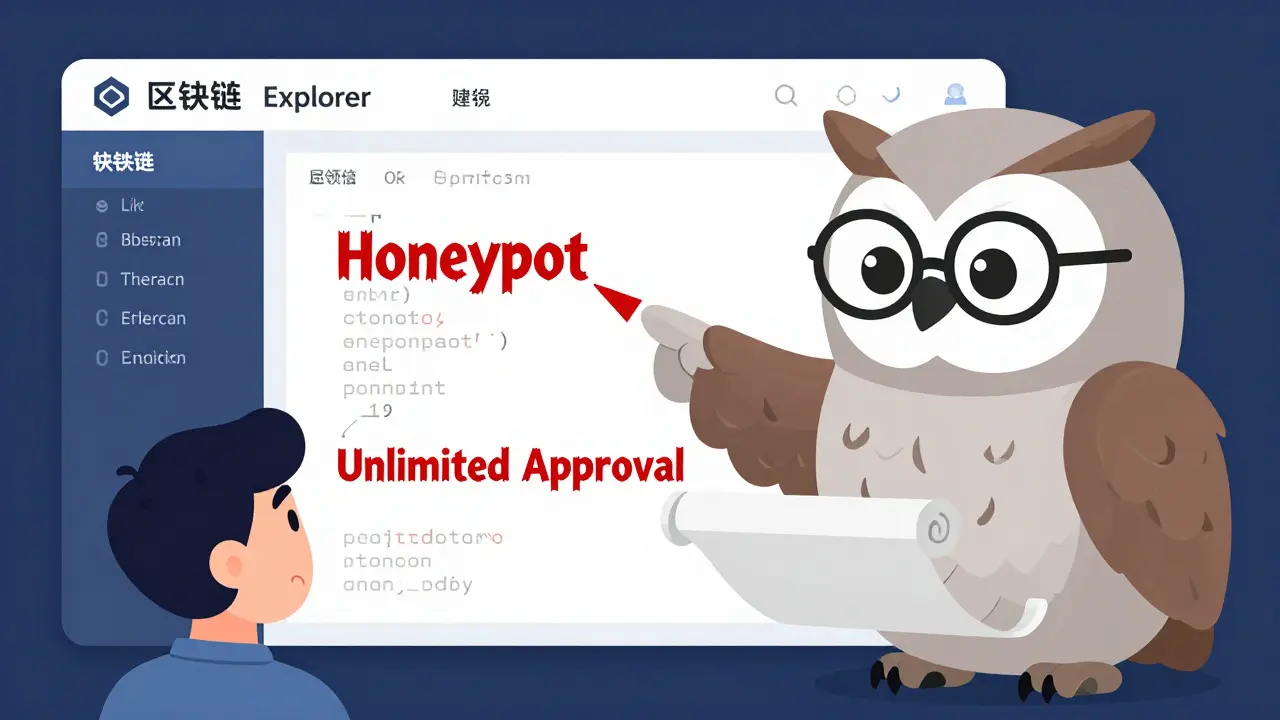
- Check Permissions: When you connect your wallet, the site will ask for permissions. Be wary of requests for "Unlimited Approval." Legitimate airdrops usually require minimal interaction, such as signing a message or approving a specific transaction amount. If the site asks you to sign a transaction that looks like a token transfer before you receive anything, stop immediately.
- Review the Smart Contract: Use tools like Etherscan (a blockchain explorer and analytics platform for Ethereum) or BscScan (the primary block explorer for the BNB Smart Chain). Paste the KCAKE contract address. Look for warnings. If the contract is not verified, or if it has functions like `blacklist` or `mint` that allow the owner to create infinite tokens or freeze your funds, walk away.
Common Airdrop Scams to Avoid
The crypto industry sees thousands of scams every year. Understanding how they work is your best defense. Here are the most common tactics used against airdrop hunters:
| Scam Tactic | What Happens | Legitimate Alternative |
|---|---|---|
| Private Key Request | The site asks you to input your seed phrase or private key to "claim" tokens. | No legitimate service will ever ask for your private key. Claims are made via wallet signature. |
| Gas Fee Front-Running | You pay a high gas fee to interact with a contract, but no tokens are sent. The contract is empty or malicious. | Legitimate airdrops are free or have negligible gas costs. They do not require large upfront payments. |
| Phishing Links | Fake websites mimic the official brand to steal connection data. | Always navigate through bookmarked URLs or official social media links. |
| Honeypot Tokens | You receive tokens, but the contract prevents you from selling them. You can buy more, but never sell. | Check liquidity pools on DEXs. If there is no liquidity or the sell function is disabled, it's a honeypot. |
One specific trend in 2025-2026 involves "fake airdrops" on Layer 2 networks like Arbitrum or Base. Scammers send worthless tokens to thousands of wallets, then set up a fake landing page where victims think they need to "stake" or "bridge" these tokens to unlock value. This action drains their actual ETH or USDT. Always remember: if it sounds too good to be true, it almost certainly is.
Understanding Tokenomics: What is KCAKE Worth?
Even if the airdrop is real, the value of the KCAKE token is another critical factor. Many airdropped tokens have zero initial value because there is no liquidity pool. Without liquidity, you cannot swap your tokens for stablecoins or ETH.
Look for these metrics on the contract page:
- Total Supply: How many KCAKE tokens exist? If the supply is in the trillions, each token may be worth fractions of a cent.
- Liquidity Lock: Is the liquidity locked? If the developers can pull the liquidity at any time (a "rug pull"), the token is worthless. Tools like Unicrypt or Team Finance show if liquidity is locked and for how long.
- Holders Distribution: Who holds the majority of the tokens? If the top 10 wallets hold more than 50% of the supply, the project is centralized and risky. A healthy distribution shows a wide range of holders.
In the absence of public data for KangarooCake, you must treat the token as having $0 value until it is listed on a reputable decentralized exchange (DEX) like Uniswap or PancakeSwap with verified liquidity.
Step-by-Step: Verifying the KCAKE Contract
Let's walk through a practical example of how to verify a token contract. Assume you found a KCAKE contract address on BNB Chain.
- Navigate to BscScan: Go to bscscan.com and paste the contract address into the search bar.
- Check Verification Status: Under the "Contract" tab, look for "Contract Source Code Verified." If it says "Not Verified," you cannot read the code, which means you don't know what it does. High risk.
- Readholders Tab: Click on "Holders." See how many addresses hold the token. If there are fewer than 100 holders, it is likely a testnet token or a scam.
- Check Transactions: Look at recent transactions. Are people buying and selling? Or is it only transfers from one wallet to many? Mass transfers to random wallets are often spam or honeypot setups.
- Use Honeypot Checkers: There are online tools (like Honeypot.is) where you can paste the contract address. These tools simulate a buy and sell transaction to see if the sell fails. If the tool reports "Honeypot Detected," do not touch it.
What to Do If You Already Connected Your Wallet
If you already connected your main wallet to a suspicious KangarooCake site, take immediate action:
- Revoke Permissions: Use a tool like Revoke.cash or the built-in revocation feature in MetaMask. Disconnect the app and revoke any token approvals you granted. This prevents the contract from spending your tokens later.
- Move Funds: Transfer all remaining assets from that wallet to a new, clean wallet. Consider the old wallet compromised.
- Change Passwords: If you entered any passwords or seed phrases on the site, change them immediately. However, note that legitimate web3 interactions do not require password entry on the site itself.
Final Thoughts on KangarooCake and Crypto Airdrops
The allure of free tokens is strong, but the cost of being wrong can be total loss. As of June 2026, the KangarooCake (KCAKE) project lacks widespread recognition and verifiable security audits. Proceed with extreme skepticism. Always prioritize safety over potential gains. Use burner wallets, verify contracts, and never share your private keys. The crypto market rewards patience and diligence, not impulsiveness.
Is the KangarooCake (KCAKE) airdrop legit?
As of mid-2026, there is no widely recognized, verified project named KangarooCake issuing a major airdrop. Most references to KCAKE are either obscure micro-caps, community memes, or potential scams. Always verify the contract address on a block explorer and check for independent audits before participating.
How do I claim KCAKE tokens safely?
To claim safely, use a dedicated burner wallet with minimal funds. Verify the official website URL from trusted social media sources. Never enter your private key or seed phrase. Use tools like Revoke.cash to manage permissions and Honeypot.is to check the contract for sell restrictions.
What is the difference between KCAKE and CAKE (PancakeSwap)?
CAKE is the native utility token of PancakeSwap, a leading decentralized exchange on BNB Chain with billions in volume. KCAKE appears to be an unrelated, obscure token. Scammers often use similar names to confuse users. Always check the contract address to distinguish between them.
Can I lose money participating in a crypto airdrop?
Yes. While the token itself might be free, you can lose money paying gas fees for malicious transactions, getting drained by a phishing site, or investing time in a project that turns out to be a rug pull. Always use a burner wallet to isolate your risk.
Where can I find the official KangarooCake website?
There is no officially recognized mainstream website for a major KangarooCake project. Be extremely cautious of any site claiming to be official. Cross-reference links with verified social media accounts and community discussions on platforms like Reddit or specialized crypto forums.