
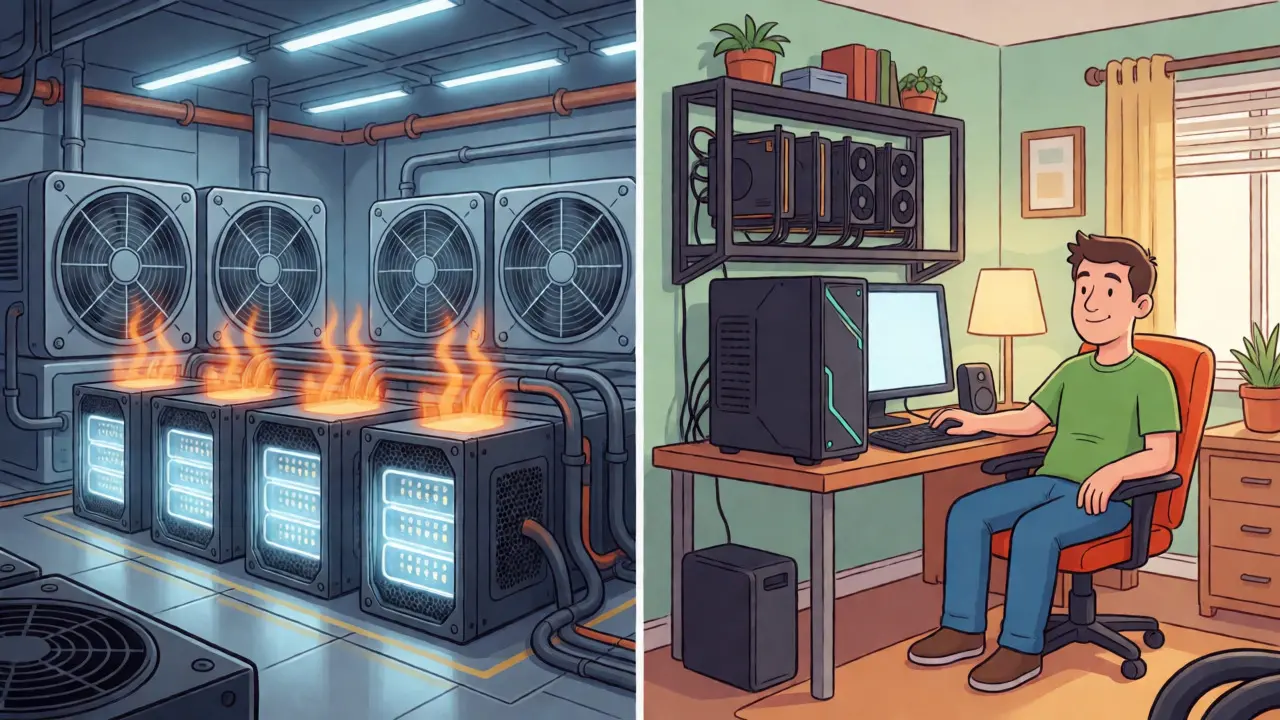
You’ve probably heard the horror stories about Bitcoin mining being dead for the little guy. Or maybe you’re seeing screenshots of someone making rent money by mining Monero on their gaming PC. The truth? Both are partially right, but it depends entirely on where you plug in your machine and what’s sitting on your desk. If you’re thinking about jumping into the mining game in 2026, you need to cut through the noise. It’s not just about which coin is "better"; it’s about matching your hardware, electricity costs, and risk tolerance to the right network.
The State of Play in 2026
Let’s look at the landscape today. Since the fourth halving in April 2024, Bitcoin's block reward dropped to 3.125 BTC. That sounds like a lot until you realize how much energy it takes to earn it. With Bitcoin trading around $55,000-$60,000 (a conservative estimate for current market conditions), the margins have tightened. Large industrial farms with cheap power are still printing money, but if you’re running a rig in your spare room paying residential rates, you might be losing money every month.
On the flip side, the altcoin scene has fragmented. While Ethereum moved to Proof-of-Stake back in 2022, leaving its miners stranded, networks like Litecoin, Monero, and Ethereum Classic kept the Proof-of-Work flame alive. These coins don’t require million-dollar data centers. They allow hobbyists to stay in the game, often using hardware that would sit idle otherwise.
Hardware Reality Check: ASICs vs GPUs and CPUs
This is the biggest divider between mining Bitcoin and most altcoins. You cannot mine Bitcoin effectively with a graphics card anymore. You need an ASIC miner (Application-Specific Integrated Circuit). These machines do one thing: hash SHA-256 algorithms. Machines like the Whatsminer M20S or newer Antminer S19 series are loud, hot, and expensive. We’re talking $5,000 to $10,000+ per unit depending on efficiency. If your ASIC breaks, you can’t use it for anything else. It’s e-waste waiting to happen.
| Feature | Bitcoin Mining | Altcoin Mining (e.g., Monero/LTC) |
|---|---|---|
| Primary Hardware | ASIC Miners (SHA-256) | GPUs, CPUs, or specialized ASICs (Scrypt/KawPow) |
| Initial Cost | High ($5k - $10k+ per unit) | Low to Medium ($500 - $3k for multi-GPU rigs) |
| Resale Value | Drops rapidly with new tech | Higher (GPUs usable for gaming/AI) |
| Noise/Heat | Extreme (industrial fans) | Moderate (manageable in home setups) |
Altcoins offer flexibility. Take Monero. It uses the RandomX algorithm, designed specifically to resist ASIC centralization. This means you can mine XMR with a standard CPU or a mid-range GPU. If you already own a decent PC, you can start mining Monero tonight without buying a single new component. Litecoin is similar but leans toward Scrypt ASICs, which are cheaper than Bitcoin ASICs, or you can use older GPUs before they become obsolete.
Profitability: Stability vs Volatility
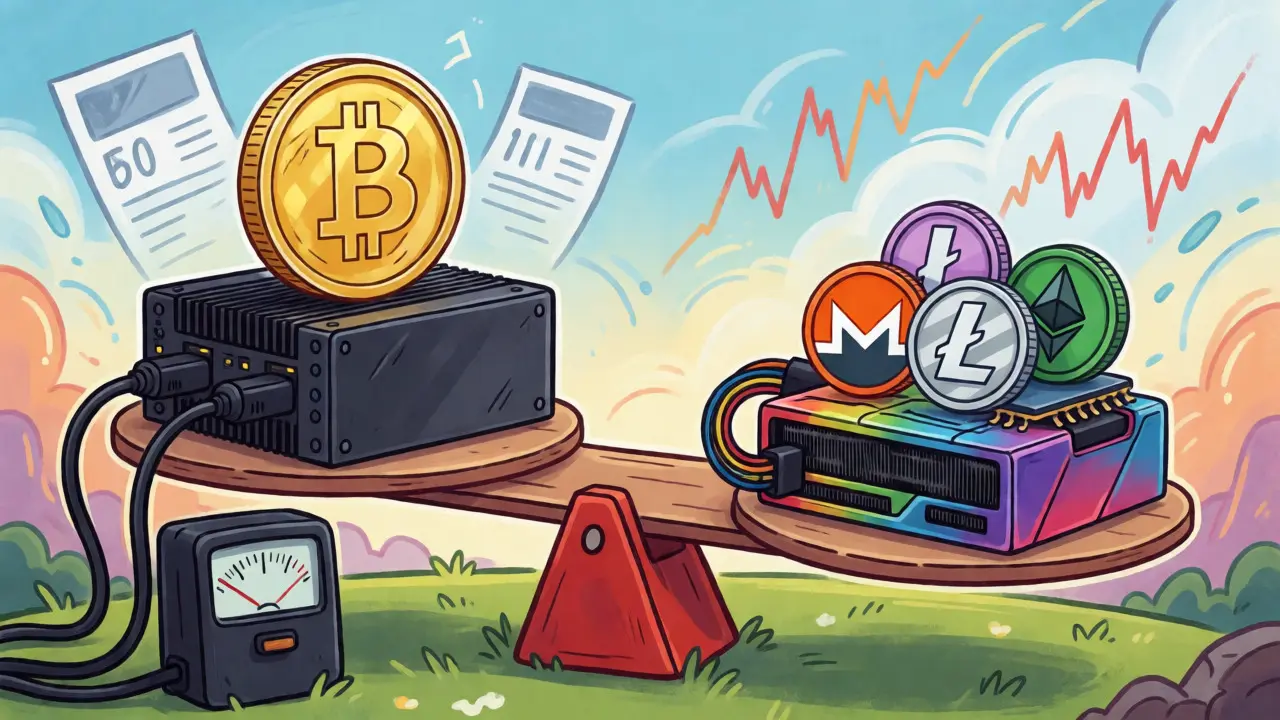
Why do people still mine Bitcoin if it’s so hard? Stability. Bitcoin has the deepest liquidity and the most predictable long-term value proposition. When you mine Bitcoin, you’re betting on the asset’s dominance. Even if difficulty rises, the price usually follows institutional adoption trends. However, the break-even point is brutal. According to recent analyses from firms like Bitdeer, you generally need electricity rates below $0.07 per kWh to remain competitive with large-scale operations. In Australia, where I’m writing this, residential rates are often double or triple that. Unless you have solar panels generating excess daytime power, home Bitcoin mining is rarely profitable in pure dollar terms.
Altcoins play a different game. Their prices are more volatile, which cuts both ways. You might mine Ethereum Classic when it’s down, only to see it spike 30% in a week. But here’s the catch: altcoin difficulty adjusts faster. If a new GPU rig floods the network, your share of the rewards drops quickly. Plus, many altcoins have lower market caps, meaning selling your mined coins could impact the price slightly, or worse, the coin could lose relevance entirely. Bitcoin will likely still exist in ten years; some of these smaller PoW chains might not.
Technical Barriers and Setup Time
Getting started isn’t as simple as plugging in a cable. For Bitcoin, you’re dealing with industrial infrastructure. You need dedicated circuits, heavy-duty cooling solutions (air conditioning or immersion tanks), and reliable internet. Setting up a competitive Bitcoin operation takes months of planning, electrical upgrades, and sourcing hardware. It’s a business venture, not a hobby.
Altcoin mining is surprisingly accessible. For Monero, you download software like XMRig, paste your wallet address, and hit enter. It runs quietly enough that you won’t hate living with it. For GPU-based coins, you might spend a weekend building a rig, tweaking overclocks to maximize hashrate while minimizing power draw. The learning curve is steep initially-understanding core clocks, memory timings, and fan curves-but the community support on Reddit and Discord is massive and helpful. You can go from zero to earning crypto in under 48 hours with altcoins. With Bitcoin, you’re looking at weeks or months before you even see a payout due to high difficulty and pool mechanics.
Strategic Considerations for 2026
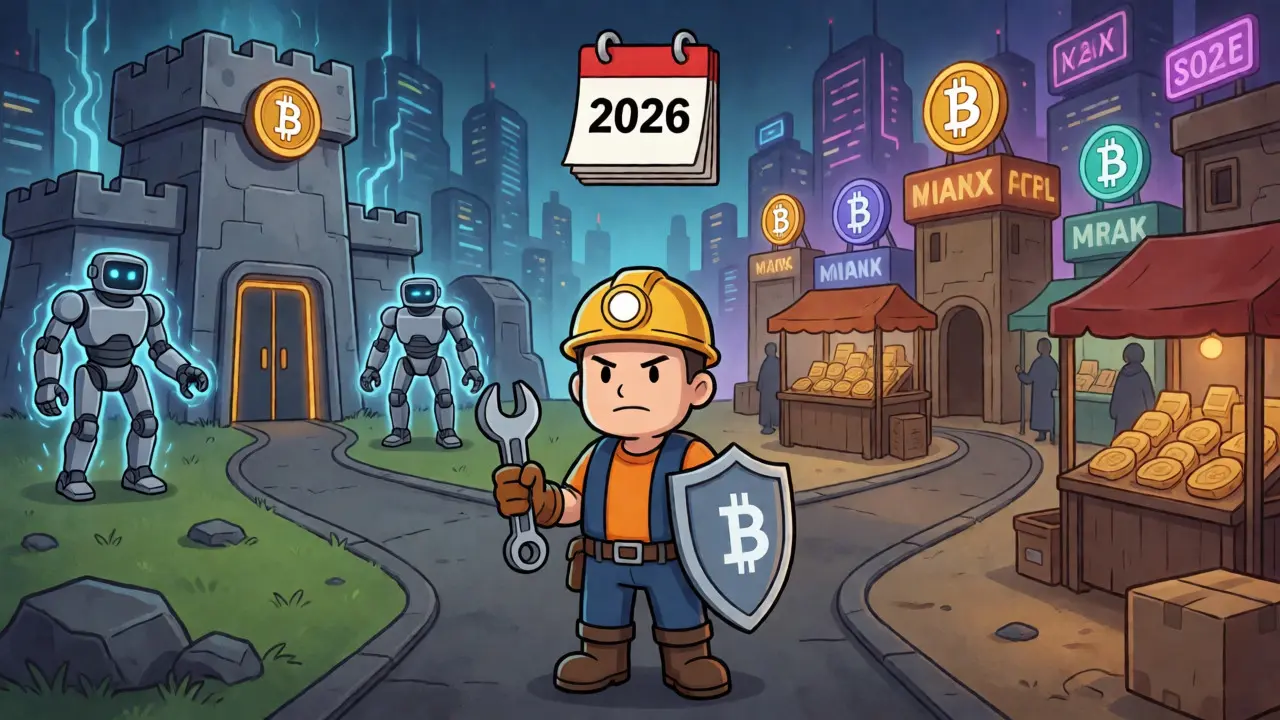
If you’re serious about mining now, ask yourself three questions:
- What is my electricity cost? If you pay over $0.10/kWh, forget Bitcoin unless you believe in holding the coin long-term regardless of fiat profit. Altcoins might still yield small profits because the hardware is less power-hungry relative to output.
- Do I want exposure to Bitcoin or diversification? Mining Bitcoin gives you BTC directly. Mining altcoins gives you a basket of assets. Some miners practice "speculative mining," holding altcoins hoping they outperform BTC against the dollar. Others auto-sell altcoins to buy Bitcoin, combining the ease of altcoin entry with the stability of Bitcoin accumulation.
- How noisy is my environment? ASICs sound like jet engines. If you live in an apartment or have close neighbors, Monero or other CPU-minable coins are your best bet. They run at whisper-quiet levels compared to industrial miners.
Also, consider the regulatory climate. Governments worldwide are scrutinizing energy usage. Bitcoin mining, being energy-intensive, often faces stricter regulations or higher taxes in certain jurisdictions. Altcoins, especially those with privacy features like Monero, sometimes face delisting pressures from major exchanges, adding another layer of risk to your exit strategy.
The Verdict: Who Should Mine What?
There is no universal winner. Here is the breakdown based on user profiles:
Mine Bitcoin if: You have access to sub-$0.05/kWh electricity, space for industrial equipment, significant capital ($10k+), and a long-term bullish view on BTC. You treat mining as a passive income stream tied to global macro trends.
Mine Altcoins if: You are a hobbyist, gamer, or student with existing hardware. You want low barrier to entry, enjoy tinkering with software/hardware, and are willing to accept higher volatility for potentially quicker returns. You value the ability to repurpose your hardware if mining stops being profitable.
In 2026, the smartest move for many isn't choosing one exclusively. Many home miners run dual-rigs: a small ASIC for steady Bitcoin drip-feed and a GPU setup for opportunistic altcoin farming. This hedges your bets. If Bitcoin crashes, your altcoin holdings might hold value better. If altcoin markets dry up, your Bitcoin stack remains solid.
Can I mine Bitcoin with a regular computer?
Technically yes, but practically no. Your CPU/GPU would generate such a tiny fraction of a satoshi per day that you would never reach the minimum withdrawal threshold of most pools. You would burn more in electricity than you earn in crypto. Dedicated ASIC hardware is required for any meaningful Bitcoin mining.
Which altcoin is easiest to mine for beginners?
Monero (XMR) is widely considered the most beginner-friendly because it supports CPU mining. You don't need specialized graphics cards or complex rig builds. Just download XMRig, configure your settings, and start mining with your existing processor. It also resists ASIC domination, keeping the playing field level for home users.
Is it worth mining altcoins if the price is low?
It depends on your strategy. If you plan to hold the coins long-term (HODL), mining during bear markets allows you to accumulate more units for the same amount of effort. If you need immediate cash flow, low prices might make mining unprofitable compared to simply buying the coin on an exchange. Always calculate your break-even price before starting.
What happens if I stop mining an altcoin?
You keep whatever you mined. Unlike staking, where funds can sometimes be locked or slashed, mining rewards are yours once confirmed. However, if you used borrowed money to buy hardware, stopping mining doesn't erase the debt. Also, if the specific altcoin loses all market interest, your hardware may become useless for that specific network, though GPUs can often switch to other coins or AI tasks.
Does electricity cost matter more for Bitcoin or Altcoins?
Electricity cost is critical for both, but Bitcoin is more sensitive due to its massive energy consumption per transaction. High-end ASICs consume 3,000+ watts continuously. Altcoin rigs, particularly CPU-based ones, consume far less power. Therefore, altcoin mining can remain viable at higher electricity rates (e.g., $0.15/kWh) where Bitcoin mining would operate at a loss.