
Ever tried to trade on a decentralized exchange (DEX) and felt like you were shouting into the void? You connect your wallet, scan for pairs, and find... silence. That’s the reality for many looking at Newdex, a platform that launched back in 2018 with big promises as the "world's first decentralized exchange based on the EOS blockchain." Fast forward to today, September 2026, and Newdex has expanded to Binance Smart Chain (BSC), yet its presence in the mainstream DeFi conversation is quieter than ever. If you’re wondering whether this veteran of the DEX world still has legs, or if it’s been left behind by newer, flashier platforms, you’re in the right place.
The Core Promise: What Newdex Actually Does
Newdex isn’t just another automated market maker (AMM). It positions itself as a next-generation DEX focused on order-book functionality with on-chain matching and settlement. Think of it as trying to bring the precision of a centralized exchange (like Coinbase or Binance) onto the trustless rails of blockchain technology. Launched on August 8, 2018, on the EOS network, it aimed to solve the speed and cost issues plaguing Ethereum-based exchanges of that era.
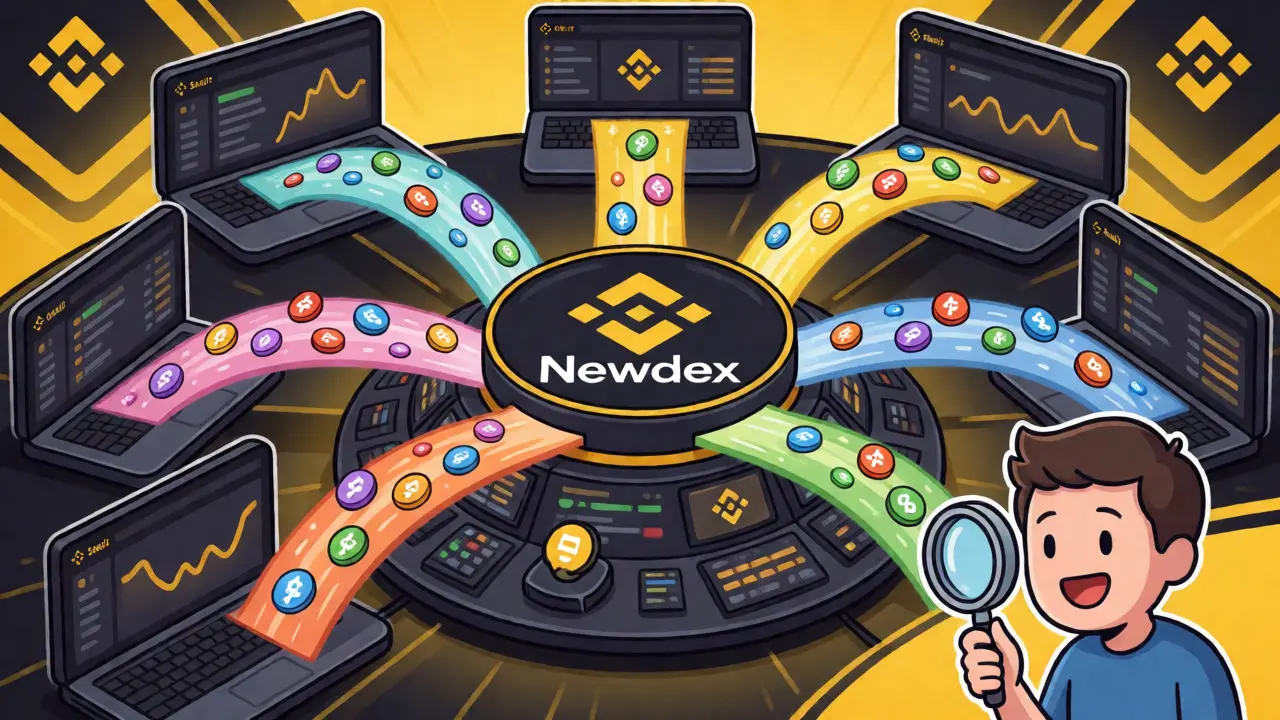
Three years later, on its third anniversary, Newdex launched Newdex (BSC-Beta) on the Binance Smart Chain. Why the shift? Because while EOS had potential, BSC became the playground for retail traders due to low fees and high throughput. Today, the BSC version aggregates liquidity from seven major swap protocols, including PancakeSwap, Mdex, BakerySwap, ApeSwap, Defibox, SushiSwap, and Biswap. This aggregation model is key-it means you don’t have to hunt across five different sites to find the best price; Newdex tries to do that heavy lifting for you.
Security and Custody: The Decentralized Advantage
If you’ve ever worried about an exchange getting hacked and running off with your funds, you know why decentralized exchanges exist. Newdex follows the standard DEX model: it never holds your assets. When you trade, you interact directly with smart contracts via your wallet. This is a massive win for security-conscious users. Even if Newdex’s front-end servers go down, your tokens remain safe in your own wallet, not sitting in a hot wallet waiting for a hacker’s script to trigger.
The infrastructure is distributed globally, reducing the risk of single-point-of-failure downtime common in centralized exchanges. However, let’s be real: "decentralized" doesn’t mean "risk-free." Smart contract bugs are still a thing. But compared to the catastrophic failures we saw with some centralized entities in recent years, Newdex’s architecture offers peace of mind regarding custody. You keep the keys, you keep the coins.
Liquidity and Market Visibility: The Elephant in the Room
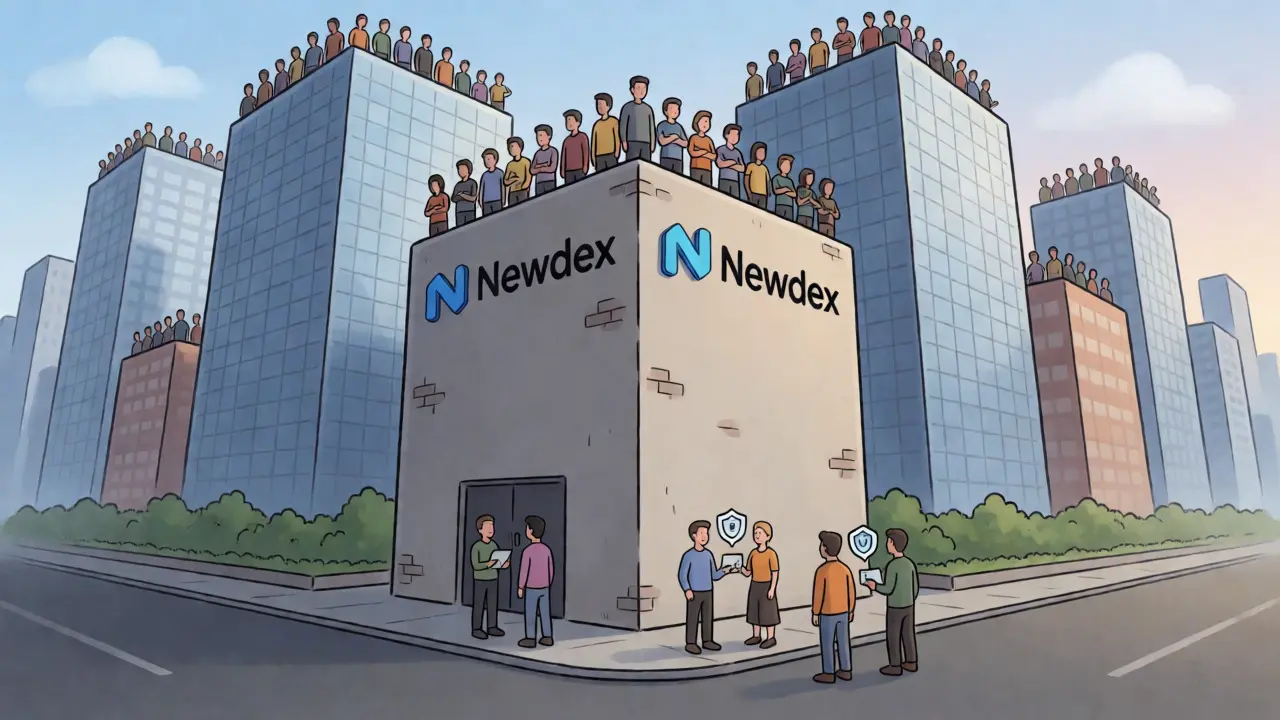
Here’s where things get tricky. While Newdex claims to be a leading DEX, current data tells a different story. On major aggregators like CoinMarketCap, Newdex is often listed as "Untracked" or shows limited volume data. This isn’t necessarily because the tech is broken, but because user activity has migrated elsewhere. In the fast-moving world of DeFi, visibility equals liquidity, and liquidity equals better trades.
The lack of readily available user reviews on platforms like Reddit or Trustpilot suggests a smaller, perhaps more niche community. If you’re a beginner looking for a bustling marketplace with thousands of active pairs and deep order books, Newdex might feel sparse. It’s not dead, but it’s certainly not the main character in the 2026 DeFi drama anymore. Platforms like Hyperliquid or Aster have grabbed the spotlight for derivatives, while Uniswap and PancakeSwap dominate spot trading volumes.
User Experience and Tools
For those who do use Newdex, the interface leans toward experienced traders. It features advanced K-line charting capabilities, which allow for detailed technical analysis directly within the platform. If you’re used to TradingView or complex centralized exchange interfaces, you’ll feel somewhat at home. However, beginners might find the learning curve steep. There’s no fiat on-ramp here-you need crypto to buy crypto. This means if you’re new to the space, you’ll first need to use a centralized exchange to buy ETH or BNB, transfer it to a compatible wallet (like MetaMask for BSC or Anchor for EOS), and then connect to Newdex.
Support responsiveness is hard to gauge due to limited public feedback, which can be frustrating if you hit a snag during a transaction. Always double-check network settings before confirming trades, especially when bridging assets between chains.
Comparison: Newdex vs. The Field
To help you decide if Newdex fits your needs, let’s compare it against typical alternatives.
| Feature | Newdex (DEX) | Centralized Exchange (CEX) | Top-Tier AMM (e.g., PancakeSwap) |
|---|---|---|---|
| Custody of Funds | User Wallet (Non-custodial) | Exchange Wallet (Custodial) | User Wallet (Non-custodial) |
| Fiat Deposit | No | Yes | No |
| Trading Model | Order Book + Aggregation | Order Book | Automated Market Maker (AMM) |
| Networks Supported | EOS, Binance Smart Chain | Varies (BTC, ETH, etc.) | Binance Smart Chain, Others |
| Liquidity Depth | Low/Moderate (Aggregated) | High | Very High |
| Best For | EOS/BSC holders wanting order book precision | Beginners, Fiat users | General BSC trading, yield farming |
Who Should Use Newdex?
You should consider Newdex if you already hold EOS or BNB and prefer the transparency of on-chain settlement. It’s also a decent option if you specifically want aggregated liquidity without navigating multiple AMMs manually. However, if you prioritize high volume, tight spreads on obscure altcoins, or robust customer support, you might find better options elsewhere.
As of late 2025 and into 2026, industry leaders like BitMEX CEO Stephan Lutz have warned that incentive-heavy DEX models may not be sustainable. Newdex’s reliance on aggregation rather than pure AMM incentives might actually make it more resilient in the long run, provided it maintains enough user activity to keep the order books alive.
Final Verdict
Newdex is a solid piece of DeFi history that has adapted to survive. Its multi-chain approach and non-custodial nature offer genuine security benefits. Yet, its lack of mainstream visibility and lower trading volumes mean it serves a specific niche rather than the masses. If you’re an EOS enthusiast or a BSC trader looking for an alternative to the usual AMMs, give it a try with small amounts first. But don’t expect it to replace the giants like Uniswap or Binance anytime soon.
Is Newdex safe to use?
Yes, generally speaking. As a decentralized exchange, Newdex does not hold your funds; they remain in your connected wallet. This eliminates the risk of exchange hacks stealing your assets. However, always ensure you are interacting with the correct smart contract addresses to avoid phishing scams.
Can I deposit fiat currency into Newdex?
No, Newdex is a cryptocurrency-only platform. You must already own cryptocurrency (such as EOS or BNB) to trade on it. To get started, you typically need to buy crypto on a centralized exchange and transfer it to your personal wallet.
Which blockchains does Newdex support?
Newdex originally launched on the EOS blockchain. In 2021, it expanded to the Binance Smart Chain (BSC) with the launch of Newdex BSC-Beta. Users need wallets compatible with these networks, such as Anchor for EOS or MetaMask for BSC.
Why is Newdex volume low on tracking sites?
Newdex is sometimes listed as "untracked" on sites like CoinMarketCap because its trading volume is significantly lower than major competitors like Uniswap or PancakeSwap. This reflects its status as a niche platform rather than a primary destination for most retail traders.
Does Newdex require KYC verification?
Like most decentralized exchanges, Newdex does not require Know Your Customer (KYC) identity verification. You simply connect your crypto wallet to start trading, offering greater privacy compared to centralized exchanges.