
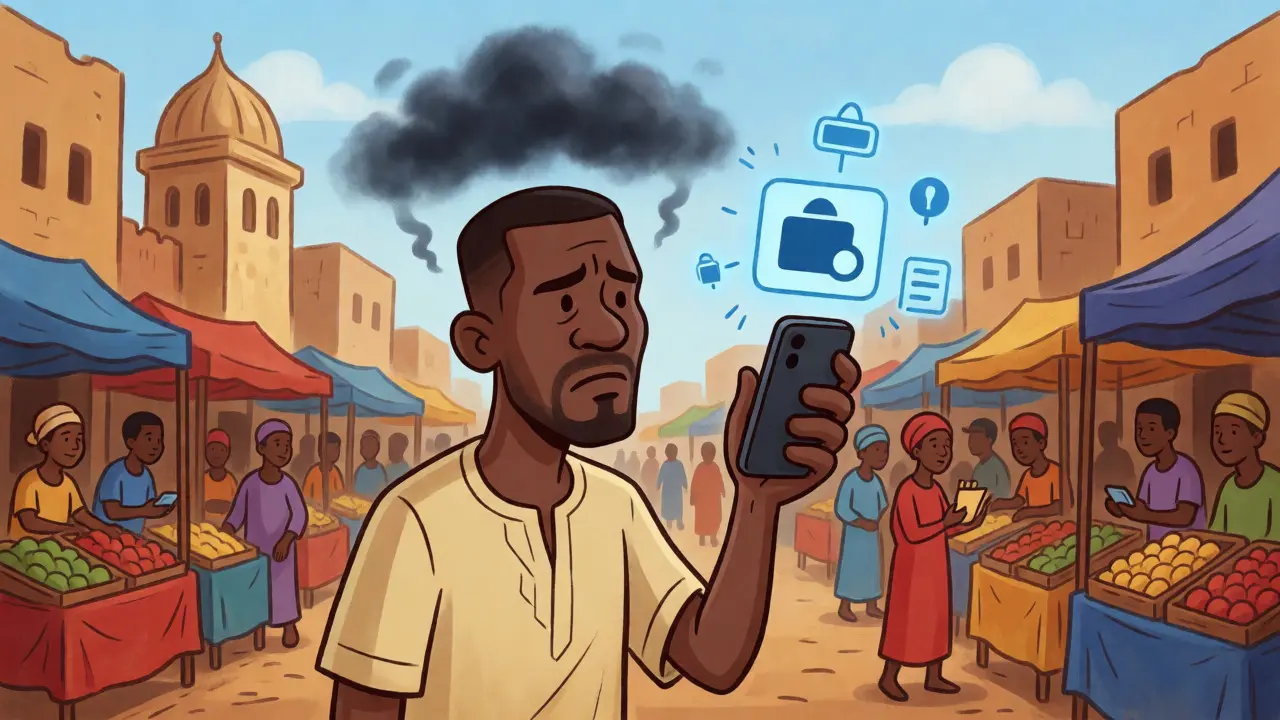
Imagine trying to send money to your family abroad, only to have your bank freeze your account because you bought a few dollars' worth of Bitcoin. For millions of people in nations where cryptocurrency is banned or heavily restricted, this isn't a hypothetical scenario-it's Tuesday. While headlines focus on the latest price swings of Bitcoin a decentralized digital currency that operates without a central authority, the real story for users in places like Nigeria, Vietnam, or Bangladesh is about survival and access. You don't need a fancy trading terminal; you need a way to move value when the traditional financial doors are locked.
This is where Peer-to-Peer (P2P) platforms digital marketplaces that allow users to trade cryptocurrencies directly with one another without a centralized intermediary holding funds step in. They act as the lifeline for financial sovereignty in hostile regulatory environments. But how do they work when the government is actively trying to shut them down? And more importantly, which platforms actually stick around when the heat turns up?
Why P2P Becomes Essential When Banks Say No
In regulated markets like Australia or the US, P2P trading is often seen as a niche alternative to big exchanges like Coinbase or Kraken. It’s convenient, sure, but rarely necessary. In restricted countries, it’s the entire economy of crypto. When a central bank bans banks from facilitating crypto transactions-as Nigeria did back in 2017-users can’t just wire money to an exchange. The bridge is burned.
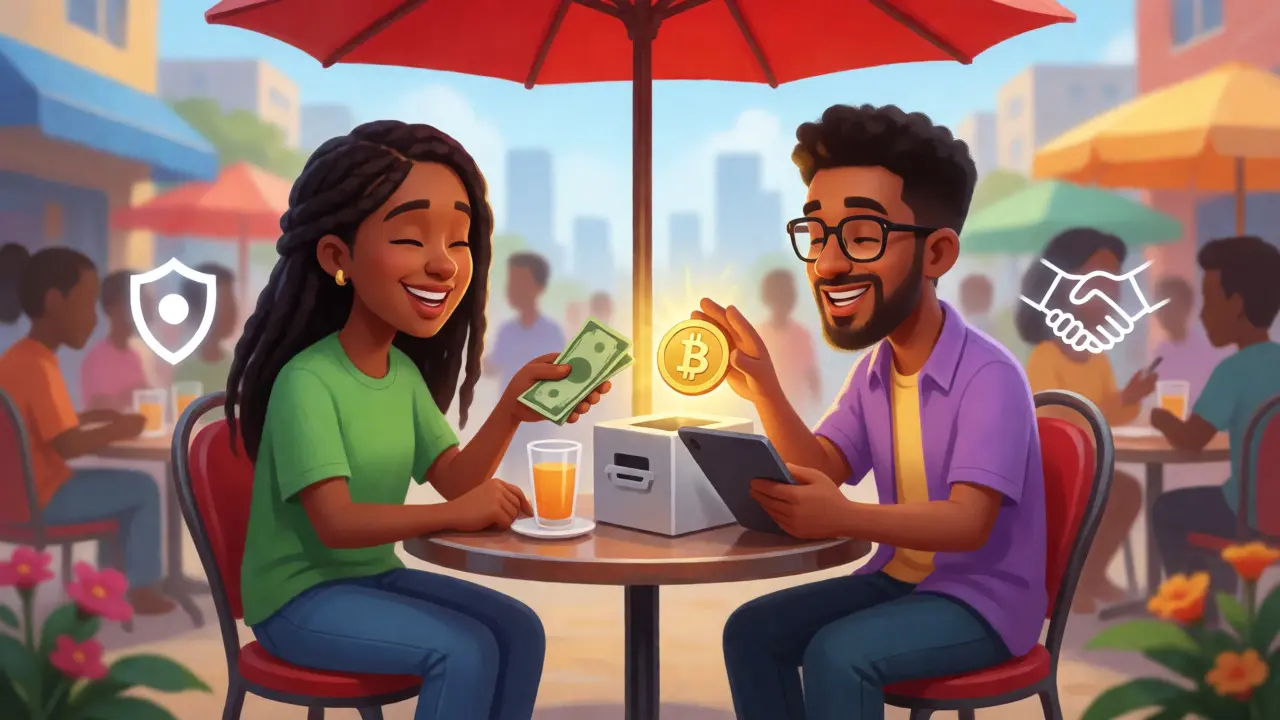
P2P platforms rebuild that bridge by connecting buyers and sellers directly. If you want to buy Bitcoin in Lagos, you aren't sending money to a company in Switzerland. You're sending Naira to another Nigerian user via bank transfer or mobile money, and they release Bitcoin to your wallet from their escrow account. This directness bypasses the banking restrictions because, technically, the bank sees a normal person-to-person payment, not a crypto transaction.
The stakes are high. In countries facing hyperinflation, like Turkey or Venezuela, citizens use these platforms to hedge against devaluing local currencies. During Turkey’s lira crisis, where the currency lost over 80% of its value against the dollar between 2018 and 2021, P2P volume surged. People weren't speculating; they were saving their wages. The platform became a parallel banking system, offering stability when the official one was crumbling.
The Major Players and Their Survival Tactics
Not all P2P platforms are created equal, especially in restricted zones. Some vanish overnight due to regulatory pressure, while others adapt and thrive. Here’s a look at the heavy hitters and how they navigate the red tape.
| Platform | Custody Model | KYC Requirements | Best For |
|---|---|---|---|
| Binance P2P | Custodial (Escrow) | Mandatory & Strict | Liquidity and speed in high-volume regions |
| Paxful | Custodial (Escrow) | Tiered / Risk-Based | Flexible payment methods (gift cards, cash) |
| LocalBitcoins | Custodial (Escrow) | Strict (Post-2020) | Legacy users, though liquidity has dropped |
| Bisq | Non-Custodial (Decentralized) | None | Privacy-focused users avoiding KYC entirely |
Binance P2P has arguably become the dominant force in recent years. Why? Because of liquidity. In a country like India, where crypto profits are taxed at 30% but trading remains legal, Binance offers deep order books. However, their strict KYC (Know Your Customer) protocols mean you’re never truly anonymous. If the government decides to crack down on specific accounts, your identity is already known.
Paxful takes a different approach. It’s famous for supporting over 300 payment methods, including gift cards and mobile money services like M-Pesa in Africa. This flexibility is crucial in regions where bank transfers are slow or monitored. But this flexibility comes with higher fraud risks. In 2022, reports indicated that a significant portion of Paxful’s fraud cases originated from jurisdictions with unclear or restrictive laws. The platform uses a risk-based compliance model, meaning if you’re in a "high-risk" zone, your verification hurdles will be much higher.
For those who fear any form of identity linkage, Bisq offers a completely non-custodial solution. It’s a desktop application that connects users directly without holding their funds. There’s no sign-up, no email, and no ID upload. The trade-off? Liquidity is lower, and the user interface is less polished than web-based competitors. It’s the tool for the purist or the paranoid.
Navigating the Regulatory Minefield
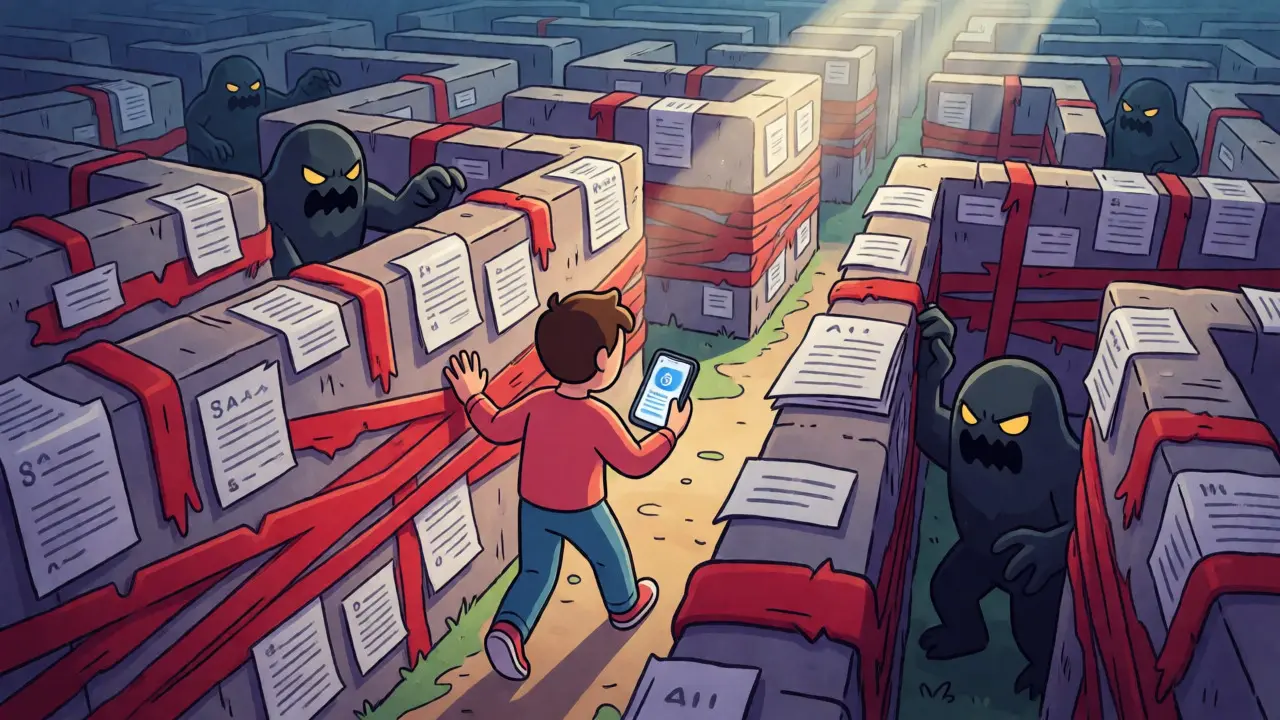
Using a P2P platform in a restricted country is like walking through a minefield. One wrong step-a suspiciously large transfer, a poorly worded bank memo-and you could trigger a review. Regulations vary wildly, even among neighbors.
Take Nigeria a West African nation with a large unbanked population and strict historical banking bans on crypto. After the Central Bank banned banks from serving crypto exchanges in 2017, activity didn't stop; it went underground. By 2023, the landscape had shifted slightly, with regulators exploring sandboxes for blockchain innovation. Yet, users still report frequent bank freezes. A study noted that nearly 22% of Nigerian P2P users experienced account freezes simply for having crypto-related activity visible in their transaction history.
In contrast, Vietnam a Southeast Asian country where using crypto as a payment method is explicitly banned imposes fines ranging from $6,500 to $8,800 for illegal payments. Here, P2P is used primarily for investment and savings, not daily purchases. Users must be careful not to label their bank transfers with words like "BTC" or "Crypto," which can flag automated monitoring systems.
Then there’s China the world's second-largest economy which implemented a total ban on cryptocurrency trading and mining in 2021. Despite the outright prohibition, P2P activity persists through informal networks and apps distributed outside standard app stores. Enforcement is aggressive, with thousands of arrests reported in recent years for "illegal financial activities." Chinese users often rely on Tor networks or specialized APK files to access platforms, avoiding the Google Play Store where crypto apps might be delisted.
Security Risks and How to Mitigate Them
If you think buying crypto in New York is risky, try doing it in Dhaka or Cairo. The lack of consumer protection laws means that if you get scammed, there’s often no police department equipped to help. Fraud rates in restricted jurisdictions are significantly higher-some estimates suggest 43% higher than in regulated markets.
Common scams include:
- Chargeback Fraud: The buyer pays via PayPal or credit card, releases the crypto, then disputes the charge with their bank. Since the seller already sent the coins, they lose both.
- Fake Proof of Payment: A buyer sends a screenshot of a bank transfer that looks real but hasn’t cleared yet. Sellers must always wait for the actual funds to appear in their bank account before releasing crypto.
- Third-Party Interference: Someone else pays for your sale, complicating the audit trail and potentially implicating you in money laundering investigations.
To stay safe, adopt a zero-trust mindset. Use platforms with robust escrow services. Never release funds based on screenshots alone. Keep communication strictly within the platform’s chat system so support can intervene if things go south. And perhaps most importantly, keep your transaction sizes modest. Large, irregular flows of money are what catch the eye of compliance algorithms.
The Future of P2P in a Regulated World
Is this state of limbo sustainable? Industry analysts project that P2P volume in restricted markets will continue to grow, potentially hitting $210 billion annually by 2025. The driver isn't speculation; it's necessity. With six of the top ten P2P volume countries experiencing inflation rates above 50%, people need an escape valve for their wealth.
However, the pressure is mounting. The Financial Action Task Force (FATF) continues to push for the "Travel Rule," which requires sharing sender and receiver information for transactions over $1,000. Implementing this in decentralized, cross-border P2P networks is technically difficult and politically sensitive. We may see a bifurcation: compliant, KYC-heavy platforms like Binance dominating the mainstream, while fully decentralized options like Bisq serve the privacy-conscious minority.
For now, if you live in a restricted country, P2P isn't just a trading method-it's a financial utility. Treat it with the same care you’d treat carrying cash across a border. Stay informed, stay cautious, and remember that in these markets, anonymity is a luxury, not a right.
Can I be fined for using P2P crypto in a banned country?
Yes, penalties vary by jurisdiction. In countries like Vietnam, using crypto for payments can result in fines exceeding $6,000. In China, engaging in illegal financial activities related to crypto can lead to asset seizure and criminal charges. Always check local laws regarding possession versus usage.
Which P2P platform is best for avoiding KYC?
Bisq is the leading choice for avoiding KYC as it is a decentralized, non-custodial network requiring no registration. However, liquidity is lower compared to custodial platforms like Binance P2P or Paxful, which mandate strict identity verification.
How do banks detect P2P crypto transactions?
Banks use algorithmic monitoring to spot patterns such as frequent transfers to/from unknown individuals, round-number amounts, or descriptions containing keywords like 'crypto', 'BTC', or 'coin'. Even without explicit labels, high-frequency small transfers can trigger manual reviews.
What is the average fee for P2P crypto trades?
Fees typically range from 0.5% to 1.5% depending on the payment method and platform. Mobile money and gift cards often carry higher premiums due to conversion costs and risk, while bank transfers usually offer the lowest spreads.
Is P2P safer than centralized exchanges in restricted countries?
It depends on the risk. P2P avoids the risk of an exchange being blocked or going bankrupt, but it introduces counterparty risk (scams). Centralized exchanges offer better security infrastructure but face higher regulatory shutdown risks in banned jurisdictions.