
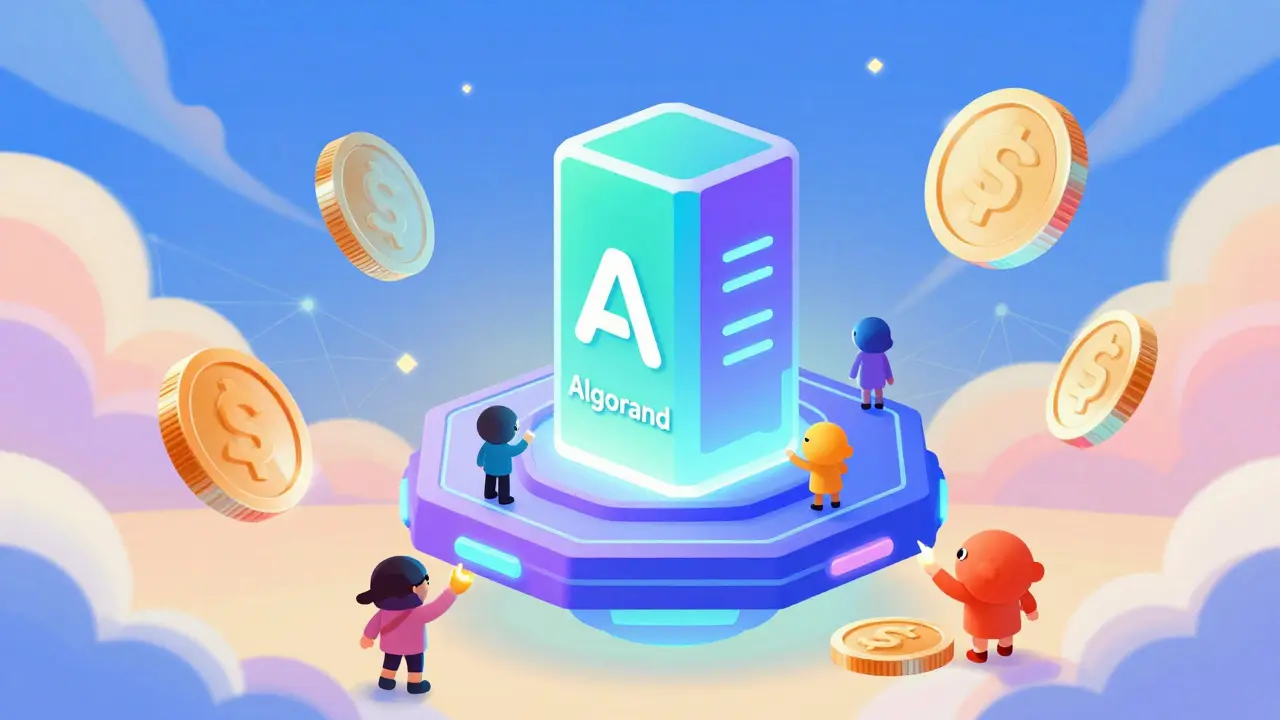
Most people hear the name "Pact" and immediately think of a smart contract language or a generic agreement. But if you are looking at Pact crypto exchange, you are looking at something very specific: a decentralized exchange (DEX) built exclusively on the Algorand blockchain. Launched in 2021, it has carved out a niche as one of the first Automated Market Makers (AMMs) on this network. The big question is whether its mobile-first design and low fees actually make it better than the giants like Uniswap or even its local rival, Tinyman.
If you hold ALGO or Algorand Standard Assets (ASAs), you might be wondering if it's worth moving your funds to this platform. The short answer is yes, but only if you fit a specific profile. You need low transaction costs, you prefer a clean mobile interface, and you don't mind being locked into the Algorand ecosystem. If you want deep liquidity for obscure tokens or cross-chain swaps without bridging, Pact might frustrate you. Here is the honest breakdown of how it works, what it costs, and who should actually use it.
What Exactly Is Pact?
Pact is a non-custodial decentralized exchange operating on the Algorand blockchain that allows users to swap Algorand Standard Assets using automated market making. Unlike centralized exchanges where a company holds your keys, Pact uses smart contracts to hold your funds securely until the trade executes. This means no one can freeze your account or steal your assets through a hack of a central server. Your wallet connects directly to the protocol.
The platform was developed by Ulam Labs, which served as the main technology provider working closely with the core team from scratch. This partnership ensures ongoing maintenance and feature enhancements. Pact positions itself as "The home of liquidity on Algorand," backed by major ecosystem partners including Hivemind, Borderless Capital, and Meld Ventures. It operates permissionlessly, meaning anyone can create markets or provide liquidity for any pair of ASAs, including stablecoins like USDC and USDT, wrapped assets, and the native ALGO token.
User Experience: Mobile-First Design
Here is where Pact stands out from most competitors. Most DEXs are designed for desktop screens first, then squeezed onto phones. Pact flipped that script. The interface is clean, intuitive, and optimized for touch controls. If you trade on the go, this matters. According to usability testing conducted by Ulam Labs in Q2 2023, the average user required only 15 to 30 minutes to complete their first trade. That is significantly faster than learning curves on more complex platforms like Uniswap.
The visual layout removes clutter. You see the price, the slippage tolerance, and the estimated output clearly. There are no hidden menus or confusing dashboards. For beginners, this lowers the barrier to entry. However, power users might find it lacks some advanced charting tools found on professional trading terminals. It’s a tool for execution, not analysis. If you need deep technical indicators, you’ll likely still rely on external charting platforms while executing trades on Pact.
Fees, Speed, and Transaction Costs
Cost is the primary driver for choosing an Algorand-based DEX over Ethereum-based ones. Algorand is known for its speed and low cost. Transactions typically settle in about 4.3 seconds, and the gas fee is roughly $0.001 per transaction. On Pact, you pay these minimal network fees plus a small trading fee taken by the liquidity pool.
Pact offers two distinctive fee structures:
- Multiple Fee Tiers: Different pools have different fee percentages based on volatility. Highly volatile pairs might have higher fees to compensate liquidity providers for risk, while stable pairs have lower fees.
- StableSwap: An optimized algorithm for stablecoin pairs (like USDC/USDT) that minimizes impermanent loss and keeps fees extremely low.
Compared to Ethereum DEXs, the savings are massive. A single swap on Uniswap during peak congestion could cost $5 to $50 in gas. On Pact, it’s fractions of a cent. This makes micro-trading viable, which isn’t possible on high-gas networks.

Liquidity Depth and Market Share
This is the critical area where you need to manage expectations. While Pact is a top player on Algorand, the entire Algorand DeFi ecosystem is smaller than Ethereum or Solana. As of late 2023, the total value locked (TVL) in Algorand DeFi was approximately $287 million. Within that, DEXs held about 38% of the TVL. Pact holds an estimated 15-20% market share among Algorand DEXs.
Your main competitor here is Tinyman, which has historically dominated Algorand DEX volume with around 65% market share. If you are swapping large amounts of ALGO for USDC, both platforms work well. But if you are trying to buy a small-cap ASA with low liquidity, you might face higher slippage on Pact compared to Tinyman. Always check the "price impact" indicator before confirming a trade. If it exceeds 1-2%, consider splitting the order or checking another venue.
| Feature | Pact (Algorand) | Tinyman (Algorand) | Uniswap (Ethereum) |
|---|---|---|---|
| Primary Chain | Algorand | Algorand | Ethereum |
| Avg. Gas Fee | ~$0.001 | ~$0.001 | $0.50 - $50+ |
| Interface Focus | Mobile-First | Desktop/Hybrid | Desktop/Hybrid |
| Liquidity Depth | Moderate (Top 3 on Algo) | High (Market Leader on Algo) | Very High |
| Cross-Chain Support | No (Algo only) | No (Algo only) | Yes (via bridges/multi-chain) |
| Best For | Mobile traders, low-cost swaps | Deep Algo liquidity | Major asset pairs, institutional volume |
Security and Trust
When dealing with a DEX, security isn't just about the code; it's about who wrote it and who audits it. Pact’s smart contracts were audited by Kudelski Security, a reputable firm in the crypto space. Additionally, the platform participates in Immunefi’s security partnership program, offering bounties for bug hunters. As of late 2023, there have been no major publicly disclosed vulnerability reports or hacks affecting Pact users. This is a strong signal of stability.
Since it is non-custodial, your biggest security risk is usually yourself-losing your seed phrase or connecting to a phishing site. Pact integrates with major Algorand wallets like Pera, My Algo, Fireblocks, AlgoSigner, and Defly. Using a hardware wallet via these integrations adds an extra layer of protection. The fact that Ulam Labs and the Pact team cannot access your funds reduces counterparty risk significantly compared to centralized exchanges like FTX or Celsius, whose collapses highlighted the dangers of custodial models.
Getting Started: Step-by-Step Guide
If you decide to try Pact, the process is straightforward. You don’t need to download an app; it runs entirely in your web browser.
- Get an Algorand Wallet: Install Pera Wallet or My Algo on your phone or computer. Fund it with ALGO (for gas) and the asset you want to swap.
- Connect to Pact: Visit pact.fi and click "Connect Wallet." Select your wallet and approve the connection.
- Select Tokens: Choose the token you have (top left) and the token you want (bottom right). The available pools will load automatically.
- Check Slippage: Set your slippage tolerance. For stable pairs, 0.5% is fine. For volatile pairs, 1-2% is safer.
- Execute Trade: Click "Swap" and confirm the transaction in your wallet. Wait 4-5 seconds for confirmation.
For liquidity providers, the process is similar but involves adding equal values of two tokens to a pool. Be aware of impermanent loss, which occurs when the price ratio between your two tokens changes after you deposit them. Pact provides basic explanations, but if you are new to providing liquidity, start small.
Pros and Cons of Using Pact
Every platform has trade-offs. Here is what you gain and what you sacrifice by using Pact. Pros:
- Low Fees: Negligible gas costs make frequent trading feasible.
- Mobile Optimization: Best-in-class mobile interface for quick trades.
- Security: Audited contracts and non-custodial model reduce trust issues.
- Fast Settlements: Near-instant finality thanks to Algorand’s infrastructure.
- Limited Asset Selection: Only Algorand Standard Assets. No direct access to ERC-20 or BEP-20 tokens.
- Smaller Liquidity Pools: Less depth than Ethereum majors or even Tinyman for some pairs.
- Educational Gap: Fewer beginner guides and advanced strategy resources compared to Uniswap.
- Ecosystem Dependence: Success is tied entirely to Algorand’s growth and adoption.
Who Should Use Pact?
Pact is ideal for Algorand holders who want to diversify within the ecosystem without paying high gas fees. If you are already invested in ALGO and want to swap for other ASAs or stablecoins, Pact is one of the safest and most efficient options. It is also great for mobile-first traders who prioritize convenience over advanced analytics.
You should probably avoid Pact if you are a multi-chain trader who frequently moves assets between Ethereum, Solana, and BNB Chain. The lack of native cross-chain functionality means you’ll need to bridge assets separately, adding complexity and cost. In that case, a multi-chain aggregator or a DEX with broader compatibility might serve you better.
Frequently Asked Questions
Is Pact crypto exchange safe to use?
Yes, Pact is considered safe due to its non-custodial nature and audits by Kudelski Security. Since funds are held in smart contracts rather than a central company, there is no risk of the exchange going bankrupt or freezing your assets. However, standard DeFi risks apply, such as smart contract bugs or user error (e.g., sending funds to the wrong network).
How much does it cost to trade on Pact?
Trading on Pact costs less than $0.01 in gas fees per transaction, paid in ALGO. Additionally, liquidity pools charge a small trading fee, typically ranging from 0.05% to 1% depending on the pair and volatility. Stablecoin pairs often have lower fees due to the StableSwap optimization.
Can I trade Ethereum tokens on Pact?
Not directly. Pact operates exclusively on the Algorand blockchain. To trade an Ethereum token on Pact, you would first need to wrap that token into an Algorand Standard Asset (ASA) using a bridge. Once wrapped, it becomes tradable on Pact. This adds an extra step and potential bridge risks.
Which wallets are compatible with Pact?
Pact supports major Algorand wallets including Pera Wallet, My Algo, Fireblocks, AlgoSigner, and Defly. Any wallet that supports Algorand Standard Assets and can sign transactions on the Algorand network will work with Pact.
How does Pact compare to Tinyman?
Tinyman generally has higher trading volume and deeper liquidity pools, holding about 65% of the Algorand DEX market share. Pact differentiates itself with a superior mobile-first interface and strategic partnerships. If you prioritize maximum liquidity for rare tokens, Tinyman might be better. If you prioritize ease of use and mobile experience, Pact is often preferred.