

You might think of Parallel Finance as a standard crypto exchange, but that’s a dangerous misconception. It is actually a decentralized finance (DeFi) protocol built on the Polkadot network. If you are looking for a place to trade with high liquidity and instant customer support, you might be in the wrong place. But if you want to earn yield on your idle DOT or KSM tokens while retaining full custody of your assets, this platform offers something unique. However, its recent history is messy. In August 2024, it shut down its NFT lending service, leaving users scrambling to recover assets. This review breaks down what Parallel Finance does well, where it failed, and whether it is worth your time today.
What Is Parallel Finance?
Parallel Finance is a Polkadot-based DeFi platform launched in 2021 that combines lending, borrowing, and automated market maker (AMM) trading. Unlike centralized exchanges like Binance or Coinbase, you do not deposit money into a company bank account. Instead, you interact directly with smart contracts. The core idea was simple: let users lend out their stablecoins or native tokens to earn interest, or borrow against them to get liquidity without selling. It also included "Dynamic Swap," an AMM feature similar to Uniswap V2, allowing users to swap tokens like DOT and PARA without needing a traditional order book.
The platform operates as a parachain, meaning it runs on its own blockchain secured by Polkadot’s shared security. This setup allows for faster transactions than Ethereum but requires specific wallet integrations. You cannot just log in with an email; you need a Polkadot.js extension or MetaMask configured for the Polkadot ecosystem. This technical barrier is the first hurdle for many beginners.
Core Features: Lending and Dynamic Swap
The main draw for Parallel Finance has always been its yield opportunities. During the bull market of 2021, the platform offered APYs ranging from 8% to 12% on DOT staking and lending. Compare this to Aave on Ethereum, which often hovered between 4% and 6%, and the appeal was obvious. Users could supply DOT, receive pDOT (a receipt token), and use that collateral to borrow other assets. This loop allowed for leveraged positions and efficient capital usage.
The Dynamic Swap feature handled spot trading within the same interface. It used a constant product formula ($x \times y = k$) to determine prices based on liquidity pool ratios. While convenient, the liquidity pools were never massive. At its peak, the total value locked (TVL) hit $387 million in November 2021. By August 2024, that number had crashed to roughly $12.4 million. Low liquidity means higher slippage when you trade. If you try to swap a large amount of DOT for PARA now, you might lose 2-5% of your value just in price impact, depending on the pool depth.
The August 2024 NFT Shutdown Crisis
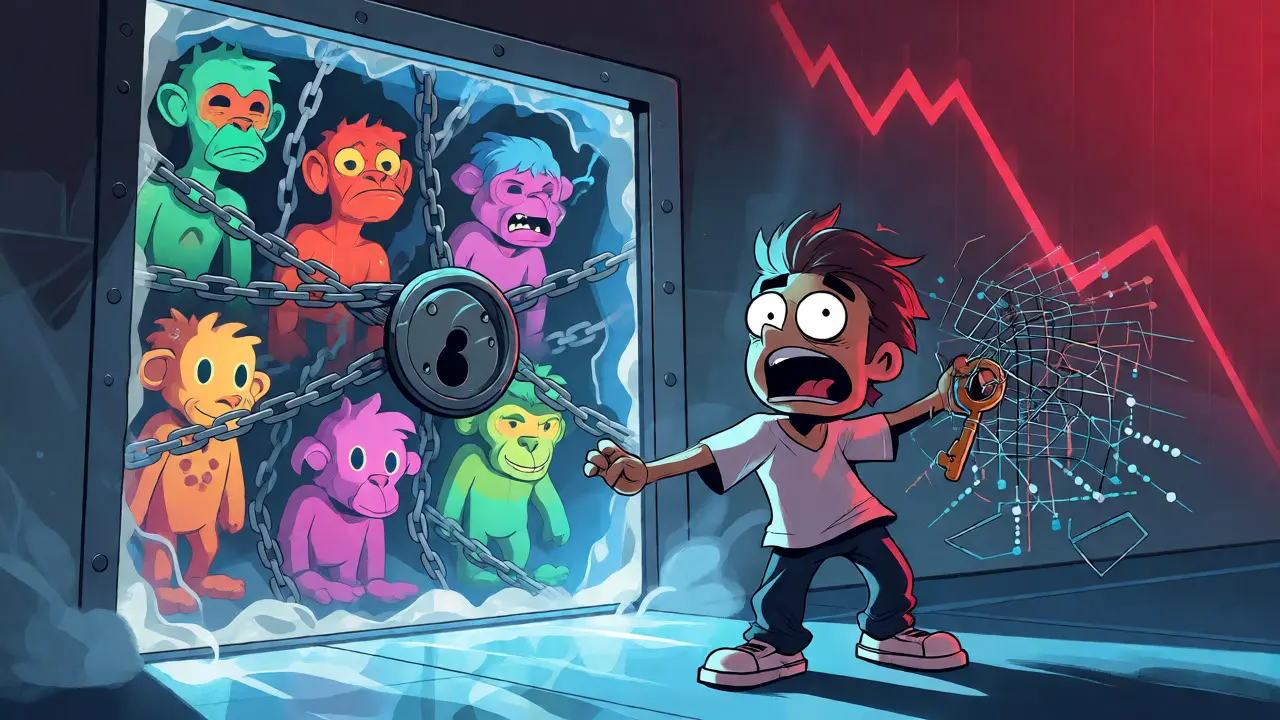
This is the elephant in the room. On July 31, 2024, Parallel Finance announced it would terminate its NFT lending services effective August 1, 2024. This wasn’t a gradual wind-down; it was abrupt. Users who had deposited high-value NFTs-like Bored Apes, Mutant Apes, and Doodles-to borrow stablecoins suddenly found themselves unable to withdraw easily. Reports indicate approximately $800,000 worth of NFTs got stranded in user vaults.
The recovery process was a nightmare for non-technical users. The platform did not provide a simple "withdraw" button for these stranded assets. Instead, users had to interact directly with smart contracts on Etherscan or Polkadot.js explorer. For someone who isn’t comfortable writing function calls or managing gas fees manually, this felt like losing access to their property. CEO Yubo Ruan even suggested a $500 fee for late withdrawals, which sparked outrage on Reddit and Twitter. Community analyst 0xQuit estimated that fewer than 15% of affected users successfully recovered their NFTs through direct contract interaction. This event severely damaged trust. A DeFi platform must prioritize user asset accessibility, especially during crises. Parallel Finance failed that test.
Security and Trustworthiness
Technically, the smart contracts behind Parallel Finance were audited by reputable firms like Blocksec and PeckShield in March 2022. No major hacks occurred due to code vulnerabilities in the core lending logic. The issue wasn’t bad code; it was operational risk management. When the team decided to pivot away from NFT lending, they underestimated the friction it would cause for users holding illiquid assets.
Security protocols include standard DeFi measures, but there is no insurance fund comparable to those found on larger platforms like Aave or Compound. If a liquidation cascade occurs, or if a bridge fails, your funds are exposed. The lack of robust customer support exacerbates this. Before the shutdown, average response times on Twitter were around 4 hours. After the crisis, that jumped to nearly 15 days. In DeFi, speed matters. If your position is about to be liquidated, waiting two weeks for support is useless.
Comparison with Competitors
To understand where Parallel stands, look at how it compares to the giants of DeFi. While it pioneered some features in the Polkadot ecosystem, its scale and reliability lag far behind Ethereum-based protocols.
| Feature | Parallel Finance | Aave (Ethereum) | Compound (Ethereum) |
|---|---|---|---|
| Primary Network | Polkadot Parachain | Ethereum / Layer 2s | Ethereum / Layer 2s |
| Total Value Locked (Aug 2024) | ~$12.4 Million | ~$13 Billion | ~$3 Billion |
| Lending APY (DOT/ETH) | Variable, historically higher | Stable, lower (4-6%) | Stable, lower (3-5%) |
| NFT Lending Status | Shut Down (Aug 2024) | Not Native (via partners) | Not Native |
| User Support Response | Poor (Days/Weeks) | Community-led (Hours) | Community-led (Hours) |
| Asset Recovery Complexity | High (Manual Contract Interaction) | Low (Standard UI) | Low (Standard UI) |
The table highlights a clear trade-off. Parallel offered higher yields and integrated Polkadot-native functionality, but at the cost of liquidity depth and operational resilience. Aave and Compound have survived multiple market cycles with consistent uptime and predictable withdrawal processes. Parallel’s niche advantage-high yields on Polkadot assets-is now overshadowed by the risk of getting stuck in a low-liquidity environment with poor support.
User Experience and Learning Curve
If you are new to DeFi, expect a steep learning curve. Connecting a wallet, approving token allowances, and understanding liquidation thresholds takes time. CoinLedger rates the basic complexity at 6/10, but recovering assets post-shutdown jumps to 9/10. You need to understand concepts like collateral factors, health factors, and impermanent loss if you plan to provide liquidity.
The interface itself was clean when it worked. It aggregated lending markets and swaps in one dashboard. But documentation has stalled since July 2024. GitHub repositories show little activity. Community support has shifted to independent channels, such as 0xQuit’s free recovery assistance initiative. Relying on community goodwill rather than official support is risky for anyone with significant capital at stake.

PARA Token Performance and Outlook
The native token, PARA, suffered alongside the platform. It peaked at $0.0042 in November 2021. As of October 2024, it trades near $0.00044, a decline of nearly 90%. Analyst predictions are split. WalletInvestor forecasts further drops to $0.000055, suggesting abandonment. PricePrediction.net sees potential for a rebound to $0.00048, citing undervaluation. Given the TVL drop and reduced governance participation (only 38.7% turnout in recent votes), optimism seems strained.
Dr. Elena Rodriguez from Blockchain Insights LLC noted that while the tech was sound, the operational failure destroyed trust. Rebuilding that trust requires transparent communication and reliable execution, both of which have been lacking. Unless the team delivers on promised upgrades (like version 2.3 planned for late 2024) with flawless execution, PARA may remain a speculative play with high downside risk.
Who Should Use Parallel Finance?
Do not use Parallel Finance if:
- You are a beginner who needs hand-holding and instant support.
- You hold large amounts of capital and cannot afford to wait weeks for withdrawals.
- You require deep liquidity for frequent trading.
Consider it only if:
- You are deeply invested in the Polkadot ecosystem and want to maximize yield on DOT/KSM.
- You have advanced technical skills to manage smart contract interactions manually.
- You are comfortable with the risk of low liquidity and potential service interruptions.
Frequently Asked Questions
Is Parallel Finance a centralized exchange?
No, Parallel Finance is a decentralized finance (DeFi) protocol built on the Polkadot blockchain. It uses smart contracts for lending, borrowing, and swapping, meaning users retain custody of their private keys and assets throughout the process.
Why did Parallel Finance shut down its NFT lending service?
The team announced the termination of NFT lending in July 2024, effective August 1, 2024. They cited strategic pivots and resource allocation towards the core lending protocol. The abrupt nature of the shutdown led to significant user complaints regarding asset accessibility.
How do I withdraw my funds from Parallel Finance?
For standard lending positions, you can withdraw via the web interface using your Polkadot.js or MetaMask wallet. However, for assets stranded from the NFT shutdown, users often had to interact directly with smart contracts on block explorers like Etherscan or Polkadot.js, which requires technical expertise.
What wallets work with Parallel Finance?
The primary wallet is Polkadot.js Extension. MetaMask is also supported for certain cross-chain interactions or if you are bridging assets from Ethereum, but native Polkadot operations are best handled with Polkadot.js.
Is it safe to keep funds on Parallel Finance?
The smart contracts were audited by Blocksec and PeckShield, indicating strong code security. However, operational risks are high. The 2024 shutdown revealed weaknesses in user protection and support. Funds are safe from hacks if the code holds, but they are vulnerable to liquidity crunches and withdrawal delays.
What is the current status of the PARA token?
As of late 2024, PARA trades significantly below its all-time high, around $0.00044. Market sentiment is mixed, with some analysts predicting further declines due to low TVL and others seeing value in its undervalued state. Governance participation remains low.