

It is easy to feel overwhelmed by the sheer number of decentralized exchanges (DEXs) popping up on the blockchain. You see promises of high yields, low fees, and instant transactions everywhere. But when you dig into a platform like Polycat Finance, which launched back in May 2021 as a hybrid yield optimizer on Polygon Network, the picture becomes much less clear. The big question for any investor or trader in 2026 is simple: does this platform still offer real value, or has it faded into obscurity?
The short answer might surprise you. Polycat Finance is not dead, but it is certainly not thriving in the way major competitors are. It sits in a quiet corner of the DeFi world, offering basic functionality with very little activity. If you are looking for deep liquidity, cutting-edge features, or massive community support, you will likely find yourself disappointed. However, if you are curious about niche yield aggregators or want to understand what happens to smaller projects after the initial hype dies down, Polycat offers an interesting case study.
What Exactly Is Polycat Finance?
To understand where Polycat stands today, we need to look at its origins. Launched in 2021 during the peak of the DeFi boom, Polycat Finance positioned itself as more than just a place to swap tokens. It was built as a yield optimizer that combined decentralized exchange functionality with automated yield farming strategies. The idea was appealing: users could deposit assets, and the protocol would automatically move them to the most profitable opportunities across various pools.
The platform runs on Polygon, a Layer 2 scaling solution for Ethereum. This technical choice was smart at the time. Ethereum mainnet fees were skyrocketing, making small trades unprofitable. By using Polygon, Polycat promised near-instant settlements and gas costs close to zero. For traders who wanted exposure to ERC20 tokens without paying $50 per transaction, this was a compelling proposition.
The native utility token of the ecosystem is FISH. This token serves two main purposes within the platform: governance voting and fee discounts. Holding FISH allows users to have a say in how the protocol evolves and reduces the cost of trading on the exchange. In theory, this creates a sticky ecosystem where users are incentivized to hold the token rather than sell it immediately.
The Reality Check: Liquidity and Market Presence
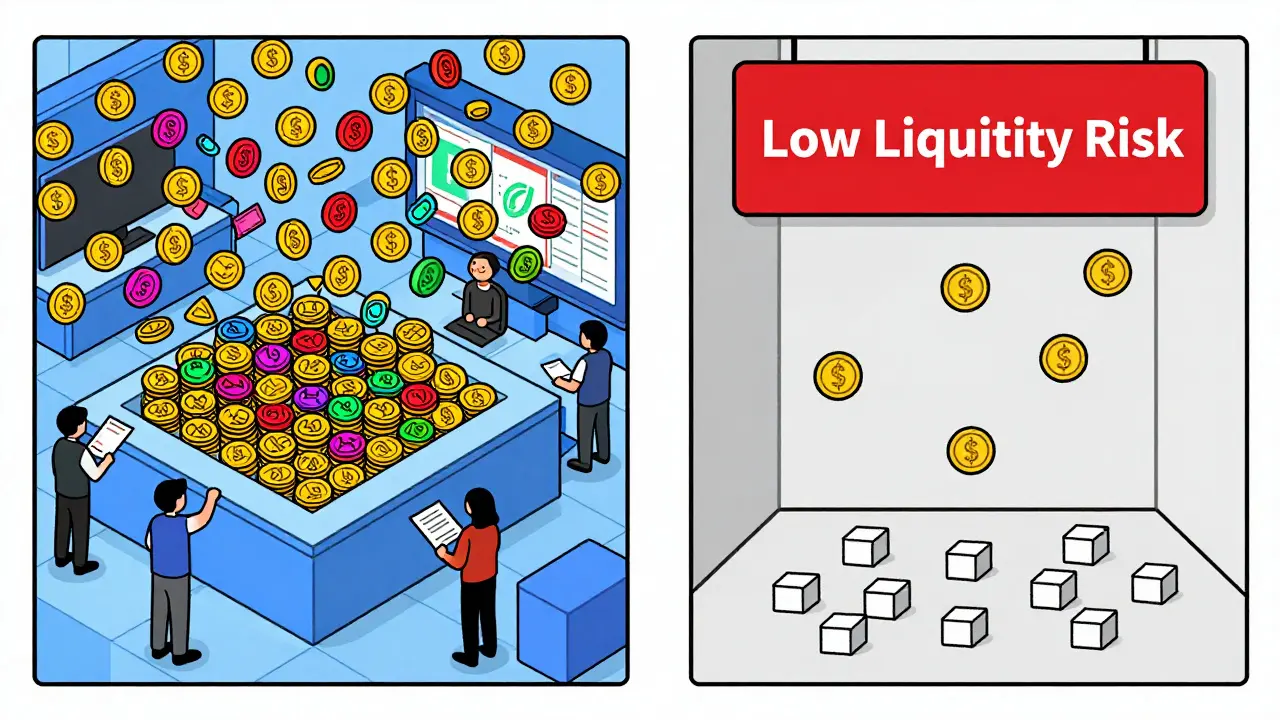
Here is where things get tricky. When you compare Polycat Finance to industry giants like Uniswap or PancakeSwap, the difference is stark. As of late 2023 data, which remains relevant given the lack of significant updates since then, Polycat lists only five tradable coins and fifteen active trading pairs. To put that in perspective, Uniswap supports thousands of tokens, and PancakeSwap handles hundreds.
This limited selection means that if you want to trade anything other than the most common assets, you probably won't find a pair on Polycat. More importantly, the lack of volume has led CoinMarketCap to classify Polycat as an 'Untracked Listing'. This status isn't a punishment; it simply means there isn't enough consistent trading data to calculate reliable market metrics like daily volume or market cap accurately. For a serious trader, this is a red flag. Low liquidity can lead to slippage, meaning your trades might execute at worse prices than expected because there aren't enough buyers or sellers in the pool.
| Feature | Polycat Finance | Uniswap V3 | PancakeSwap |
|---|---|---|---|
| Network | Polygon (Layer 2) | Ethereum & Multiple L2s | BNB Chain |
| Listed Tokens | ~5 | Thousands | Hundreds |
| Trading Pairs | ~15 | Tens of Thousands | Thousands |
| Volume Status | Untracked / Minimal | Billions Daily | Billions Daily |
| Primary Focus | Yield Optimization | General Trading | General Trading & Gaming |
Performance of the FISH Token
If you are considering investing in Polycat, you are likely looking at the FISH token. The performance of this asset tells a story of stagnation. Data from CoinGecko shows that FISH experienced significant volatility and downward trends in 2023, including an 11.4% decline over a single week in October. While crypto markets are volatile, FISH underperformed the broader market during many periods.
Price prediction models, such as those from Coinbase, have projected modest changes for FISH, estimating values around S$0.02 by late 2025. This suggests that analysts do not expect explosive growth. The token's value is tied closely to the utility of the platform. Since the platform's user base and trading volume remain low, there is limited demand driving the price of FISH upward. Without new features, partnerships, or a surge in user adoption, the token is likely to continue trading in a narrow range or slowly declining against major cryptocurrencies like Bitcoin or Ethereum.
User Experience and Community Sentiment
One of the most telling signs of a project's health is its community. For Polycat Finance, this area is notably quiet. There are virtually no user reviews on major platforms like Trustpilot, and Reddit discussions are sparse. Compare this to Uniswap or SushiSwap, which have vibrant communities constantly discussing strategy, bugs, and improvements. The silence around Polycat suggests that very few active users are engaging with the platform daily.
From a practical standpoint, buying FISH tokens can also be cumbersome. Unlike major tokens available directly on centralized exchanges like Binance or Coinbase, FISH often requires users to go through third-party services or specific payment processors like PLGPAY or CHIPPAY. This adds friction to the onboarding process. If you cannot easily buy the token, fewer people will use it, which further depresses liquidity and volume-a vicious cycle for smaller DeFi projects.

Security and Risks
When dealing with decentralized finance, security is paramount. Polycat Finance operates via smart contracts on the Polygon network. While Polygon itself is secure, the safety of the specific Polycat contracts depends on rigorous auditing. Unfortunately, detailed public records of recent security audits from reputable firms are scarce in mainstream crypto news outlets like CoinDesk or Cointelegraph. This lack of transparency is common for smaller projects but should give cautious investors pause.
Additionally, the 'NaN BRL' pricing error noted by some conversion tools indicates potential issues with price feed integration. While this might seem minor, accurate pricing is crucial for yield farming strategies. If the oracle feeds providing price data are unreliable, your automated yield optimization could make poor decisions, leading to unexpected losses. Always verify that the data you see on the dashboard matches reality on-chain before committing funds.
Is Polycat Finance Right for You?
So, who is this platform actually for? It is not for the casual investor looking for safe, steady returns. It is not for the high-volume trader needing deep liquidity. Polycat Finance occupies a niche that is shrinking, not growing. The DEX space is consolidating, with top platforms adding yield optimization features themselves, rendering standalone optimizers like Polycat less unique.
You might consider interacting with Polycat if:
- You are an experienced DeFi user comfortable with high-risk, low-liquidity environments.
- You specifically want to experiment with Polygon-based yield farming strategies outside of the major hubs.
- You already hold FISH tokens and want to utilize them for governance or fee discounts.
However, if you are new to crypto or prefer platforms with proven track records, robust security audits, and large communities, Polycat Finance is likely not the best fit. The risks outweigh the benefits for most users in 2026.
Is Polycat Finance safe to use?
While Polycat Finance operates on the secure Polygon network, there is a lack of publicly available, recent security audit reports from major firms. Additionally, its low liquidity and minimal user base mean there is less community oversight. Use extreme caution and never invest more than you can afford to lose.
Why is Polycat Finance listed as 'Untracked' on CoinMarketCap?
CoinMarketCap marks listings as 'Untracked' when there is insufficient trading volume data to calculate reliable market metrics. This indicates that Polycat has very low trading activity compared to standard exchanges, making it difficult to determine its true market capitalization or daily volume.
Can I buy FISH tokens on Binance or Coinbase?
Generally, no. FISH is not typically listed on major centralized exchanges like Binance or Coinbase. Users usually acquire FISH through decentralized swaps on Polygon or via third-party payment processors, which adds complexity to the purchasing process.
What is the main advantage of using Polycat Finance?
The primary advantage is its hybrid model combining a DEX with automated yield optimization on Polygon. This allows for low gas fees and potentially higher yields through automated strategies, though these benefits are currently undermined by low liquidity and limited token options.
How does Polycat compare to Uniswap?
Uniswap is a market leader with massive liquidity, thousands of tokens, and billions in daily volume. Polycat is a niche player with only five tokens and minimal volume. Uniswap is better for general trading, while Polycat focuses on yield farming but lacks the depth and security reputation of larger competitors.