
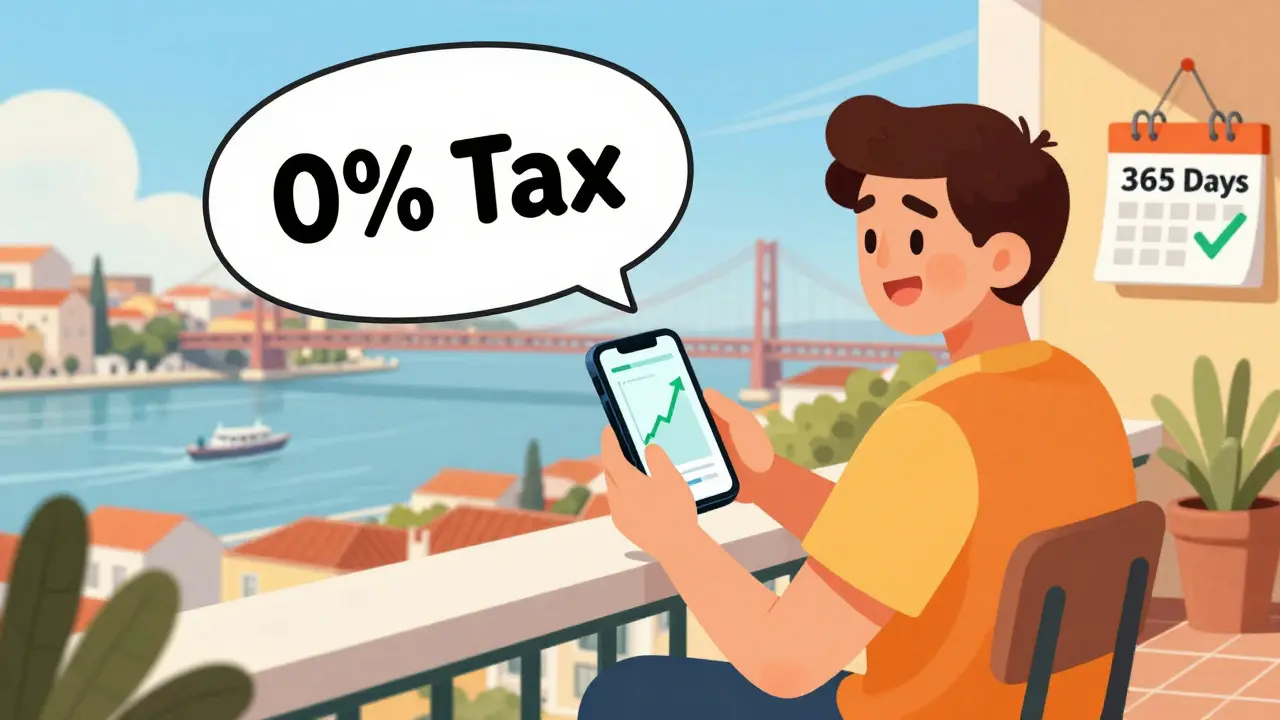
Imagine holding Bitcoin or Ethereum for just over a year and paying absolutely zero tax on your profits. For many international traders, this isn't a fantasy-it’s the reality in Portugal. As we move through 2026, Portugal remains one of the most attractive destinations for digital asset investors, primarily because of its unique tax structure that rewards long-term patience. While other European nations are tightening their grip with higher taxes and stricter reporting, Portugal offers a rare combination of fiscal relief and a growing, albeit complex, regulatory framework.
However, it is not all sunshine and beaches. The landscape shifted dramatically in early 2025 when the country faced a temporary regulatory vacuum regarding new service providers. If you are considering moving your trading operations to Lisbon or Porto, you need to understand exactly how the Markets in Crypto-Assets (MiCA) regulation interacts with local laws. This guide breaks down the real costs, the legal hurdles, and the strategic advantages of trading crypto from Portugal in 2026.
The Tax Advantage: Why Traders Flock to Portugal
The primary driver for any serious trader looking at Portugal is the tax code. Under the current regime established in the 2023 budget plan, the distinction between short-term and long-term holdings is stark-and beneficial if you can wait.
If you hold a cryptocurrency for less than 365 days, any profit you make is taxed at a flat rate of 28%. This applies to capital gains, income from staking, and other crypto-related earnings categorized as capital. While 28% might sound high compared to some offshore havens, it is significantly lower than the rates in neighboring countries. For context, Germany often pushes combined rates toward 45%, and France sits around 30%. More importantly, there is no progressive bracket; it is a simple, predictable flat rate.
Here is where the magic happens: if you hold your assets for more than one year, those gains are completely tax-exempt. This exemption applies to individuals, making Portugal a haven for 'HODLers' and long-term portfolio builders. You do not need to be a resident for decades to benefit; you just need to demonstrate that the asset was held for the required period. This policy has attracted thousands of traders from Switzerland, the UK, and Eastern Europe who are tired of punitive taxation on digital assets.
For those bringing significant foreign income, the Non-Habitual Residence (NHR) Program adds another layer of protection. Although the program has undergone changes in recent years, it still offers a 20% flat rate on specific Portuguese-sourced income and exemptions on most foreign earnings for qualifying professionals. For a digital nomad running a remote trading business, this can drastically reduce the overall tax burden, provided you structure your residency correctly.
Navigating the Regulatory Maze: MiCA and Local Laws
Tax benefits are useless if you cannot legally operate. Portugal’s regulatory environment has been a rollercoaster, but by mid-2026, the picture is becoming clearer. The cornerstone of this change is the EU-wide Markets in Crypto-Assets (MiCA) regulation, which became fully effective across the bloc in late 2024. However, national implementation varies, and Portugal experienced a notable gap in early 2025.
In January 2025, the Banco de Portugal announced it could no longer authorize or supervise new cryptocurrency services due to pending national legislation. This created a paradox: existing Virtual Asset Service Providers (VASPs) could continue operating under transitional rules, but new entrants were effectively blocked. It was a confusing time, with many exchanges pausing their expansion plans into the country.
By October 2025, the government moved decisively. Secretary of State for Treasury and Finance João Silva Lopes confirmed that new rules were being finalized to transpose MiCA into national law. These rules aim to strengthen supervision and protect consumers while ensuring full compliance with European obligations. As of 2026, the expectation is that the Banco de Portugal will resume its supervisory role, working alongside the Comissão do Mercado de Valores Mobiliários (CMVM).
For traders, this means two things. First, consumer protection is improving. Second, if you are running a business or a large-scale operation, you must register as a VASP. The CMVM determines whether specific tokens qualify as financial instruments on a case-by-case basis. If they do, you fall under stricter securities laws. If not, you follow the general MiCA guidelines for 'other' crypto-assets, which require a white paper but no prior authorization for issuance.
Compliance Requirements for Businesses and High-Volume Traders
If you are an individual trader using major exchanges like Binance or Coinbase, your compliance burden is relatively low. You simply need to ensure your exchange is registered with the Banco de Portugal. However, if you are setting up a trading firm, a fund, or a specialized service provider, the requirements are rigorous.
All VASPs must register with the Banco de Portugal before offering services. This registration does not imply prudential supervision (like a bank), but it does enforce strict Anti-Money Laundering (AML) and Countering the Financing of Terrorism (CFT) protocols. You must appoint dedicated AML/CFT officers and conduct customer due diligence for transactions exceeding €1,000. Enhanced due diligence is required for high-risk situations, such as dealing with politically exposed persons or cross-border transfers from non-EU jurisdictions.
One surprising advantage for businesses is that Portugal requires no minimum share capital for crypto licenses. This lowers the barrier to entry for startups compared to jurisdictions like Malta or Singapore, which often demand substantial upfront deposits. Additionally, there are no restrictions on declaring cryptocurrency assets for individuals, meaning you don’t face confiscation risks simply for owning digital wealth.
| Feature | Portugal | Germany | Switzerland |
|---|---|---|---|
| Long-Term Capital Gains Tax | 0% (after 1 year) | ~25-45% (combined) | 0% (private wealth) |
| Short-Term Capital Gains Tax | 28% | Variable (Income Tax) | Variable (Income Tax) |
| Regulatory Body | Banco de Portugal / CMVM | BAFin | FINMA |
| Minimum Share Capital for License | None | Required | Required |
| MiCA Implementation Status | Active (Transitional Phase Ending) | Active | Aligned via EEA/EFTA |

The Real Cost of Living and Operating in Portugal
Tax savings mean little if your cost of living eats them up. Portugal remains one of the more affordable Western European countries, but prices have risen sharply since 2020, particularly in Lisbon and the Algarve. For a crypto trader relocating alone, expect to pay between €1,500 and €2,500 per month for a comfortable lifestyle, including rent, utilities, and food. In Lisbon, a modern one-bedroom apartment in the city center can range from €1,200 to €1,800 monthly.
Internet infrastructure is excellent, with fiber-optic connections widely available even in smaller towns. This is crucial for day traders who rely on low-latency connections to global exchanges. Co-working spaces are abundant and affordable, often costing less than €100 per month for a hot desk. This ecosystem supports a vibrant community of digital nomads and tech entrepreneurs, creating networking opportunities that are hard to find in more traditional financial hubs.
Healthcare is another factor. Public healthcare is accessible to residents, but many expats opt for private insurance, which costs around €50-€100 per month for comprehensive coverage. This ensures quick access to specialists and English-speaking doctors, which is invaluable during the initial relocation phase.
Market Confidence and Future Outlook
Despite the regulatory hiccups in 2025, investor confidence in Portugal remains robust. Blockchain technology commanded 36% of all venture funding in the country during the 2024-2025 period, according to Chambers Global Practice Guides. This indicates that institutional money sees Portugal as a stable, long-term play rather than a fleeting trend.
Adoption among the general population is also growing. Approximately 850,000 Portuguese citizens (8.2% of the population) now own cryptocurrency, with nearly a quarter of these owners being foreign residents attracted by the favorable tax policies. Enterprise adoption is slower, with only 12% of businesses accepting crypto payments, but this is gradually increasing as payment processors adapt to MiCA standards.
Industry analysts project that once the MiCA framework is fully implemented, Portugal could become Europe’s third-largest crypto hub, trailing only Switzerland and Germany. The economic impact could reach €1.2 billion annually by 2027. However, risks remain. There is always the possibility of EU pressure leading to tax harmonization, which could erode Portugal’s competitive edge. Additionally, delays in finalizing national legislation could create uncertainty for new market entrants.
Practical Steps for Relocating to Portugal as a Trader
If you decide to make the move, here is a streamlined checklist to ensure a smooth transition:
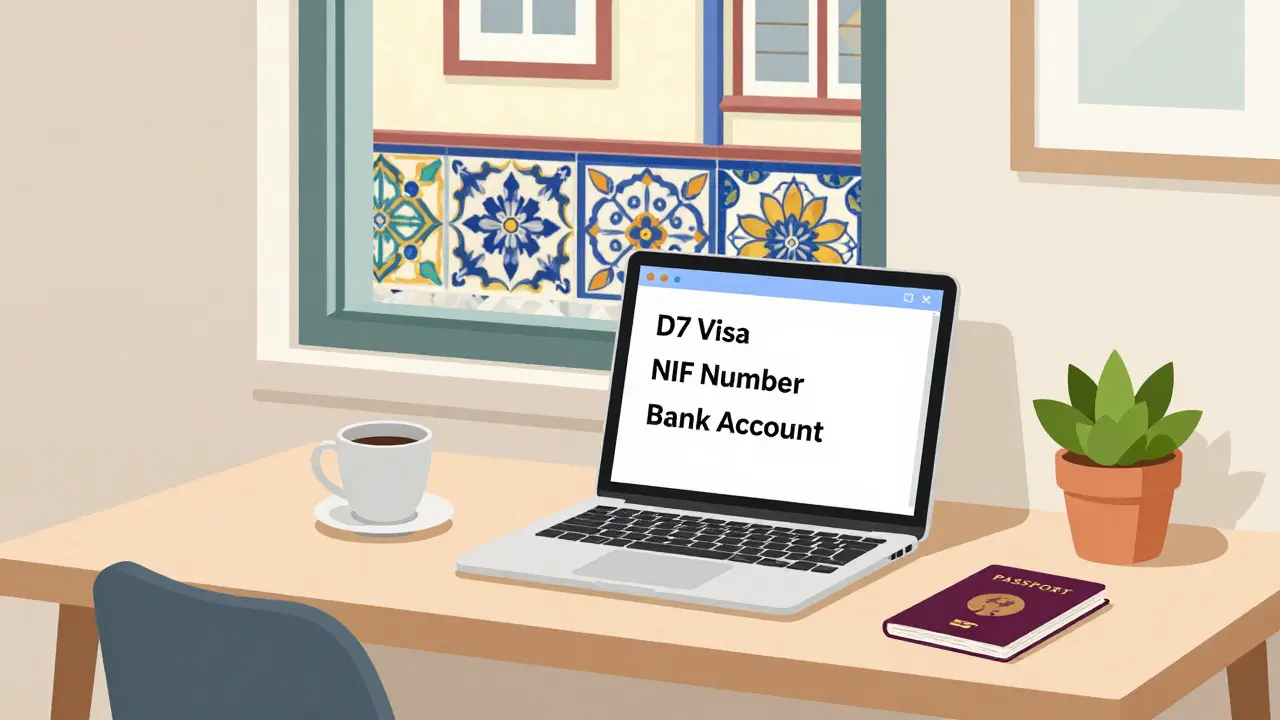
- Determine Your Residency Status: Apply for the D7 Visa (Passive Income) or D8 Visa (Digital Nomad) depending on your income source. Ensure you have proof of sufficient funds and health insurance.
- Secure a Fiscal Number (NIF): You cannot open a bank account or sign a lease without a NIF. Hire a local accountant or lawyer to obtain this quickly upon arrival.
- Open a Bank Account: Traditional banks may be hesitant about crypto income. Consider fintech solutions like Revolut or Wise for daily transactions, and use a reputable local bank for larger deposits. Be prepared to explain the source of your funds thoroughly.
- Register with the Tax Authority (AT): Declare your worldwide income if you become a tax resident. Keep detailed records of all crypto transactions, especially dates of acquisition and disposal, to prove the one-year holding period for tax exemption.
- Verify Exchange Compliance: Ensure the exchanges you use are registered with the Banco de Portugal or comply with MiCA standards. Avoid unregulated platforms to minimize risk.
- Consult a Specialist Lawyer: Given the complexity of MiCA and local AML laws, invest in legal advice from firms specializing in blockchain, such as Morais Leitão. They can help navigate the nuances of token classification and licensing.
Common Pitfalls to Avoid
Many traders underestimate the administrative burden of proving tax residency and transaction history. The biggest mistake is failing to document the exact time of purchase and sale. To claim the 0% tax rate on long-term holdings, you must provide irrefutable evidence that the asset was held for more than 365 days. Use tax software like CoinLedger or Koinly to automate this tracking.
Another pitfall is assuming that all crypto activities are treated equally. Mining, staking, and lending may be classified as income rather than capital gains, subjecting them to different tax rates and social security contributions. Always consult with a local tax advisor to classify your activities correctly.
Finally, do not ignore the regulatory updates. The landscape is evolving rapidly. What was true in January 2025 may not apply in December 2026. Subscribe to updates from the Banco de Portugal and join local crypto communities to stay informed about legislative changes.
Is crypto trading tax-free in Portugal?
Yes, but with conditions. Crypto profits are tax-exempt if the assets are held for more than one year. Short-term gains (held for less than 365 days) are taxed at a flat rate of 28%.
Do I need a license to trade crypto in Portugal?
Individual traders do not need a license. However, if you run a business providing crypto services (exchange, wallet, etc.), you must register as a Virtual Asset Service Provider (VASP) with the Banco de Portugal and comply with MiCA regulations.
What happened to crypto regulation in Portugal in 2025?
In early 2025, there was a temporary suspension of new authorizations due to pending national legislation implementing the EU's MiCA regulation. By late 2025, the government introduced new rules to resolve this gap, restoring clarity for both existing and new market participants.
Can digital nomads benefit from the NHR program?
Yes, eligible digital nomads can benefit from the Non-Habitual Residence (NHR) program, which offers a 20% flat tax rate on certain Portuguese-sourced income and exemptions on most foreign earnings. Specific eligibility criteria apply, so professional advice is recommended.
How much does it cost to live in Portugal as a crypto trader?
A single person can expect to spend between €1,500 and €2,500 per month for a comfortable lifestyle in cities like Lisbon or Porto, including rent, utilities, food, and internet. Costs are lower in smaller towns and rural areas.
Are there restrictions on owning cryptocurrency in Portugal?
No, there are no restrictions on individuals owning or declaring cryptocurrency assets. Portugal recognizes crypto as a valid asset class, and ownership is protected under civil law.