
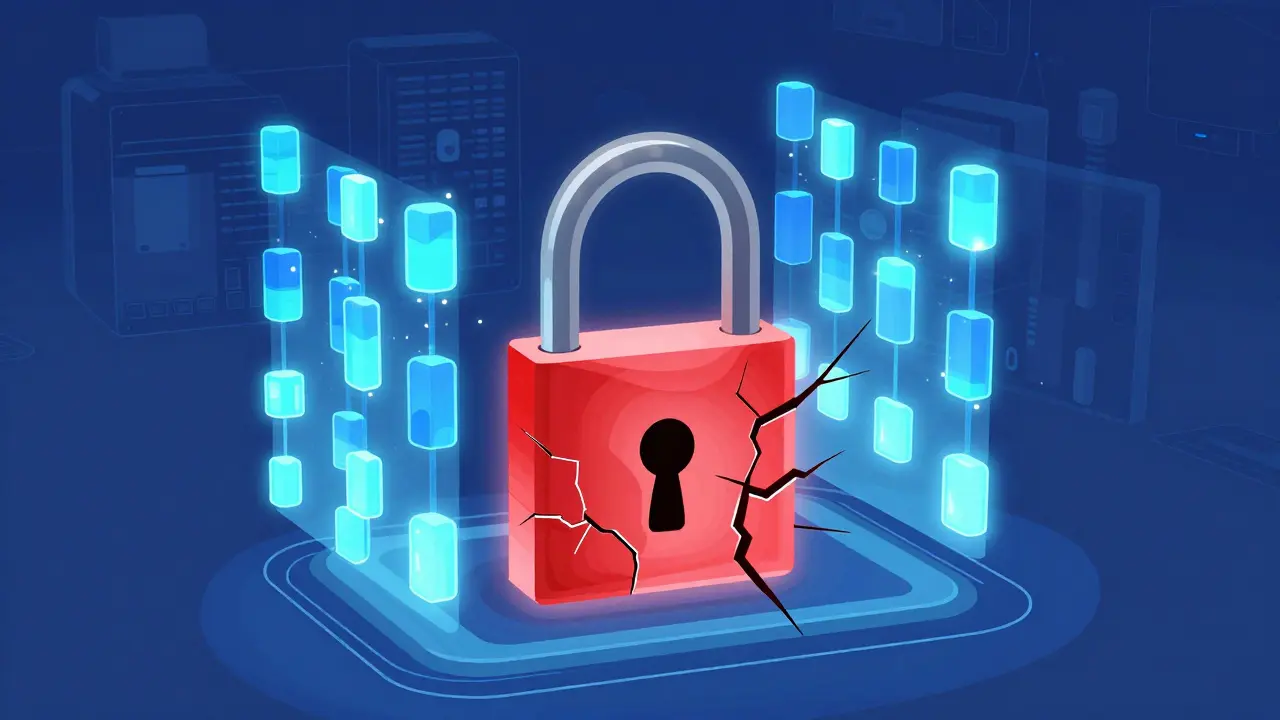
Imagine waking up tomorrow to find your digital vault unlocked. Not by a hacker with a laptop, but by a machine that can crack the mathematical locks we trust today in seconds. This isn't science fiction anymore. As we move through 2026, the threat of quantum computing looms larger over our digital infrastructure. Quantum-Resistant Security is the field of cryptography designed to protect digital systems against attacks from both classical and quantum computers. It has become the most critical topic for anyone holding digital assets or managing sensitive data. If you rely on blockchain technology, this shift matters more to you than almost anyone else.
We built the internet on math problems that were hard for old computers to solve. Factoring large numbers or finding discrete logarithms took supercomputers thousands of years. That difficulty was our shield. But quantum computers don't play by those rules. They use quantum bits, or qubits, which can exist in multiple states at once. This allows them to process information in ways that render our current encryption obsolete. The question isn't if we need to adapt, but how fast we can move before the threat becomes reality.
Understanding the Quantum Threat
To grasp why this research is urgent, you need to understand the enemy. Quantum computers leverage quantum mechanics to perform calculations that are intractable for even the most powerful classical supercomputers. Where a classical computer might need 317 trillion years to break a single encryption key, a quantum machine could do it in months. This speed comes from specific algorithms designed to exploit mathematical weaknesses.
Two algorithms stand out as the primary threats. Shor's Algorithm is a quantum algorithm that can efficiently break RSA and Elliptic Curve Cryptography. Most of your current secure communications, including blockchain signatures, rely on RSA or Elliptic Curve Cryptography (ECC). Shor's Algorithm can solve the underlying math problems exponentially faster than any classical method. Then there is Grover's Algorithm, which significantly weakens symmetric encryption methods like AES. While symmetric encryption is tougher to break, it still requires larger key sizes to remain safe against quantum attacks.
Dr. Michele Mosca, a quantum computing expert from the University of Waterloo, gave us a stark timeline. He estimated a one in seven chance that fundamental public-key cryptography tools would be broken by 2026. We are now in that window. A 50% chance by 2031 suggests that if we haven't moved by now, we are running out of time. This isn't just about future data; it is about data you have today.
The NIST Standardization Effort
Standardization is the bridge between theoretical research and practical tools. The United States National Institute of Standards and Technology (NIST) has led the charge here. They conducted multiple rounds of evaluation to find algorithms that could withstand quantum attacks while still working with our existing networks. NIST is the United States National Institute of Standards and Technology that spearheaded the international standardization effort for post-quantum cryptography. Their announcements gave the industry a clear roadmap.
NIST selected specific finalists to become the new standard. For encryption and key establishment, they chose CRYSTALS-Kyber, a lattice-based cryptographic scheme selected by NIST for encryption and key establishment. For digital signatures, which are vital for verifying transactions on a blockchain, they selected Dilithium, a lattice-based cryptographic scheme selected by NIST for digital signatures. These aren't just random choices; they are mathematically robust solutions that have survived years of scrutiny.
This standardization is crucial because it ensures interoperability. Organizations can implement these solutions without completely overhauling their infrastructure. You don't need to rebuild the internet, but you do need to upgrade the locks. The process represents a critical milestone in transitioning from theoretical research to practical implementation.
| Feature | Traditional (RSA/ECC) | Post-Quantum (Kyber/Dilithium) |
|---|---|---|
| Mathematical Basis | Integer Factorization, Discrete Logarithms | Lattice-Based Problems |
| Quantum Vulnerability | High (Shor's Algorithm) | Low (Believed Hard for Quantum) |
| Key Size | Small (2048-bit RSA) | Larger (Several KB) |
| Performance | Fast on Classical Hardware | Higher Computational Cost |
Why Blockchain Needs This Now
Blockchain technology relies heavily on public-key cryptography. Every transaction you sign with your private key is a mathematical proof that you own the assets. If a quantum computer can derive your private key from your public address, your funds are vulnerable. This is where the research in Quantum-Resistant Security becomes existential for the crypto industry.
Most blockchains currently use Elliptic Curve Cryptography. While efficient, it is vulnerable to Shor's Algorithm. Some networks are already experimenting with quantum-safe signatures. However, the transition is complex. You cannot just flip a switch. The consensus mechanism, the wallet software, and the node validation logic all need to align with the new cryptographic standards.
Consider the implications for smart contracts. If a contract relies on a signature scheme that a quantum computer can break, the logic of the contract can be manipulated. This doesn't just affect Bitcoin or Ethereum; it affects supply chain ledgers, identity systems, and decentralized finance protocols. The integrity of the entire ledger depends on the security of the underlying math.
The Harvest Now, Decrypt Later Threat
You might think you have time because quantum computers aren't breaking encryption today. Current quantum computers exist only in highly controlled laboratory environments. They are not yet capable of breaking cryptographic systems at scale. However, adversaries are already collecting encrypted data today with the intention of decrypting it once quantum computers become available.
This is the "harvest now, decrypt later" threat model. It is particularly concerning for data that must remain confidential for extended periods. Government secrets, financial records, and personal health information are prime targets. If a hacker steals your encrypted blockchain data today, they don't need to break it immediately. They store it. In five or ten years, when a powerful quantum computer exists, they unlock it. Your data from 2026 could be exposed in 2035.
Security experts worldwide believe that practical quantum computers will become standard within the next decade. The quantum computing industry has seen significant investment from technology giants like IBM, Google, and Microsoft. IBM's quantum computing division has made particular strides in developing quantum-safe cryptographic implementations. This investment accelerates the timeline, making proactive preparation essential.
Implementation Challenges and Trade-offs
Moving to quantum-safe cryptography involves more than simply replacing existing algorithms. It requires a comprehensive paradigm shift in secure system design and management. Organizations must understand the architectural changes, performance trade-offs, and operational risks associated with integrating quantum-ready solutions.
Performance is a major consideration. Quantum-resistant algorithms typically require more computational resources and generate larger signatures or ciphertext compared to classical methods. Lattice-based cryptographic schemes may produce signatures several times larger than current RSA signatures. This impacts network bandwidth and storage requirements. For a blockchain where every byte counts, this is a significant engineering challenge.
Legacy systems present another hurdle. Many older protocols and devices cannot handle the larger key sizes or different computational requirements. You might need to upgrade hardware or rewrite software stacks. The learning curve for security professionals is significant, requiring an understanding of new mathematical concepts that differ substantially from classical cryptography.
Future Developments and Hybrid Systems
Future developments in this field will likely focus on algorithm optimization and the development of hybrid systems. Hybrid systems combine classical and quantum-resistant methods during the transition period. This provides a safety net. If a flaw is found in the new quantum-resistant algorithm, the classical layer still offers some protection.
The field continues to evolve rapidly. Ongoing research into new mathematical approaches and continuous refinement of existing algorithms based on security analysis and practical implementation experience is constant. Long-term viability of specific quantum-resistant algorithms remains an active area of research. The cryptographic community works to ensure that selected methods can withstand not only current quantum algorithms but also future quantum computing advances that may emerge over the coming decades.
Companies like Fortanix have positioned themselves as leaders in quantum-resistant cryptography implementation, emphasizing the importance of future-proofing data security strategies. The market opportunity is substantial, as virtually every organization that relies on digital encryption will need to upgrade their systems. Regulatory and compliance considerations are becoming increasingly important as governments recognize the national security implications of quantum computing threats.
What is the biggest risk quantum computers pose to blockchain?
The biggest risk is the ability to derive private keys from public addresses using Shor's Algorithm. This would allow attackers to steal funds from wallets that use standard Elliptic Curve Cryptography.
When will quantum computers be powerful enough to break encryption?
Experts estimate a 50% chance by 2031 that fundamental public-key cryptography tools could be broken. However, the "harvest now, decrypt later" threat means data stolen today is at risk regardless of the timeline.
What algorithms is NIST recommending for post-quantum security?
NIST has selected CRYSTALS-Kyber for encryption and key establishment, and Dilithium for digital signatures as the primary standards for post-quantum cryptography.
Can I upgrade my blockchain wallet to be quantum-safe today?
Some wallets and networks are beginning to integrate quantum-resistant signatures, but widespread adoption is still in progress. You should monitor updates from your specific wallet provider and blockchain network.
Why are quantum-resistant keys larger than traditional keys?
Quantum-resistant algorithms rely on different mathematical problems, such as lattice-based problems, which require more data to represent securely. This results in larger key sizes and signatures compared to RSA or ECC.
Let's get this party started because the future is waiting for us! :)
shor's algo is scary but we have time to adapt to the new standards
lattce based crypto is the way to go for sure, cyrpto needs to upgrade soon
The layman does not understand the real implications of this shift
This negligence is unacceptable and you people are irresponsible
looks good though
We really need to talk about the timeline here. It feels like everyone is panicking a bit too early. But the math behind Shor's algorithm is undeniable. I have been following the NIST standards for a while now. They seem to have picked the right candidates for the job. Kyber and Dilithium sound like the way forward for sure. The lattice-based problems are much harder to crack. I worry about the implementation costs though. Upgrading all the nodes is going to take forever. Plus the bandwidth issues with larger keys are real. We cannot ignore the harvest now threat either. Data stolen today is useless until quantum computers exist. But that is still a threat to long term privacy. I think hybrid systems are the only logical choice. We need to keep the old math while we test the new. It gives us a safety net if something goes wrong.
It is important that we all work together on this transition
Only the elite understand the true cost of this migration :)
We can all support each other through the jargon and tech changes
This is a dramatic moment for the entire industry!!
Simple math shows the risk is high for ECC keys
This whole thing is just hype to sell more security tools.
I think we can do this if we stay positive and try hard
Wake up!! This is a national security issue!!!
The colorful landscape of cryptography is shifting beneath our feet
Optimism is key!!! We must prepare!!! The jargon is complex!!!
We should all share knowledge about the new standards
Oh please, you think you know better than the experts
I have been studying the protocols for years and the shift is necessary
You are all wrong about the timeline and the risk
I am curious about how the hybrid systems will function in practice
Great point about the timeline, we can make it work together! :)