
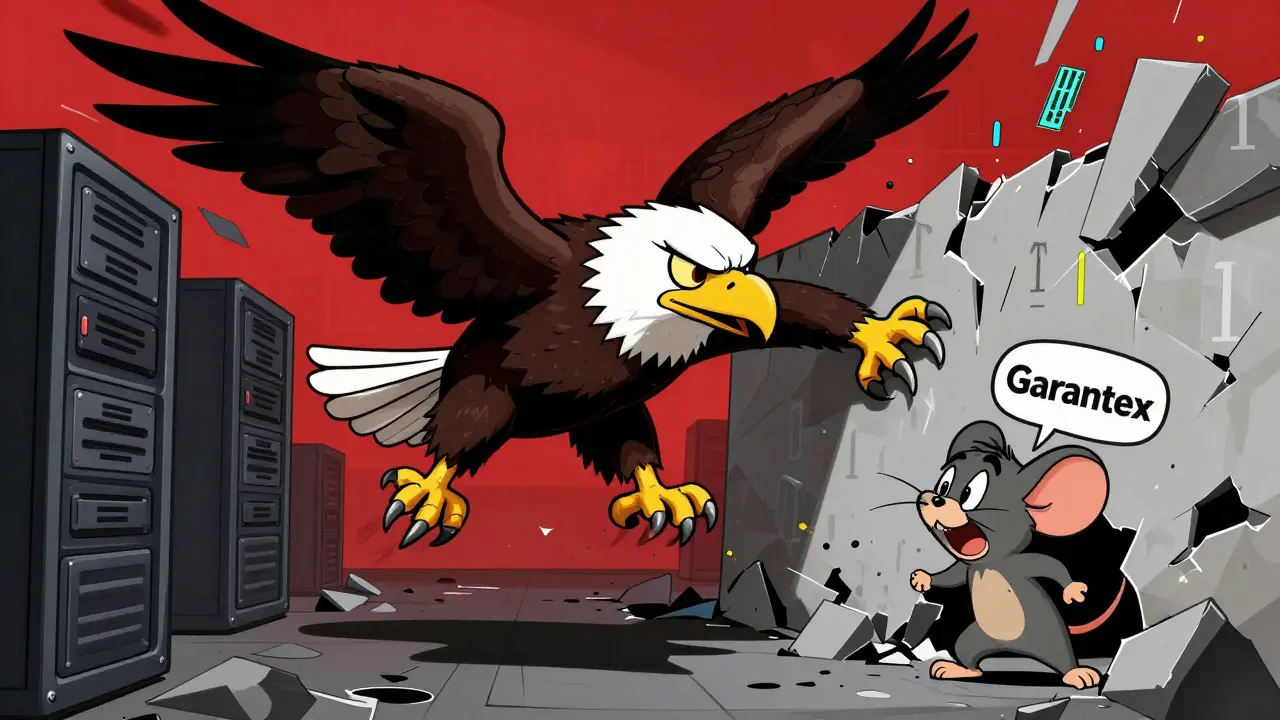
The landscape for cryptocurrency users in Russia has shifted dramatically. What was once a workaround for traditional banking restrictions has become a high-stakes game of cat-and-mouse with global enforcement agencies. If you are trying to access your funds or understand why certain exchanges have vanished from the internet, you are likely dealing with the fallout of aggressive U.S. sanctions targeting the Russian crypto infrastructure.
For years, platforms like Garantex is a Russian-operated cryptocurrency exchange that became a primary hub for converting fiat to crypto within sanctioned jurisdictions. served as the backbone for these transactions. But since early 2025, the ground beneath this ecosystem has crumbled. The U.S. Department of the Treasury’s Office of Foreign Assets Control (OFAC) has moved beyond simple warnings, executing coordinated takedowns that freeze assets, arrest executives, and ban successor platforms almost immediately after they launch.
The Fall of Garantex and the Rise of Grinex
To understand the current limitations, you need to look at the timeline of events involving Garantex. This platform was first designated by OFAC in April 2022 under Executive Order 14024. However, it continued to operate in the shadows, processing billions in transactions linked to illicit activities. The real turning point came on March 6, 2025. In a major international operation led by the U.S. Secret Service, authorities seized three Garantex domains, confiscated servers, and froze over $26 million in cryptocurrency.
The human cost was immediate. Aleksej Besciokov, a co-founder of Garantex, was arrested while vacationing in India. This disruption forced the company’s remaining employees to act fast. They didn’t just shut down; they pivoted. Almost overnight, they created Grinex is a successor cryptocurrency exchange launched specifically to circumvent sanctions imposed on Garantex. Grinex openly admitted in its promotional materials that it was formed in response to the asset freezes affecting Garantex. Its goal was clear: allow former Garantex customers to regain access to their accounts using a new token system.
But the window of opportunity was short. On August 14, 2025, OFAC re-designated Garantex and simultaneously sanctioned Grinex. The Treasury Department explicitly stated that Grinex was owned or controlled by Garantex, making it a blocked entity under Executive Order 13694. This means that any interaction with Grinex is now a violation of U.S. sanctions, exposing users and partners to severe legal risks.
The A7 Network and the A7A5 Stablecoin
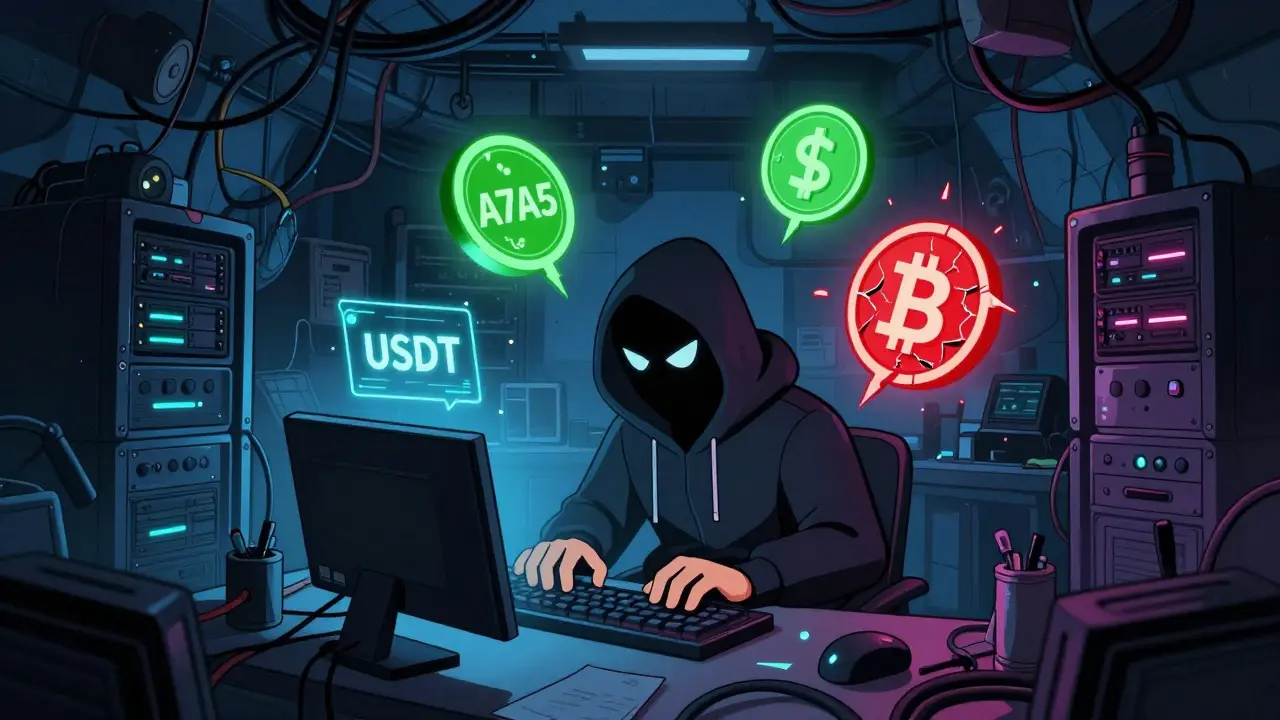
When Garantex went offline, users needed a way to move money. Enter the A7 network. This isn't just one company but a complex web of entities including A7, A71, A7 Agent, Old Vector, Independent Decentralized Finance Smartbank (InDeFi Bank), and Exved. According to blockchain analytics firm Elliptic, companies linked to this network received approximately $8 billion in cryptocurrency transactions since early 2024. That figure is likely a conservative estimate, as many wallets remain unidentified.
Central to this network is the A7A5 stablecoin is a ruble-backed digital asset issued by a Kyrgyzstani firm, designed as an alternative to Tether's USDT to bypass sanctions. Why did this emerge? Because USDT, while popular, is centralized. Tether can freeze wallets if pressured by regulators. When Garantex was disrupted in March 2025, users holding USDT faced the risk of being locked out. A7A5 offered a decentralized alternative pegged to the Russian Ruble, allowing users to preserve value without relying on Western-controlled infrastructure.
| Feature | USDT (Tether) | A7A5 (A7 Network) |
|---|---|---|
| Issuer | Tether Limited (Global) | Kyrgyzstani Firm (A7 Network) |
| Backing | USD Reserves | Russian Ruble |
| Freeze Risk | High (Centralized control) | Low (Decentralized issuance) |
| Sanction Status | Legal globally, but risky for sanctioned entities | Linked to sanctioned A7 entities |
| Primary Use Case | General trading, liquidity | Sanctions evasion, domestic stability |
However, the safety of A7A5 is illusory. In mid-2025, leaks known as the "A7 leaks" exposed wallet addresses linked to these companies. By August 2025, Elliptic had added support for screening A7A5 transactions on both TRON and Ethereum blockchains. This means that what was once an invisible flow of funds is now transparent to compliance tools used by global banks and exchanges. If you try to deposit A7A5 into a compliant international exchange, it will likely be flagged and frozen.
Key Figures and Financial Rewards
The U.S. government is not just targeting software; they are targeting people. The August 2025 sanctions named three key executives: Sergey Mendelev (co-founder), Aleksandr Mira Serda (chief commercial officer), and Pavel Karavatsky (regional director). To accelerate their capture, the U.S. Department of State announced financial rewards totaling up to $6 million. Specifically, there is a reward of up to $5 million for information leading to the arrest or conviction of Aleksandr Mira Serda.
This strategy sends a clear message: leadership is not safe. Whether you are in Russia, the Kyrgyz Republic, or elsewhere, if you are involved in operating these platforms, you are a target. For ordinary users, this creates a chilling effect. Who will maintain the servers? Who will provide customer support? The infrastructure is becoming unstable because the human element is being systematically removed.
How Blockchain Analytics Are Closing the Loopholes
You might think that cryptocurrency is anonymous. It is not. It is pseudonymous, and sophisticated analytics firms like Elliptic are dismantling that privacy layer. Garantex employed advanced wallet obfuscation techniques to hide the source of funds. They mixed coins, routed them through multiple chains, and used complex smart contracts to break the trail.
Elliptic’s technical analysis showed how they overcame these methods. By correlating on-chain data with off-chain intelligence (like the A7 leaks and server seizures), they could trace specific transactions back to Garantex. This intelligence was directly used by the U.S. Secret Service to freeze $26 million in USDT. The lesson here is stark: obfuscation works only until it doesn’t. Once a pattern is identified, every transaction following that pattern becomes visible.
Furthermore, the timing of infrastructure changes suggests panic. Around August 14, 2025-the same day OFAC issued new sanctions-there was unusual activity with A7A5 stablecoin wallets. This indicates that the operators were likely scrambling to move funds or change cryptographic keys in response to a security breach or impending seizure. These rapid shifts often lead to errors, lost keys, and inaccessible funds for users.

What This Means for Users in Sanctioned Jurisdictions
If you are in Russia or another sanctioned region, your options are narrowing. Traditional banks are cut off from SWIFT. Major crypto exchanges like Binance, Coinbase, and Kraken have exited the market to comply with sanctions. You are left with two choices: use non-compliant local platforms like Grinex (which are actively being targeted and may vanish overnight) or attempt to use peer-to-peer (P2P) networks.
P2P trading carries its own risks. Without the protection of an escrow service provided by a regulated exchange, you are vulnerable to fraud. Moreover, if you receive crypto from a sanctioned entity, your own wallet could be tainted. Many global services now screen for "dirty" crypto. If your address interacts with a known Garantex or A7 wallet, you may find yourself blacklisted from future services.
The scale of this issue is massive. With $8 billion flowing through the A7 network alone, millions of users are affected. The development of ruble-backed tokens shows resilience, but also desperation. It is a temporary fix in a system under siege. As President Trump noted in August 2025, economic sanctions against Russia are prepared to escalate further if geopolitical conditions do not improve. This political backdrop ensures that crypto enforcement will remain a priority.
Navigating the Future: Risks and Realities
There is no easy path forward. The era of using crypto as a frictionless escape hatch from sanctions is ending. Enforcement is becoming proactive rather than reactive. OFAC is not waiting for crimes to be reported; they are monitoring blockchain flows in real-time. The designation of Grinex proves that creating a new brand does not protect you if the underlying ownership and user base are the same.
For businesses and individuals, the advice is simple: avoid any platform linked to the A7 network, Garantex, or Grinex. Do not hold A7A5 tokens expecting long-term stability. Instead, focus on understanding the legal boundaries of your jurisdiction. Consult with legal experts who specialize in international sanctions law. The penalties for violating U.S. sanctions can include heavy fines and criminal charges, regardless of where you live.
The technology of blockchain remains powerful, but its utility in sanctioned regions is being choked off by regulatory pressure. The next few months will likely see more arrests, more domain seizures, and more innovations in evasion tactics that will, in turn, be countered by better analytics. It is a cycle that favors those with the most resources-and right now, that is the enforcement agencies.
Is Grinex a safe alternative to Garantex?
No. Grinex was officially sanctioned by the U.S. Treasury’s OFAC on August 14, 2025, as a successor entity to Garantex. Interacting with Grinex violates U.S. sanctions and poses significant legal and financial risks, including potential freezing of assets and loss of access to funds.
What is the A7A5 stablecoin and why was it created?
A7A5 is a ruble-backed digital asset issued by a Kyrgyzstani firm within the A7 network. It was created to replace USDT, which users feared could be frozen by Tether due to its centralized nature. A7A5 aims to provide a decentralized alternative for preserving value during sanctions, but it is now tracked by blockchain analytics firms like Elliptic.
Who are the key figures behind Garantex and what happened to them?
Key figures include co-founders Sergey Mendelev and Aleksej Besciokov, and CCO Aleksandr Mira Serda. Besciokov was arrested in India in March 2025. In August 2025, OFAC sanctioned Mendelev, Serda, and regional director Pavel Karavatsky. The U.S. State Department offers up to $6 million in rewards for information leading to their arrest, with $5 million specifically for Serda.
How much money has flowed through the A7 network?
According to Elliptic, companies linked to the A7 network have received approximately $8 billion in cryptocurrency transactions since early 2024. This figure is considered a conservative lower bound, as additional unidentified wallets likely exist within the ecosystem.
Can I still use USDT if I am in Russia?
While USDT itself is not banned, using it via sanctioned platforms like Garantex or Grinex is illegal under U.S. sanctions. Additionally, because USDT is centralized, Tether can freeze wallets if requested by authorities. Many Russian users have shifted to A7A5 to avoid this centralization risk, though A7A5 is now also being monitored.
What role did blockchain analytics play in the Garantex takedown?
Blockchain analytics firms like Elliptic played a crucial role by overcoming Garantex’s wallet obfuscation techniques. They traced transactions linked to illicit activities and provided actionable intelligence to the U.S. Secret Service, enabling the freezing of $26 million in USDT and the identification of key operational wallets.