
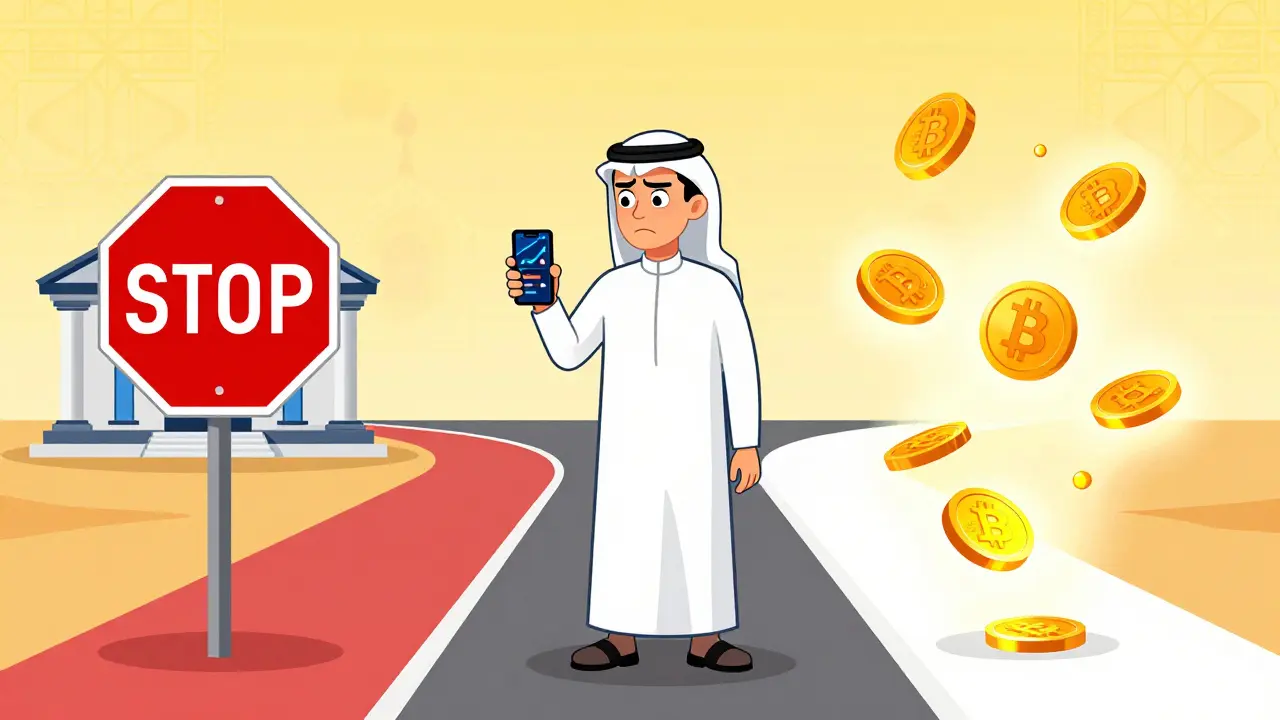
It’s easy to get confused if you’re trying to trade crypto in Saudi Arabia right now. One day, a bank warns you it’s illegal; the next, you see news about massive mining farms and government-backed blockchain projects. So, what is actually going on? The short answer is that Saudi Arabia is in a transition phase. While public use of cryptocurrency remains restricted and unregulated, the government is aggressively building the infrastructure for digital finance behind the scenes.
If you are an individual trader, you need to know where the lines are drawn to avoid legal trouble. If you are a business or investor, you need to understand how Saudi crypto regulation is evolving under Vision 2030. This guide breaks down the current reality, the upcoming changes expected in late 2025 and 2026, and what this means for your wallet.
The Current Legal Status: Restricted but Not Banned
To understand the situation today, we have to look at who is calling the shots. The Saudi Central Bank (SAMA) is the central bank of Saudi Arabia responsible for monetary policy and financial stability and the Capital Market Authority (CMA) is the regulatory body overseeing capital markets and securities in Saudi Arabia are the two main entities involved. As of mid-2026, there is no specific law that explicitly bans individuals from owning Bitcoin or Ethereum. However, there is also no law that protects you if things go wrong.
Here is the practical reality:
- No Legal Tender: Cryptocurrencies are not recognized as official currency. You cannot pay taxes or buy groceries with them legally within the Kingdom.
- Banks Are Blocked: Local banks are strictly prohibited from processing transactions related to crypto exchanges without explicit SAMA approval. This makes moving money from your Saudi bank account to a platform like Binance difficult and risky.
- Gray Area Trading: Many Saudis still trade on international platforms. According to user reports and market data, services like Coinbase and Kraken are popular. But remember: you are doing this at your own risk. There is no local consumer protection.
This creates a "legal gray area." Your assets aren’t confiscated just for holding them, but the system isn’t designed to support you. It’s a cautious approach born from a 2018 committee decision that declared virtual currencies illegal, which has since softened into a stance of strict monitoring rather than outright criminalization for holders.
Institutional Innovation vs. Public Restriction
While retail traders face hurdles, institutions are getting a fast pass. This dual approach is central to understanding Saudi Arabia’s strategy. The government wants the technology of blockchain without the volatility and anonymity risks associated with public crypto trading.
| Feature | Retail Investors (Public) | Institutions / Government |
|---|---|---|
| Legal Status | Unregulated / Gray Area | Actively Encouraged & Supported |
| Banking Support | Restricted (Banks blocked) | Direct Integration (CBDCs, mBridge) |
| Primary Focus | Trading & Speculation | Blockchain Infrastructure & Efficiency |
| Risk Level | High (No recourse) | Low (Regulated frameworks) |
A prime example of this institutional push is the mBridge Project is a cross-border CBDC initiative involving Saudi Arabia, UAE, China, Thailand, and Hong Kong. Saudi Arabia joined this project in 2024 to test real-time cross-border payments using central bank digital currencies. This shows that while they restrict Bitcoin trading for citizens, they are deeply invested in the underlying technology for national economic gain.
Additionally, the first regulated NFT platform, Nuqtah is Saudi Arabia's first approved NFT marketplace launched in late 2024, received approval in late 2024. This signals that digital assets are acceptable if they operate within strict, government-approved boundaries.

Market Growth Despite Restrictions
You might think these restrictions would kill the market. They haven’t. In fact, the Saudi crypto market is booming. Why? Because of demographics and wealth.
About 63% of Saudi Arabia’s population is under 30. These young Saudis are tech-savvy and eager to participate in global financial trends. Data from 2024 shows that approximately 4 million people (11.4% of the population) already own some form of cryptocurrency. The total value of the crypto-asset market in Saudi Arabia hit $23.1 billion in 2024 and is projected to reach nearly $46 billion by 2033.
Transaction volumes surged by 153% between July 2023 and June 2024. This growth is driven by high net-worth individuals and institutional players who navigate the regulatory gaps through offshore accounts or private banking solutions. Interestingly, Saudis show a higher interest in altcoins compared to the global average, suggesting a appetite for higher-risk, higher-reward investments.
Taxation and Financial Implications
If you are making money in crypto, you need to know how the tax man views it. The rules differ sharply depending on whether you are an individual or a business.
- Individuals: Currently, there is no capital gains tax on cryptocurrency profits for individual residents. If you buy Bitcoin and sell it for a profit, you generally keep that profit tax-free. However, this lack of clarity can change overnight with new regulations.
- Businesses: If your company deals in crypto, the rules are stricter. Businesses face a 15% capital gains tax, a 20% corporate income tax, and a 2.5% zakat (Islamic wealth tax). This creates a complex fiscal environment for any fintech startup operating in the Kingdom.
Also, keep in mind the Anti-Money Laundering Law (AML) and Counter-Terrorist Financing (CFT) laws. While they don’t mention "crypto" by name, their definitions of "funds" include digital assets. This means large, unexplained crypto transactions could trigger investigations even if trading itself isn’t explicitly banned.

The Future: What to Expect in 2026 and Beyond
The regulatory landscape is shifting rapidly. For a long time, the guidance was vague. Now, specific frameworks are emerging. Here is what experts and leaked documents suggest is coming:
- New Licensing Framework: The Capital Market Authority (CMA) is expected to issue specific regulations for crypto service providers in late 2025 or early 2026. This will likely introduce licensing requirements for exchanges and custodians wanting to operate locally.
- CBDC Pilot Launch: SAMA has been testing a domestic Central Bank Digital Currency (CBDC). A pilot phase for integration with the existing financial system is expected to launch in Q4 2025. This won’t replace Bitcoin, but it will create a state-controlled digital riyal for everyday transactions.
- Sharia Compliance Standards: A major hurdle for mass adoption in the Muslim world is religious compliance. A recent fatwa confirmed that Bitcoin operations can align with Sharia principles if structured correctly. Expect more "Islamic-compliant" crypto products and staking mechanisms to emerge.
- Mining Regulations: Crypto mining has grown to represent about 4% of global activity, partly due to Saudi energy resources. New rules are being introduced to ensure mining uses renewable energy, particularly in projects like NEOM. Mining is now legal but heavily monitored for environmental impact.
The goal is clear: integrate crypto into the formal economy under strict supervision. The days of the wild west are ending. The future is regulated, licensed, and tied closely to Vision 2030’s goals of economic diversification.
Practical Advice for Traders and Businesses
So, what should you do right now?
For Individual Traders: If you are trading on international platforms, stay vigilant. Keep records of all transactions for tax purposes, even if you don’t currently pay capital gains tax. Be aware that using local bank cards directly for crypto purchases may be blocked or flagged. Consider using peer-to-peer (P2P) methods or offshore banking if necessary, but understand the risks. Never invest more than you can afford to lose, especially in an unregulated environment.
For Businesses: Do not assume you can launch a crypto exchange tomorrow. Wait for the CMA guidelines. Focus on blockchain utility-supply chain, smart contracts, and digital identity-rather than pure speculation. Align your projects with Vision 2030 objectives to attract government support and investment. Ensure your AML/KYC procedures are robust, as regulators will scrutinize any entity touching digital assets.
The Saudi crypto market is a high-potential, high-complexity environment. By staying informed about SAMA and CMA updates, you can navigate the restrictions and position yourself for the boom that is coming as regulations mature.
Is cryptocurrency legal in Saudi Arabia in 2026?
Cryptocurrency is not explicitly banned for individuals to hold, but it is not recognized as legal tender. Trading exists in a gray area because local banks are prohibited from facilitating crypto transactions without SAMA approval. However, institutional blockchain development is actively encouraged and regulated.
Can I use my Saudi bank card to buy Bitcoin?
Generally, no. Most local Saudi banks block transactions to known crypto exchanges to comply with SAMA warnings. Users often resort to P2P platforms or international banking channels, though this carries its own risks and potential for account flagging.
Do I have to pay tax on crypto profits in Saudi Arabia?
Individuals currently do not pay capital gains tax on crypto profits. However, businesses dealing in crypto must pay corporate income tax (20%), capital gains tax (15%), and Zakat (2.5%). Tax laws are subject to change as new regulations are introduced.
What is the mBridge project?
mBridge is a multi-country project led by the Bank for International Settlements (BIS) involving Saudi Arabia, UAE, China, Thailand, and Hong Kong. It aims to develop a wholesale central bank digital currency (CBDC) bridge for faster and cheaper cross-border payments.
When will new crypto regulations be enforced?
The Capital Market Authority (CMA) and SAMA are expected to roll out comprehensive licensing frameworks for crypto service providers in late 2025 or early 2026. This will clarify legal statuses for exchanges and custodians operating within the Kingdom.
it is all a scam to steal your money and control the world population. they want you to buy into this fake digital paper so they can track every single penny you spend. i told you years ago that this technology was built by evil people to destroy privacy. do not trust the government or these crypto bros. they are lying to you.
actually u guys dont understand the real implications here. its not just about trading it is about the underlying blockchain tech which is being used for surveillance. also why r u using such simple words? ur writing style is very basic and shows lack of education. i have studied finance in depth and know that SAMA is actually protecting u from losing everything but u are too stupid to see it. typical reddit crowd.
hey there! i think u might be overthinking it a bit. the article says its a gray area right now but things are changing slowly. if u want to trade u should probably look into P2P options since banks block direct transfers. its kinda tricky but ppl do it all the time just be careful with ur records. hope this helps!
The regulatory framework described is fundamentally flawed and demonstrates a lack of understanding of decentralized finance principles. The Saudi approach is merely a facade to maintain state control while siphoning wealth through institutional channels. You are ignoring the systemic risks posed by centralized CBDCs which will inevitably lead to hyperinflation and loss of sovereignty for the average citizen. It is pathetic how easily people accept this narrative without questioning the motives of the Central Bank.
From a compliance standpoint, the bifurcation between retail restrictions and institutional adoption is quite standard for emerging markets 📉. The CMA's upcoming licensing framework in late 2025 will likely introduce strict KYC/AML protocols similar to MiCA in Europe. For HNWIs, the tax implications of the 15% capital gains tax on business entities vs zero for individuals creates an interesting arbitrage opportunity, provided one structures their holdings correctly 💼. The mBridge integration suggests a focus on cross-border efficiency rather than speculative assets.
In my experience working with fintech startups in the Gulf region, the distinction between 'restricted' and 'banned' is crucial for market entry strategies. The Saudi model mirrors early-stage regulatory approaches seen in Singapore before full liberalization. The emphasis on Sharia-compliant products is a significant differentiator that could attract conservative Muslim investors globally who previously stayed away due to religious concerns regarding interest-based mechanisms in DeFi protocols.
good news is that regulations are coming soon so we wont be flying blind forever. just keep ur receipts safe and dont invest more than u can lose. its gonna be a bumpy ride but the potential is huge especially with NEOM getting involved. stay positive and keep learning!
Let's look at the bigger picture here. The integration of blockchain into Vision 2030 is not just about crypto speculation; it's about modernizing the entire financial infrastructure. The demographic dividend of young Saudis adopting digital assets is a powerful force for change. We should encourage this innovation while ensuring robust consumer protection frameworks are established alongside the new CMA guidelines. Collaboration between traditional banking and Web3 is key.
As someone who has followed the Indian crypto scene, I can say that the situation in Saudi Arabia is quite similar to what we faced a few years back. The initial ban was lifted but regulations were slow to come. Now we have clear guidelines and taxation rules. I believe Saudi will follow a similar path. The key is patience and compliance. Don't rush into things without proper knowledge. :)
Oh great, another government trying to put a leash on freedom of money. Like that ever works. They say it's for 'your own good' while they build their own digital currency to spy on us. Classic move. But hey, if you really want to play the game, make sure you're smart enough to beat them at their own game. Or don't, I guess.
The regulatory stance of Saudi Arabia reflects a prudent approach to maintaining financial stability and national security. Unlike other nations that have suffered from unregulated crypto bubbles, the Kingdom is taking measured steps to integrate technology without compromising economic integrity. This cautious methodology ensures that only legitimate institutions benefit from blockchain advancements, thereby protecting the broader economy from volatile speculative activities.
i mean... it is what it is. the banks are blocking transactions so yeah you gotta work around it. i heard some people use offshore accounts but that sounds risky as hell. just do what makes sense for you and dont let anyone tell you otherwise. stay chill though.
I think it is important to remember that regulations are still evolving. The fact that there is no capital gains tax for individuals right now is a big plus but it could change anytime. So yes keep records of everything. Also the part about mining using renewable energy in NEOM is really cool. Shows they are thinking about sustainability too. What do you think?
Haha, welcome to the wild west of crypto regulation! One day it is illegal, next day it is encouraged. Just roll with the punches. If you are in India you know how crazy our taxes are so maybe Saudi looks better now. But seriously, watch out for those AML laws. They catch everyone eventually. Stay sharp buddy!