
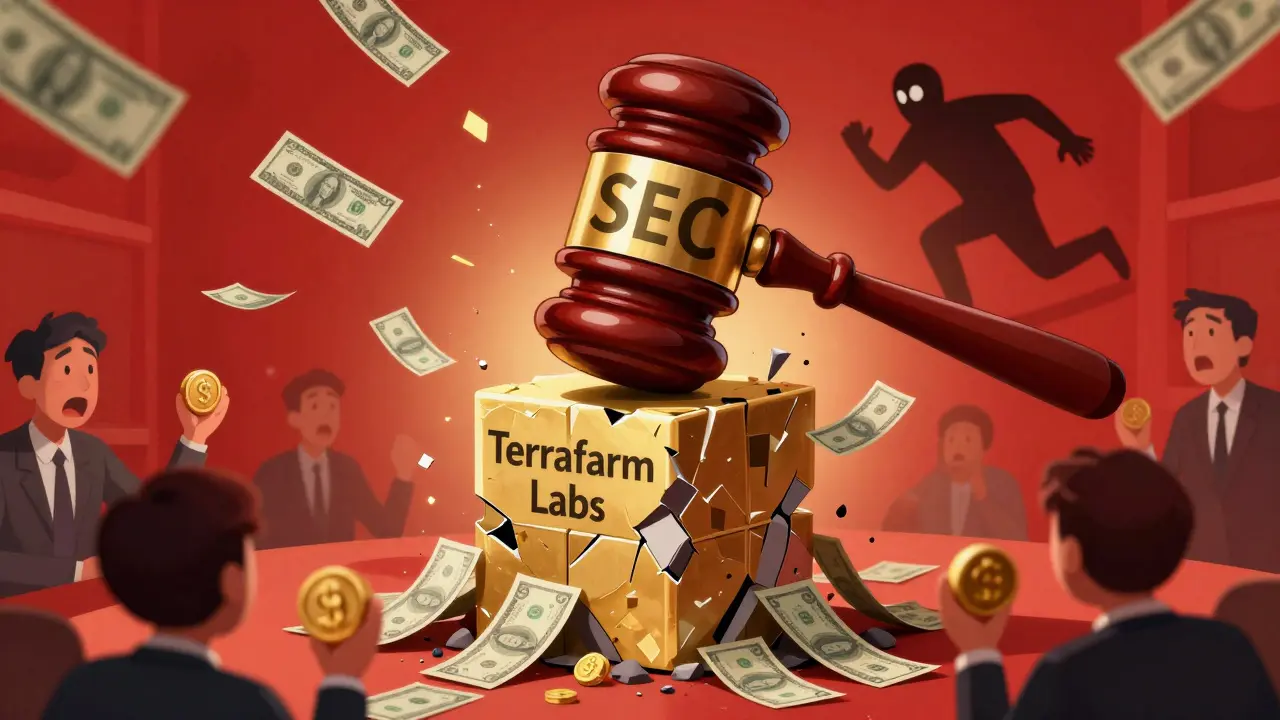
The U.S. Securities and Exchange Commission (SEC) slapped crypto companies with $4.68 billion in fines in 2024 - more than the total amount it had collected in all previous years combined. This wasn’t just a record year. It was a full-blown crackdown. And it didn’t happen by accident.
Why $4.68 Billion? The Terraform Labs Case
The biggest chunk of that $4.68 billion came from one case: Terraform Labs and its founder, Do Kwon. The SEC accused them of running a massive fraud disguised as a decentralized stablecoin system. They sold tokens to investors as if they were safe, reliable digital assets - but the system collapsed when the algorithm couldn’t hold the peg. Investors lost billions. The SEC didn’t just call it a failure. They called it a criminal scheme. The $4.68 billion penalty was the largest ever against a crypto company in U.S. history.
This wasn’t the first time the SEC went after a crypto project. Back in 2019, they fined Telegram $1.24 billion for selling unregistered tokens. In 2021, Ripple paid $125 million over XRP. But none of those cases came close to the scale of Terraform. What made this different? The SEC didn’t just target the company. They went after Kwon personally, froze his assets, and even tried to extradite him from abroad. The message was clear: if you’re running a crypto scheme, you’re not hiding behind a blockchain.
More Money, Fewer Cases
Here’s the twist: even though fines hit a record high, the SEC actually brought fewer enforcement actions in 2024 than in 2023. In 2023, they filed 47 cases. In 2024, it was 33. That’s a 30% drop. So why did penalties go up? Because they stopped going after small players and went straight for the big ones.
Half of those 33 cases were filed in September and October - right before the presidential election. That timing wasn’t random. It was strategic. The SEC knew public attention was high. They picked cases with massive financial damage, where the evidence was undeniable. Terraform was the crown jewel. But they also targeted others: John and JonAtina Barksdale for a fake ICO, and a handful of exchanges that misled users about trading volumes.
What changed? The SEC stopped chasing minor registration violations. They started focusing on fraud, deception, and investor harm. That’s why the total number of cases dropped but the dollar value exploded. One big case could now outweigh ten smaller ones.
The Gensler Era: Enforcement as Policy
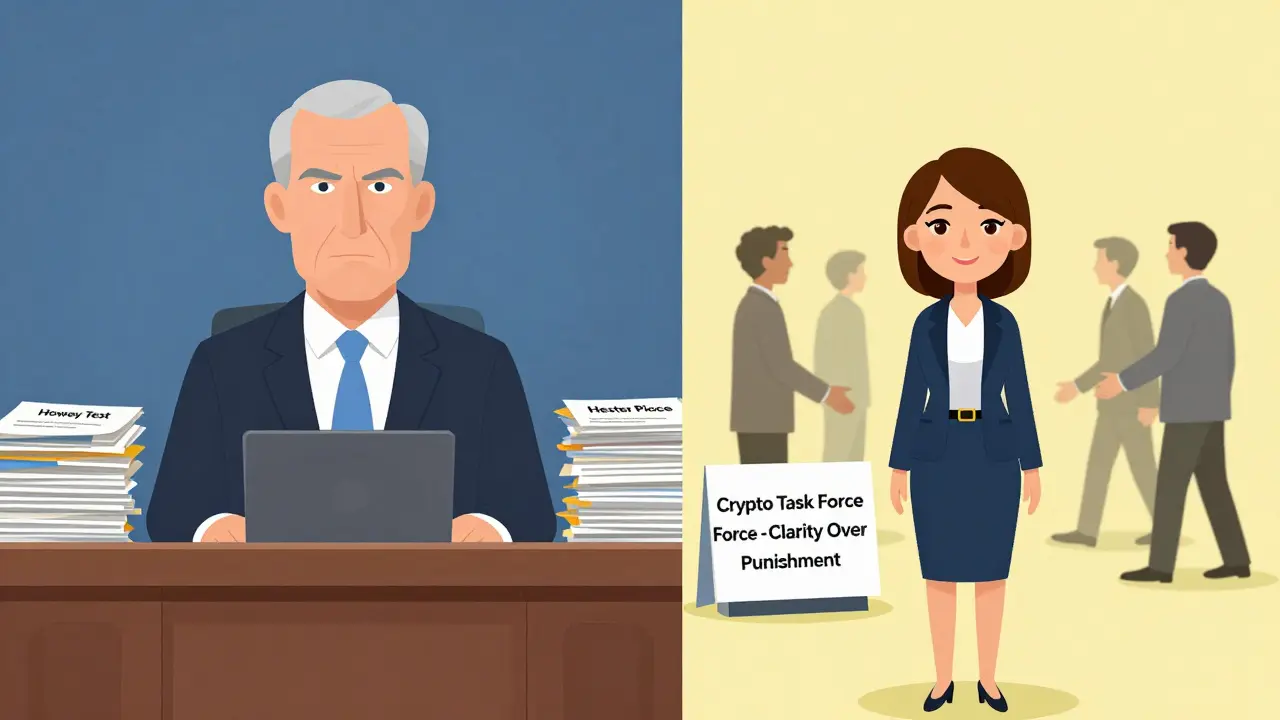
Under former SEC Chair Gary Gensler, who served from 2022 to early 2025, crypto enforcement became the agency’s top priority. He pushed the Howey Test - a 80-year-old legal standard for what counts as a security - onto every crypto token. If a token looked like an investment, the SEC said it was a security. No exceptions. That meant most major coins, from Solana to Polygon, were technically unregistered securities.
By the end of Gensler’s term, the SEC had collected $6.05 billion in crypto penalties - nearly four times what they took under the previous chair. They opened the Crypto Assets and Cyber Unit, staffed it with dozens of lawyers, and filed lawsuits in federal courts left and right. They didn’t ask for permission. They didn’t wait for Congress. They just acted.
But there was a cost. Many crypto firms moved overseas. Exchanges like Binance and KuCoin shifted their main operations to places like Singapore and the UAE. Startups stopped building in the U.S. Investors got scared. And the industry started calling the SEC’s approach “regulation by enforcement” - meaning they were making up rules as they went along.
Change at the Top: The New SEC
Gensler resigned on January 20, 2025. Within 24 hours, everything shifted.
Acting Chairman Mark Uyeda announced the creation of the Crypto Task Force - led by Commissioner Hester Pierce, better known as “Crypto Mom” for her long-standing support of crypto innovation. Her team wasn’t here to punish. They were here to clarify.
On February 20, 2025, the SEC shut down the old Crypto Assets and Cyber Unit. In its place, they created the Cyber and Emerging Technologies Unit (CETU). But this time, they cut the number of crypto-focused attorneys. They said they’d use enforcement resources “judiciously.”
Then came the bombshell: on June 11, 2025, the SEC dropped its lawsuit against Coinbase. Not because they lost. Not because the court ruled. They voluntarily dismissed it. The SEC admitted they had been too aggressive. They said they wanted to “reform and renew” their approach.
This wasn’t just a policy tweak. It was a reversal. For years, the SEC had said: “If you’re trading crypto, you’re a broker-dealer. If you’re listing tokens, you’re selling unregistered securities.” Now, they’re saying: “We’ll only act if there’s clear fraud.”
What’s Still Being Targeted?
Don’t think the SEC has gone soft. They’re just more selective.
In April 2025, they charged Ramil and PGI Global with a $198 million crypto and forex scam. In May, they went after Unicoin Inc. for running a fake coin that promised 10x returns. Both cases involved lies, fake websites, and stolen money. No gray area.
They also dropped three “dealer” lawsuits - cases where they claimed crypto firms were unregistered brokers. Those cases were based on technicalities. The new team said: “We’re not going to win those. And we shouldn’t try.”
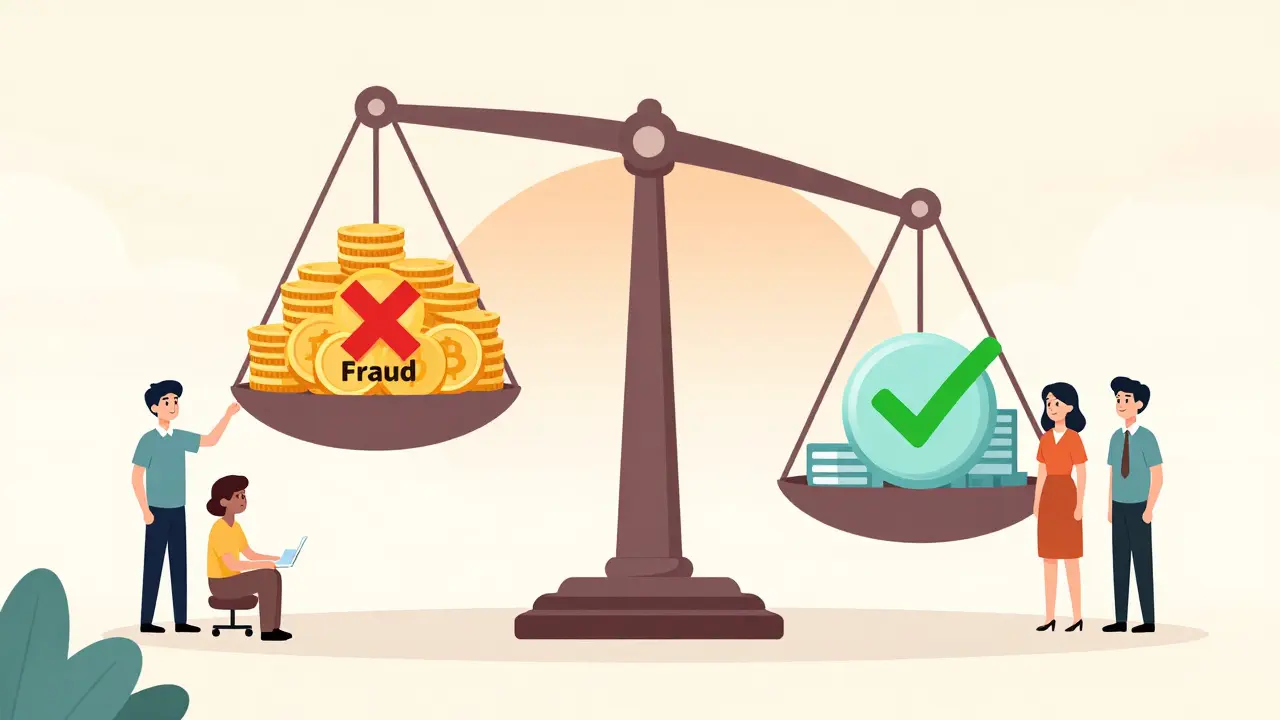
The message now? If you’re lying to investors, we’ll come after you. If you’re running a legitimate business but just didn’t file paperwork? We’ll help you fix it.
What This Means for Crypto
The $4.68 billion fine wasn’t just a number. It was a turning point.
Before 2024, crypto companies lived in fear of being sued for anything - even for listing a token that might be a security. Now, they know the SEC won’t touch them unless there’s real harm. That’s given startups breathing room. Investors are returning. And exchanges are starting to talk about compliance again - not as a threat, but as a path.
But the biggest win? The dismissal of the Coinbase case. It proved that crypto companies can fight back - and win. Coinbase sued the SEC first. They challenged the agency’s authority. And they forced a reckoning.
The SEC’s new approach doesn’t mean crypto is safe. It just means the rules are clearer. You can’t scam people. You can’t hide the truth. But if you’re honest, building something real, and trying to follow the law? The SEC might actually help you.
The Road Ahead
As of mid-2025, the Crypto Task Force is working on three big things:
- Defining which tokens are securities and which aren’t
- Creating a clear registration process for exchanges
- Setting disclosure rules for token projects
For the first time in years, crypto companies aren’t just reacting to lawsuits. They’re helping shape the rules.
The market is responding. Crypto’s total value hit $1.97 trillion in October 2025 - up from $1.2 trillion in early 2024. Spot Bitcoin ETFs are now mainstream. Institutional money is flowing back in.
It’s not over. But the pendulum has swung. The SEC isn’t trying to kill crypto anymore. They’re trying to tame it - with rules, not just fines.
Why did the SEC fine Terraform Labs $4.68 billion?
The SEC fined Terraform Labs and its founder Do Kwon $4.68 billion because they ran a fraudulent cryptocurrency scheme. They sold tokens as if they were stable, reliable assets, but the system collapsed when it couldn’t maintain its peg. Investors lost billions. The SEC proved the project was a deception, not a technological innovation, and held Kwon personally responsible - making it the largest crypto penalty ever.
Did the SEC bring more or fewer cases in 2024 compared to 2023?
The SEC brought fewer cases in 2024 - 33 - compared to 47 in 2023. That’s a 30% drop. But the fines went up because they focused on fewer, bigger cases with massive investor harm, like Terraform Labs. They stopped chasing minor registration violations and went after fraud instead.
What changed after Gary Gensler left the SEC?
After Gary Gensler resigned in January 2025, the SEC shifted from aggressive enforcement to a more measured approach. The new leadership created the Crypto Task Force, shut down the old crypto enforcement unit, and cut staff. They stopped pursuing cases based on technical registration violations and now focus only on clear fraud and investor harm - as shown by the dismissal of the Coinbase lawsuit.
Is the SEC still active in crypto enforcement?
Yes, but differently. The SEC still brings cases - like the $198 million charge against Ramil and PGI Global in April 2025 - but only when there’s clear fraud, deception, or stolen funds. They’ve stopped suing companies just for listing tokens or not registering as brokers. Enforcement is now targeted, not broad.
What does the dismissal of the Coinbase case mean?
The dismissal of the SEC’s case against Coinbase in June 2025 was a major turning point. It signaled that the new SEC leadership no longer sees registration as the primary issue. Instead, they’re prioritizing real fraud. It also proved crypto companies can legally challenge the SEC and win - opening the door for more clarity and less fear in the industry.
This is actually kind of beautiful. The SEC didn’t kill crypto - they just scared off the scammers. Finally, real builders can breathe. 🙌
Gensler went full witch hunt mode but honestly? The market needed that fire. Now with the new team, it’s like the cops stopped chasing you for speeding and started helping you fix your brake lights. 🚗🔧
lol they dropped the coinbase case because they realized they had zero legal ground. classic overreach. they thought they could just make up rules as they went. now they’re backpedaling so hard they’re gonna pull a hamstring.
The $4.68B fine wasn’t punishment - it was a public service announcement. When a system collapses because the algorithm can’t hold a peg, and the founder vanishes into a yacht in Monaco, you don’t call it innovation. You call it fraud. And the SEC finally had the guts to say it out loud. 🎯
let me guess - the ‘new’ sec is just the old sec in a hoodie. they’re not changing. they’re just waiting for the next bubble to pop so they can swoop in again. this is all theater. crypto will never be safe until congress writes real laws. until then? it’s just a game of cat and mouse with the feds.
I remember when people thought crypto was just a meme. Now? The SEC fined someone more than the GDP of some small countries. And honestly? I’m not mad. The Terraform mess was a horror show. People lost life savings. The system was rigged. If this is what it takes to clean house? Do it again. 💪
I don’t care if they dropped the case. The damage is done. All the devs left. All the VC money went to Dubai. We lost. The U.S. just handed crypto to China and the UAE on a silver platter. And now they want a medal for being ‘reasonable’? Screw that.
I’ve been in finance for 20 years. What’s remarkable here isn’t the money - it’s the shift in intent. The SEC went from ‘we’re going to shut you down’ to ‘let’s help you do this right.’ That’s not weakness. That’s maturity. And honestly? It’s the only way crypto survives long-term.
The real story here isn’t the fine. It’s the precedent. The SEC finally admitted that not every token is a security. That’s huge. It means innovation can exist without fear of being sued for existing. That’s a win for capitalism, not just crypto.
Oh wow. The SEC is now ‘helping’? Please. They’re just waiting for the next wave of retail FOMO so they can pounce with a 10x penalty and a press release. This isn’t reform. It’s a reset button. The same players. The same playbook. Just with better PR.
I get why the Coinbase case got dropped. But let’s be real - they didn’t lose. They just realized the legal risk of going to trial was higher than the PR gain. That’s not change. That’s calculation. And we should be wary of any regulator who only acts when the math says so.
so now the sec is chill? cool. but what about all the people who lost everything during the crackdown? did they get anything back? or just a pat on the back and a ‘sorry we were too aggressive’? i’m not buying the redemption arc
The fact that they shut down the Crypto Assets and Cyber Unit is peak institutional cowardice. You don’t dismantle the enforcement team because the market got loud. You do it because you’re afraid of being called out. And now? We’re all just waiting for the next ‘innovation’ to be a rug pull with a whitepaper and a Discord server.
they dropped the case? lol they got owned. the whole thing was built on a legal sandcastle. coinbase fought back and won. now the sec is trying to act like they always meant to be chill. nah. they got schooled. and the market knows it.
I’m from India. We’ve seen this before. The government bans crypto, then allows it with restrictions, then taxes it heavily. The pattern is always the same. The SEC isn’t changing. They’re just changing the script. The players? Same. The game? Still rigged.
I’m not saying the SEC is perfect. But this shift? It’s real. For the first time, there’s space to build without fear of being crushed for a technicality. That’s not just policy. That’s hope. And in crypto? Hope is the rarest asset of all.