
Imagine moving to a city because the rent was practically free, only to have the landlord hike it by 6,000% overnight. That is exactly what happened to cryptocurrency miners in Sweden. For years, this Nordic country was known as a haven for digital asset operations. It offered cool climates and cheap hydroelectric power. But that era has officially ended. Sweden has not just removed its generous tax breaks; it has slapped on punitive taxes that make mining there economically impossible.
If you are following the global shift in how governments treat crypto mining, this is the headline story of 2023. It marks a dramatic reversal from being a friendly host to becoming one of the most hostile jurisdictions in Europe. Let’s break down what changed, why it matters, and where all those miners went next.
The Golden Age of Swedish Mining
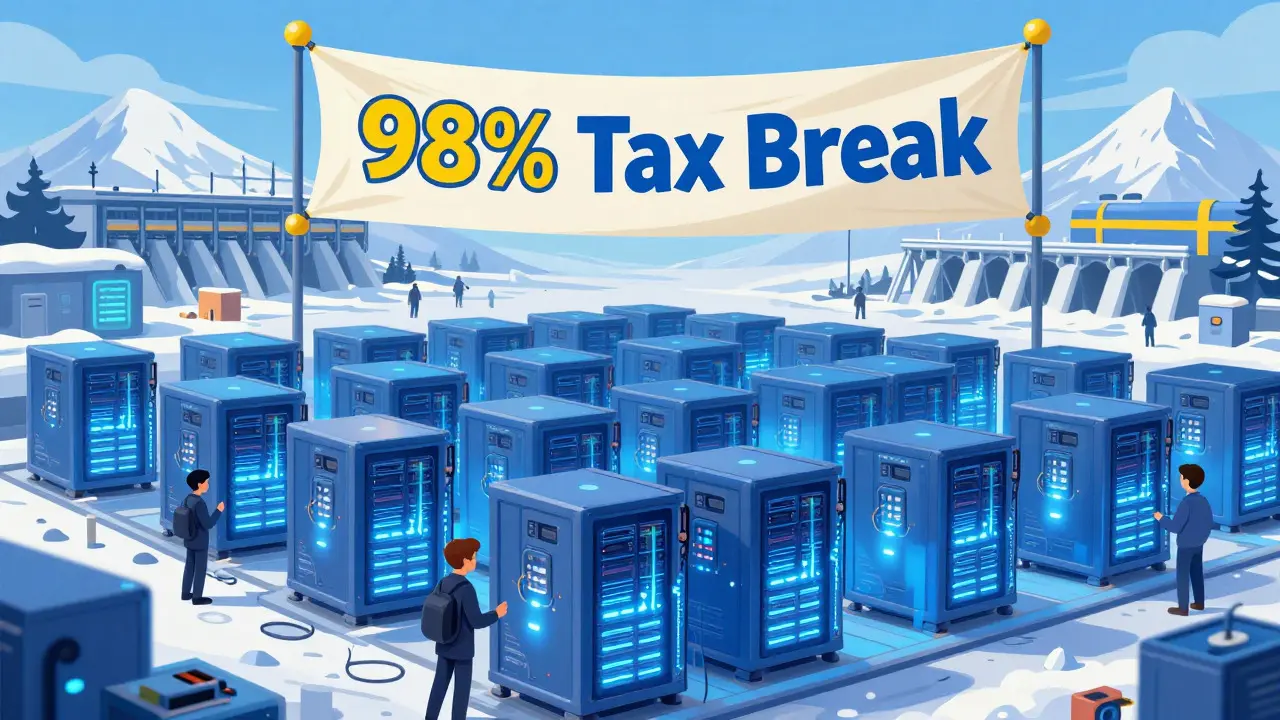
To understand how drastic the current situation is, we need to look back at where things started. In 2017, Sweden made a bold move. They introduced a massive 98% tax reduction for data centers. This wasn't just a small discount; it was a magnet for technology investment. The goal was simple: attract big tech companies and build out digital infrastructure using the country's abundant natural resources.
It worked. Big names arrived. But so did the Bitcoin miners. Why? Because mining requires two main things: cheap electricity and cooling. Sweden had both in spades. The northern parts of the country are naturally cold, which helps keep servers from overheating without needing expensive air conditioning. Plus, the hydroelectric dams provided steady, renewable energy. By 2023, before the crackdown, Sweden hosted about 150 megawatts of active mining capacity. It was widely considered the last remaining stronghold for Bitcoin miners in Europe.
The Great Reversal: A 6,000% Tax Hike
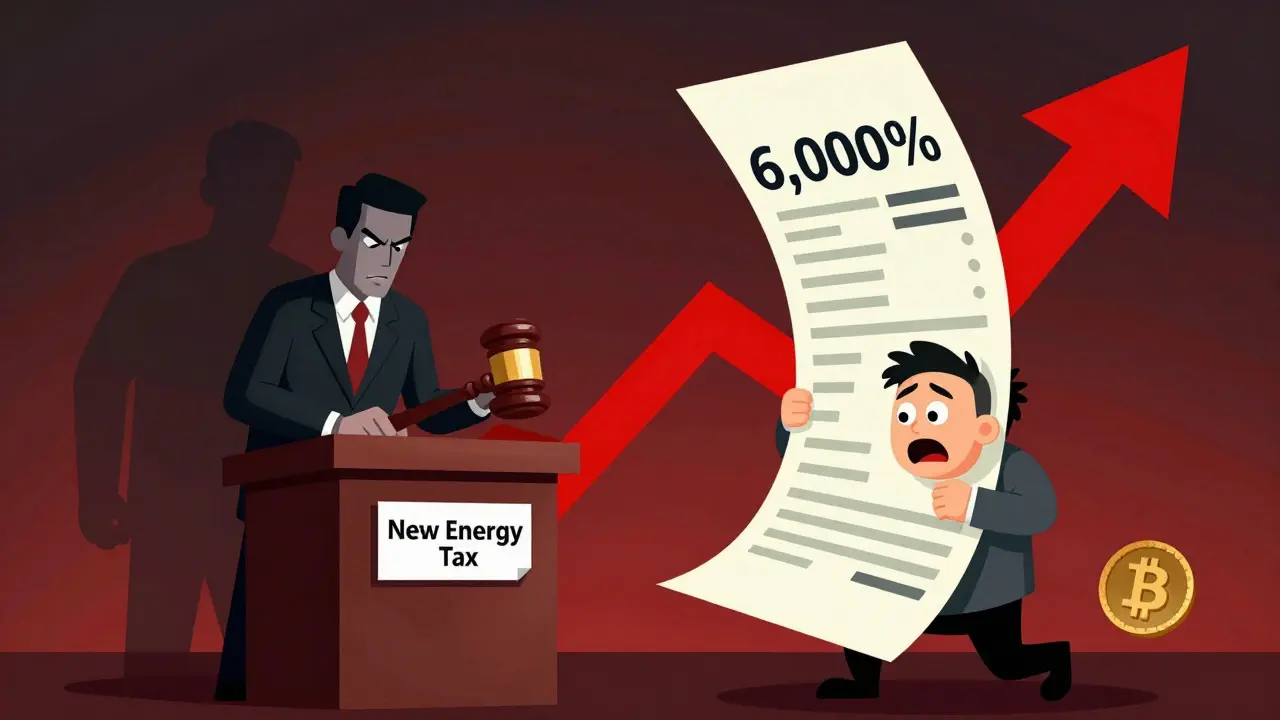
Then came the pivot. The Swedish government decided that the benefits of hosting these operations no longer outweighed the costs. In November 2022, they published a budget that shocked the industry. Effective July 2023, the rules changed completely.
First, they killed the 98% tax reduction. Gone. Second, they introduced a new energy tax specifically targeting high-energy consumers like crypto mines. Here is the kicker: the energy tax jumped from SEK 0.006 per kilowatt-hour to SEK 0.36 per kilowatt-hour. That is a 6,000% increase. To put that in perspective, if your electric bill was $10, it suddenly became $610.
| Period | Tax Rate (SEK/kWh) | Tax Rate (USD/kWh approx.) | Incentive Status |
|---|---|---|---|
| Pre-July 2023 | 0.006 | $0.0006 | 98% Tax Reduction Active |
| Post-July 2023 | 0.36 | $0.035 | Incentives Eliminated |
This wasn't just a slight adjustment. It was a shutdown order disguised as a tax code update. Industry analysts immediately pointed out that even with the most efficient ASIC hardware available, the cost of electricity alone would exceed the revenue generated from mining Bitcoin or other cryptocurrencies. Mathematically, staying in business became impossible.
Why Did Sweden Change Its Mind?
You might wonder why a country would turn on its guests so harshly. The answer lies in past grievances and shifting political priorities. During the 2018 cryptocurrency market crash, many mining companies in Sweden simply left. They took their equipment but left behind unpaid energy bills. This caused substantial disruption for local energy providers who were left holding the bag.
The government also began to question the value proposition. According to analyses from GRN Energy, policymakers felt that crypto mining contributed "minimal" economic activity compared to its energy consumption. Unlike traditional data centers that support jobs and serve global internet traffic, mining farms often operated quietly in remote areas with few local employees. When energy prices across Europe surged due to the conflict in Ukraine, the tolerance for such high-consumption industries evaporated. The government decided that public tax incentives should go to sectors that create more tangible local employment and infrastructure benefits.
The Exodus: Where Did Miners Go?
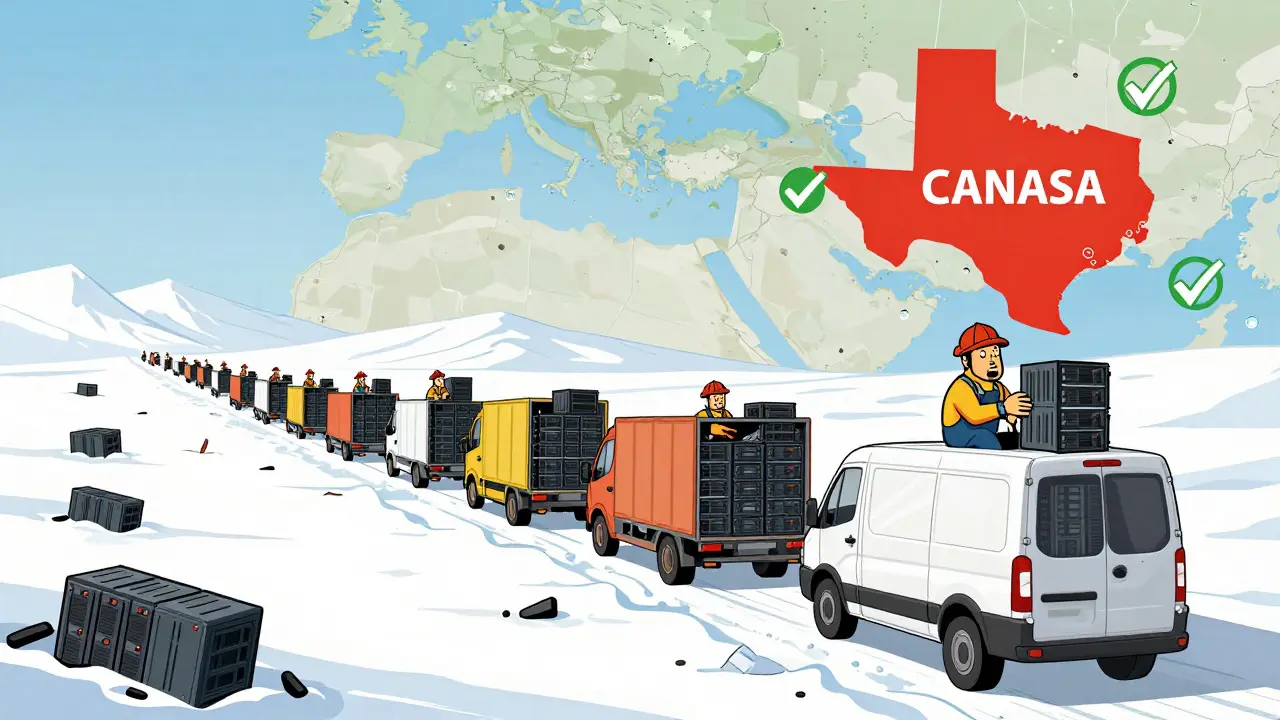
When the door closes, people find another way in. Or rather, they find another place entirely. The reaction from the mining community was swift. Operators described the new tax regime as "devastating" and "economically prohibitive." There was no point in fighting it. Instead, they packed up.
Relocation became the only viable strategy. Many operators moved their hardware to countries with more favorable regulatory environments. Key destinations included:
- Kazakhstan: Offered lower energy costs and a more welcoming stance on crypto assets during this period.
- United States: States like Texas competed aggressively for mining investment through stable grids and pro-business policies.
- Canada: Several provinces remained attractive due to existing infrastructure and reasonable energy pricing.
Neighboring Norway, despite having similar concerns about energy usage, did not implement comparable tax penalties. However, the sheer scale of the tax hike in Sweden made it uncompetitive regardless of regional comparisons. The result was a near-total evacuation of commercial mining operations from Swedish soil by late 2023.
Impact on Local Infrastructure and Stranded Assets
The sudden exit created logistical nightmares. Companies had invested millions in building specialized facilities designed for mining. These buildings featured specific cooling systems and power connections. Overnight, these assets became stranded. Selling them locally was difficult because the tax environment made any new buyer wary.
For energy grid operators in northern Sweden, the abrupt disappearance of large energy consumers required rapid adjustments. Grids are balanced carefully. When huge loads vanish unexpectedly, it can cause voltage spikes and instability. Utilities had to recalibrate distribution models quickly to avoid blackouts or inefficiencies in the regions that had once been mining hubs.
A Warning Signal for Global Regulation
Sweden’s actions send a clear message to the rest of the world. Governments hold the power to shape the crypto landscape through taxation. While some nations embrace Bitcoin as part of their national strategy-like El Salvador-others view it as a drain on resources. Sweden represents the extreme end of the restrictive spectrum.
Other European Union member states are watching closely. While none have copied Sweden’s 6,000% tax hike yet, the debate over environmental impact and energy allocation is intensifying. If you are an investor or operator, this highlights a critical risk: regulatory stability. Just because a location is cheap today doesn't mean it will be tomorrow. Diversification across jurisdictions is no longer just a good idea; it’s a survival tactic.
What Comes Next?
As of mid-2026, the dust has settled. Large-scale commercial mining in Sweden is effectively dead. The country has returned to focusing on traditional tech data centers that offer broader economic benefits. For the crypto industry, the lesson is etched in stone: always read the fine print on energy taxes. The golden age of Swedish mining is over, replaced by a cautionary tale about the volatility of policy.
Did Sweden ban cryptocurrency mining entirely?
Sweden did not issue a outright legal ban on the act of mining. Instead, they used fiscal policy to make it economically unviable. By eliminating tax incentives and increasing the energy tax by 6,000%, they forced almost all commercial operations to shut down or relocate. So while it is technically legal, it is practically impossible to run a profitable mine there.
How much did the energy tax increase?
The energy tax for data centers increased from SEK 0.006 per kWh to SEK 0.36 per kWh. This represents a 6,000% increase, effective July 2023. This hike applied to high-energy consumers, disproportionately affecting cryptocurrency mining operations.
Where did Swedish miners relocate to?
Many miners relocated to jurisdictions with more favorable energy costs and regulatory frameworks. Primary destinations included Kazakhstan, various states in the United States (particularly Texas), and certain provinces in Canada. These locations offered cheaper electricity and less aggressive taxation on mining activities.
Why did Sweden reverse its policy?
The reversal was driven by several factors. First, after the 2018 crypto crash, many miners left without paying their energy bills, causing financial strain on local utilities. Second, the government felt mining provided minimal job creation relative to its high energy consumption. Finally, rising European energy prices due to geopolitical conflicts made the state unwilling to subsidize such intensive energy users.
Is it still possible to mine Bitcoin in Sweden?
For hobbyists with very small setups, it might still be physically possible, but for any commercial operation, it is not economically feasible. The combination of lost tax breaks and the new energy tax means costs far exceed potential rewards. Most industry experts agree that large-scale mining has ceased in the country.