
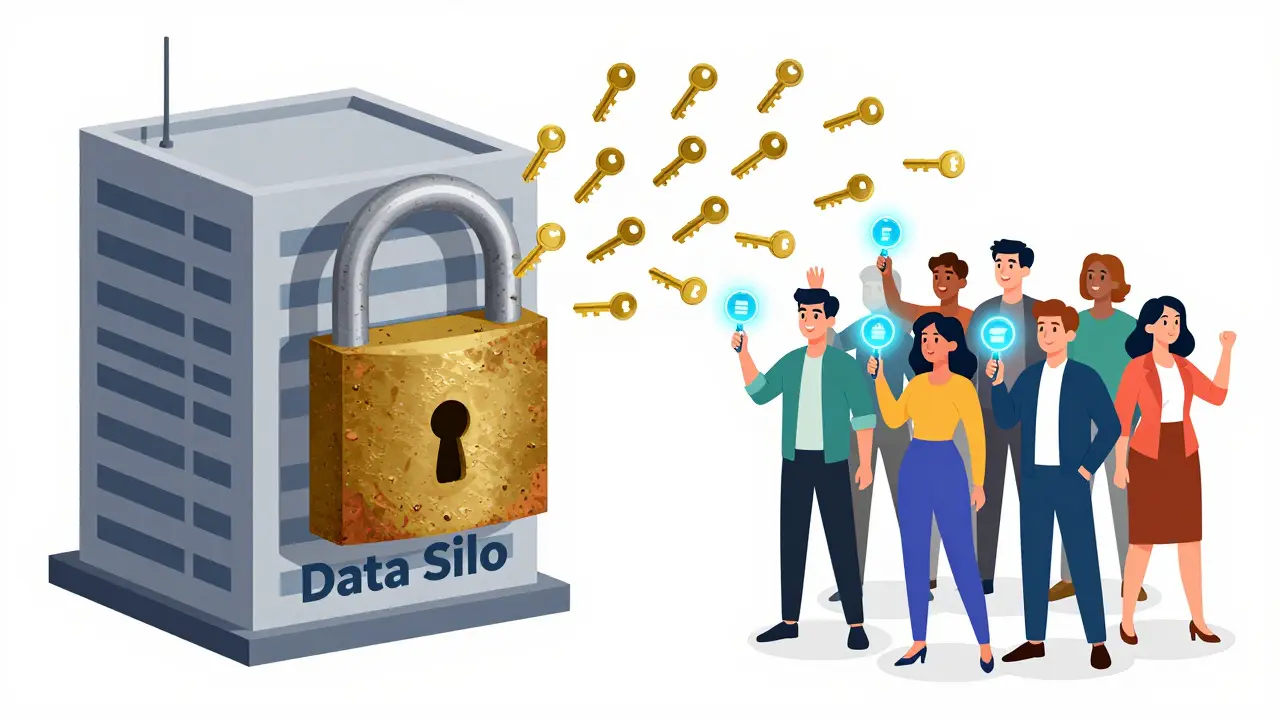
Think about how many times you've had to reset a password this year or worry about a data breach at a site where you used the same login for five other accounts. Most of us just accept that our personal data lives in massive, centralized silos owned by tech giants and banks. But that's a huge security risk. In fact, data from Verizon's 2022 report shows that a staggering 81% of data breaches stem from weak or compromised credentials. We're essentially handing the keys to our digital lives to a few large entities and hoping they don't lose them.
Enter the concept of blockchain digital identity is a decentralized approach to managing who you are online, allowing individuals to own and control their personal data without needing a central authority. Instead of a company "giving" you an account, you own your identity, and you simply prove certain things about yourself to the company. It's the difference between giving someone your entire birth certificate to prove you're over 21, and just showing them a green light that says "Yes, this person is over 21."
The Core Tech: How Decentralized Identity Actually Works
To understand why this is a game-changer, we need to look at the building blocks. The magic happens through Decentralized Identifiers (or DIDs), which are unique, permanent identifiers that exist on a blockchain rather than in a corporate database. A DID is essentially a cryptographic hash-a unique string of characters-that points to a set of public keys. You don't need to ask a provider for a username; you generate your own.
Then there are Verifiable Credentials (VCs). Think of these as digital versions of your passport, diploma, or driver's license. A trusted organization (like a university) signs a digital document and gives it to you. You store it in your digital wallet. When you apply for a job, you don't send a PDF of your degree; you share a VC. The employer checks the blockchain to verify the university's signature is real, but the university doesn't even know you're applying for a job. This removes the "phone call to verify" step entirely.
To keep things private, many systems use Zero-Knowledge Proofs (ZKPs). These allow you to prove a statement is true without revealing the underlying data. For example, you can prove you have a credit score over 700 without revealing the exact number. Polygon ID is a prime example of a platform implementing this to ensure privacy-preserving verification.
| Feature | Traditional (Centralized) | Blockchain (Decentralized) |
|---|---|---|
| Data Ownership | Owned by the service provider | Owned by the individual |
| Security Risk | Single point of failure (Honeypots) | Distributed cryptographic security |
| Verification Speed | Slow (Manual/API checks) | Fast (2-5 seconds via crypto) |
| User Control | Provider decides access | User decides what to share |
| Authentication | Primarily Password-based | Biometric + Cryptographic Keys |
Real-World Wins and Growing Pains
This isn't just theoretical. Estonia has been a pioneer here, integrating blockchain components into its national identity system. Their results are eye-opening: they've processed over 2 million cross-border transactions and reported a 92% drop in fraud. Similarly, the EU's European Blockchain Services Infrastructure (EBSI) is allowing citizens to verify academic and professional credentials across member states digitally, cutting out weeks of bureaucracy.
In the corporate world, the shift is happening for the sake of the bottom line. Some healthcare administrators have reported that patient onboarding time plummeted from 45 minutes to just 8 minutes after switching to decentralized models. Companies are seeing a 40-60% reduction in verification costs because they no longer have to manually vet documents or pay third-party agencies to do it.
However, it hasn't been a smooth ride for everyone. The biggest hurdle is the "human element." A 2024 study by Webasha found that 62% of non-technical users struggled with managing private keys. If you lose your password today, you click "Forgot Password." If you lose your private key in a purely decentralized system, you could be locked out of your own identity forever. While "social recovery" (where trusted friends help you get back in) is being developed, the learning curve remains steep.
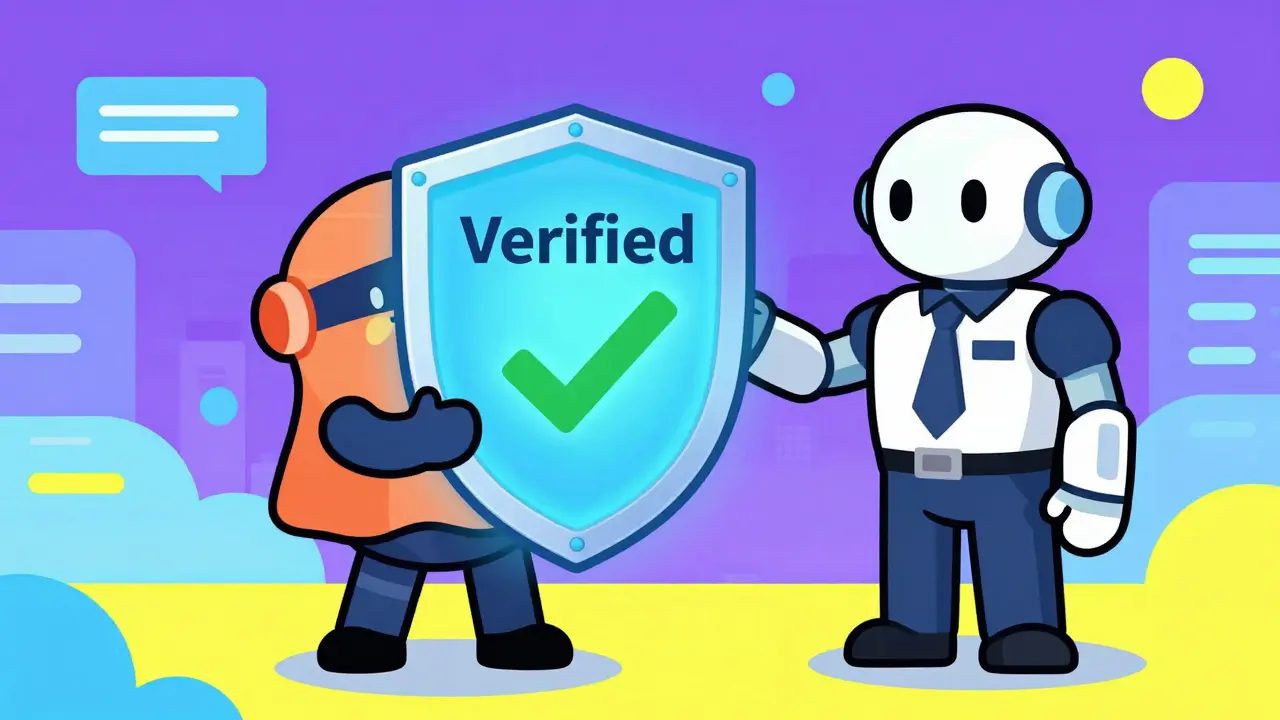
The Road to 2030: AI and Regulation
Where are we heading? By 2026, we'll see the EU's eIDAS 2.0 regulation fully take hold, providing a legal framework for blockchain identities. The US is slower, with only a handful of states having clear laws, but the pressure is mounting. As governments strive for the UN's goal of providing a legal identity for all by 2030, blockchain offers a way to provide IDs to people in regions without stable government registries.
The next big evolution is the marriage of Artificial Intelligence and identity. AI will likely act as a manager for our digital identities, optimizing how we interact with different platforms. Imagine an AI agent that knows exactly which verifiable credentials to present to a rental agency to prove you're creditworthy, without ever showing your bank balance. Blockchain anchors the trust by tracking where the data came from, while AI handles the logistics.
We're also seeing a move toward multi-modal biometrics. Instead of just a thumbprint, systems will combine iris scanning, facial recognition, and fingerprinting to stop deepfakes. Worldcoin has already pushed this boundary with its proof-of-personhood protocol, registering millions of users via iris scans to prove they are actual humans and not AI bots.
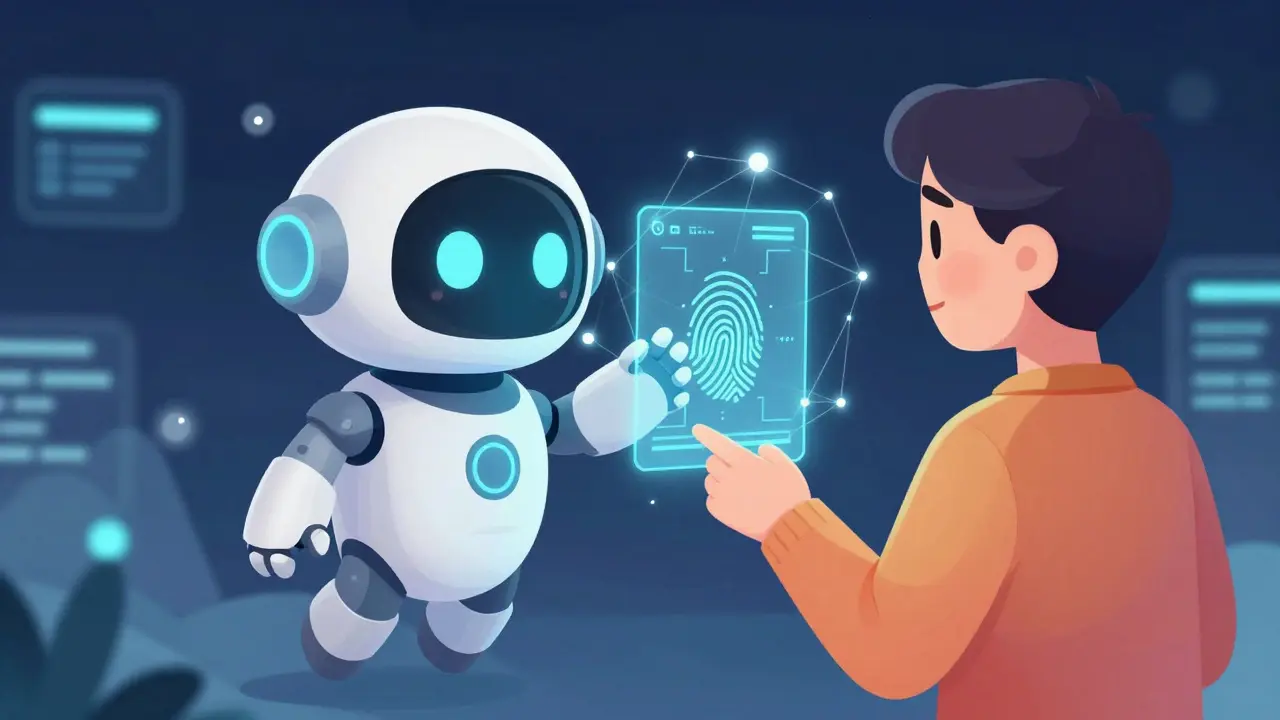
How to Start Implementing Decentralized Identity
For businesses looking to move away from old-school databases, the transition takes time-usually 6 to 12 months. It's not as simple as installing a new app. You need a strategy:
- Choose your foundation: Decide between a public chain like Ethereum or Polygon for transparency, or a permissioned framework like Hyperledger Fabric for strict corporate control.
- Standardize: Use the W3C Decentralized Identifier (DID) specifications. If you build a proprietary system, you're just creating another silo, which defeats the whole purpose.
- Solve the Key Problem: Don't force users to manage 64-character hex strings. Use biometric-based key reconstruction or managed wallets that offer a bridge for non-technical users.
- Integrate via APIs: Use RESTful APIs to connect your new identity layer with existing enterprise software. For example, Microsoft's Entra Verified ID already connects to over 1,200 apps.
If you're a developer, start by learning Solidity or Rust and dive into the documentation for Hyperledger Indy, which is widely regarded as one of the most comprehensive resources for identity-specific blockchain development.
Will blockchain digital identity replace my passport?
Not immediately. It will likely exist as a "digital twin" of your passport. You'll still have the physical book for border crossings, but you'll use a Verifiable Credential on your phone to check into hotels, open bank accounts, or verify your age online without showing the physical document.
What happens if I lose my private key?
In early systems, losing your key meant losing your identity. However, modern frameworks implement "Social Recovery" or "Guardians." This allows you to designate a few trusted people or institutions who can help you recover your identity without them ever having full access to your data.
Is this safer than using Google or Facebook Login?
Yes, because it eliminates the "central point of failure." With Google Login, if Google's servers go down or your account is banned, you lose access to everything. With a decentralized ID, you hold the keys. No single company can "turn off" your identity.
Can't governments just track me more easily with this?
It's a double-edged sword. While Zero-Knowledge Proofs allow you to hide your data, the integration of biometrics (like iris scans) could lead to more surveillance if not regulated. This is why legal frameworks like the EU's eIDAS 2.0 are critical-they set the rules on how data can be collected and used.
How long does it take to verify an identity on the blockchain?
It's surprisingly fast. While traditional manual checks can take days and API calls can take a minute, blockchain-based cryptographic verification typically happens in 2 to 5 seconds. Some newer layer-2 solutions are aiming to bring this under 1 second.
The whole idea of a "digital twin" for a passport is just a fancy way of saying we're building a more efficient cage for ourselves. It's a delicious irony that we use cryptography to "free" our data only to hand it over to the same bureaucratic machines in a faster format. I love the dream, but the implementation is just a digital coat of paint on a very old, very dusty wall of control.
just another way for them to track the iris and the soul while we think we're owning the keys they probably have a back door in the protocol anyway trust nobody especially not a system that wants your eyeballs
Oh honey, as if the average user can handle the cognitive load of a non-custodial wallet without losing their entire existence in a weekend. The sheer audacity of suggesting that a 64-character hex string is a "hurdle" is precious when the actual systemic failure is the lack of a standardized interoperability layer between disparate L2 solutions. We're essentially talking about swapping a centralized database for a fragmented mess of shards and ZK-rollups while pretending the UX isn't a total nightmare for anyone without a CS degree. It's a goldmine for the consultants but a disaster for the actual human beings who just want to log into their bank account without needing a mnemonic phrase written on a piece of paper hidden in a sock drawer.
It is imperative that we consider the legal implications of social recovery systems, as the definition of a "trusted guardian" may vary significantly across different jurisdictions. I believe a harmonized global standard would be most beneficial for the average citizen.
I already knew about ZKPs years ago. Everyone is acting like this is new. The problem isn't the tech, it's that people are too lazy to actually learn how it works.
There is something profoundly poetic about the idea of a mathematical proof replacing a physical document, as it shifts the nature of truth from an institutional stamp to a computational certainty. I find myself wondering if we are losing a certain human element of trust when we replace a handshake or a verified letter with a green light from a blockchain, though perhaps that's just a nostalgic longing for a world that was fundamentally less efficient and more prone to error anyway.
OH MY GOODNESS! This is the absolute breakthrough we've been waiting for! Imagine the empowerment of a person in a developing nation finally getting a legal identity through a DID! It's absolutely life-changing stuff!
It's a big jump for most people. We should focus on a gradual transition where the tech is invisible.
STOP COMPLAINING ABOUT THE LEARNING CURVE AND JUST LEARN THE TECH! The future is coming whether you're ready or not, so either get on board with decentralized ID or get left behind in the password ages!
It's just a fancy database.
imagine thinking the govt wants to give you control over your data lol they just want a more precise way to freeze your assets in one click
The integration in Estonia is a very impressive model for other nations to follow.
I love how this empowers the individual! Let's all push for more open-source identity tools so everyone can benefit from this security!
This is such a vibe for digital freedom! 🚀 Sending positive energy to all the devs working on the social recovery side of things because that's where the real magic happens ✨
The sheer banality of the "human element" argument is exhausting 🙄. If one cannot manage a private key, one simply does not possess the intellectual fortitude to navigate the digital frontier. Truly a tragedy of the modern era 💅.
I feel so much anxiety about the iris scanning parts... it feels so intense. I hope the laws really do protecc us from the bad guys. It's just a lot to take in!!
I'm really glad to see the focus on privacy through ZKPs. It's a wonderful way to maintain boundaries while still being functional.
If you're still using passwords in 2024, you're basically asking to be hacked. Wake up and evolve or stay vulnerable. It's that simple.
I find it amusing that people think this is a revolutionary leap when it's essentially just public-key infrastructure with a ledger attached. Groundbreaking. Truly.
INDIA WILL LEAD THE WORLD IN THIS! Our digital infrastructure is already lightyears ahead and the blockchain will make us invincible! The glory of our tech sector is unmatched!
I agree with the need for cautious implementation. :) One must ensure the accessibility is prioritized for all ages.
This technology can really help people who don't have traditional paperwork in their home countries. It is very inclusive.
too much reading for a basic concept
The comparison table helps clarify the differences, though I wonder how this adapts to different cultural views on privacy.