
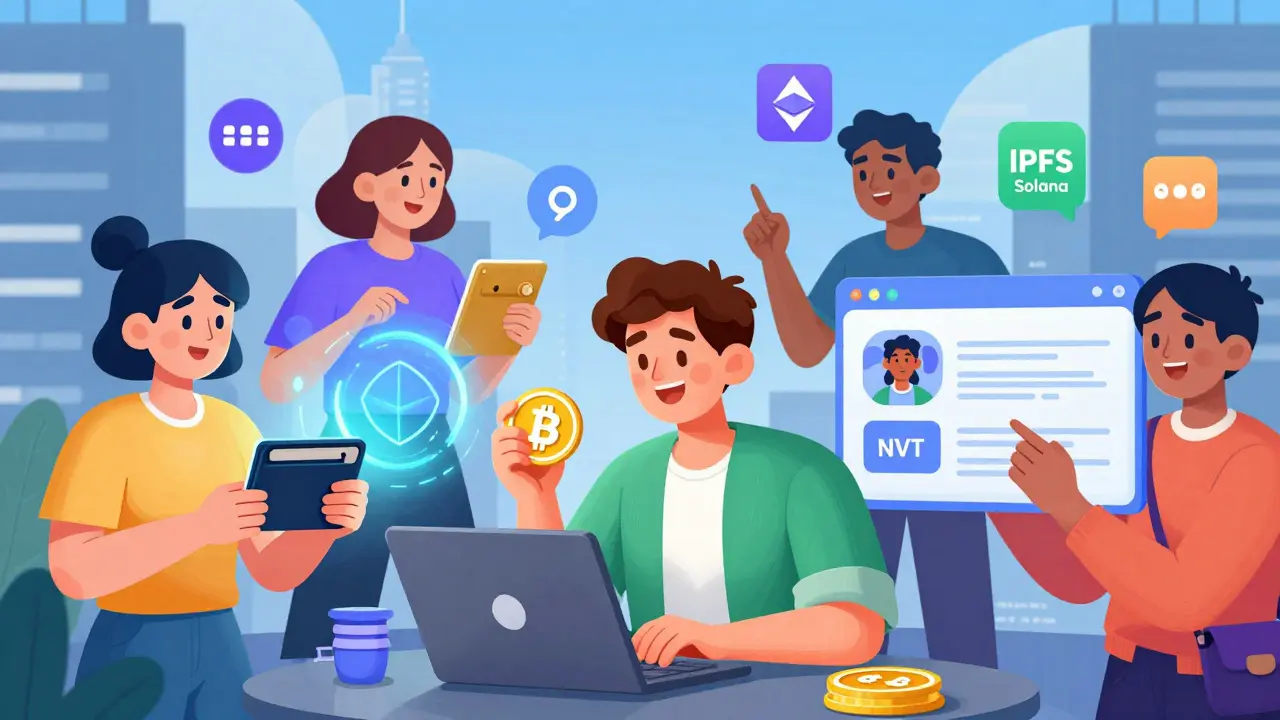
Web3 isn’t just another tech buzzword. It’s a shift in how we own, interact with, and get paid for our digital lives. Forget logging in with Google or Facebook. Web3 apps let you own your data, your assets, and even your online identity - no middlemen needed. And it’s not theoretical anymore. Millions of people are using these apps every day, from lending money without a bank to earning cash just by browsing the web.
What Exactly Is a Web3 Application?
A Web3 application runs on a blockchain, not a server owned by a company. Instead of signing up with an email, you connect a wallet - like MetaMask or Phantom - that holds your digital keys. Every action you take, whether trading tokens or posting content, is recorded on a public ledger. This means no single company can shut it down, change the rules, or sell your data. The code that runs these apps - called smart contracts - executes automatically. If you lend $100 to someone, the contract handles repayment with interest, no bank involved.
Most Web3 apps today live on Ethereum, which hosts over 64% of all decentralized apps. But alternatives like Solana, Polygon, and BNB Chain are catching up fast. They’re faster and cheaper, which matters when you’re paying a few cents per transaction instead of dollars.
Decentralized Finance (DeFi): Banking Without Banks
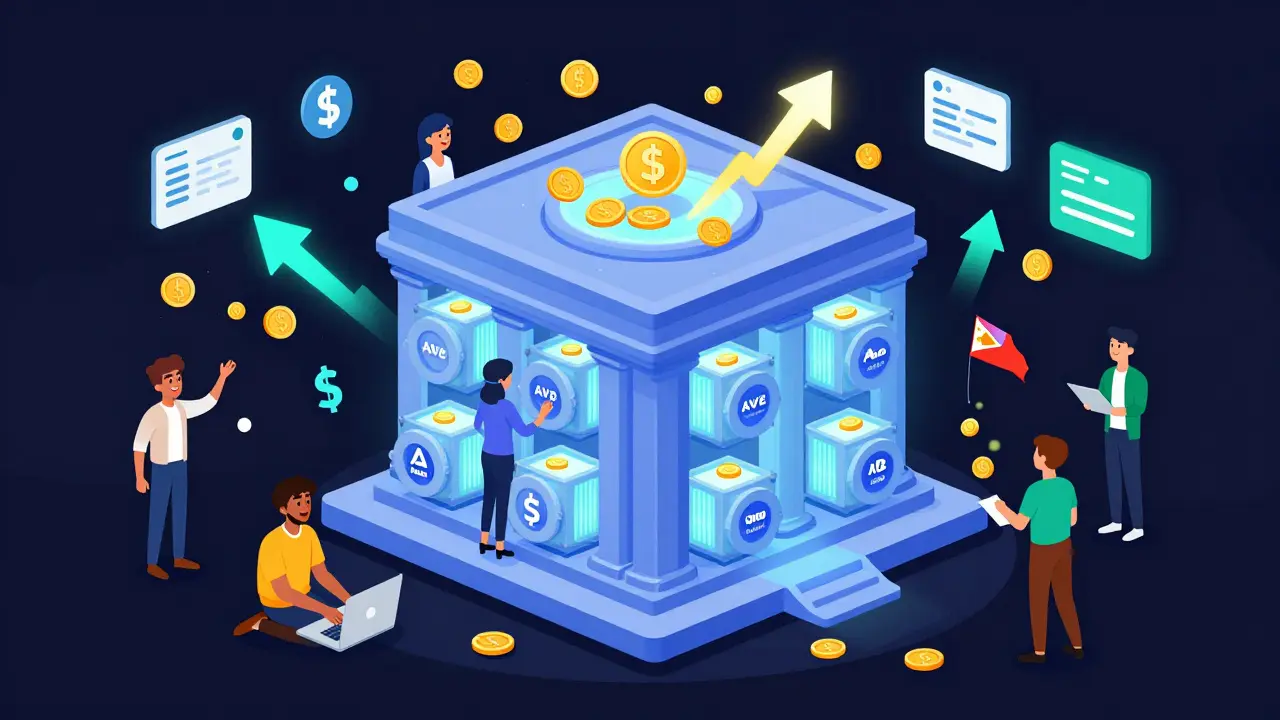
DeFi is the biggest chunk of Web3. As of February 2026, over $58 billion is locked in DeFi protocols. That’s money people are lending, borrowing, or earning interest on - all without a bank.
- Aave lets you deposit crypto and earn interest, or borrow against it. Rates change every 15 seconds based on supply and demand - way faster than any bank.
- Compound works the same way, with over $6.8 billion in deposits. Users earn yields between 2% and 8% depending on the asset.
- Uniswap is a decentralized exchange. You swap tokens directly from your wallet. No registration. No KYC. Just a trade. But watch out: during market swings, slippage can hit 2.3% - meaning you might get slightly less than you expected.
Why does this matter? In countries like Nigeria or the Philippines, where traditional banks are slow or inaccessible, DeFi gives people real financial tools. Someone can lend their crypto and earn interest in real time - no waiting weeks for a loan approval.
NFT Marketplaces: Owning Digital Stuff
NFTs aren’t just JPEGs. They’re proof of ownership on the blockchain. And marketplaces are where people buy, sell, and trade them.
- OpenSea still leads with 43.8% of NFT sales. It’s the go-to for artists, collectors, and gamers.
- Blur is the dark horse. It’s built for traders, offering advanced tools like bulk listings and fee discounts.
- Magic Eden dominates on Solana, where transactions cost pennies instead of dollars.
In 2024, NFT marketplaces processed $12.7 billion in sales. But the real shift is happening beyond art. Brands like Nike and Adidas now sell digital sneakers as NFTs. Musicians release albums as NFTs with built-in royalties - so every time it’s resold, they get paid. Even concert tickets are being issued as NFTs to prevent scalping.
Web3 Gaming: Play to Earn, Not Just Pay to Play
Remember Axie Infinity? It blew up in 2021 with players in the Philippines earning more from the game than their day jobs. That model - play to earn - changed everything.
But things got messy. When token prices crashed in 2024, Axie’s monthly users dropped from 2.8 million to 2.1 million. The same happened with STEPN, where users walked to earn tokens - until the value of those tokens collapsed by over 96%. User retention plummeted.
The lesson? You can’t just pay people to play. You need real utility. Newer games like Dark Forest and Illuvium are blending gameplay with ownership. Players don’t just own their characters - they own the land, the resources, and the rules. Some even vote on game updates through DAOs. That’s the future: games where players aren’t just users - they’re stakeholders.
Web3 Browsers and Content: Get Paid to Browse
Brave Browser is the quiet giant of Web3. It blocks ads and trackers by default - and pays you for opting into privacy-respecting ads.
Users earn Basic Attention Tokens (BAT). On average, you make $0.08-$0.13 per viewing session. That adds up: Brave reports users earn $3.20 per month on average. Over 57 million people use it. No app store. No login. Just install, browse, and get paid.
Even Reddit jumped in. Its community points system - used by 42 million users - lets you earn tokens for posting, commenting, and moderating. These points can be converted into NFTs or traded. It’s Web3 wrapped in a familiar interface.
Decentralized Storage: Your Data, Not on Amazon’s Servers
When you upload a photo to Instagram, it’s stored on Amazon’s servers. Web3 changes that. Apps like IPFS, Filecoin, and Storj split your data into pieces and store them across thousands of computers worldwide.
92% of Web3 app front-ends now run on IPFS. It’s slower than cloud storage - 3.2 seconds to load vs. 0.8 seconds on AWS - but it’s censorship-resistant. If a government tries to take down a site, there’s no single server to shut down. And it’s 70% cheaper than traditional hosting.
Together, these networks store 18.7 exabytes of data - that’s 18.7 billion gigabytes - across 38,000 nodes. It’s not perfect, but it’s working.
Real Challenges: Why Most People Still Struggle
Web3 isn’t magic. It’s hard. Here’s what’s holding most people back:
- Wallets are scary. Lose your private key? Your money is gone. No customer service. No reset button. 72% of failures happen during wallet setup.
- Gas fees. On Ethereum, a simple swap used to cost $50. Now, thanks to Layer 2s like Arbitrum and Optimism, it’s under $0.07. But if you’re on the wrong network? You could pay $3.
- Scams. Fake apps, phishing links, rug pulls - they’re everywhere. Reddit threads are full of users who lost thousands.
- Learning curve. Coinbase says it takes 8-12 weeks to get comfortable. You need to understand private keys, gas, networks, slippage, and tokenomics.
And then there’s regulation. The EU’s MiCA law, active since January 2025, forces Web3 apps to collect ID from users. Some exchanges blocked EU access entirely. Meanwhile, the U.S. still has no clear rules.
The Future: Web2.5 Is Already Here
The most promising Web3 apps aren’t pure crypto. They’re hybrids - Web2.5.
- Shopify lets merchants accept NFTs as payment. In Q1 2025, they processed $87 million in NFT sales.
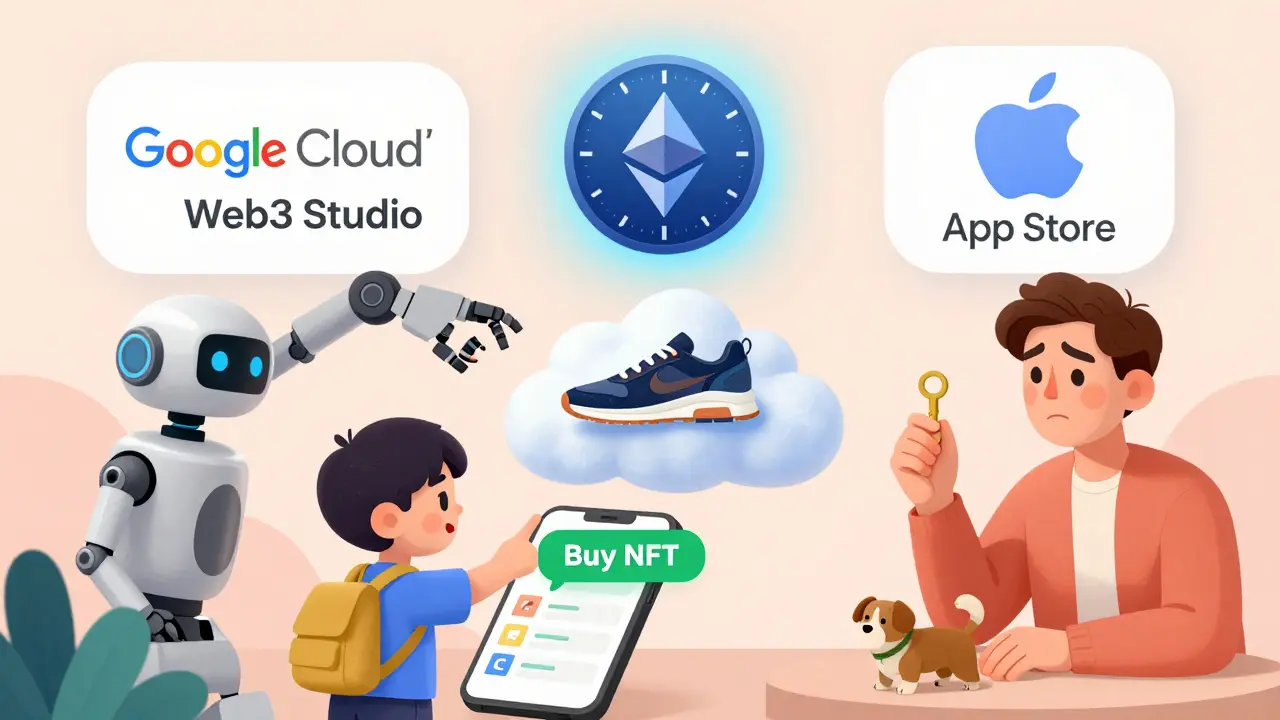
- Google Cloud launched Web3 Application Studio in February 2025. Over 1,800 projects signed up in the first month.
- Apple now allows Web3 apps on the App Store - as long as they offer real utility, not just speculation.
- Ethereum’s Prague upgrade in March 2025 slashed transaction finality from 12 minutes to 3.2 seconds. Gas volatility dropped 63%.
These aren’t just experiments. They’re mainstream adoption in disguise. You don’t need to know what a smart contract is to use Shopify’s NFT checkout. You just click “Buy NFT.” The blockchain does the rest.
Who’s Using Web3 - and Where?
Adoption isn’t evenly spread. The U.S. leads with 28.3% of users. But the real growth is in emerging markets:
- Vietnam: 14.7%
- Philippines: 12.9%
- Nigeria: 9.8%
- Turkey: 7.3%
In these places, Web3 isn’t about speculation. It’s about access. A farmer in Nigeria can receive payments in stablecoins without a bank account. A freelancer in the Philippines can invoice clients in crypto and get paid instantly. That’s the real power of Web3.
What’s the difference between Web2 and Web3?
Web2 is what we use now: apps like Facebook, Instagram, and YouTube. You don’t own your data - the company does. Web3 flips that. You own your data, your assets, and your identity through blockchain and crypto wallets. No company can delete your account or sell your info.
Do I need crypto to use Web3 apps?
Yes - but not always in the way you think. You need a crypto wallet (like MetaMask) to log in and sign transactions. You don’t always need to buy Bitcoin or Ethereum upfront. Some apps, like Brave Browser, let you earn crypto just by browsing. Others let you use stablecoins like USDC, which are pegged to the dollar and less volatile.
Are Web3 apps safe?
The tech is secure - blockchains are nearly impossible to hack. But you’re still vulnerable. If you click a fake link, send funds to the wrong address, or lose your private key, there’s no recovery. Scams are common. Always double-check contracts. Use trusted wallets. Never share your seed phrase.
Can I make money with Web3 apps?
Yes - but don’t treat it like gambling. You can earn through Brave Browser (BAT rewards), by staking crypto in DeFi apps, or by creating content on NFT platforms. But most people don’t get rich. The real value is ownership: you control your digital life, not a corporation.
What’s the easiest Web3 app to try?
Brave Browser. Install it, enable ads, and you’ll start earning BAT within minutes. No wallet setup needed at first. It’s a low-risk way to experience Web3 without buying crypto or risking funds.
Web3 is just blockchain with extra steps. All this 'ownership' nonsense is a marketing gimmick. You still need to trust the devs behind the smart contracts. And don't get me started on gas fees on Layer 1. It's a circus.
I started with Brave Browser and it changed everything. No ads, no tracking, and I actually got paid in BAT. No wallet needed at first. It’s the easiest way to dip your toes in. Seriously, try it. No pressure.
You people act like DeFi is some revolutionary utopia. Aave? Compound? Half those protocols are just leveraged yield farms with rug-pull potential. And don’t tell me about Nigeria - most people there are just chasing pump-and-dumps disguised as 'financial inclusion'.
I live in India and Web3 gave me my first real way to earn online. I started staking USDC on a small DeFi app - not big, just $200. Now I get 5% APY. It’s not life-changing, but it’s something my bank never offered. And no, I didn’t need to understand smart contracts. Just followed a YouTube guide.
I love how Web3 is empowering creators! NFTs aren’t just JPEGs - they’re digital rights. When my friend sold a music track as an NFT and got 10% every time it was resold? That’s justice. And the fact that platforms like Shopify are integrating it? Huge step forward. We’re building a new economy, one transaction at a time!
The data on IPFS is impressive, but let’s be honest - 3.2 seconds load time is unacceptable for mainstream use. And ‘censorship-resistant’? That’s just code for ‘hosting illegal content’. The EU’s MiCA is the only sane regulatory approach. Everything else is chaos with a blockchain logo.
You think this is about ownership? Nah. This is a Fed-backed crypto pump disguised as decentralization. The ‘Ethereum Prague upgrade’? That was just a coordinated move by the Ethereum Foundation to make it look like progress. The real power is still in the hands of a few VCs and mining pools. Wake up. The blockchain is a ledger, not a liberation movement.
Brave Browser changed my life 😊 I get paid just for browsing? Yes please. I’ve earned $28 so far. No scams, no stress. I didn’t even need to touch crypto until now. This is Web3 done right.
The entire premise of Web3 rests on the ontological assumption that decentralization equates to liberation. But in practice, it merely redistributes power from corporate monopolies to algorithmic oligarchies. The wallet isn’t freedom - it’s a new cage, forged in cryptographic steel.
They say Web3 is the future but the truth is they’re just trying to get us to buy crypto while the feds watch. I lost 15k on a ‘play to earn’ game last year. The devs vanished. Now I hear they’re all in Dubai. Coincidence? I think not. They’re all in on the scam. Always was.
I’ve been running a node on Filecoin for six months. It’s low maintenance, pays in FIL, and I’ve earned enough to cover my home internet. The tech is clunky, sure, but it works. If you’re looking for passive income, this is way better than crypto gambling.
Web3? More like WebScam. NFTs are just JPEGs with a blockchain sticker. And ‘play to earn’? More like ‘play to lose your time’. I tried STEPN. Walked 10 miles. Got $0.42. Then the token crashed. I’m not dumb. I know a pyramid when I see one.
America leads in Web3? Please. The real innovation is happening in Asia. Vietnam’s devs are building better dApps than Silicon Valley’s overpaid consultants. And Nigeria? They’re using crypto to bypass a broken banking system. We’re just here to monetize the hype.
They say Web3 gives you ownership. But who owns the nodes? Who controls the validators? It’s all centralized under a few DAOs that answer to VCs. And don’t tell me about Ethereum - it’s still a Wall Street play. This isn’t revolution. It’s rebranding.
I tried to set up a wallet. Lost my keys. Lost $800. No one helped. No customer service. Just silence. Now I’m scared to touch anything. This isn’t freedom. It’s a trap for people who don’t read the fine print.
Brave Browser is cute. But it’s just a Trojan horse. You think you’re getting paid? You’re just feeding data to the same ad networks - now with more blockchain glitter. And Reddit’s points? That’s not Web3. That’s gamified capitalism with a crypto label.
I’ve been using DeFi for two years. It’s not perfect. But I’ve earned more from staking than I ever did from my savings account. The learning curve is steep, sure. But once you get it - you never go back. It’s not about getting rich. It’s about having control. That’s priceless.
They’re all lying. The whole Web3 movement is a psyop designed to shift wealth from the middle class to crypto bros. The ‘utility’ you see? It’s a mirage. The real utility is in the tax loopholes and offshore wallets. And don’t even get me started on how Apple and Google are letting Web3 apps in - they’re just preparing to tax it later.
I work in fintech. The real story here isn’t Web3. It’s that traditional finance is finally being forced to adapt. DeFi forced banks to offer better yields. NFTs made artists demand royalties. Even Shopify’s integration? That’s a sign the old guard is scared. Web3 isn’t replacing Web2 - it’s pushing it to evolve.
The numbers are fabricated. 57 million Brave users? Where’s the audit? 18.7 exabytes on IPFS? That’s less than 0.1% of global data. This isn’t adoption. It’s hype inflated by crypto Twitter bots.
I used to think Web3 was for techies. Then I watched my grandma use Brave and earn BAT just by reading news. She didn’t know what blockchain was. She just liked not being tracked. That’s the real win. Not the money. The peace of mind.
The real shift isn’t in the tech. It’s in the mindset. People are starting to ask: Who owns my data? Who profits from my attention? Web3 doesn’t answer those questions perfectly - but it forces them into the open. That’s the quiet revolution.
They say Web3 is the future. But I’ve seen this movie before. Dot-com bubble. Crypto winter. NFT mania. Each time, the same story: hype, crash, then the same people start again. This time’s different? Yeah right. I’ll believe it when I see a Web3 app that doesn’t require a degree in blockchain engineering to use.