
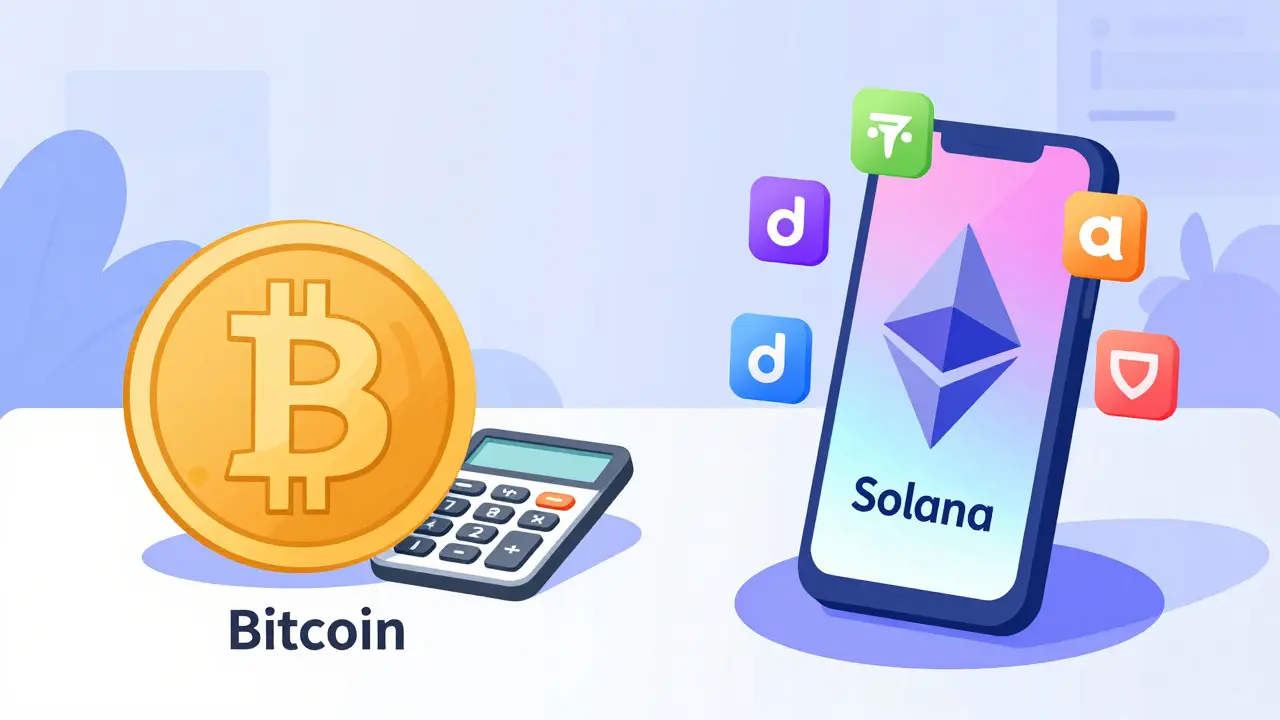
Imagine walking into a store where you can only buy coffee. That’s how most people think of Bitcoin-it’s digital cash, great for moving value from one pocket to another. But what if that store also let you build your own espresso machine, rent out tables to other customers, or even create a new type of drink entirely? That is the world of platform cryptocurrencies, which are blockchain networks designed not just for payments, but as foundational infrastructure for building complex software and financial systems.
While Bitcoin was built to be digital gold, platform coins like Ethereum and Solana were built to be digital operating systems. They don’t just move money; they execute code. This distinction changes everything about how we interact with the internet, finance, and ownership.
The Core Difference: Payment vs. Platform
To understand platform cryptocurrencies, you first have to understand what they aren’t. Traditional payment cryptocurrencies focus on two things: security and decentralization in transferring value. Their ledgers are simple lists of who owns what. If Alice sends Bob five coins, the network records that change. That’s it.
Platform cryptocurrencies add a third layer: programmability. Think of a payment coin as a calculator. It does math. A platform coin is more like a smartphone. It has an operating system (the blockchain) that allows developers to install apps (decentralized applications, or dApps). These apps run on the network without any single company controlling them.
This shift from static ledger to dynamic computer is why platform tokens often have different utility. You might use Bitcoin to save value. You use Ether (ETH) or Solana (SOL) to pay for computing power on their respective networks. When you send ETH, you aren’t just sending money; you’re often paying for the energy required to run a smart contract or verify a transaction.
How Smart Contracts Power the Ecosystem
The engine behind every platform cryptocurrency is the smart contract, which is self-executing code stored on a blockchain that automatically enforces the terms of an agreement when predefined conditions are met. Unlike traditional contracts written on paper and enforced by lawyers, smart contracts are written in code and enforced by mathematics.
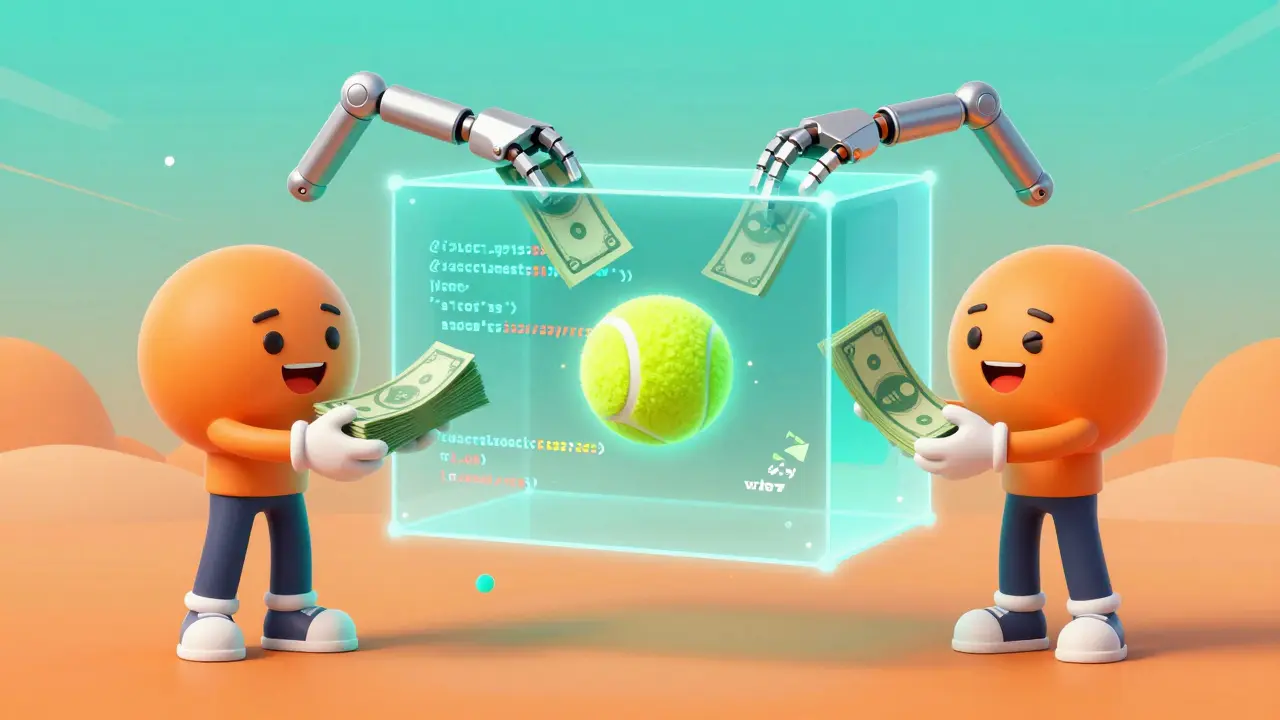
Here is how it works in practice. Imagine you want to bet $100 with a friend on the outcome of a tennis match. In the old world, you’d need a referee to hold the money and release it to the winner. On a platform cryptocurrency, you deposit your funds into a smart contract. The code says: “If Player A wins, send all funds to User A. If Player B wins, send all funds to User B.”
When the match ends, the contract checks a trusted data source (called an oracle), sees the result, and instantly distributes the funds. No bank, no lawyer, no middleman taking a cut. This automation is the heart of Decentralized Finance (DeFi), lending protocols, and insurance products built on these platforms.
Major Players: Ethereum and Solana Compared
Not all platform cryptocurrencies are created equal. While there are dozens of options, two dominate the conversation: Ethereum and Solana. They solve the same problem-hosting decentralized apps-but take very different technical approaches.
| Feature | Ethereum (ETH) | Solana (SOL) |
|---|---|---|
| Primary Focus | Security and Developer Ecosystem | Speed and Low Cost |
| Transaction Speed | ~15-30 transactions per second (Layer 1) | Up to 65,000 transactions per second |
| Average Fee (Gas) | Variable, can be high during congestion | Fraction of a cent |
| Consensus Mechanism | Proof of Stake | Proof of History + Proof of Stake |
| Best For | High-value DeFi, NFTs, Institutional Apps | High-frequency trading, Gaming, Micro-payments |
Ethereum is the original smart contract platform, launched in 2015, which established the standard for decentralized application development. It is the most secure and has the largest developer community. Because it prioritizes security over speed, it can get congested, leading to higher fees. However, its robustness makes it the go-to choice for large financial institutions and valuable assets.
Solana is a high-performance blockchain designed to handle thousands of transactions per second at minimal cost, using a unique Proof of History mechanism. Solana sacrifices some decentralization for incredible speed. This makes it ideal for applications that require rapid updates, like online gaming or high-frequency trading bots, where waiting minutes for a confirmation is unacceptable.
The Role of Validators and Consensus
In a traditional bank, employees check your balance before approving a transfer. In a platform cryptocurrency, this job falls to validators, which are network participants who stake their native tokens to verify transactions and secure the blockchain. This process is known as consensus.
Most modern platform cryptocurrencies use Proof of Stake (PoS). Here’s why that matters to you. To become a validator, you must lock up (stake) a significant amount of the platform’s native token. If you act honestly and validate correct transactions, you earn rewards. If you try to cheat or double-spend, the protocol slashes (destroys) your staked tokens.
This economic incentive aligns everyone’s interests. The network stays secure because attacking it would cost validators billions of dollars in lost stakes. As a regular user, you can also participate. By staking your ETH or SOL with a validator, you help secure the network and earn passive income, usually ranging from 3% to 8% annually depending on market conditions.
Tokens vs. Coins: What’s the Distinction?
You will hear the terms “coin” and “token” used interchangeably, but in the world of platform cryptocurrencies, the difference is structural. A coin (like ETH or SOL) lives on its own native blockchain. It is the fuel of the network.
A token (like USDC or UNI) lives on top of a platform’s blockchain. Think of the platform as the land, and the tokens as the buildings constructed on that land. You cannot have a building without the land, but the land exists independently. This is why platform cryptocurrencies are called “coins”-they provide the underlying infrastructure that allows thousands of other tokens to exist and function.
Why Platform Cryptocurrencies Matter for the Future
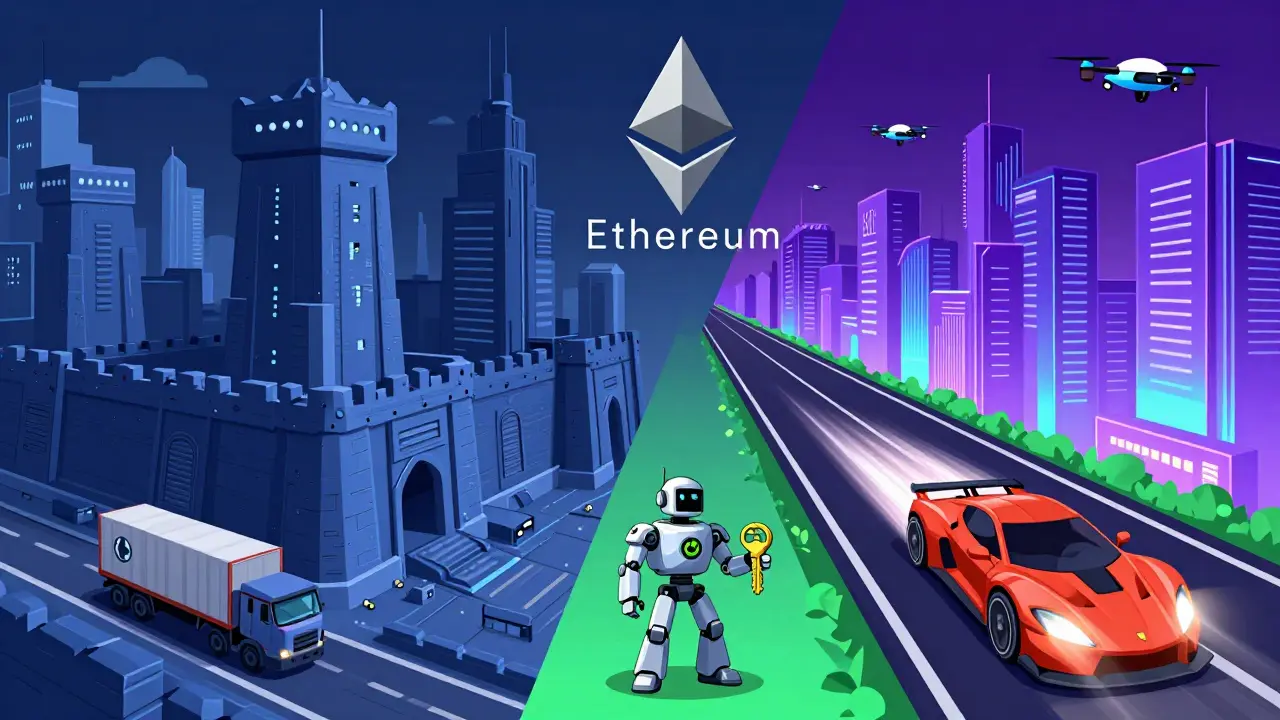
The rise of platform cryptocurrencies represents a shift from Web2 (centralized platforms owned by corporations) to Web3 (decentralized networks owned by users). When you use Facebook, Meta controls your data. When you use a dApp on Ethereum, the code controls the logic, and you control your data via your private keys.
This architecture enables censorship-resistant services. A lending protocol on a platform cryptocurrency cannot arbitrarily freeze your account because you live in a certain country or made a controversial post. The code executes blindly. This trustless nature is powerful, but it also means you are responsible for your own security. There is no customer support hotline to reset your password. If you lose your private key, your access to the platform is gone forever.
Common Pitfalls to Avoid
Entering the world of platform cryptocurrencies requires caution. Here are three common traps:
- Ignoring Gas Fees: On networks like Ethereum, small transactions can sometimes cost more in fees than the transaction itself. Always check current network congestion before interacting with dApps.
- Misunderstanding Smart Contract Risk: Just Because It’s Code: Code can have bugs. Hackers frequently exploit vulnerabilities in poorly audited smart contracts. Only use established, audited protocols.
- Confusing Utility with Price: The price of a platform coin is driven by speculation and demand for network usage. High price doesn’t always mean better technology. Solana is cheaper to use than Ethereum, but Ethereum often has a higher market cap due to its entrenched ecosystem.
Is Bitcoin a platform cryptocurrency?
No, Bitcoin is primarily a payment cryptocurrency. While it has limited scripting capabilities, it was not designed to host complex decentralized applications or smart contracts in the way Ethereum or Solana were. Its primary purpose is secure, peer-to-peer value transfer.
What happens if a platform cryptocurrency network goes down?
Unlike centralized servers, blockchain networks are distributed across thousands of nodes globally. While specific instances of downtime have occurred (such as early issues with Solana), the network generally recovers quickly without loss of data. Transactions may be delayed, but the ledger remains intact and secure.
Do I need to be a programmer to use platform cryptocurrencies?
No. You do not need to write code to use these platforms. Most interactions happen through user-friendly interfaces (wallets like MetaMask or Phantom) that hide the complex coding behind simple buttons. However, understanding the basics helps you avoid scams and manage risks effectively.
Are platform cryptocurrencies regulated?
Regulation varies significantly by country. In many jurisdictions, platform tokens are treated as commodities or securities depending on their utility and governance structure. Always check local laws regarding taxation and compliance before participating in staking or trading activities.
Which platform cryptocurrency is best for beginners?
Ethereum is often recommended for beginners due to its vast ecosystem, extensive documentation, and widespread support across wallets and exchanges. While fees can be higher, the abundance of resources makes it easier to learn and troubleshoot issues compared to newer or more niche platforms.
Oh my gosh, this is such a helpful breakdown!! I always get so confused with all the crypto jargon but this makes it seem way more accessible. I love how you explained the difference between coins and tokens using the land and buildings analogy! It really clicked for me. Thank you so much for writing this!!!
The distinction between payment cryptocurrencies and platform cryptocurrencies is indeed quite significant. The shift towards programmability allows for a much broader range of applications beyond simple value transfer. It is interesting to observe how Ethereum has established itself as the standard while Solana offers an alternative focused on high throughput.
Let's be real about the technical debt here. The article glosses over the fact that 'programmability' often just means 'attack surface.' Smart contracts are not self-executing magic; they are buggy code running on a distributed ledger that hasn't been peer-reviewed by actual experts in most cases. The EVM is a legacy architecture trying to scale via L2s because the base layer is fundamentally broken for mass adoption. Solana's PoH is a centralization vector disguised as innovation. You're paying for speed with security guarantees that vanish under load. The oracle problem isn't solved; it's just outsourced to centralized data feeds that can be manipulated. This 'trustless' narrative is a marketing scam to sell VC tokens to retail degenerates who don't understand consensus mechanisms.
I guess I see both sides. It is cool what they can do, but yeah, the fees on Eth can be annoying sometimes.
Wow! 🚀 So basically Bitcoin is like a calculator from the 80s and Ethereum is like a supercomputer? 🤯 I feel like I just had a breakthrough moment! But wait... if Solana is so fast, why does it crash every time someone tweets about it? 😂📉 Is it because the validators are too busy drinking coffee? ☕️ Just kidding! Or am I? 🤔 The drama is delicious! 🍿
You think this is decentralized? Please. The entire ecosystem is controlled by a handful of venture capital firms and insiders who pump their own bags before dumping on the little guy. The 'validators' are just nodes run by large corporations that collude to censor transactions whenever the SEC sneezes. Proof of Stake is just Proof of Wealth. They want you to believe you have ownership, but you're just renting access to a system designed to extract your liquidity. The oracles are fed by centralized exchanges that manipulate prices. Wake up sheeple! 🐑 The matrix is built on Solidity code written by paid mercenaries.
I appreciate the detailed explanation provided in the post, as it seems to bridge the gap between complex technological concepts and everyday understanding, which is often lacking in discussions regarding blockchain technology, and I believe that fostering such clarity is essential for the broader acceptance and integration of these systems into our daily financial lives, especially considering the historical context of currency evolution and the current trends towards digital asset adoption globally.
Good info. I use MetaMask mostly. Seems easy enough.
It is frankly disheartening to read such a superficial overview of what constitutes a foundational layer protocol. The conflation of 'platform' with merely 'smart contract capability' ignores the nuanced architectural differences in state management, finality guarantees, and governance structures that truly differentiate robust ecosystems from fleeting speculative bubbles. One must possess a deeper understanding of computer science fundamentals to appreciate why certain design choices in Ethereum’s transition to PoS were necessary for long-term sustainability, rather than simply chasing transaction per second metrics that are largely irrelevant for most decentralized applications.
The article fails to address the critical vulnerability of front-running bots on public mempool data.
Smart contracts are deterministic.
Attackers exploit this determinism.
Your 'simple guide' is dangerously naive.
DeFi is not safe.
Stop pretending otherwise.
i kinda like the idea of owning my own data but like... whats the catch? is it really that hard to keep track of private keys? i mean, i lose my phone password all the time lol. but the part about staking sounds kinda cool, like getting interest without a bank taking a cut. maybe ill look into it more!
This piece lacks the rigor expected of serious financial analysis. While the analogies are charming for the layperson, they obscure the fundamental risks associated with smart contract vulnerabilities and regulatory uncertainty. A true understanding requires acknowledging that these platforms are experimental technologies operating in a legal gray area, not stable infrastructure ready for institutional reliance.
What fascinates me is the philosophical shift from trust in institutions to trust in code. It challenges our very notion of social contracts. How do we reconcile the need for human judgment with rigid algorithmic enforcement? Perhaps the future lies in hybrid models where community governance supplements automated execution. What are your thoughts on the ethical implications of immutable code?
Listen up, newbies! 🧠 If you don't understand gas optimization and MEV extraction, you're already dead in the water. Ethereum is the only game in town because of its network effects and developer moat. Solana is a centralized monstrosity that relies on high-end hardware, making it impossible for average users to validate. Stick to ETH or go home. Don't let FUD fool you. 💎🙌
OMG! 🤯 Did you guys realize that the validators are actually watching us?! 👀 Like, they know everything we do! It’s terrifying! 😱 But also kind of exciting? Maybe they’ll help us find our lost passwords? 🤔 No, wait, that’s not how it works. Ugh! My head hurts! 🤕 Why is crypto so complicated?! 😫
The assertion that platform cryptocurrencies represent a move towards true decentralization is fundamentally flawed. In reality, the concentration of stake among a few large entities creates a new form of oligarchy. Furthermore, the environmental impact of mining, while reduced in PoS, still raises ethical concerns regarding energy consumption. We must critically evaluate whether this technology truly serves the public good or merely enriches a select few.