
Imagine you missed out on Dogecoin, the original meme coin that turned internet jokes into millions of dollars. Then you watched DOGE soar. Next came Shiba Inu, and later SHIB. And just when you thought you’d caught your break with Pepe (the frog), it skyrocketed before you could click 'buy'. Enter BabyPepe, a token promising to be the 'heir to the throne' for those who missed the earlier waves.
If you are reading this, you probably want to know if BabyPepe is the next big thing or just another digital bubble waiting to burst. The short answer? It is complicated. There isn't just one BabyPepe. In fact, there are at least two major versions floating around on different blockchains, plus several smaller clones. This guide cuts through the noise to tell you exactly what BabyPepe is, where it lives, and whether it makes sense to put any money into it.
The Core Concept: What is BabyPepe?
BabyPepe is not a technology project. It does not have a revolutionary algorithm, a decentralized finance protocol, or a real-world utility like land ownership or voting rights. Instead, it is a meme coin, a type of cryptocurrency whose value is driven almost entirely by community sentiment, social media hype, and cultural relevance.
The narrative behind the token is simple but effective. If Pepe is the father-the king of memes-then BabyPepe is the son. The branding leans heavily into this family dynamic, positioning itself as a 'rite of passage' in the crypto world. The official website describes it as representing a new generation in the 'frog kingdom.' For many users, buying BabyPepe is less about financial investment and more about joining a club or participating in an inside joke.
However, you need to understand one critical detail right away: BabyPepe explicitly states on its own site that it has no intrinsic value and offers no expectation of financial return. It is marketed purely for entertainment. When you buy a meme coin, you are betting that other people will pay more for it later because they also believe in the meme. If the hype dies, the price usually follows.
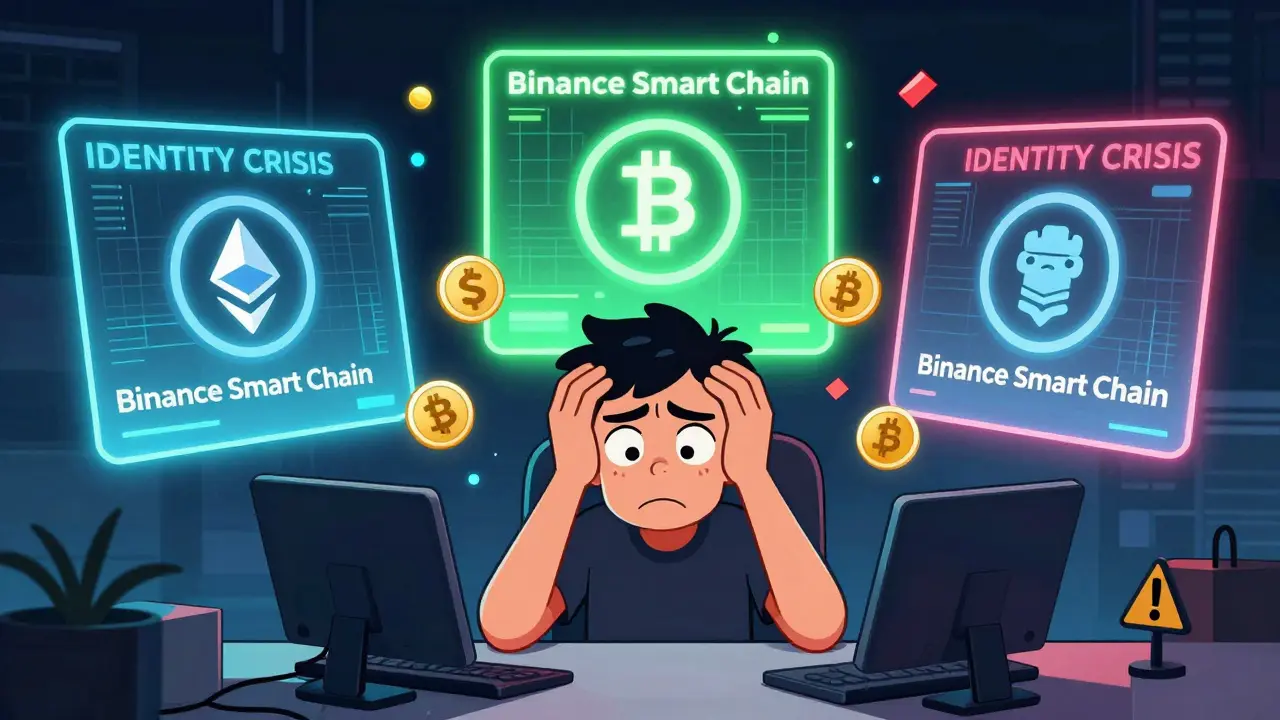
The Identity Crisis: Which BabyPepe Are You Looking At?
This is the most dangerous part of researching BabyPepe. Because anyone can create a token with a similar name, the ticker symbol BABYPEPE appears on multiple blockchains with vastly different characteristics. Confusing these tokens can lead to significant losses.
Here are the three main entities you will encounter:
- Ethereum Version (ERC-20): This is often considered the 'official' successor due to its marketing. It uses a vanity contract address starting with
0x69babe, which mirrors the original Pepe token’s address prefix (0x69). This version underwent a community takeover in May 2024 after being abandoned by its original creator. - Binance Smart Chain Version (BEP-20): This token launched via a presale platform called PinkSale. It had a notable price spike in March 2024, reaching nearly 20 times its opening price, before crashing back down. Its contract address is
0x9d6db6382444b70a51307a4291188f60d4eef205. - CoinMarketCap Listing Variant: Some data aggregators list a BabyPepe with a massive supply of 4.2 quadrillion tokens. This may refer to one of the above chains or a separate, lower-cap deployment. Always check the specific contract address.
When we talk about BabyPepe in this article, we are primarily referring to the Ethereum-based ERC-20 token, as it has the strongest connection to the original Pepe lore and the most documented community activity. However, the principles apply to all variants.
Tokenomics and Market Data
Understanding the numbers helps you gauge the risk. Let's look at the Ethereum version, which is the most prominent.
| Metric | Value |
|---|---|
| Circulating Supply | 420 Billion (420,000,000,000) BABYPEPE |
| Market Cap (Approx.) | $80,000 - $200,000 USD (Highly Volatile) |
| Blockchain | Ethereum Mainnet |
| Contract Address | 0x69babe9811cc86dcfc3b8f9a14de6470dd18eda4 |
| Trading Volume (24h) | $1,500 - $30,000 USD (Varies wildly) |
A few things stand out here. First, the market cap is tiny. While giants like Bitcoin or even Pepe have billions in market capitalization, BabyPepe operates in the micro-cap tier. This means it takes very little money to move the price up or down significantly. A single large trade can cause a 10% or 20% swing.
Second, the supply is fixed at 420 billion tokens. In meme coin culture, the number 420 is often used ironically. Unlike some cryptocurrencies that inflate their supply over time, this token has a maximum limit, which prevents further dilution from printing new coins. However, since the developers have renounced control of the contract (meaning they gave up administrative keys), no one-not even the original creators-can change the rules or pause trading.
How to Buy BabyPepe Safely
You cannot buy BabyPepe on major centralized exchanges like Coinbase or Kraken directly. These platforms generally do not list low-market-cap meme coins due to regulatory and liquidity concerns. Instead, you must use a Decentralized Exchange (DEX).
- Set Up a Wallet: You need a non-custodial wallet that supports Ethereum. MetaMask is the most popular choice. Download it as a browser extension or mobile app and secure your seed phrase offline. Never share this phrase with anyone.
- Fund Your Wallet: Buy Ethereum (ETH) on a reputable exchange like Binance or Kraken, then send it to your MetaMask wallet address. Keep enough ETH for gas fees (transaction costs on the Ethereum network).
- Connect to Uniswap: Go to the Uniswap interface (uniswap.org). Connect your MetaMask wallet. Uniswap is an automated market maker that allows you to swap ETH for other ERC-20 tokens.
- Paste the Contract Address: This is the most crucial step. Do not search for "BabyPepe" by name, as scammers often create fake tokens with the same name. Instead, paste the verified contract address:
0x69babe9811cc86dcfc3b8f9a14de6470dd18eda4. Ensure the token details match the expected supply and decimals. - Execute the Swap: Set your slippage tolerance. For volatile meme coins, you may need to set this higher (e.g., 5-10%) to ensure the transaction goes through despite rapid price changes. Review the transaction details carefully and confirm.
If you are looking at the Binance Smart Chain (BSC) version instead, you would use PancakeSwap and BNB (Binance Coin) for gas fees, using the BSC contract address mentioned earlier.
Risks and Red Flags
Before you spend a single dollar, you need to understand why experts advise extreme caution with tokens like BabyPepe.
Extreme Volatility: Data from 2024 shows that BabyPepe prices can drop by over 88% in a year. One day it might jump 97%, the next it could crash 30%. This is normal for meme coins but disastrous if you need the money soon.
Liquidity Risks: With daily trading volumes sometimes under $2,000, selling large amounts of BabyPepe can be difficult. If you try to sell too much at once, you might drive the price down so much that you lose value instantly. This is known as slippage.
No Fundamental Value: Remember, there is no company behind this. No revenue stream. No product. The value exists only because people agree it does. If the community loses interest, the token becomes worthless. Unlike stocks or bonds, there is no bankruptcy protection or investor recourse.
Scam Copies: Because the name is generic, scammers frequently launch fake BabyPepe tokens on various chains. They lure buyers with promises of high returns, then drain the liquidity pool (a 'rug pull'). Always verify the contract address against trusted sources like CoinGecko or the official website.
Is BabyPepe a Good Investment?
Let's be direct: BabyPepe is not an investment in the traditional sense. It is a speculative asset. Think of it like buying a lottery ticket rather than putting money into a savings account.
If you enjoy meme culture, follow crypto trends closely, and can afford to lose 100% of your capital, then BabyPepe might offer entertainment value. The community aspect can be fun, with active Discord servers and Twitter spaces where holders share memes and discuss the 'frog kingdom.'
However, if you are looking for long-term growth, stability, or passive income, look elsewhere. Established cryptocurrencies like Bitcoin or Ethereum have stronger networks, broader adoption, and more resilient ecosystems. Even within the meme coin space, older tokens like Dogecoin have deeper liquidity and wider recognition.
The best strategy for interacting with BabyPepe is to treat any money spent as 'fun money.' Never borrow to buy it. Never invest rent money. Only allocate funds that you are comfortable watching disappear overnight.
Is BabyPepe listed on Coinbase or Binance?
No, BabyPepe is not currently listed on major centralized exchanges like Coinbase, Binance, or Kraken. It is primarily traded on decentralized exchanges such as Uniswap (for the Ethereum version) and PancakeSwap (for the BSC version). You must use a crypto wallet to access these platforms.
What is the difference between BabyPepe and Pepe?
Pepe is the original meme coin inspired by the Pepe the Frog image, launched in 2023. BabyPepe is a derivative token created later, positioning itself as the 'son' of Pepe. While both are meme coins with no intrinsic utility, Pepe has a much larger market cap, higher liquidity, and greater brand recognition. BabyPepe is a smaller, more speculative play.
Can I mine BabyPepe?
No, BabyPepe cannot be mined. It is an ERC-20 or BEP-20 token, meaning it was pre-mined (all tokens were created at launch) and distributed through sales, presales, or liquidity pools. You can only acquire it by swapping other cryptocurrencies for it on a decentralized exchange.
Why did BabyPepe have a community takeover?
The Ethereum version of BabyPepe was originally abandoned by its creator. In May 2024, the community stepped in to take over the project, renaming it and revitalizing its marketing efforts. This 'community takeover' (CTO) is common in meme coin culture, where enthusiasts try to rescue abandoned projects to keep the meme alive.
Is BabyPepe a scam?
While the primary Ethereum and BSC versions have transparent contract addresses and locked liquidity (reducing the risk of a developer rug pull), the ecosystem is rife with scams. Fake tokens with the same name exist on multiple chains. Additionally, because the token has no fundamental value, losing money is a high probability regardless of whether the team is honest. Always verify contract addresses and assume high risk.