
The Quick Facts: BTC.ℏ at a Glance
Before we get into the weeds, let's look at the hard numbers. BTC.ℏ isn't a standalone blockchain; it's actually a token running on the Hedera Hashgraph network. This distinction is huge because it changes how the coin actually functions under the hood.
| Feature | Bitcoin (BTC) | Bitcoin.ℏ (BTC.ℏ) |
|---|---|---|
| Consensus Mechanism | Proof-of-Work (PoW) | Hashgraph (aBFT) |
| Transaction Speed | ~7 Transactions Per Second | ~10,000 Transactions Per Second |
| Energy Use (per txn) | ~703 kWh | ~0.000003 kWh |
| Max Supply | 21 Million | 21 Million |
| Network Layer | Independent Blockchain | Hedera Hashgraph Network |
How It Actually Works: The Tech Stack
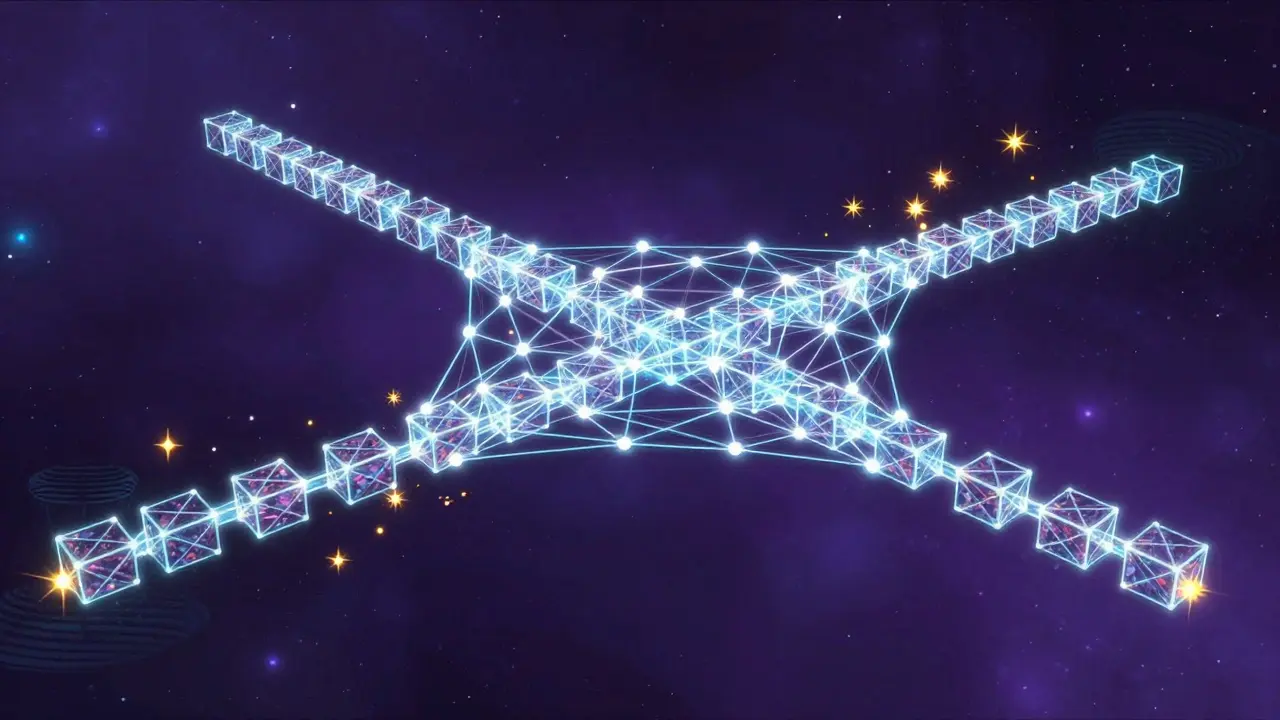
To understand Bitcoin.ℏ, you have to stop thinking about "blocks" and start thinking about "graphs." While traditional Bitcoin uses a linear chain of blocks, BTC.ℏ uses a Directed Acyclic Graph (DAG). This architecture allows the network to process transactions asynchronously, meaning it doesn't have to wait for the entire network to agree on one block before moving to the next.
This shift to the aBFT (asynchronous Byzantine Fault Tolerance) consensus mechanism is what allows the coin to hit 10,000 transactions per second. If you've ever tried to send Bitcoin during a bull market and watched your transaction hang for an hour, you know why this matters. In contrast, users of BTC.ℏ have reported near-instant settlement times, making it far more viable for buying a coffee or paying for a digital service in real-time.
Security is another area where the project tries to leapfrog the original. BTC.ℏ integrates quantum-resistant encryption protocols. Why? Because the rise of quantum computing poses a theoretical threat to the Elliptic Curve Cryptography that protects most current wallets. By baking in this resilience now, the developers are aiming for a "long-term" survival strategy.
The Green Argument: Solving the Energy Crisis
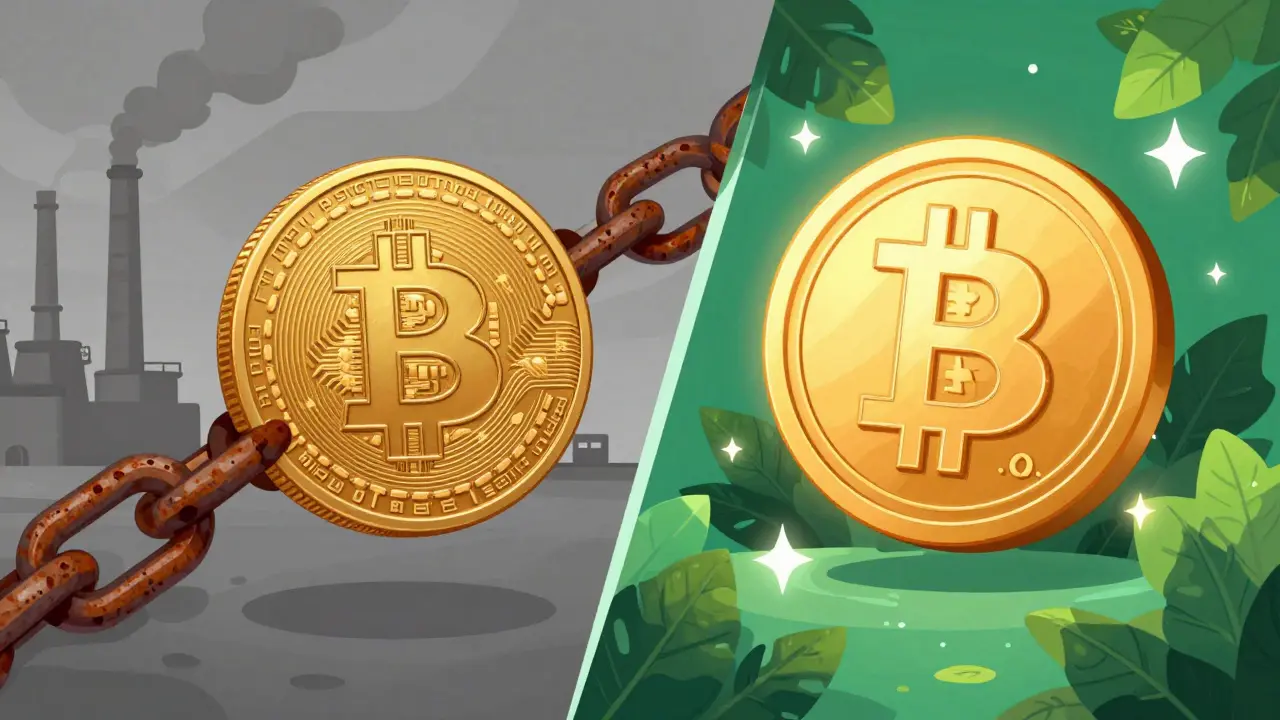
The biggest criticism of Bitcoin has always been its carbon footprint. Mining requires massive warehouses of hardware running 24/7. BTC.ℏ takes a completely different path. By utilizing the Hedera network, the energy cost per transaction drops to roughly 0.000003 kWh. To put that in perspective, that's a 234 million percent reduction in energy consumption compared to Bitcoin 1.0.
This makes it a magnet for environmentally conscious investors. In a regulatory climate where the European Union's MiCA (Markets in Crypto-Assets) regulations are pushing for more sustainable finance, having a "green" version of a scarce asset is a strategic move. It effectively removes the "guilt factor" from holding a coin that mimics Bitcoin's scarcity model.
Market Reality: The Good, the Bad, and the Ugly
Now, let's be real: technical specs aren't everything. In the crypto world, liquidity and adoption are king. As of late 2024/2025, BTC.ℏ is a micro-cap project. With a market cap around $3.03 million and a ranking near #66, it is a tiny fish in a massive pond compared to Bitcoin's trillion-dollar dominance.
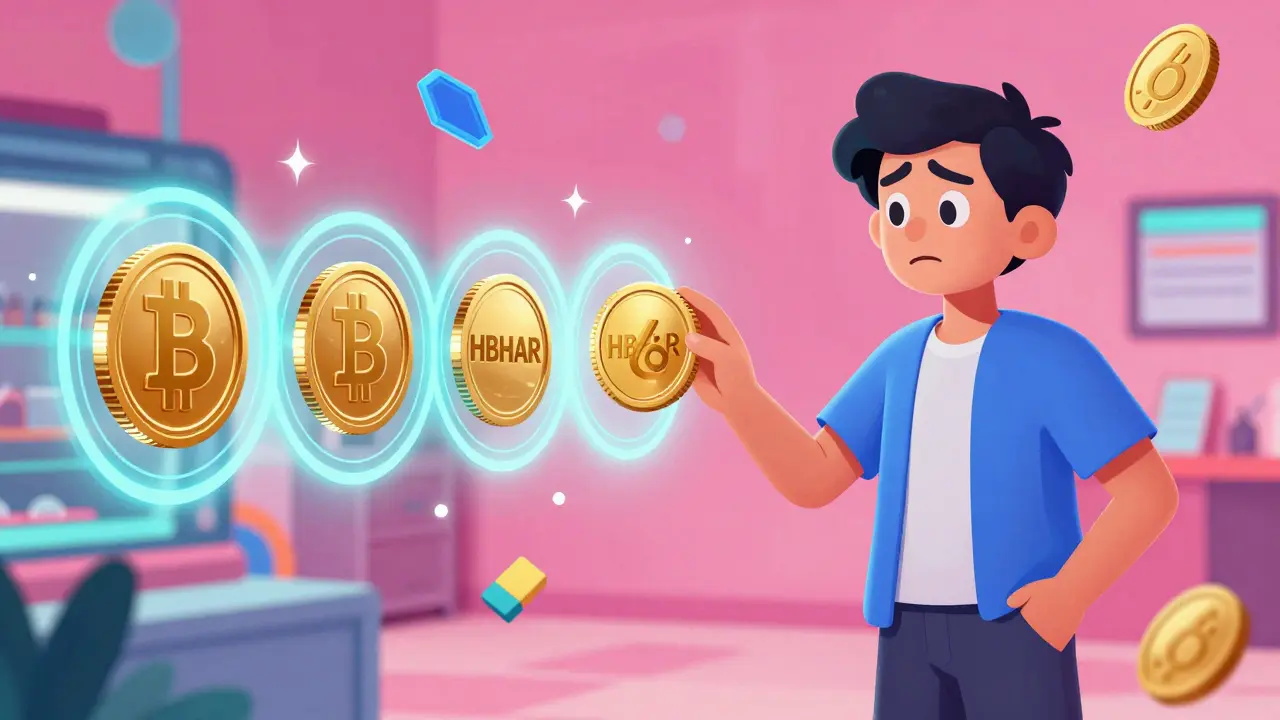
The most glaring issue is accessibility. You won't find this coin on every major exchange. Many users have complained about the "hoops" they have to jump through just to buy it. For example, you often can't just trade USD for BTC.ℏ. Instead, you might have to buy HBAR (the native Hedera coin) first, move it to a compatible wallet, and then swap it for BTC.ℏ on a decentralized exchange (DEX). This friction kills mainstream adoption.
There's also the "branding" debate. Some critics on Reddit dismiss it as a meme coin or a "copycat" because it borrows the Bitcoin name to gain instant recognition. While the utility is objectively higher in terms of speed, it doesn't have the 14,000+ node network that makes Bitcoin nearly impossible to shut down. You're essentially trading some decentralization for a lot more speed.
Getting Started: How to Use and Store BTC.ℏ
If you're decided on trying this out, you can't just use a standard Bitcoin wallet. Since it's a token on the Hedera network, you need a wallet that speaks that language.
- Choose a Hedera-Compatible Wallet: The most common recommendations are HashPack or Freewallet.
- Acquire HBAR: Since most DEXs pair BTC.ℏ with HBAR, you'll need some of the native network tokens to facilitate the swap.
- Use a DEX: Look for decentralized exchanges that support the Hedera ecosystem. Be careful with liquidity; some users have reported taking several days to sell large amounts of tokens because there weren't enough buyers on the platform.
- Secure Your Keys: As with any crypto, never share your seed phrase. Use a hardware wallet if you're planning to hold a significant amount for the long term.
Is It a Worthwhile Investment?
Whether BTC.ℏ is a "gem" or a "trap" depends on what you value. If you believe that sustainability and transaction speed are the only things that matter for the future of payments, the value proposition is strong. The ability to process 500 microtransactions for less than five cents is a game-changer for developers building apps.
However, if you view Bitcoin as a "digital gold" primarily because of its absolute decentralization and massive network effect, BTC.ℏ might feel like a compromise. It is a utility tool, not a global reserve asset (at least not yet). The lack of institutional inflows-like the spot ETFs seen with Bitcoin-means the price is driven almost entirely by retail speculation and a small community of sustainability advocates.
Is Bitcoin.ℏ (BTC.ℏ) the same as Bitcoin (BTC)?
No. While it shares the same name and the 21 million supply cap, BTC.ℏ is a separate token that runs on the Hedera Hashgraph network. It does not use Proof-of-Work mining like the original Bitcoin does.
Why is BTC.ℏ considered more environmentally friendly?
It uses the Hashgraph consensus mechanism instead of mining. This allows it to process transactions with a tiny fraction of the electricity-approximately 0.000003 kWh per transaction compared to Bitcoin's 703 kWh.
Where can I buy BTC.ℏ?
It is not available on all major centralized exchanges. You generally need to use decentralized exchanges (DEXs) or specific compatible platforms, often requiring you to own HBAR first to perform a swap.
What wallet should I use for BTC.ℏ?
You must use a Hedera-compatible wallet. Popular options include HashPack and Freewallet, as standard Bitcoin wallets cannot interact with the Hashgraph network.
Is BTC.ℏ secure against quantum computers?
Yes, one of its key technical features is the inclusion of quantum-resistant encryption protocols designed to protect the network from future threats posed by quantum computing.
The obsession with "green" crypto is just another layer of social engineering by the globalist elite to funnel us into centralized ledgers like Hedera. If you actually examine the aBFT consensus, it's far more susceptible to governance capture than the raw, chaotic beauty of PoW. Most people are too blind to see that trading decentralization for speed is a Faustian bargain. We are essentially moving from a fortress to a glass house because the air conditioning is better. Truly pedestrian thinking to believe a token on another network is an "evolution" of the original sovereign asset.
seems like a lot of hoops to jump through just to buy some
Oh honey, let me enlighten you on the sheer audacity of calling a Hedera token "Bitcoin" when it lacks the fundamental Byzantine Fault Tolerance of a truly distributed peer-to-peer network. We are talking about a layer-2 adjacent asset utilizing a gossip-about-gossip protocol which, while mathematically elegant in a vacuum, completely obliterates the trustless ethos of Nakamoto's original whitepaper. It is utterly precious that retail investors think
Wait, the energy reduction is actually staggering! Imagine the impact if we can shift the paradigm of scarcity without burning down the planet! This is the kind of breakthrough that can actually bring the next billion people into the ecosystem! Let's focus on the potential for growth and accessibility!
who cares about the energy anyway just want to see the price moon
It is simply wrong to use the name Bitcoin for something that isn't Bitcoin. This is just dishonest marketing. People should know the difference between a real coin and a token. It is basic logic.
USA needs to lead the way in this tech!!! 🇺🇸🇺🇸 Get rid of the slow stuff and go full speed! 🚀🚀🚀 Lets make the dollar digital with this stuff!! 🦅💰
It is very interesting to see how different regions view the balance between speed and decentralization. In my experience, the utility aspect is what attracts a lot of new developers who are just starting out!
this whole thing is a joke lol imagine swapping hbar just to hold a pretend bitcoin while the real wolves are eating the market
The government is probably behind this. They want us on Hedera so they can track every single cent we spend. Don't trust the "green" lie.
totally get why the friction of buying is a bummer but the quantum resistance sounds super cool for the long haul
The sheer audacity of the nomenclature is practically a crime against linguistic precision. 🙄 It's a token, not a coin, and pretending otherwise is an exercise in futility. 💅
I believe that providing clear guidance on the use of HashPack and Freewallet is the most helpful approach for those who are hesitant to enter the Hedera ecosystem.
It's a decent trade-off for some people. Not everyone needs a 14,000 node network if they're just doing micro-payments for apps. It's about finding the tool that fits the job.
Love seeing the shift toward sustainability! 🌿 Every little bit helps the planet and the tech community! 🌍✨
I am truly moved by the throught of a more eco-friendly futture for us all... even if the process to buy it is a bit confusingg!
Just vibing with the low energy use. Nice.
The quantum-resistant part is the most intriguing bit here. It makes me wonder how other projects will pivot once that threat becomes real.
Let's all try to keep the conversation positive. Whether you like the tech or not, it's an interesting attempt to solve the energy problem!