
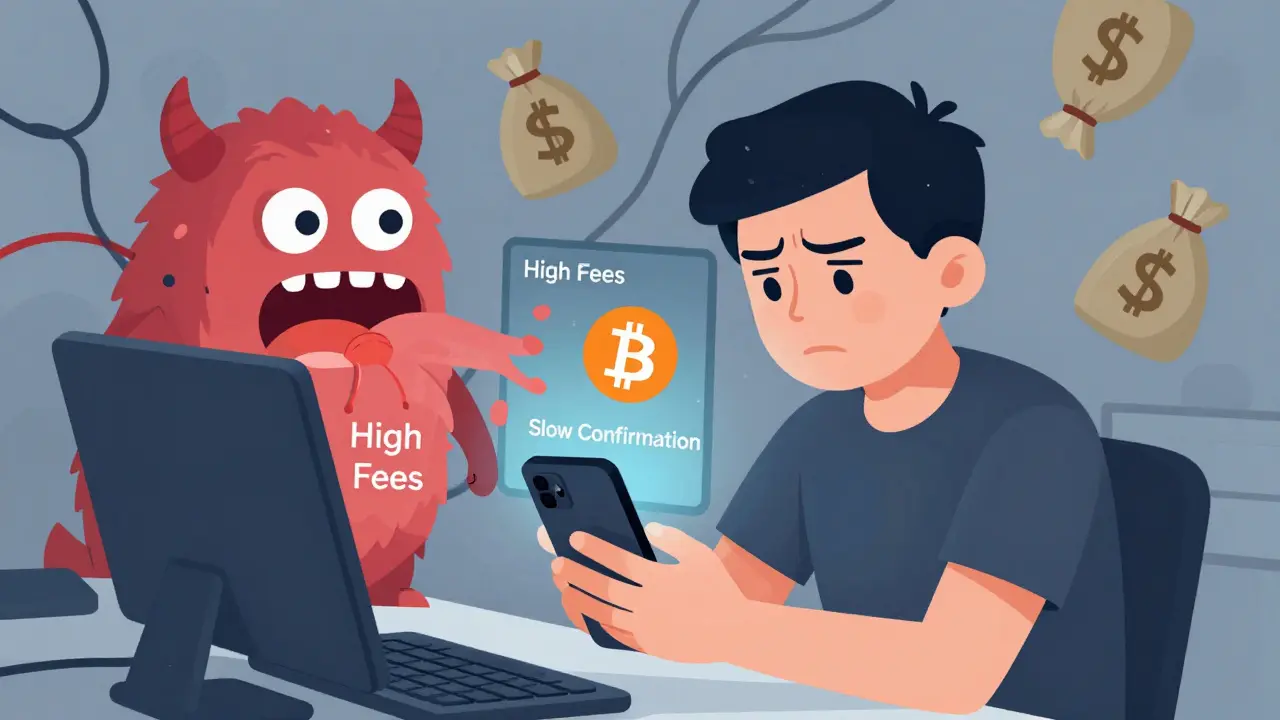
Have you ever tried to pay for something online with Bitcoin, only to watch the transaction fee eat up half your profit? Or maybe you’ve been stuck waiting hours for a confirmation while the price of your asset swings wildly? That friction is exactly what Cryptomus is trying to fix. Launched in 2022, this isn’t just another speculative coin; it’s a full-stack digital payment platform designed to make moving money as easy as sending an email.
The native token, CRMS, sits at the center of this ecosystem. But before you buy or stake any tokens, you need to understand how the platform actually works, where the token fits in, and whether it has real utility beyond hype. Let’s break down what Cryptomus is, how the CRMS token functions, and what you should know about its market status in 2026.
More Than Just a Coin: The Cryptomus Ecosystem
When people ask "what is Cryptomus," they often expect a simple answer like "it’s a payment coin." But that misses the bigger picture. Cryptomus is primarily a multi-functional digital payment platform and crypto exchange. Think of it as a bridge between traditional finance and the blockchain world. It allows individuals and businesses to send, receive, and manage assets without the usual headaches of complex wallet setups or high intermediary fees.
The platform operates on a proprietary blockchain infrastructure. This means they aren’t relying solely on congested networks like Ethereum for every single micro-transaction. Instead, they’ve built a system focused on speed and scalability. For a business owner in Hobart or a freelancer in Berlin, this translates to faster payouts and lower costs. The platform supports a wide range of cryptocurrencies, including Bitcoin (BTC), Litecoin (LTC), Solana (SOL), and stablecoins like USDT and DAI. You don’t always need to convert everything into one specific token to use the service.
What Does the CRMS Token Actually Do?
This is the most critical part for investors. A token without utility is just a number on a screen. The CRMS token has several defined roles within the Cryptomus ecosystem:
- Transaction Fees: Users can pay network fees using CRMS, often at a discounted rate compared to other currencies.
- Staking Rewards: Holders can lock their tokens to help secure the network and earn passive income.
- Governance: Token holders get a say in the future of the project. You can vote on proposals that affect platform upgrades, fee structures, and new feature integrations.
- Platform Utility: Access to certain premium features or higher limits may require holding or staking CRMS.
Additionally, there are ways to earn CRMS without buying it upfront. The platform features a Rewards Center where users complete tasks, participate in giveaways via their Telegram channel, or refer friends. If you use Cryptomus to pay merchants, you might even get cashback in CRMS. This creates a circular economy where the token has demand drivers beyond just speculation.
Security: How Safe Is Your Money?
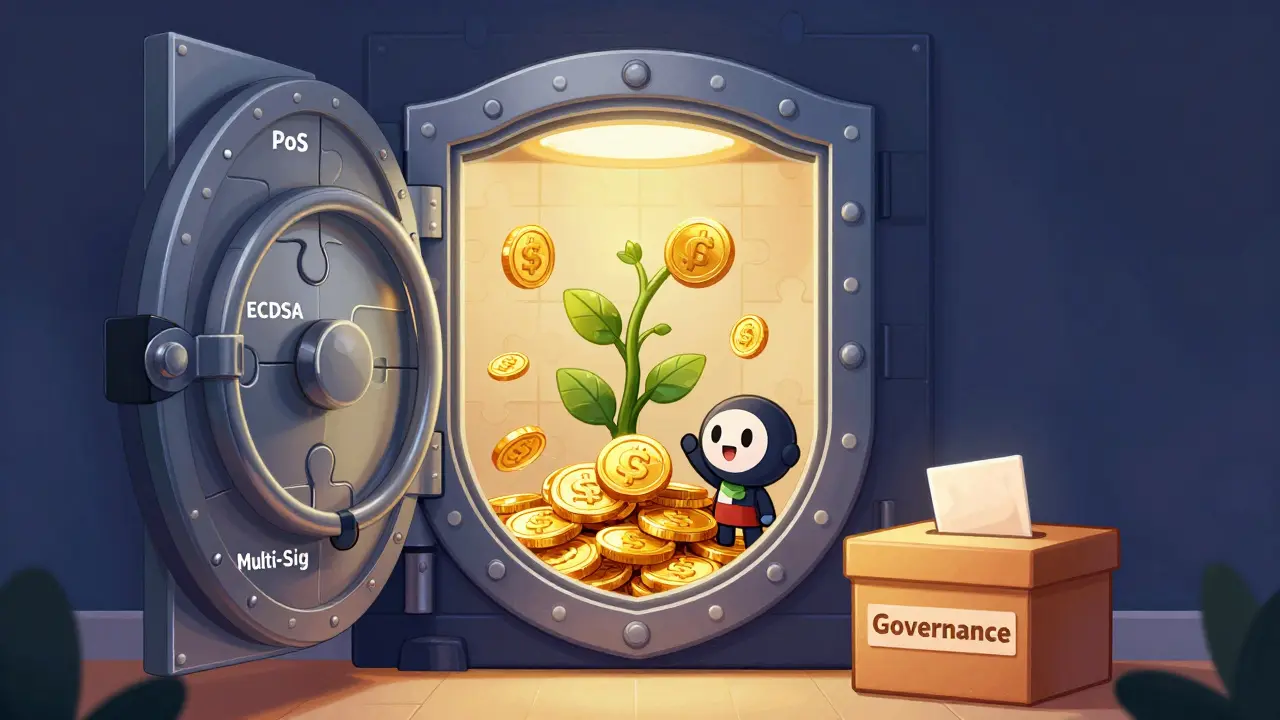
In crypto, security isn’t a feature; it’s a requirement. Cryptomus uses a Proof of Stake (PoS) consensus model. Validators confirm transactions and maintain network integrity. If a validator acts maliciously or fails to perform, they face "slashing"-a penalty where they lose part of their staked assets. This economic disincentive keeps bad actors out.
On the user side, the platform employs Elliptic Curve Digital Signature Algorithm (ECDSA) for authentication. This is the same standard used by major blockchains like Bitcoin and Ethereum, ensuring your digital signatures are cryptographically secure. They also offer multi-signature wallets, which require multiple keys to authorize a transaction. This is huge for businesses or joint accounts because it prevents a single compromised key from draining funds. Regular audits are conducted to check for vulnerabilities, though independent audit reports should always be reviewed by users for transparency.

Trading and Market Status in 2026
Let’s talk numbers. As of March 2026, the CRMS token trades around $0.61-$0.63 USD. However, there’s a catch: trading volume on major external exchanges is effectively zero. Most trading happens directly on the Cryptomus platform itself. The token was initially valued at $1 upon introduction but has seen minimal volatility recently, with daily changes often under 1%.
| Feature | Details |
|---|---|
| Launch Year | 2022 (Token fair launch Oct 2021) |
| Consensus Mechanism | Proof of Stake (PoS) |
| Supported Assets | BTC, SOL, LTC, USDT, DAI, and 18+ others |
| P2P Trading Fee | 0.1% for takers, 0% for makers |
| Major Exchange Listing | Not listed on Binance/Coinbase (as of early 2026) |
| Primary Use Case | Payments, Staking, Governance |
The lack of listing on giants like Binance means liquidity is limited. If you want to sell large amounts of CRMS quickly, you might face slippage or delays. This is typical for mid-tier utility tokens that rely heavily on their own internal ecosystem rather than external speculators. For long-term believers in the payment platform’s growth, this might not matter. For day traders, it’s a significant hurdle.
Who Should Use Cryptomus?
Cryptomus targets two main groups: consumers who want cheaper payments and businesses that need reliable crypto integration.
For Consumers: If you frequently send money internationally, the P2P exchange feature is valuable. It connects buyers and sellers directly, using escrow services to protect both parties. You can trade using various local payment methods, avoiding the need to go through a centralized bank first. The spot trading interface is also simplified, offering market and limit orders without the clutter found on professional trading platforms.
For Businesses: The API tools allow e-commerce sites to accept crypto payments seamlessly. Developers can build decentralized applications (dApps) on the network. The ability to settle in stablecoins like USDT helps merchants avoid the volatility of Bitcoin or Ethereum while still capturing the efficiency of blockchain transfers.
Pros and Cons: A Balanced View
No platform is perfect. Here’s what stands out:
Pros:
- All-in-One Solution: Wallet, exchange, staking, and payments in one app.
- Low Fees: Competitive rates, especially for P2P makers.
- User-Friendly: Designed for non-technical users, not just coders.
- Multi-Currency Support: No forced conversion to a single gas token.
Cons:
- Limited Liquidity: Low trading volume outside the platform.
- Exchange Listings: Absent from top-tier global exchanges.
- Adoption Stage: Still growing its merchant base compared to established players.
Getting Started with Cryptomus
If you’re interested in trying the platform, start small. Create an account and verify your identity (KYC), as this is required for fiat on-ramps and higher withdrawal limits. Fund your wallet with a supported cryptocurrency like USDT or BTC. From there, you can explore the P2P marketplace to swap assets or try staking some CRMS if you acquire it. Always enable two-factor authentication (2FA) immediately. In crypto, convenience never outweighs security.
Is Cryptomus (CRMS) a good investment?
Whether CRMS is a "good" investment depends on your strategy. If you believe in the growth of crypto payments and plan to use the platform actively, the token offers utility and staking rewards. However, due to low liquidity and absence from major exchanges, it carries higher risk for pure speculation. It is better suited for long-term ecosystem participants than short-term traders.
Where can I buy CRMS tokens?
As of 2026, CRMS is primarily traded on the Cryptomus platform itself. It is not listed on major centralized exchanges like Binance or Coinbase. You can typically acquire it by swapping other supported cryptocurrencies (like USDT or BTC) within the Cryptomus wallet or through their P2P marketplace.
How does Cryptomus ensure security?
Cryptomus uses a Proof of Stake consensus mechanism with slashing penalties for validators. On the user side, it employs ECDSA encryption, multi-signature wallets, and regular security audits. Users are encouraged to use strong passwords and enable 2FA for account protection.
What are the fees for using Cryptomus?
Fees vary by service. P2P trading charges 0.1% for takers and is free for makers. Spot trading has competitive rates, and using CRMS for transaction fees often provides discounts. Withdrawal fees depend on the specific blockchain network being used (e.g., Bitcoin vs. Solana).
Can I stake CRMS tokens?
Yes, staking is a core feature. By locking your CRMS tokens, you help secure the network and earn staking rewards. This also grants you governance rights, allowing you to vote on platform decisions. Staking yields can vary based on network participation and total locked supply.