
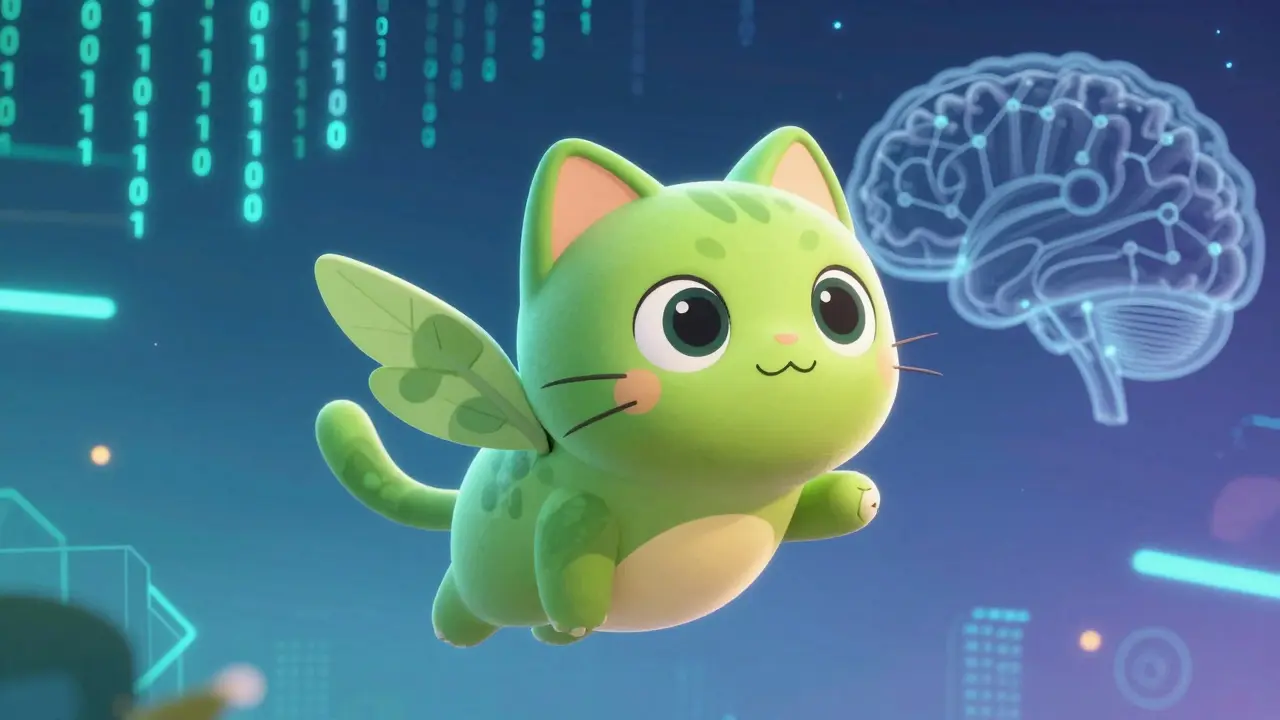
Have you ever heard of a cryptocurrency designed by an artificial intelligence? It sounds like science fiction, but it’s the exact pitch behind Flying Avocado Cat, also known as FAC. This isn't just another random dog or cat coin popping up on social media. Its origin story ties directly to xAI's Grok system, the conversational AI developed by Elon Musk’s company. If you are looking at your portfolio and wondering if this micro-cap token is a hidden gem or a total trap, you are not alone. The crypto space is flooded with meme coins, but FAC stands out because of its unique branding narrative. Let’s break down what this token actually is, where it came from, and whether it has any real value beyond the joke.
The Origin Story: When AI Meets Meme Culture
To understand FAC, you have to look at who created it. The project was launched in November 2023 by an anonymous founder who goes only by the name "V". According to profiles on major tracking sites like CoinMarketCap and CoinGecko, V describes themselves as an early Tesla investor and a huge fan of Elon Musk. But here is the twist: V didn’t come up with the character design or the name alone. They used beta access to Grok, xAI’s large language model, to brainstorm the concept.
The story goes that V’s son suggested creating a "fantasy animal" meme token. V fed this prompt into Grok, and the AI proposed the "flying avocado cat" character. This specific combination became the identity of the token. It is important to note that neither Elon Musk nor xAI officially endorsed or created this coin. The connection is purely narrative-a marketing hook built around the idea that an AI helped birth the mascot. For many investors, this AI-assisted origin is the main selling point, distinguishing it from thousands of other generic meme coins.
Technical Specs: What Is Under the Hood?
If you strip away the funny mascot and the AI backstory, what are you actually buying? Technically, Flying Avocado Cat is a standard ERC-20 token running on the Ethereum blockchain. This means it follows the same technical rules as most other tokens on Ethereum. It is simple, transparent, and lacks complex mechanisms.
- Total Supply: Fixed at 10,000,000 FAC. No new tokens can be minted.
- Circulating Supply: Approximately 9.16 million FAC (about 91.6% of the total).
- Tax: Zero tax on transfers. You don't pay extra fees for reflections or burns when you send tokens.
- Holders: Around 3,290 addresses hold FAC, according to recent data.
Because there is no tax, the cost of holding or transferring FAC is limited to standard Ethereum gas fees. These fees vary based on network congestion but are separate from the token itself. The fixed supply of 10 million is relatively small compared to some meme coins that have supplies in the trillions, which can sometimes make price movements appear more dramatic in percentage terms, even if the actual dollar volume is low.
Price History and Market Reality
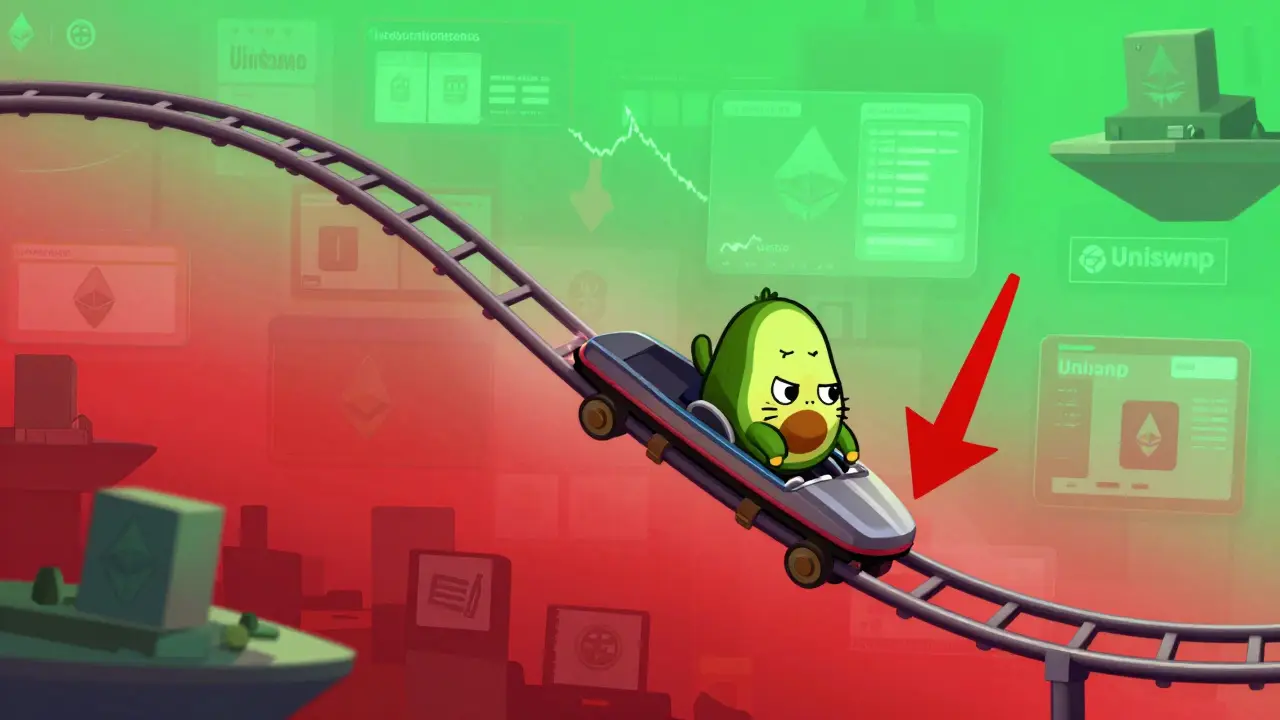
Let’s talk numbers, because they tell a stark story. Like many meme coins, FAC experienced a massive spike followed by a severe crash. In September 2024, specifically on September 21, the token hit an all-time high (ATH) of roughly $2.08. At that moment, hype was high, and buyers were flooding in.
Fast forward to late April and May 2026, and the picture looks very different. Data from CoinGecko and Bybit shows the market capitalization hovering between $130,000 and $250,000. This places FAC firmly in the "micro-cap" category, ranking somewhere between #4,500 and #5,500 globally. The price dropped by over 99% from its peak. As of mid-May 2026, the token saw an all-time low (ATL) of about $0.015. While there are occasional daily spikes-sometimes jumping 50% in 24 hours due to low liquidity-the overall trend has been downward since the 2024 peak.
| Metric | Value | Source Context |
|---|---|---|
| All-Time High (Price) | $2.08 | Reached Sept 21, 2024 |
| All-Time Low (Price) | $0.01523 | Recorded May 25, 2026 |
| Market Cap Range | $133k - $248k | Varies by tracker (CoinGecko vs Bybit) |
| Global Rank | #4,500 - #5,500 | Micro-cap segment |
| 24h Volume | $2k - $60k | Highly variable; thin liquidity |
Where and How to Buy FAC
You won’t find Flying Avocado Cat listed on major centralized exchanges like Binance’s main trading platform. Instead, it lives primarily on decentralized exchanges (DEXs). The most active trading pair is FAC/WETH on Uniswap v2.
If you want to buy FAC, you generally need to follow these steps:
- Set up a Wallet: Use a self-custody wallet like Trust Wallet or MetaMask. Make sure you secure your seed phrase.
- Get Ethereum: Buy ETH on a centralized exchange (like Binance or Coinbase) and withdraw it to your wallet. You need ETH to pay for gas fees and to swap for FAC.
- Connect to Uniswap: Go to the Uniswap interface and connect your wallet.
- Find the Contract: Since FAC is not always auto-listed, you may need to paste the official smart contract address. Always verify this address on trusted sources like CoinMarketCap to avoid scams.
- Swap: Trade your ETH for FAC. Be aware of slippage settings, as liquidity can be thin.
Some smaller centralized platforms like XT.com and LCX also track FAC prices, but the bulk of the trading volume happens on-chain via DEXs. This means you are responsible for managing your own security and transaction costs.
Risks You Need to Know
Investing in FAC comes with significant risks that go beyond normal market volatility. First, consider the liquidity. With daily volumes often under $10,000, buying or selling large amounts can drastically move the price against you. You might see a great price on paper but fail to execute a trade at that level.
Second, the anonymity of the founder "V" raises questions about transparency. There is no public team, no audited code references prominently displayed, and no detailed whitepaper outlining long-term utility. The token relies entirely on community sentiment and the novelty of its AI origin story. If interest fades, the price could drop further, as seen in the decline from 2024 to 2026.
Finally, remember that this is a pure memecoin. It does not offer staking rewards, governance rights, or integration with other DeFi protocols. Its value is derived solely from speculation. In the world of crypto, meme coins are often described as "lottery tickets"-you might win big if the narrative catches fire again, but statistically, most lose value over time.
Conclusion: Is FAC Worth Your Attention?
Flying Avocado Cat is a fascinating case study in modern crypto marketing. It leverages the buzz around AI and Elon Musk without having any direct technological link to those entities. For collectors of niche meme coins or those interested in the intersection of AI and crypto culture, FAC offers a unique entry point. However, for serious investors looking for stability or utility, the lack of fundamentals, thin liquidity, and extreme historical volatility make it a high-risk asset. Always do your own research and never invest money you cannot afford to lose.
Is Flying Avocado Cat (FAC) a scam?
There is no evidence that FAC is a direct scam, such as a rug pull, since the contract is live and tradable. However, it is a high-risk speculative asset. The anonymous nature of the founder and the lack of utility mean there is no guarantee of future value. Treat it as a gamble rather than an investment.
Does Elon Musk own Flying Avocado Cat?
No. Elon Musk does not own or endorse FAC. The token’s creator, "V", claims to be a fan of Musk and used Musk’s AI tool, Grok, to generate the idea. This is a marketing narrative, not an official partnership.
Can I buy FAC on Binance?
You cannot buy FAC directly on Binance’s central exchange. However, you can use the Binance Web3 Wallet feature to swap ETH for FAC on decentralized exchanges like Uniswap. You must first fund your wallet with ETH.
What is the total supply of FAC?
The total supply of Flying Avocado Cat is fixed at 10,000,000 tokens. Approximately 91.6% of this supply is currently in circulation.
Why did FAC’s price drop so much?
Like many meme coins, FAC experienced a hype cycle. After reaching an all-time high in September 2024, interest waned, leading to a sell-off. With no underlying utility or revenue stream, the price corrected significantly, dropping over 99% from its peak.