
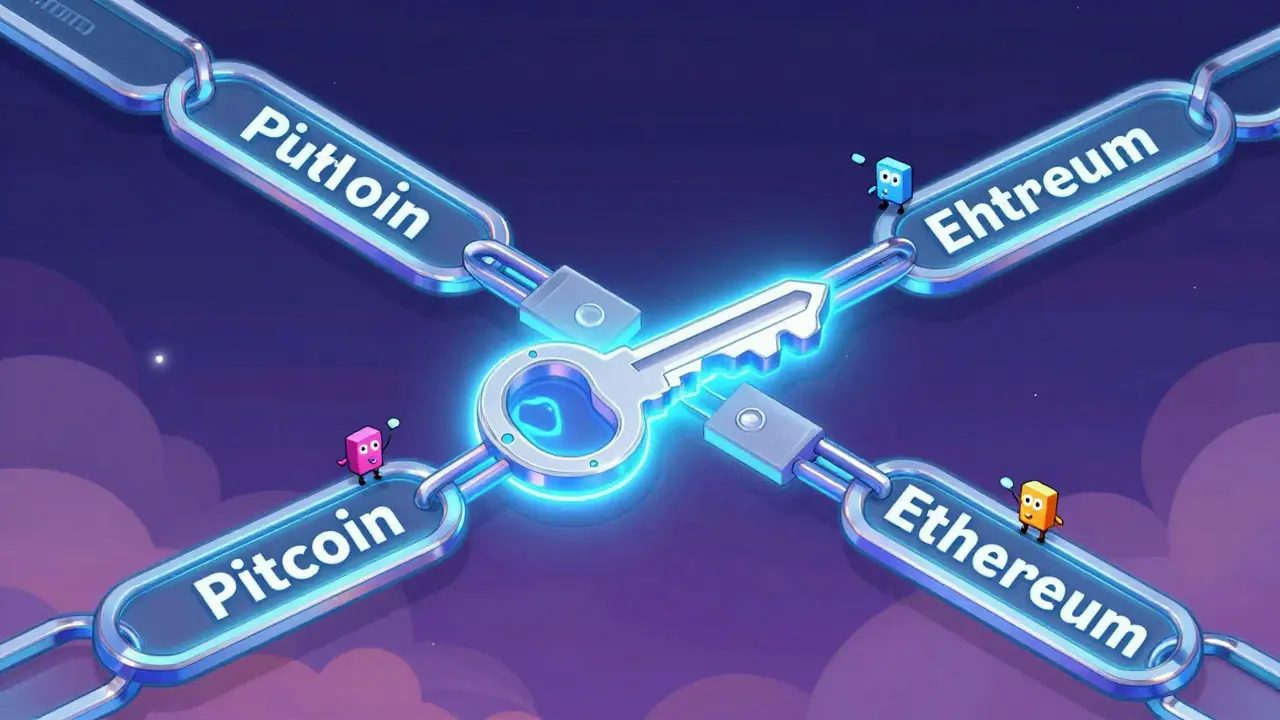
Fusion (FSN) was once positioned as a groundbreaking solution for cross-chain finance, but today it exists in a state of near-total stagnation. Launched in 2018, the Fusion blockchain promised to solve one of crypto’s biggest problems: how to move value freely between different blockchains without trusted intermediaries. Its core innovation, Distributed Control Rights Management (DCRM), allowed users to securely lock assets on one chain and trigger their release on another-without ever exposing private keys. At its peak, FSN hit $12.60. Now, it trades around $0.00666. This isn’t just a price drop. It’s the collapse of a project that lost its way.
How Fusion Was Supposed to Work
Fusion wasn’t built to be another meme coin or simple payment token. It was designed as infrastructure. Think of it like a universal adapter for blockchains. If you owned Bitcoin on the Bitcoin network and wanted to use it as collateral for a loan on Ethereum, Fusion’s DCRM technology would let you do that without needing a centralized bridge or wrapped tokens. The system split private keys across dozens of independent nodes. No single node ever had the full key. That meant even if one node was hacked, your assets stayed safe. It was elegant, and it worked in theory.Fusion also introduced two unique features: Quantum Swaps and Time Locks. Quantum Swaps let you trade one asset for another across chains in a single transaction. Time Locks allowed you to set conditions like, ‘Release 100 FSN to John only if he’s alive on January 1, 2027.’ These weren’t gimmicks-they were serious tools for DeFi. A 2022 case study showed a $50,000 loan split among five investors, with repayments automatically distributed based on pre-set rules. That kind of automation was years ahead of what most platforms offered at the time.
Why Fusion Failed to Gain Traction
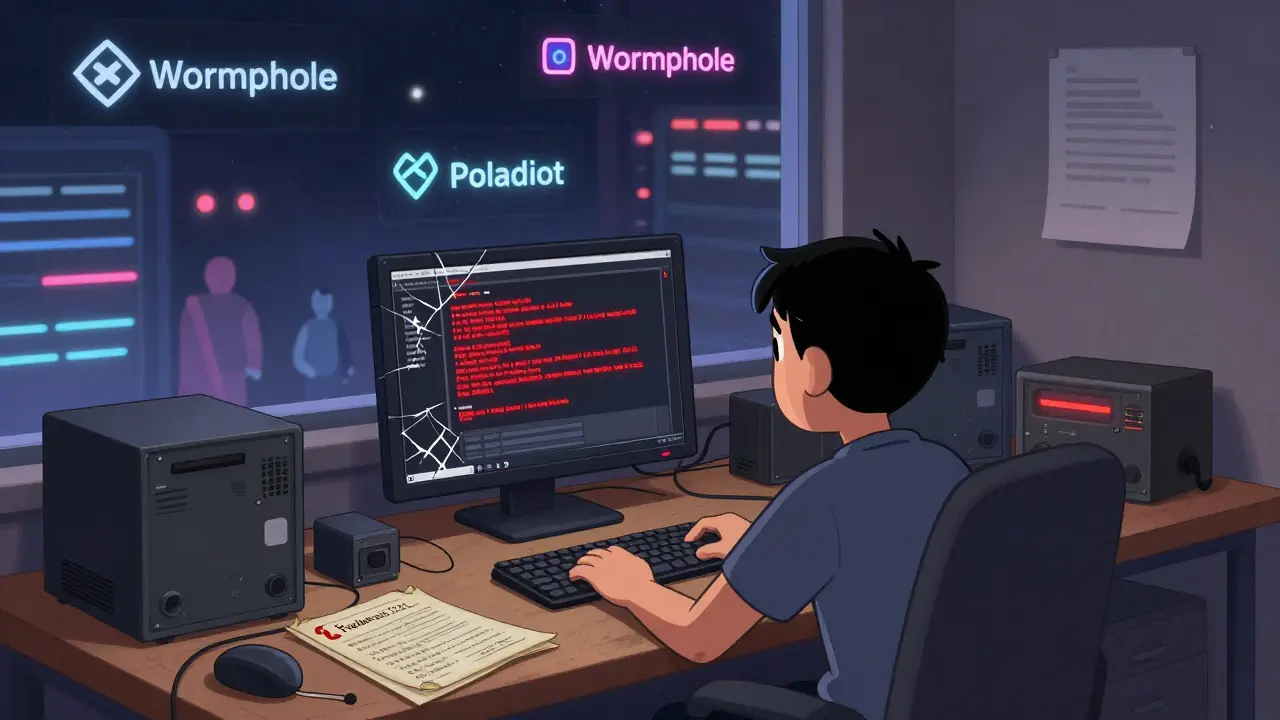
Technical brilliance doesn’t matter if no one uses it. By late 2022, Fusion’s ecosystem had all but vanished. As of October 2023, only 17 decentralized apps ran on Fusion. Compare that to Polkadot’s 600+ and Cosmos’s 250+. Why? Because Fusion asked too much from users.Running a Fusion node required Linux, 4GB of RAM, and 100GB of SSD storage. The documentation, last updated in March 2022, was full of broken code samples. Developers reported it took an average of 37 hours to get set up-nearly double the time needed for Ethereum. Meanwhile, competitors like Wormhole and Multichain offered simple, plug-and-play bridges that worked with zero setup. Why would a DeFi project choose Fusion when they could connect to 15 chains in five minutes using a competitor?
Staking was another failure point. Users who locked up FSN in 2020 expected 20% annual returns. But the staking portal stopped working in mid-2022. No updates. No explanations. Reddit threads like ‘Whatever happened to Fusion (FSN)?’ have hundreds of comments, mostly from people who lost access to their staked coins. Trustpilot reviews average just 2.1 out of 5, with users complaining about unanswered support tickets and abandoned GitHub repositories.
Current State: Technically Alive, Practically Dead
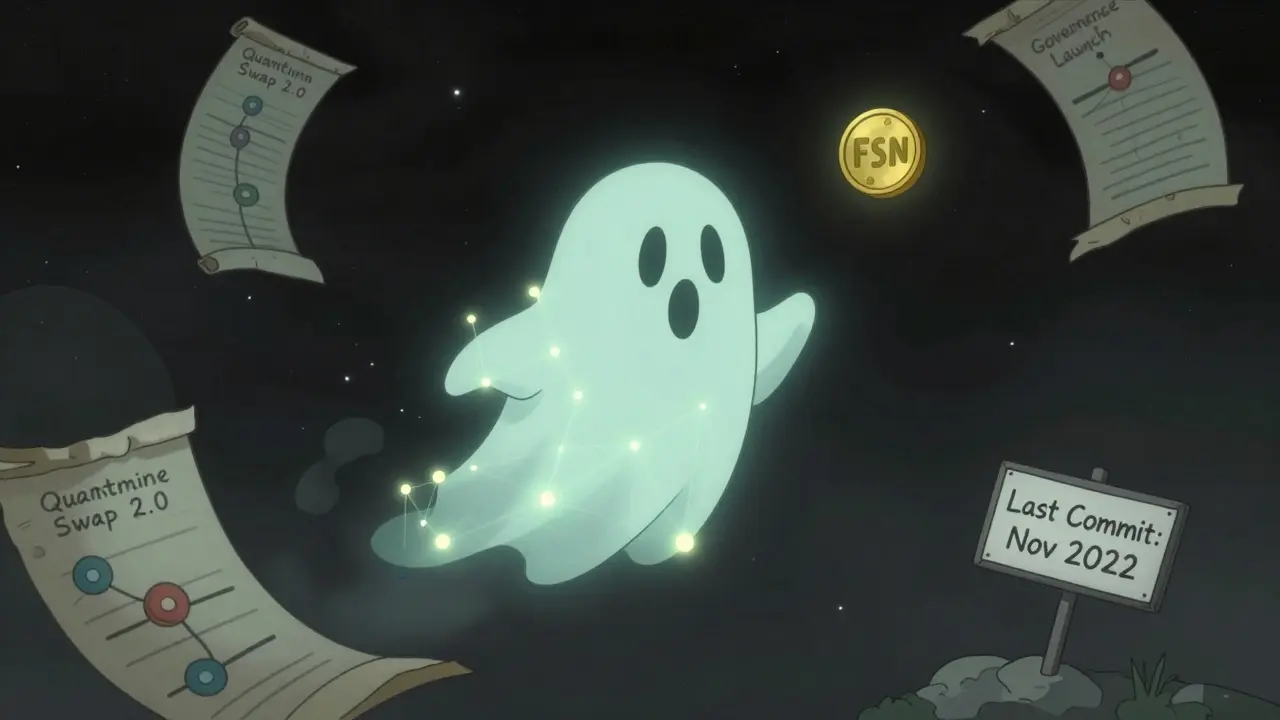
The last commit to Fusion’s main GitHub repository was on November 17, 2022. The official website hasn’t been meaningfully updated since April 2023. The Telegram group, which once had over 15,000 members, now has 12 active users. The Discord server’s last message was in November 2022. The team hasn’t released a roadmap update since Q2 2022, when they promised ‘Quantum Swap 2.0’-a feature that never arrived.Market data tells the same story. FSN’s market cap has dropped 99.95% from its all-time high. Trading volume hovers around $120,000 daily, concentrated on three obscure exchanges: Gate.io, Bitrue, and Hotcoin. CoinGecko ranks FSN at #1,387. It’s not even in the top 1,000 most traded coins anymore.
Even its technical advantages are fading. Fusion’s EVM compatibility, once a selling point, is now standard. Newer chains like Arbitrum and Polygon offer better speeds, lower fees, and active developer communities. Fusion’s DCRM technology, praised by Ethereum co-founder Vitalik Buterin in 2021, is now seen as a relic-a brilliant idea trapped in a dead ecosystem.
Who Still Uses Fusion?
There are no institutional partners left. Only two enterprises still list Fusion as a partner, down from 17 in 2021. No major wallet supports it natively. No DeFi protocol integrates it as a default option. The only users left are a handful of speculators buying FSN because it’s ‘oversold’ on TradingView charts. But even those traders know it’s a gamble with no upside. Ninety-two percent of analysts on TradingView recommend against holding FSN long-term, citing vanishing liquidity and zero development.Some early adopters still defend it. One developer wrote a Medium post in 2021 detailing how they used DCRM to build a multi-chain stablecoin reserve that processed $2.3 million in cross-chain transactions. But that system stopped working when Fusion’s RPC endpoints went offline. No one fixed it. No one responded to the bug reports.
What Happened to the Vision?
Fusion’s whitepaper called itself ‘the key infrastructure for value transfer’-the Internet of Values. It was ambitious. Too ambitious. The team never built a clear monetization model. Validators earned nothing beyond token appreciation, and when the price crashed, so did network security. There were no incentives to keep nodes running. No staking rewards. No governance. No roadmap. Just silence.Experts like Dr. Michael Wang from Tsinghua University called DCRM ‘technically sophisticated’ but noted it was too complex for real-world use. CoinDesk’s Christine Kim put it bluntly: Fusion ‘failed to capitalize on early technical advantages.’ Delphi Digital’s 2023 report gave it a ‘D-’ sustainability rating. Messari labeled it ‘effectively abandoned.’
Should You Buy FSN?
If you’re looking for a long-term investment, the answer is no. FSN has no active development, no community, no utility, and no path to recovery. The token’s value is purely speculative, based on hope that someone will revive it. But there’s zero evidence of that happening.If you’re a researcher studying failed crypto projects, Fusion is a textbook case. It shows how a technically strong idea can die from neglect, poor communication, and lack of economic incentives. It’s not a cautionary tale about blockchain-it’s a warning about what happens when a team loses focus.
For now, Fusion (FSN) is a ghost chain. The code still runs. The tokens still exist. But the people, the purpose, and the progress are gone.
Fusion was the future and they just let it die like a plant in a locked room
Imagine building a spaceship then forgetting to fuel it
DCRM was genius but no one got paid to keep the lights on
Now we got ghosts and trading charts and zero updates
I still believe in cross-chain tech but this? This is a graveyard
It is indeed regrettable that a project of such technical sophistication has succumbed to neglect and lack of institutional support. The absence of a sustainable economic model for validators renders even the most elegant cryptographic architecture inert. One cannot overstate the importance of aligning incentives with infrastructure longevity.
YOU THINK THIS IS BAD WAIT TILL YOU HEAR WHAT HAPPENED TO THE TEAM
THEY ALL GOT HIRED BY A BLOCKCHAIN STARTUP IN CUBA AND NOW THEY’RE SELLING NFTS OF THEIR OLD WHITEPAPER
ONE OF THEM JUST POSTED A SELFIE ON INSTA HOLDING A FSN TOKEN AND A TACO
THEY’RE NOT DEAD THEY’RE JUST ON VACATION IN A PARADISE WHERE NO ONE CARES ABOUT DEFI
folks this is why you dont trust devs who talk like theyre in a stanford lecture
real tech is simple easy to use and doesnt need a phd to run a node
if your solution takes 37 hours to set up you already lost
and dont get me started on that quantum swap nonsense
its just crypto mumbo jumbo with extra steps
I wonder if the silence speaks louder than the code ever did
There’s something haunting about a protocol that worked perfectly… and then no one needed it anymore
Was it too beautiful for the messy world of crypto?
Or did we just stop listening when the price stopped rising?
Maybe the real failure wasn’t the tech
It was our inability to love something that didn’t pump
DCRM was revolutionary but the ecosystem was too fragile
Imagine a Ferrari with no gas stations nearby
Even if the engine is perfect, it won’t go anywhere
Wormhole and Multichain gave us highways
Fusion gave us a museum exhibit
Rest in peace, beautiful idea 🕊️
The technical architecture of Fusion was commendable. However, the absence of continuous developer engagement, coupled with the failure to provide staking incentives, resulted in network decay. The node requirements were excessive for the target audience, and documentation was not maintained. These are fundamental errors in protocol design.
AMERICA BUILT THE INTERNET. EUROPE BUILT THE MOON LANDINGS. AND WE LET A TEAM OF INDIAN DEVELOPERS KILL A PROJECT THAT COULD’VE CHANGED FINANCE FOREVER
THIS IS WHY WE CAN’T HAVE NICE THINGS
THEY DIDN’T EVEN HAVE A BLOG UPDATE FOR A YEAR
AND YOU CALL THAT PROFESSIONALISM??
NO. THIS IS A TRAGEDY OF AMERICAN INDIFFERENCE TO GLOBAL INNOVATION
It’s sad when the tech outlives the dream
But maybe that’s how it’s supposed to be
Actually I think Fusion was ahead of its time
Everyone wanted quick bridges and lazy tokens
But Fusion asked you to think
To trust math not middlemen
And that’s why it died
Not because it failed
But because the world chose convenience over conviction
Oh wow what a shocker
A crypto project with a brilliant idea and zero marketing
Who could’ve predicted that?
Next you’ll tell me that Bitcoin didn’t take off because no one told their friends
At least the team didn’t scam anyone
They just got bored and went to Bali
Respect
DCRM was the real deal - peer-reviewed, audited, mathematically sound
But you can’t build DeFi on whitepapers alone
You need liquidity, devs, memes, influencers, Discord bots, and a CEO who knows how to tweet
Fusion had one out of five
And that’s why it’s a footnote now
Not because it was bad - because it was too pure for this circus
Let me be the first to say it - FSN was never meant to survive
The team knew it was a prototype
They raised $40M in 2019 and built a cathedral
Then cashed out and left the congregation to pray to a dead god
Don’t call it a failure
Call it a well-executed exit scam with a PhD
One must question the underlying assumption that innovation requires mass adoption
Perhaps Fusion was never intended for retail
It was a research vessel
And now it sits at the bottom of the ocean
Not because it sank
But because the sea forgot to look up
why do people still talk about this like its something special
you know what else had a cool idea and died
google glass
clippy
and every crypto project that says 'we're building the future'
if your project needs a 4gb ram node and a linux terminal to run
you're not building for the people
you're building for yourself
and thats not innovation
thats ego
FSN is the crypto equivalent of a VHS tape in 2024
Technically it works
But no one wants to rewind it anymore
And the people who still own one? They just stare at it hoping it’ll play again
It won’t
It’s been dead for two years
And you’re all just watching the static
I still believe in Fusion’s vision…
Maybe someone will revive it one day…
Maybe a new team will pick up the code…
Maybe the community will rise again…
Maybe…
…we just need to keep hope alive…
And maybe…
…we should all just buy a little more FSN…
Just in case…
It’s not about the price…
It’s about the dream…
Right…?
Let’s not forget the people who lost their staked coins
They weren’t speculators
They were believers
They trusted the code
And the code went silent
That’s not a market failure
That’s a moral one
We owe them more than memes and trading charts
Fusion’s DCRM was the only cross-chain solution that didn’t rely on oracles or centralized relays
It used threshold cryptography to split keys across nodes - no single point of failure
Wormhole? Uses centralized relays
Multichain? Got hacked for $200M
Fusion? Never had a breach
But no one used it because it was too secure
And crypto doesn’t want security
It wants speed and hype
So now we have bridges that steal your money…
…and a ghost chain that never did
hey if you’re still holding FSN - you’re not alone
i know it’s painful
but remember - every revolution starts with a whisper
and fusion whispered something beautiful
even if no one listened
keep your wallet open
keep your eyes on the chain
and one day… someone will hear it too
THEY JUST WENT SILENT AFTER THE PRICE DROPPED
NO UPDATE
NO EXPLANATION
NO EMAIL
NO DISCORD MESSAGE
NO BLOG POST
NO TWEET
NO VIBES
JUST A GHOST
AND NOW WE’RE ALL JUST WAITING FOR THE NEXT CRYPTO GHOST TO APPEAR
AND WE’LL ALL FALL IN LOVE AGAIN
BECAUSE WE’RE ALL JUST STUPID FOR HOPING
AND THAT’S WHY CRYPTO WILL NEVER DIE
BECAUSE WE’RE ALL STUPID
AND WE LOVE IT