
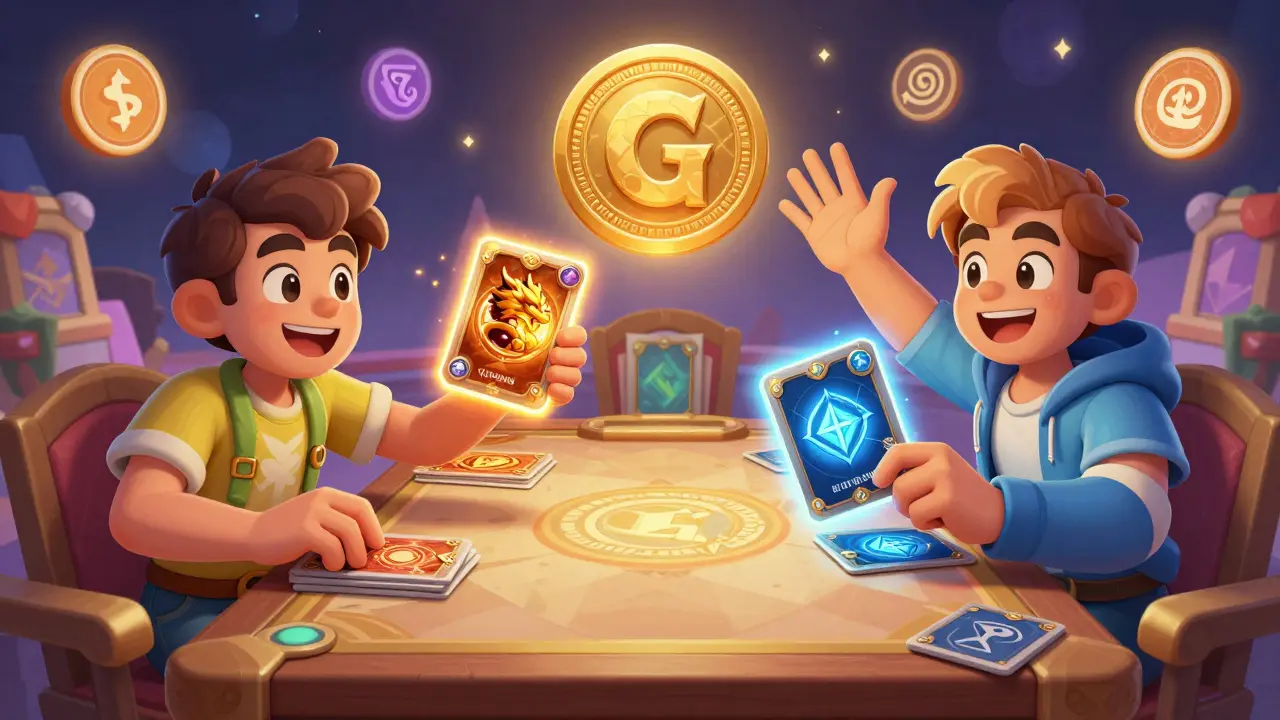
Gods Unchained isn't just another crypto coin. It's the heartbeat of a real, playable card game where what you win actually belongs to you. If you've ever bought a pack of Magic: The Gathering cards and felt like you were just renting them, Gods Unchained flips that whole idea on its head. This isn't a game where you pay to win. It's a game where you play to own.
What Exactly Is GODS?
The GODS token is the native currency of Gods Unchained - a free-to-play, blockchain-based trading card game built by Immutable, an Australian company founded in 2018. Unlike most crypto projects that live only on exchanges, GODS has a real, working game behind it. Players use GODS to buy card packs, fuse cards into rare NFTs, vote on game updates, and earn rewards just by playing. It’s not a speculative asset with no use - it’s the engine that runs the whole ecosystem.
The total supply of GODS is fixed at 500 million tokens. As of early 2026, about 418 million are in circulation, with a market cap around $14.7 million. The token trades on major exchanges like Binance and Coinbase, and its price hovers around $0.035. That might seem low, but remember: this isn’t a stock. It’s a utility token tied directly to a game with over 1.8K unique cards and 20,100 active holders.
How Does Gods Unchained Actually Work?
Think of it like Hearthstone or Magic: The Gathering - but with real ownership. You pick one of six gods - each with a unique deck of cards - and duel opponents turn by turn. You start with one mana, gain one more each turn, and max out at nine. Higher mana cards are stronger, so deck-building matters. There’s no luck-based drawing. You build your deck, strategize, and play.
Here’s the twist: every card you earn or buy is a non-fungible token (NFT). That means you own it outright. You can sell it. Trade it. Hold it. Use it in future game updates. No company can delete your collection. No server shutdown can erase your cards. If you win a rare card in a tournament, it’s yours - forever.
How Is GODS Used in the Game?
It’s not just a currency - it’s the glue holding everything together:
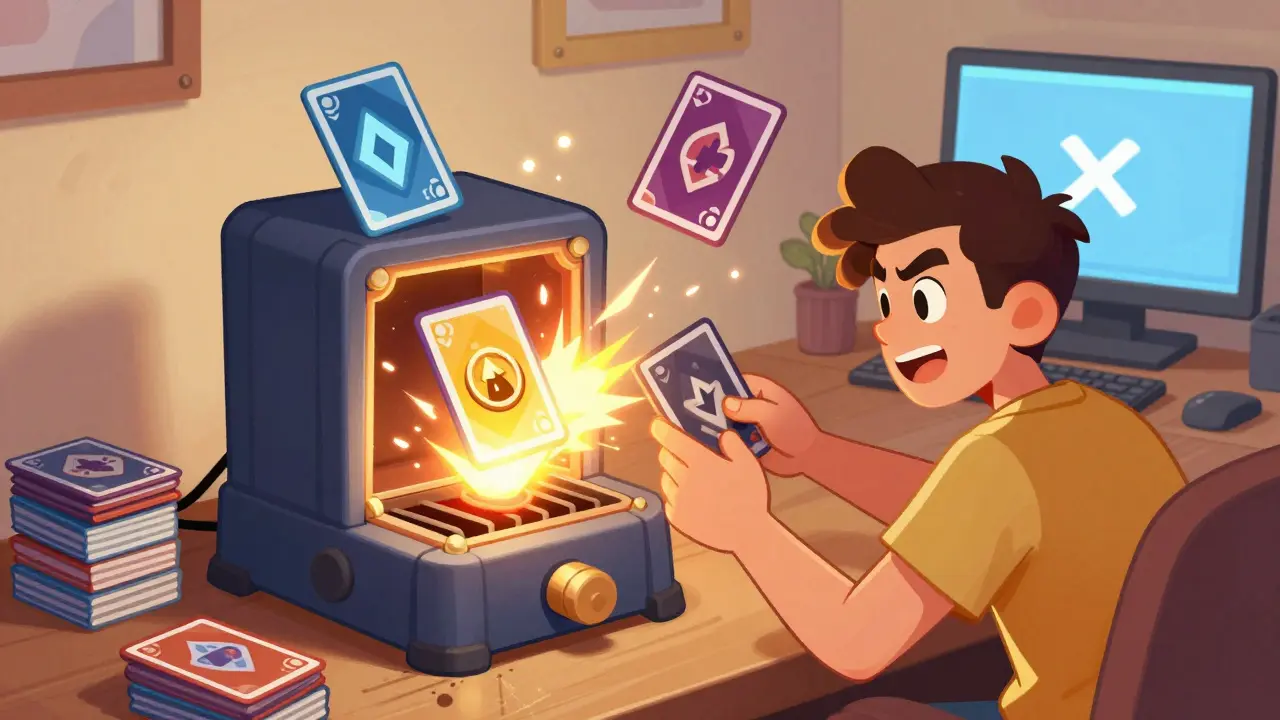
- Fusing Cards: You can combine two common cards using GODS tokens to create a rare NFT card. This is called "Fusing in the Forge." The more rare the result, the more GODS it costs.
- Buying Packs: Card packs cost GODS. You can also buy them with real money, but the game lets you earn GODS just by playing.
- Governance: Holders of GODS can vote on game changes - new cards, balance tweaks, tournament rules. Your vote matters.
- Staking: You can lock up your GODS to earn more over time. It’s not high yield, but it rewards long-term players.
- Rewards: Play daily matches, complete quests, or enter tournaments to earn GODS as prizes.
There are other in-game currencies too - like Flux and Fragments - but they’re just stepping stones. Flux helps turn regular cards into NFTs. Fragments track how much you’ve played and determine how much GODS you earn at the end of the week. Stars? Those are for cosmetics. Only GODS has real, cross-platform value.
Why Is This Different From Other Crypto Games?
A lot of "play-to-earn" games feel like grind mills. You play for hours just to earn a tiny bit of token that’s worth pennies. Gods Unchained doesn’t do that. It’s built by former developers of Magic: The Gathering Arena. That means the gameplay is tight, balanced, and fun - even if you never touch crypto.
You can download Gods Unchained right now and play the full game for free. No wallet needed. No money required. You can enjoy the strategy, the deck-building, the duels - all without ever buying a single GODS token. The blockchain part? That’s optional. It’s there if you want to own your cards or earn rewards. But it doesn’t force you in.
This is how you onboard people to Web3: by making the game better first, then adding blockchain as a bonus. It’s the opposite of most crypto projects that try to sell you a coin before you’ve even tried the product.
What’s the Bigger Picture?
Gods Unchained is part of a movement called GameFi - where gaming and decentralized finance meet. But unlike many GameFi projects that collapsed in 2022, this one survived. Why? Because it doesn’t rely on token speculation. It relies on real gameplay.
The game’s infrastructure runs on Immutable X, a Layer 2 solution built on Ethereum. That means transactions are fast, cheap, and eco-friendly. No gas fees over $10. No waiting 10 minutes for a trade to confirm. It’s smooth. That’s why players stick around.
The developers have added over 1,800 cards since launch. They run weekly tournaments with prize pools funded by fusing fees. They listen to the community. And they’ve stayed true to their promise: players own their assets. That’s rare in gaming.
Who Is This For?
If you’re a card game fan - whether you’ve played Hearthstone, Yu-Gi-Oh!, or Magic - this is for you. If you’re curious about crypto but hate the hype, this is a low-pressure way to try it. If you’ve ever wanted to turn your gaming hobby into something tangible, this is your chance.
You don’t need to be a trader. You don’t need to be a tech expert. You just need to like playing cards. The rest - the NFTs, the staking, the voting - it all comes naturally once you’re in the game.
Is GODS a Good Investment?
That’s not the point. The value of GODS isn’t in its price. It’s in its use. If you play the game, you’ll need it. If you don’t, it’s irrelevant. Crypto investors often look at market cap and volume - $14.7 million and $407K daily volume aren’t huge, but they’re steady. The volume-to-market-cap ratio is 3.05%, which means people are using it, not just flipping it.
Compare that to other crypto games that had 100x spikes and then crashed. Gods Unchained has stayed flat because it’s not a pump. It’s a platform.
If you’re looking for a crypto coin with a real product, real users, and real utility - GODS is one of the few that checks all the boxes.
How Do You Get Started?
It’s simple:
- Go to godsunchained.com and download the game for free.
- Play. No wallet needed. Just enjoy the matches.
- Once you want to own your cards, link a wallet (like MetaMask) to the game.
- Start earning GODS through daily quests and ranked play.
- Use GODS to fuse cards, buy packs, or vote on future updates.
You can play for months before ever spending a cent. That’s the beauty of it.
This is actually how you do it right. Play the game first, let people fall in love with it, then let them discover they own their cards. No pressure. No hype. Just fun.
I played this for three weeks and didn't spend a dime. Then I won a legendary card and got chills. This isn't crypto. This is magic.
What strikes me most about Gods Unchained isn't the tokenomics or the NFTs or even the blockchain infrastructure-it's the quiet rebellion against the entire modern gaming model. For decades, we've been conditioned to believe that our digital possessions are temporary, disposable, subject to corporate whim. We buy skins, we unlock content, we grind for loot, and then the server goes down or the company changes its mind or the license expires. We're told it's fine. We're told it's the price of convenience. But Gods Unchained whispers something different: what if your collection wasn't just a reflection of your time and skill, but a true extension of your identity? What if the card you spent months crafting, the one you won in a final match against a stranger across the world, wasn't just pixels on a screen but a permanent artifact of your effort? That's not innovation. That's dignity. And it's why, despite all the noise around crypto, this game has staying power. Because people don't just play it-they care about it. And that's rarer than any rare card.
Still just a card game with a coin attached. Most people who play it don't even know what GODS does.
You're all missing the point. Immutable X is a centralized sidechain masquerading as Layer 2. Ethereum's security model is compromised. This isn't Web3. It's Web2.1 with NFT stickers.
I showed this to my 72-year-old uncle who used to play Magic in the 90s. He said, 'This is what I always hoped for.' He linked his wallet yesterday. We played a match. He won. He cried. I cried. This is why we do this.
YESSSS 🤍🤍🤍 I’ve been playing since beta and I still get that rush when I fuse a card. I turned 3 commons into a legendary last week. I’m not rich but I’m proud. This is art. 💖
They’re tracking everything. Your wins. Your plays. Your wallet. They’re building a profile. Next thing you know, they’ll charge you to keep your cards. It’s all a trap.
I’m from Canada and I love how this game feels global. I’ve played against people in India, Brazil, Japan. No language barrier. Just strategy. That’s beautiful.
The real innovation is not the token. It's the governance model. People vote on card balance. That's radical. Most AAA games ignore feedback for years. This is democracy in action. Even if it's messy.
While the utility of the GODS token is indeed robust and well-integrated into the gameplay ecosystem, it's worth noting that the underlying infrastructure-Immutable X-relies on a proof-of-stake consensus mechanism that, while significantly more energy-efficient than Ethereum mainnet, still introduces centralized validation nodes operated by Immutable. This creates a subtle but meaningful tension between the decentralized ethos of Web3 and the operational reality of a single-entity-controlled L2. That said, the game's design philosophy-prioritizing playability over speculative incentive-is a masterclass in sustainable onboarding. Unlike projects that rely on token inflation to retain users, Gods Unchained retains players through genuine mechanical depth, which is why its retention rates outperform 98% of comparable blockchain titles. The token isn't the product. The product is the game. And that's why it works.
Everyone’s acting like this is some revolution. It’s a card game. With NFTs. Big deal. I’ve seen this movie. It ends with investors losing money and devs vanishing.
i played for 2 months and never spent a dollar. then i won a card i liked so much i fused it. now i have it forever. thats all i need
They’re just copying Magic: The Gathering and slapping a blockchain on it. Classic. You think you’re special because you own a card? You’re just a collector with a wallet.
As someone who has followed the evolution of digital collectibles for over a decade, I find Gods Unchained to be one of the most authentically player-centric projects in the entire blockchain gaming space. The fact that the developers are former Arena designers gives them an intuitive understanding of what makes card games compelling-not the rarity, not the speculation, but the rhythm of play, the tension of decision-making, the satisfaction of a perfectly timed counter. The integration of GODS as a utility token is elegant because it doesn’t force monetization; it enhances agency. Players aren’t being sold a dream. They’re being given tools to shape their experience. And that’s a rare form of respect in an industry that too often treats users as revenue streams. This isn’t just a game. It’s a model.
I used to be into this. Then I realized they’re just using blockchain to make you feel like you’re special. Meanwhile, the devs are rich. I’m still broke. Thanks for the warm fuzzy feelings.
I’m not against blockchain... but why does every card need to be an NFT? Can’t we just... have fun without the tech?
I’ve been in crypto since 2017. I’ve seen 1000 projects die. This one? It’s the first one that doesn’t feel like a scam. That’s saying something.
i linked my wallet last week. still dont know how to stake. but i won a match. felt good. thats enough for me.
What’s beautiful about Gods Unchained is how it refuses to be one thing. It’s a game first. A community second. A token third. And that order matters. Most blockchain games try to lead with the coin, the whitepaper, the roadmap. They treat players like investors. Gods Unchained treats players like players. You don’t need to understand staking to enjoy a duel. You don’t need to know about governance to appreciate a well-played turn. And that’s how you build something lasting. Not by shouting about value, but by quietly letting people discover it for themselves. That’s not marketing. That’s trust.
While the technical architecture of Gods Unchained represents a significant advancement in digital asset ownership, one must consider the broader sociocultural implications of embedding blockchain mechanics into recreational activities traditionally governed by physical collectibility. The transition from tangible, tactile trading cards to immutable digital representations fundamentally alters the phenomenological experience of ownership. One no longer holds a card; one possesses a cryptographic key. This shift, while economically empowering, may also alienate traditional collectors who value the materiality of their artifacts-the scent of aged paper, the texture of foil, the ritual of opening a pack. The challenge for Gods Unchained is not technological, but anthropological: Can a digital object, however secure, replicate the emotional resonance of a physical one? The answer may lie not in replication, but in reimagining.
i think the real win is that you can play this without crypto. like... i just wanna play cards. not be a investor. and they get that. thats rare.
I’ve been playing for two years now. I’ve never bought a pack. I’ve never sold a card. I don’t even know how much GODS I have. But I’ve made friends across three continents. We play every Sunday. We talk about life. We laugh. We rage. We rebuild decks after losses. I’ve never felt more connected to a game community. The blockchain? It’s just the background noise. What matters is the people. And the cards. And the quiet joy of winning a match you didn’t think you could. That’s the real utility.
America made this. It’s not some foreign crypto thing. It’s real. And it’s good. Stop trying to ruin it with your crypto nonsense.
Thank you for the thoughtful post. I’d like to add a minor clarification: while the total supply of GODS is fixed at 500 million, the circulating supply is not static. Approximately 28 million tokens are allocated to future development incentives and community rewards, which are gradually unlocked over a 7-year vesting schedule. This means that the current 418 million in circulation will rise steadily, but not unpredictably. The market cap figures cited are accurate as of early 2026, but daily volume has consistently remained above $400K for over 18 months-a sign of deep, organic usage rather than speculative churn. The 3.05% volume-to-market-cap ratio you mentioned is indeed a strong indicator of utility-driven demand, and compares favorably to most DeFi tokens that hover below 1%. This isn’t a pump. It’s a slow, steady burn of real engagement.