
You hold Bitcoin. You stake Ethereum. You trade on Uniswap. But have you ever stopped to think about what happens if the protocol you trust gets hacked? In the world of Decentralized Finance (DeFi), security breaches aren't just headlines; they are personal financial disasters. This is where InsurAce comes in.
If you've been searching for "InsurAce (INSUR) crypto coin", you're likely looking for a safety net. You want to know if this platform can actually protect your assets from smart contract failures, hacks, and rug pulls. The short answer is yes, but it works differently than the health or car insurance you’re used to. There are no premiums paid in cash, no claims adjusters calling you at home, and no central company backing the payout. Instead, it relies on a community-driven model powered by its native token, INSUR.
What Exactly Is InsurAce?
InsurAce is a non-custodial, decentralized insurance protocol that allows users to purchase coverage against smart contract vulnerabilities, hacks, and exploits in the DeFi ecosystem. Think of it as a mutual aid society built on the blockchain. Instead of paying an insurance company, you contribute to a pool of funds managed by smart contracts. When a hack occurs, valid claims are paid out from this pool.
The platform was designed to solve a critical problem in cryptocurrency: trustlessness. In traditional finance, you trust the bank. In DeFi, you trust the code. But code has bugs. High-profile hacks of platforms like Poly Network or various yield farming protocols have wiped out billions of dollars. InsurAce steps in to mitigate this risk. It doesn't prevent the hack, but it ensures that if one happens, you don't lose everything.
Unlike centralized exchanges that might freeze your funds during an investigation, InsurAce operates via automated smart contracts. However, because determining whether a loss was due to a "hack" or just "bad market timing" is complex, the protocol uses a governance mechanism involving its token holders to verify claims. This makes it a hybrid of technology and human judgment.
How Does the INSUR Token Work?
To understand InsurAce, you must understand the role of the INSUR token. It is not just a speculative asset; it is the fuel that keeps the insurance engine running. Here is how it functions within the ecosystem:
- Collateral for Coverage: Users do not pay premiums in stablecoins like USDT or USDC. Instead, they stake their INSUR tokens to generate coverage. The more INSUR you stake, and the longer you stake it, the higher your coverage limit. If a claim is successful, the protocol may burn some staked tokens or use the treasury to pay out, depending on the specific policy structure.
- Governance Rights: Holding INSUR gives you voting power. When a user submits a claim, other token holders vote on whether the claim is valid. This prevents fraud. If you vote correctly on fraudulent claims, you earn rewards. If you vote incorrectly, you might face penalties. This aligns incentives: voters are motivated to do their homework.
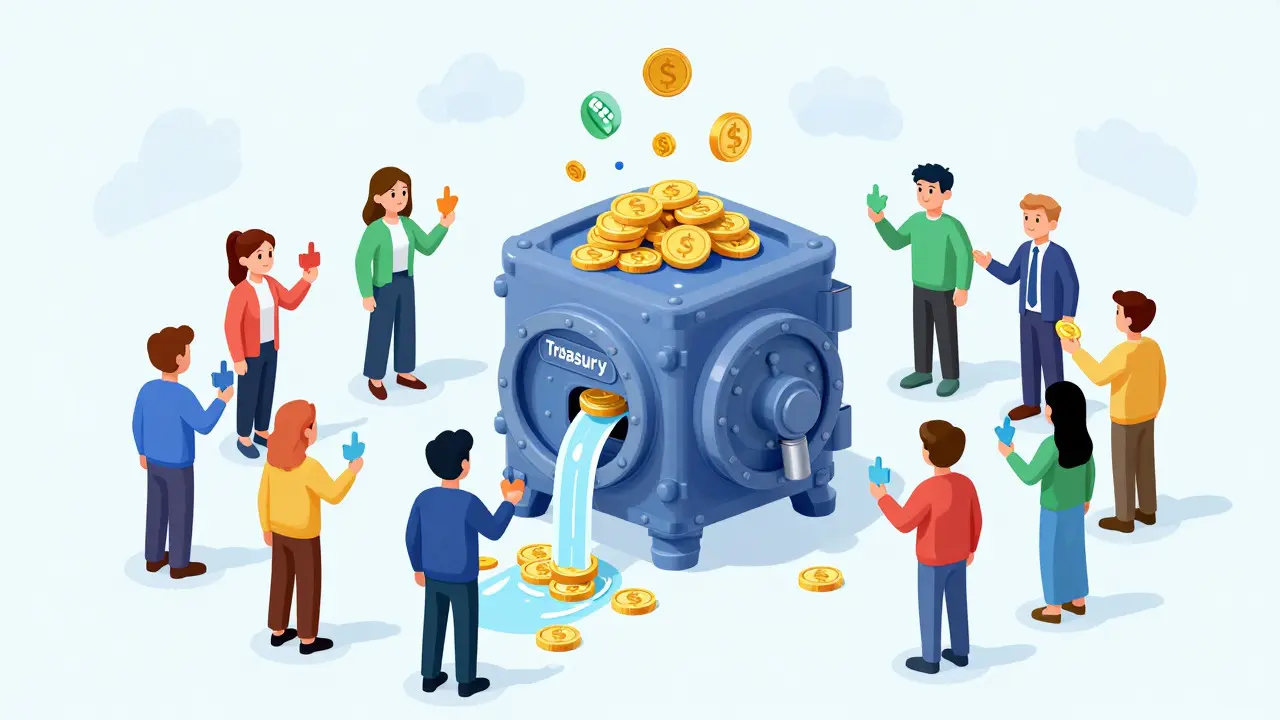
- Treasury Backing: A portion of the protocol's revenue and token allocations goes into a treasury. This treasury acts as the final backstop for payouts when the surplus pool is insufficient.
This model creates a self-sustaining economy. As more people buy insurance, demand for INSUR rises. As the treasury grows, the confidence in the system increases, which further drives value. It’s a flywheel effect, provided the protocol remains secure and solvent.
The Claim Process: From Hack to Payout
Buying insurance is easy; getting paid is hard. That’s true in traditional insurance, and it’s even trickier in DeFi. Let’s walk through what happens when a disaster strikes.
- Event Occurs: Imagine you have funds locked in a lending protocol called "LendX." Suddenly, LendX gets exploited, and $50 million is drained. Your funds are gone.
- Submit Claim: You go to the InsurAce dashboard. You connect your wallet and submit a claim. You provide transaction hashes, screenshots, and evidence linking your loss directly to the exploit.
- Voting Phase: The claim enters a voting period. INSUR token holders review the evidence. They check if LendX was covered under the policy terms. Was it a known vulnerability? Did you follow best practices?
- Payout: If the majority votes "Valid," the smart contract automatically releases funds from the Surplus Pool or Treasury to your wallet. If they vote "Invalid," the claim is rejected, and you appeal or accept the loss.
This process usually takes a few days to weeks, depending on voter participation. It is slower than a bank refund, but it is transparent. Every vote and every payout is recorded on the blockchain for anyone to audit.
Key Features and Benefits
Why would you choose InsurAce over other options? Or why wouldn't you? Let’s break down the pros and cons based on current market dynamics.
| Pros | Cons |
|---|---|
| Non-Custodial: You never give up control of your keys until the moment of payout. | Complexity: Understanding staking mechanics and coverage limits requires technical knowledge. |
| Transparency: All claims and votes are public on-chain. | Limited Coverage: Not all DeFi protocols are insurable. Popular ones often have caps. |
| Cost-Effective: No monthly fees. You only "pay" by staking existing assets. | Token Volatility: The value of your collateral (INSUR) can drop while you are trying to insure against losses. |
| Community Driven: Governance ensures fairer outcomes than opaque corporate decisions. | Solvency Risk: If a massive hack hits multiple insured protocols simultaneously, the pool might run dry. |
One major advantage is the lack of KYC (Know Your Customer) requirements. You can buy coverage anonymously. For privacy-focused crypto users, this is a huge plus. However, this also means there is less recourse if things go wrong outside the smart contract logic.
InsurAce vs. Traditional Crypto Insurance
You might have heard of competitors like Nexus Mutual or inSure DeFi. How does InsurAce stack up?
Nexus Mutual is the oldest player in the space. It has a larger brand recognition and a broader range of products, including coverage for exchange failures. However, Nexus often has stricter eligibility criteria and higher minimum stakes. InsurAce positions itself as more accessible, with lower barriers to entry for smaller investors.
inSure DeFi, another competitor, uses a similar dynamic pricing model but focuses heavily on algorithmic premium calculation. InsurAce leans more towards a fixed-stake model for simplicity. The choice between them often comes down to which protocols you are using. InsurAce has historically had strong integrations with major Ethereum DeFi protocols, making it a go-to for users in that ecosystem.
It is crucial to check the specific "Coverage Limits" for any protocol you intend to insure. Just because InsurAce exists doesn't mean they cover every new yield farm launched yesterday. Most reputable insurers wait for a protocol to be audited and battle-tested before offering coverage.

Risks to Consider Before Buying INSUR
No investment is without risk, and crypto insurance is particularly nuanced. Here are the pitfalls you need to watch out for:
- Smart Contract Risk: Irony alert. InsurAce itself is built on smart contracts. If InsurAce’s own code is hacked, your insurance could disappear along with your assets. Always check if InsurAce has recent audits from reputable firms like CertiK or PeckShield.
- Correlation Risk: If a black swan event crashes the entire crypto market, the value of your INSUR tokens will plummet. You might have enough tokens to cover a claim, but their dollar value might be too low to matter.
- Claim Rejection: The definition of a "hack" is subjective. Some exclusions apply. For example, if you send funds to a scam address voluntarily, that is usually considered user error, not a protocol failure, and won’t be covered.
- Liquidity Issues: While INSUR is traded on major decentralized exchanges, slippage can be high during volatile periods. Exiting large positions quickly can result in significant losses.
How to Get Started with InsurAce
Ready to try it out? Here is a simple step-by-step guide to buying INSUR and setting up coverage.
- Set Up a Wallet: You’ll need a Web3 wallet like MetaMask or Trust Wallet. Ensure you are on the correct network (usually Ethereum Mainnet or Binance Smart Chain, depending on the token standard).
- Buy INSUR Tokens: Go to a decentralized exchange like PancakeSwap or Uniswap. Swap ETH or BNB for INSUR. Double-check the contract address to avoid fake tokens.
- Connect to InsurAce: Visit the official InsurAce website. Connect your wallet. Always verify the URL to avoid phishing sites.
- Select a Protocol: Browse the list of insurable protocols. Click on one you use (e.g., Aave, Compound, or Curve).
- Stake for Coverage: Enter the amount of INSUR you want to stake. The interface will show you the corresponding coverage limit. Confirm the transaction.
- Monitor Claims: Once staked, you can participate in voting on claims to earn additional rewards. Keep an eye on the governance forum for updates.
Future Outlook for InsurAce
The demand for crypto insurance is growing. As institutional money flows into DeFi, the need for risk mitigation becomes paramount. InsurAce is expanding its reach beyond Ethereum to Layer 2 solutions like Arbitrum and Optimism, where gas fees are lower and activity is high. This expansion opens up new markets for micro-insurance policies.
We also expect to see more integration with oracle networks like Chainlink to automate claim verification. Currently, human voting is slow. If Chainlink Data Feeds can confirm a hack objectively, payouts could happen in minutes rather than days. This technological leap would make InsurAce significantly more competitive against traditional reinsurance models.
Regulatory scrutiny is also increasing. Governments are starting to look at DeFi protocols. InsurAce’s decentralized nature helps it resist censorship, but it may face pressure to implement identity checks in certain jurisdictions. Staying compliant while remaining decentralized will be its biggest challenge in the coming years.
Is InsurAce a good investment?
Whether INSUR is a good investment depends on your belief in the growth of DeFi insurance. If you think more people will seek protection against hacks, demand for INSUR should rise. However, it is a volatile asset. Treat it as a high-risk, high-reward play, not a savings account.
Does InsurAce cover lost private keys?
Generally, no. InsurAce focuses on smart contract failures, hacks, and exploits. Losing your private key is considered user error. Some specialized providers might offer hardware wallet insurance, but InsurAce primarily covers protocol-level risks.
How much does it cost to get insured?
There are no direct cash premiums. The "cost" is the opportunity cost of staking your INSUR tokens. While staked, those tokens cannot be sold or used elsewhere. You also take on the risk of INSUR price volatility.
Can I withdraw my INSUR tokens anytime?
Yes, but unstaking usually involves a waiting period or a reduction in coverage immediately. Check the specific lock-up terms for the policy you selected. Some long-term policies may have penalties for early withdrawal.
Is InsurAce regulated?
As a decentralized protocol, InsurAce operates globally without a central headquarters subject to single-country regulations. However, it adheres to smart contract standards and undergoes regular third-party audits to ensure security and fairness.