
You’ve probably seen the ticker **KAN** pop up on a market tracker or an exchange list and wondered what it actually does. It’s not a flashy meme coin, nor is it a massive Layer-1 blockchain like Ethereum or Solana. Instead, KAN is the native utility token for the BitKan cryptocurrency trading and analytics platform. Think of it as the digital currency you use to pay bills inside a specific ecosystem. In this case, that ecosystem is BitKan, a platform that aggregates data from multiple exchanges.
If you are looking to trade, save on fees, or just understand where your money goes when you hold KAN, this guide breaks down the reality behind the token. We will look at its technical specs, how it functions within the BitKan app, and what the current market data tells us about its value and liquidity.
The Basics: What Exactly Is KAN?
To understand KAN, you first need to understand BitKan. BitKan is not a standalone exchange in the traditional sense where it holds all the order books itself. Instead, it acts as an aggregator and analytics hub. It connects users to over 1,200 cryptocurrencies across 8 partner exchanges. It serves traders in more than 170 countries by providing a unified interface for market data, news, and social trading features.
KAN was introduced in 2018 to power this ecosystem. Technically, it is an ERC-20 token built on the Ethereum network. This means it doesn’t have its own independent blockchain. Instead, it relies on Ethereum’s security and infrastructure. When you send KAN, you are sending a transaction on the Ethereum ledger, which means you pay gas fees in ETH, not KAN.
The creation of KAN is attributed to Leon Liu, the CEO and co-founder of BitKan. Some sources link the development to KAN Land Technology Co., Ltd., suggesting a corporate structure behind the token’s issuance. The goal was simple: create a mechanism to incentivize user engagement and streamline payments within their app.
Tokenomics: Supply and Scarcity
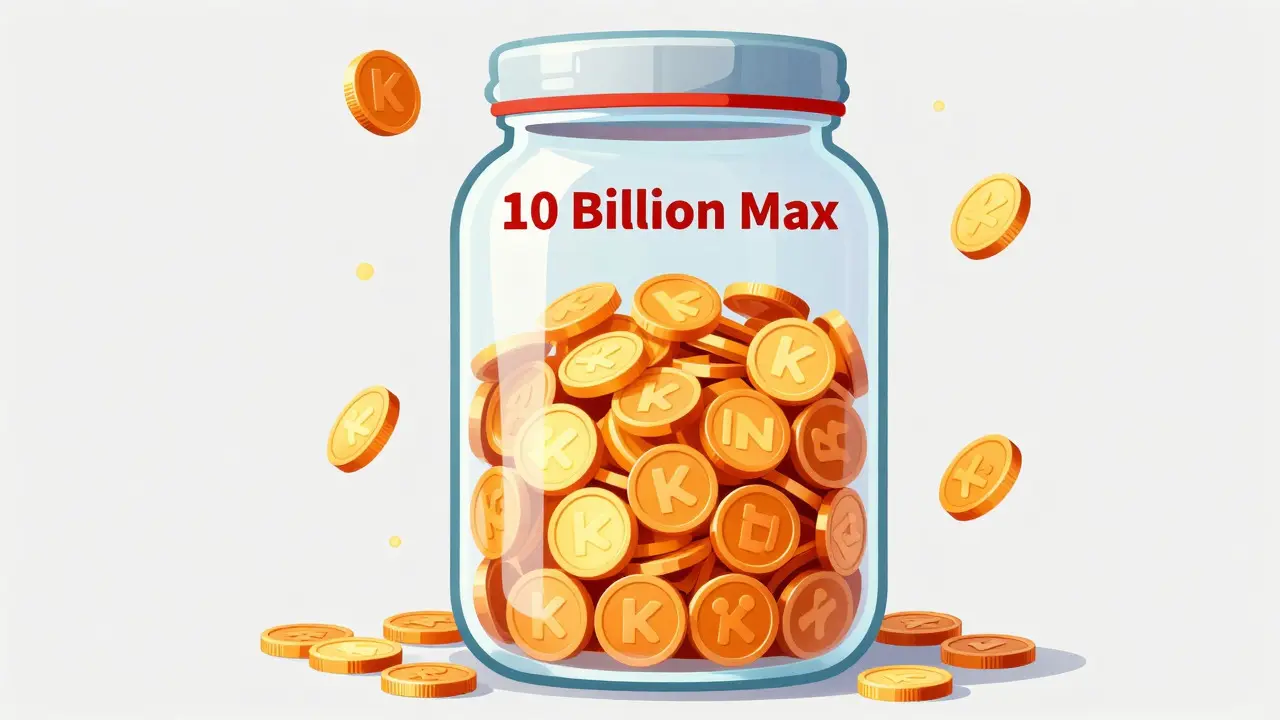
One of the most critical aspects of any crypto investment is supply. For KAN, the numbers are fixed and transparent, which helps prevent inflationary pressure that can devalue a token over time.
| Metric | Value |
|---|---|
| Maximum Supply | 10,000,000,000 KAN |
| Circulating Supply (Approx.) | 5.4 Billion - 9.6 Billion KAN |
| Token Standard | ERC-20 (Ethereum) |
| Inflation Rate | Fixed Cap (No new minting beyond max) |
The hard cap is set at 10 billion KAN. According to Coinbase and other major trackers, this limit "will never be increased." This is a crucial detail for holders because it means the total number of tokens available to buy and sell is finite. However, you might notice discrepancies in circulating supply figures across different platforms. CoinGecko might report around 5.5 billion in circulation, while Coinbase lists closer to 9.6 billion. These differences usually stem from how different data providers count locked tokens, team allocations, or tokens held in smart contracts versus those actively traded on open markets.
Utility: Why Does KAN Exist?
Unlike speculative assets that rely purely on hype, KAN has defined utilities within the BitKan ecosystem. It is designed to be the "economic glue" of the platform. Here is how you actually use it:
- Fee Discounts: This is the primary driver for holding KAN. Users can spend KAN to pay for exchange fees and withdrawal fees on the BitKan platform. Typically, paying with native tokens offers a percentage discount compared to paying with fiat or other cryptos.
- Access to Premium Content: BitKan offers analytics and market insights. Some scarce content or advanced analytical tools may require payment in KAN, gating high-value information behind the token.
- Platform Services: Various services within the BitKan app, including multi-currency exchange features in their wallet, accept KAN as a medium of exchange.
- Ecosystem Participation: As BitKan expands its social trading and community features, KAN often serves as the incentive layer, rewarding active users or enabling participation in specific platform activities.
This evolution from a simple fee-discount token to a broader utility asset is significant. It means the demand for KAN is tied directly to the usage of the BitKan app. If more people trade through BitKan, the demand for KAN to pay fees increases.
Market Performance and Liquidity
When evaluating a small-cap utility token, liquidity is king. Can you actually buy or sell it without moving the price too much? Let’s look at the recent data snapshots from mid-2026.
KAN generally trades in the range of $0.0006 to $0.0008 USD. While these prices seem low, they reflect the large circulating supply. The market capitalization typically sits between $3 million and $7 million, depending on the data source and current price fluctuations. This places KAN firmly in the lower-mid tier of the crypto market, often ranking between #1200 and #1700 globally.
Trading volume is another key indicator. Daily volumes reported across platforms like CoinGecko, CoinStats, and Coinbase range from approximately $44,000 to $160,000. This is enough liquidity for retail traders to enter and exit positions comfortably, but it is not deep enough for institutional whales to make massive moves without slippage. It indicates a niche but active user base rather than a global settlement asset.
How to Buy and Store KAN
If you decide you want exposure to the BitKan ecosystem, acquiring KAN follows standard crypto procedures. Since it is an ERC-20 token, it is widely supported.
- Choose an Exchange: KAN is listed on several centralized exchanges. Major options include Coinbase, Bitget, LBank, and the native BitKan platform itself. Coinbase listing is notable for US-based users, as it implies a certain level of compliance review.
- Create an Account and Deposit: Register on your chosen exchange. You can deposit fiat currency (like USD or AUD) or transfer another cryptocurrency (like Bitcoin or Ethereum) to fund your account.
- Execute the Trade: Find the KAN trading pair (usually KAN/USDT or KAN/BTC). Place a market or limit order to purchase the desired amount of KAN.
Once you own KAN, storage is straightforward. Because it lives on Ethereum, you can store it in any wallet that supports ERC-20 tokens. Popular software wallets include MetaMask or Trust Wallet. For higher security, especially if you are holding a significant amount, hardware wallets are recommended. Notably, Tangem cold wallets support KAN, allowing you to store your tokens offline using NFC-enabled cards, which adds a robust layer of security against online hacks.
Risks and Considerations
No crypto investment is without risk. Before adding KAN to your portfolio, consider these factors:
- Platform Dependency: KAN’s value is heavily tied to the success of BitKan. If BitKan loses users to competitors or fails to maintain its partnerships with major exchanges like Binance and OKEx, the utility-and thus the demand-for KAN could drop.
- Liquidity Constraints: With daily volumes under $200k, large trades can impact the price. Be mindful of slippage if you are buying or selling large quantities.
- Regulatory Environment: While KAN is currently treated as a utility token, regulatory changes regarding exchange tokens or securities laws in your jurisdiction could affect its tradability on major platforms like Coinbase.
- Volatility: Like most altcoins, KAN can experience sharp price swings. A 24-hour drop of 2% is common, but larger corrections can happen during broader market downturns.
Conclusion: Is KAN Worth Your Attention?
KAN is a functional utility token with a clear purpose: to facilitate transactions and reward users within the BitKan ecosystem. It is not designed to be the next Bitcoin. Instead, it is a tool for traders who find value in BitKan’s aggregated data and multi-exchange access. If you are already using BitKan or plan to use its analytics and trading aggregation features, holding KAN makes economic sense due to fee discounts. If you are purely speculating, you must weigh the low market cap and moderate liquidity against the potential growth of the BitKan platform itself.
Is KAN a good investment?
Whether KAN is a good investment depends on your strategy. As a utility token, its value is tied to the usage of the BitKan platform. If you believe BitKan will grow its user base and trading volume, KAN may appreciate. However, it is a low-cap asset with moderate liquidity, meaning it carries higher risk than top-tier cryptocurrencies. Always do your own research and consider the platform's long-term viability.
Where can I buy KAN tokens?
You can buy KAN on several centralized exchanges, including Coinbase, Bitget, LBank, and the BitKan platform itself. Availability may vary by region, so check your local exchange listings. Once purchased, you can transfer them to an ERC-20 compatible wallet.
What is the maximum supply of KAN?
The maximum supply of KAN is capped at 10,000,000,000 (10 billion) tokens. This hard cap is enforced by the smart contract on the Ethereum network, ensuring no additional tokens can be created beyond this limit.
Is KAN secure to store?
Yes, KAN is an ERC-20 token on the Ethereum blockchain, inheriting Ethereum's security protocols. For optimal security, store KAN in a reputable software wallet like MetaMask or a hardware wallet like Tangem, which supports offline storage.
Who founded BitKan and KAN?
BitKan was co-founded by Leon Liu, who serves as the CEO. The development of the KAN token is also associated with KAN Land Technology Co., Ltd. The token was launched in 2018 to enhance the functionality of the BitKan trading ecosystem.
Does KAN have staking rewards?
As of the latest available data, KAN's primary utility is for fee discounts and accessing platform services. Specific staking yield programs or governance voting rights have not been prominently detailed in major market reports, though the platform may introduce such features in the future. Check the official BitKan announcements for the latest updates on staking opportunities.
the epistemological framework of KAN is fundamentally flawed because it relies on the premise that utility dictates value in a vacuum. we are ignoring the ontological shift in decentralized finance where liquidity is not just a metric but a philosophical construct. the token is merely a symbol of trust in an opaque corporate structure disguised as open source ethos. when you hold KAN you are holding a promise from Leon Liu which is inherently fragile. the ERC-20 standard provides security yes but does it provide truth? no. the market cap reflects this existential dread.
another useless article about another dead coin. why do people still care about bitkan?
you fools are being played by the central bankers who own the exchanges bitkan aggregates with. leon liu is a puppet for the deeper state trying to track your every trade through this so called analytics hub. the 10 billion supply cap is a lie designed to create artificial scarcity while they dump their holdings on retail. look at the circulating supply discrepancies between coingecko and coinbase. that is not an error that is a signal. the SEC is waiting for you to buy the dip so they can classify it as a security and freeze your assets. wake up sheeple. the gas fees on ethereum are just a tax on your freedom imposed by the victors of the blockchain war.
i guess if you want to throw money away this is fine. most of these aggregator tokens are just ways for teams to pay themselves without taxes. simple as that. dont expect any real innovation here.
i actually think there is something really interesting about the concept of using a native token for fee discounts within an aggregated trading environment. it creates a closed loop economy that could theoretically stabilize the platform's revenue streams even during bear markets. i have been watching bitkan for a while now and i notice that their social trading features are quite robust compared to other platforms. maybe the low liquidity is just a temporary phase before institutional interest picks up. it would be great to see more development updates regarding the staking rewards mentioned in the faq. i am always optimistic that small cap gems will eventually find their footing if the team delivers on their roadmap consistently over time.
everyone here is missing the point. utility tokens are a scam invented to bypass securities laws. if it pays dividends or discounts it is a security. end of story. stop pretending otherwise. the fact that it is erc-20 means it is just code on a chain controlled by miners who hate you anyway. dont fall for the hype machine.
oh my stars! did someone say analytics? let us dive into the abyss of data together! the sheer audacity of aggregating 1200 cryptos under one roof is simply breathtaking. it is like building a library in a hurricane. but tell me does the token taste like freedom or just regulatory fear? i find the whole notion of paying for insights with a speculative asset to be utterly delightful chaos. keep dancing on the edge of volatility my friends!
hey folks! :) just wanted to drop a quick tip for anyone looking to store their KAN safely. since it is an ERC-20 token making sure you have a solid hardware wallet setup is key. tangem cards are super easy to use if you are new to cold storage. no need to worry about seed phrases getting lost. happy trading everyone! :)
LISTEN UP!!! IF YOU ARE NOT USING HARDWARE WALLETS FOR YOUR SMALL CAP ALTCOINS YOU ARE BEING FOOLISH!!! THE LIQUIDITY IS LOW WHICH MEANS WHALES CAN SLICE AND DICE YOU EASILY!!! PROTECT YOUR ASSETS!!! DO NOT KEEP IT ON AN EXCHANGE!!! USE TANGEM OR LEDGER!!! GET OFF MY LAWN WITH YOUR POOR SECURITY HABITS!!!
🚨🚨🚨 BITKAN IS A FRONT FOR SURVEILLANCE CAPITALISM 🚨🚨🚨 THEY TRACK YOUR SOCIAL TRADING TO BUILD PSYCHOLOGICAL PROFILES OF RETAIL TRADERS 😱😱😱 THE GOVERNMENT KNOWS EVERY MOVE YOU MAKE THROUGH THIS AGGREGATOR 👁️👄👁️ DON'T LET THEM STEAL YOUR SOUL FOR A FEE DISCOUNT 💀💀💀
one must question the very nature of centralized aggregation in a decentralized world. the intrusion of corporate oversight into personal trading strategies is abhorrent. furthermore the jargon used in this article is pedestrian at best. where is the rigor? where is the academic scrutiny? the lack thereof is scandalous. you are all complicit in your own financial ignorance by accepting such superficial analysis.
yo check out the slippage risks on those big trades. its wild how fast price moves with only 160k daily volume. make sure u use limit orders or u gonna get wrecked. also tangem is cool for storage no cap. stay safe out there fam.
THE SUPPLY METRICS ARE CLEAR!!! NO INFLATION!!! HARD CAP AT 10 BILLION!!! THIS IS BASIC ECONOMICS!!! WHY ARE PEOPLE STILL CONFUSED??? CHECK COINGECKO!!! CHECK COINBASE!!! VERIFY THE DATA!!! STOP LISTENING TO NOISE!!! FOCUS ON FUNDAMENTALS!!!
it is interesting to consider the balance between utility and speculation. the token serves a purpose but the market treats it as a gamble. perhaps we should focus less on price action and more on the actual usage metrics of the platform. if people are using the analytics the value will follow naturally. patience is a virtue in crypto.
i was wondering if anyone has tried the multi-currency exchange feature within the wallet. seems like a neat way to swap without leaving the app. also curious about the regional availability on coinbase for non-us users. might be worth exploring further.
leon liu is a known entity in the space but his projects always have a shady vibe. the discrepancy in circulating supply is not a mistake it is manipulation. the insiders know the true count and they are dumping slowly. typical pump and dump scheme wrapped in fancy analytics. beware.
my portfolio is bleeding red everywhere except here. maybe this is the sign i needed. 📉➡️📈
morally speaking investing in a token tied to a single company is risky. but practically it makes sense if you use the service. it is a tool not a religion. treat it accordingly. do not attach your self worth to the price chart. that is the root of all evil in crypto.
seems legit enough for what it is. just dont go all in. diversify bro. the fee discounts are nice if you trade a lot. otherwise just ignore it. peace.
OH WOW! 😲 so you mean to tell me i can save on fees?! THAT IS AMAZING NEWS! 🎉🎉 i never thought a boring utility token could be so exciting! lets gooo! 🚀🚀 cant wait to see where this rocket ship takes us! 🌕✨