
You probably clicked on this because you saw Ken (KEN) popping up in your wallet or a Telegram group, looking like the next big thing. It has a cute dog name, it claims to be related to Dogecoin’s history, and it looks cheap enough to buy a million of them for lunch money. But here is the harsh truth: if you are looking for a serious investment, you might want to close this tab right now. Ken isn’t just a small project; it is a textbook example of what happens when hype meets zero substance.
Let’s cut through the noise. Ken (KEN) markets itself as an homage to "Ken," allegedly the first Shiba Inu that inspired the Dogecoin meme. The story goes that Ken was the older brother of Kabosu, the famous dog behind Dogecoin, and Neiro. Sounds heartwarming, right? But does the reality match the marketing? Spoiler alert: it doesn’t. As of late 2023 and into 2024, Ken has shown all the signs of a "dead" or abandoned token with almost no trading activity, conflicting technical details, and a community that has largely vanished.
The Origin Story vs. Reality
The entire premise of Ken Coin is built on nostalgia. The project claims to honor the legacy of Ken, aiming to bring the same community spirit that made Dogecoin famous. However, there is a massive problem with this narrative. Atsuko Sato, the owner of Kabosu (the actual Dogecoin dog), has never publicly acknowledged a dog named "Ken" in the way the token’s marketing suggests. Verified statements from her social media indicate no such prominent figure exists in the public eye of the Dogecoin community.
This disconnect is a classic red flag in crypto. When a project relies heavily on emotional connections to established brands or mascots without any verification from those sources, you should be skeptical. Dr. Elena Rodriguez, a cryptocurrency fraud specialist at MIT’s Digital Currency Initiative, noted in recent testimony that invoking these emotional ties while providing no technical documentation is characteristic of fraudulent low-cap tokens. Ken fits this pattern perfectly. It sells you a feeling, not a function.
Technical Confusion: Ethereum or Solana?
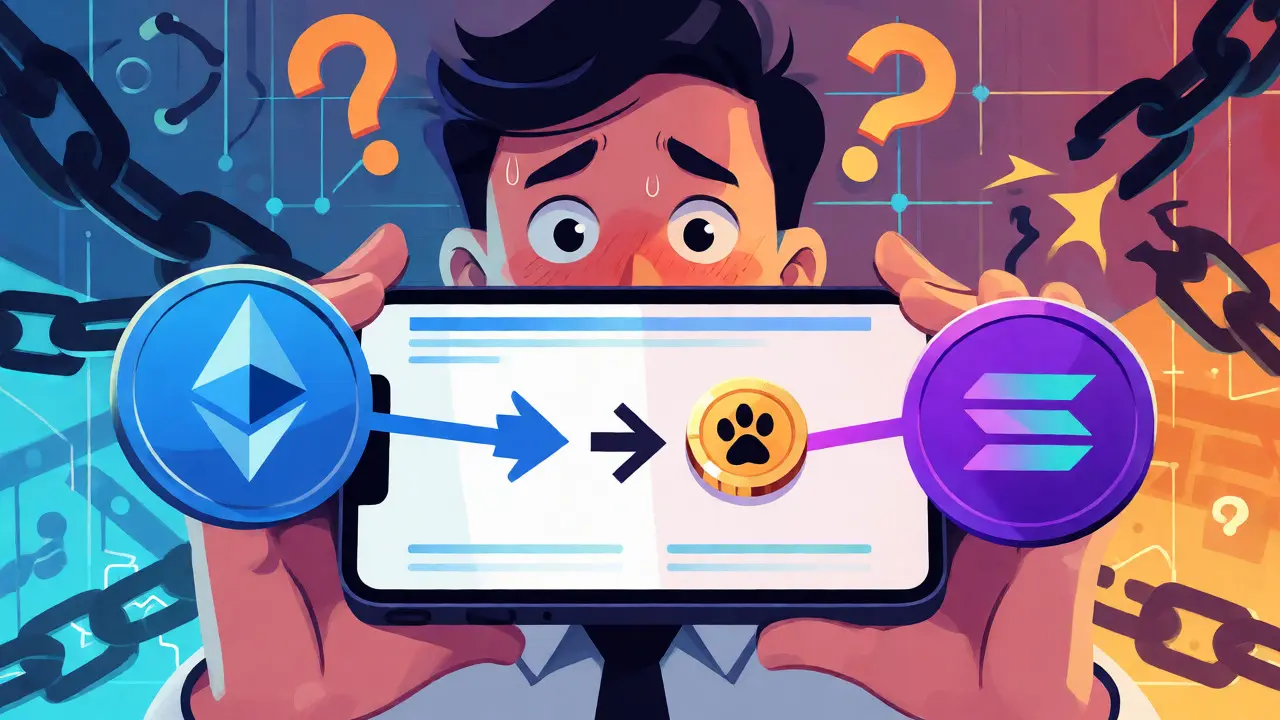
If you try to dig into the tech specs, things get messy fast. This is where you can spot a lack of professionalism or intentional obfuscation. Some data aggregators, like CoinPaprika, list Ken as an ERC-20 token running on the Ethereum blockchain. They even provide a specific contract address. On the other hand, other platforms describe Ken as a Web3 coin built on the Solana blockchain, known for high-speed transactions.
How can a single token exist on two different blockchains simultaneously without being a wrapped version or having distinct contracts? It usually means one of two things: either the data providers are confused because the project provided bad information, or the project team itself didn’t know what they were doing. For a legitimate crypto asset, clarity on its underlying infrastructure is non-negotiable. If you can’t tell which chain your money is sitting on, you’re already in trouble.
| Feature | Project Claim | Market Reality |
|---|---|---|
| Blockchain | Conflicting reports (Ethereum/Solana) | Inconsistent data across major trackers |
| Utility | DeFi, Scalability, Community | No verifiable dApps or partnerships |
| Liquidity | High volume expected | Near-zero daily trading volume |
| Community | Active and growing | Silent social channels, shrinking Telegram |
The Liquidity Trap
Here is the part that hurts most: liquidity. You might buy Ken thinking you can sell it later for a profit. But look at the numbers. Reports from late 2023 indicated zero 24-hour trading volume on many exchanges. That means nobody was buying, and nobody was selling. It was a ghost town.
Why does this matter? Because without liquidity, you cannot exit your position. If you hold 10,000 KEN and want to cash out, but there are no buyers, your tokens are essentially worthless paper weights. Users on forums reported an "inability to sell" due to empty order books. Even if you find a buyer, the spread-the difference between the buy and sell price-can be so wide that you lose money just by trying to trade.
Compare this to established meme coins like Shiba Inu, which boasts billions in daily volume. Shiba Inu has real utility, active burn mechanisms, and a massive ecosystem. Ken has none of that. It sits in the bottom tier of market capitalization, often ranking below 7,000th place globally, representing a tiny fraction of Bitcoin’s value.
Red Flags and Expert Warnings
Crypto analysts have been vocal about projects like Ken. David Palmer, Chief Analyst at Blockchain Research Institute, pointed out that tokens with sub-$100,000 market caps, zero volume, and conflicting tech specs are almost universally abandoned or scams. He isn’t alone. Platforms like Crypto Fraud Alert analyzed tweets mentioning Ken and found that over 90% expressed negative sentiment, with many users warning about "honeypot" features.
A honeypot is a smart contract designed to let you buy tokens but prevent you from selling them. While some reports suggest hidden mint functions despite claims of fixed supply, others point to simple abandonment. Either way, the risk is extreme. The SEC has also tightened regulations around unregistered securities, and mascot-inspired tokens with no functional utility are increasingly under scrutiny.
Is There Any Hope for Recovery?
Historically, tokens that hit Ken’s metrics-zero development updates for months, silent social media, and collapsed communities-rarely recover. Messari’s data showed that 100% of similar low-cap tokens remained inactive after reaching this state. The official Twitter account went silent after July 2023, and the Telegram group shrank significantly. No code updates appeared in repositories.
So, why do people still talk about it? Mostly because new investors see the low price and think, "It can only go up." But in crypto, a price of $0.000078 doesn’t mean it’s cheap; it means the market thinks it’s worth nothing. Until there is proof of life-new listings, verified development, or a clear roadmap-Ken remains a speculative gamble with terrible odds.
Is Ken (KEN) a good investment?
Generally, no. With near-zero trading volume, conflicting technical documentation, and no verifiable utility, Ken is considered a high-risk, speculative asset with a high probability of remaining stagnant or losing value entirely.
Which blockchain does Ken run on?
There is significant confusion. Some sources list it as an ERC-20 token on Ethereum, while others claim it is on Solana. This inconsistency is a major red flag indicating poor project management or misleading marketing.
Can I easily sell my Ken tokens?
Likely not. Due to extremely low liquidity and few active exchange pairs, finding a buyer can be difficult. Many users report inability to sell due to empty order books.
Did Atsuko Sato endorse Ken?
No. Atsuko Sato, the owner of the original Dogecoin dog Kabosu, has not publicly endorsed Ken or confirmed the existence of a dog named Ken as described in the token's marketing materials.
What is the total supply of KEN?
The total supply is reported as 1 billion tokens, with all reportedly in circulation. However, given the lack of transparency, verifying exact circulating supply can be challenging.