
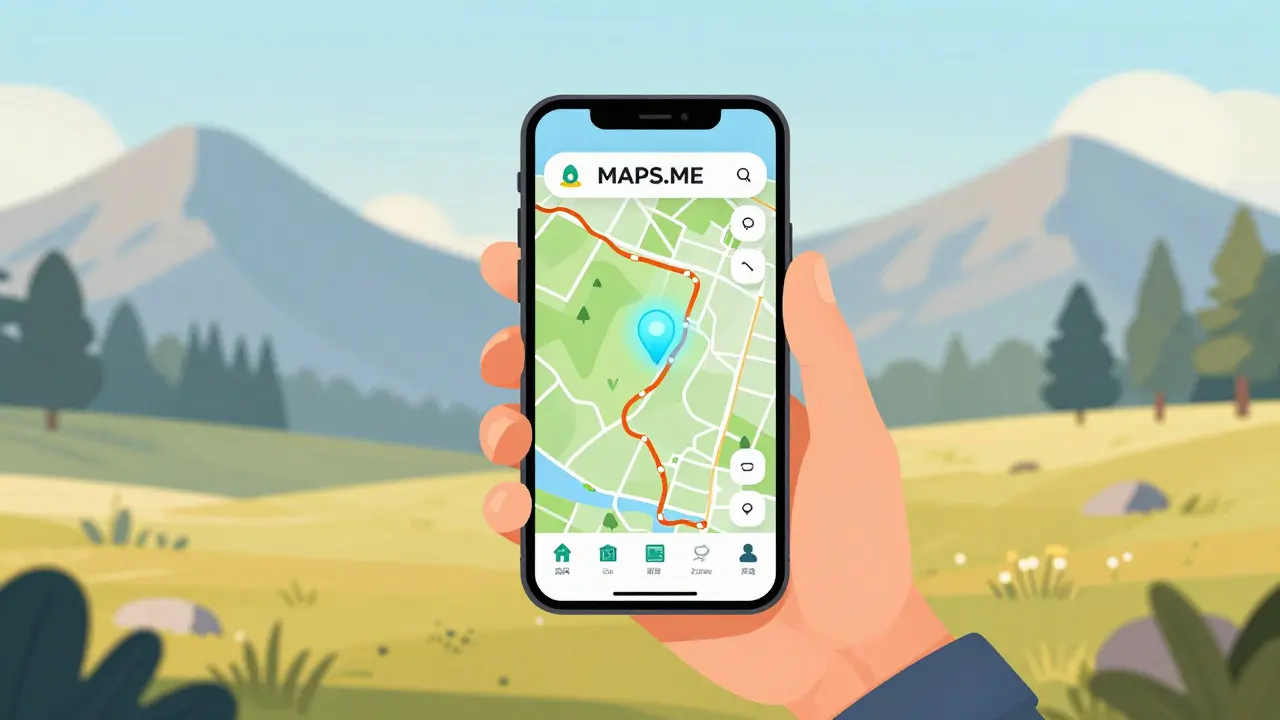
You might have stumbled upon MAPS while scrolling through a list of obscure altcoins or perhaps heard about it from someone who still uses offline maps. The name sounds familiar enough-after all, everyone uses maps-but does the cryptocurrency actually do anything useful? That’s the million-dollar question, or rather, the $0.01 question given its current market reality.
MAPS is the native utility token of the MAPS.ME ecosystem, an offline mapping application that aims to decentralize travel and location-based services. It was launched in May 2021, riding the wave of the previous bull market when 'utility tokens' were the hottest trend in crypto. Since then, the story has been one of extreme volatility, followed by a long, quiet decline into obscurity. If you are holding some MAPS tokens or considering buying them, you need to understand exactly what this asset is, why it struggles with liquidity, and whether there is any real future for it beyond speculative trading.
The Origin Story: From MapsWithMe to MAPS.ME
To understand the token, you first have to look at the app behind it. The project began as MapsWithMe, founded in 2014 by Alexander Magola and Yury Melnichek. Their goal was simple but ambitious: create a map application that worked entirely offline, without needing an internet connection, and allow users to contribute data directly. This was a direct challenge to giants like Google Maps and Apple Maps, which require constant connectivity for many features.
In 2019, the brand rebranded to MAPS.ME. By the time they launched the MAPS token in 2021, the app had already amassed a significant user base. Reports from exchanges like Kucoin indicated over 100 million active users and 140 million installs across Android and iOS platforms. This massive user base was supposed to be the token's greatest strength-a built-in audience ready to adopt the cryptocurrency for payments, loyalty rewards, and governance.
However, having users who download an app for free offline maps is very different from having users who want to spend cryptocurrency. The disconnect between the app's practical utility and the token's financial utility became apparent almost immediately after launch.
Technical Specs: Multi-Chain Complexity
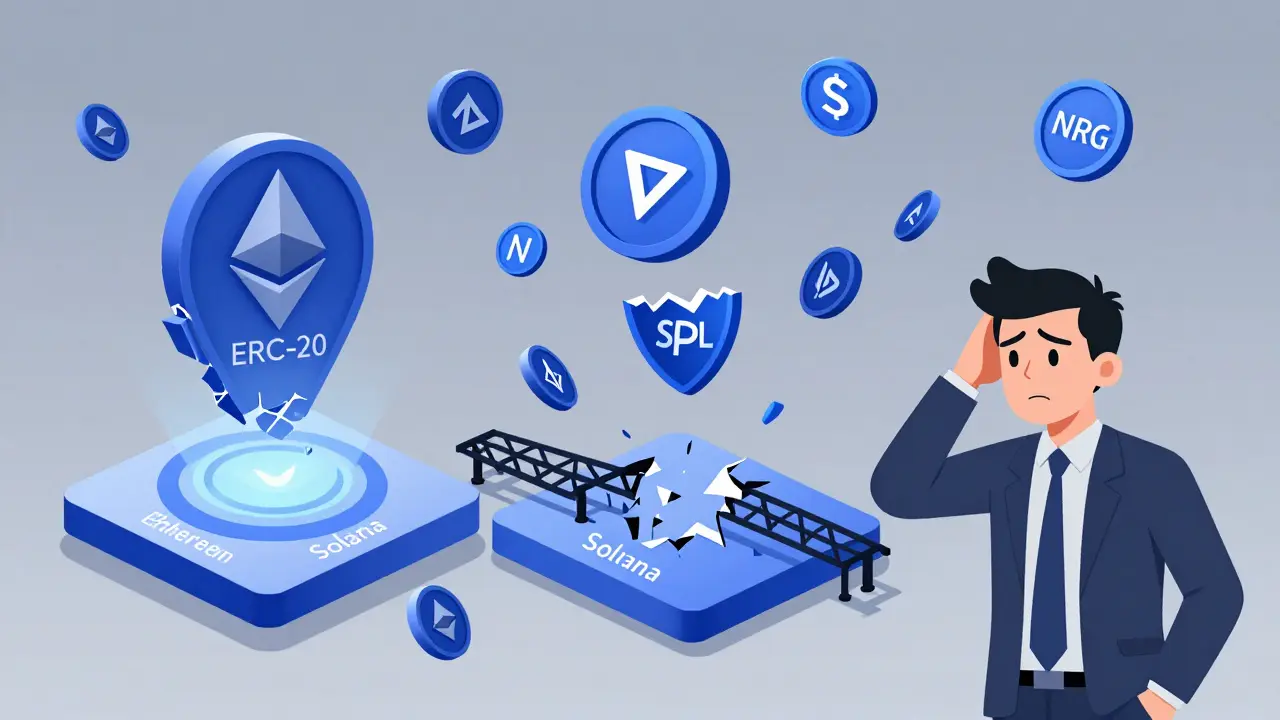
One of the most confusing aspects of MAPS for new investors is its technical structure. Unlike Bitcoin or Ethereum, which exist on their own blockchains, MAPS is a token that lives on multiple networks. This multi-chain approach was likely intended to increase accessibility, but it often creates friction for users.
MAPS operates primarily on three blockchain networks:
- Ethereum: Here, it functions as an ERC-20 token. This is the standard format for most altcoins and allows compatibility with wallets like MetaMask.
- Solana: On Solana, it exists as an SPL token, aiming for faster transaction speeds and lower fees.
- Energi: It also runs on the Energi blockchain as an NRG token.
This fragmentation means that if you buy MAPS on one exchange or network, you cannot necessarily move it easily to another without bridging or using specific wallet configurations. For the average user, this adds a layer of complexity that discourages adoption. Setting up a wallet to interact with these tokens can take 25 to 35 minutes, according to usability guides, with nearly 40% of new users reporting configuration errors.
| Attribute | Value |
|---|---|
| Token Standard | ERC-20, SPL, NRG |
| Total Supply | ~9.99 Billion |
| Circulating Supply | Disputed (45M - 75M) |
| Compatible Wallets | MetaMask, Trust Wallet, Sollet |
| Primary Use Case | Staking, Loyalty Rewards (Theoretical) |
The Liquidity Crisis: Why Price Data Varies Wildly
If you check the price of MAPS on different websites, you will see wildly different numbers. This isn't just because prices change every second; it's because the market data itself is fragmented and unreliable due to extremely low trading volume.
As of late 2023 and early 2026, MAPS trades at fractions of a cent, typically between $0.002 and $0.013 depending on the platform. But the bigger issue is liquidity. On major trackers like CoinGecko, the 24-hour trading volume has been reported as low as $54. In other words, fewer than $100 worth of MAPS tokens might change hands in a single day.
This lack of liquidity creates several problems:
- Price Slippage: If you try to sell a large amount of MAPS, your order could crash the price significantly because there are no buyers waiting in the queue.
- Delisted Risk: Exchanges often delist tokens that don't meet minimum volume requirements. MAPS has already disappeared from many major platforms, remaining only on niche exchanges like Bitforex or Hotbit.
- Data Discrepancies: With so little activity, automated pricing algorithms struggle to find accurate data, leading to conflicting market cap figures ranging from $100k to $800k across different sites.
For context, competitors in the location-based crypto space like FOAM or XYO Network maintain market caps in the tens of millions with consistent daily volumes. MAPS lags far behind, ranking outside the top 2,000 cryptocurrencies on most lists.
Utility vs. Reality: Is the Token Actually Used?
The core promise of MAPS was to integrate blockchain technology into the travel experience. Users were supposed to earn tokens for contributing map data, spend them on travel bookings, or stake them for rewards. The roadmap promised decentralized travel booking integration and a robust loyalty program.
Reality has been starkly different. User feedback from Reddit threads and app store reviews reveals a major disconnect. Long-time users of the MAPS.ME app report that they have never encountered the token within the application interface. The app works well as an offline map tool, but the cryptocurrency component feels like an afterthought-or worse, a ghost feature that was never fully implemented.
There is one area where the token does function reliably: staking. Platforms associated with MAPS.ME offer annual percentage yields (APY) between 3.5% and 5.2% for staking your tokens. However, this requires holding a minimum of 1,000 MAPS tokens, which acts as a barrier to entry for casual users. Furthermore, staking locks up your assets in a token that has limited exit options, creating a risk-reward imbalance that favors the project team over the holder.
Market Position and Competitors
MAPS exists in a shrinking niche. The global location-based services market is booming, projected to reach $110.5 billion by 2027. However, blockchain-integrated solutions represent less than 0.5% of this market. Within that tiny slice, MAPS struggles to compete.
Compared to established players, MAPS falls short on key metrics:
- FOAM: Focuses on physical proximity verification and has a stronger developer community and higher market cap (~$24M).
- XYO Network: Offers precise geospatial data infrastructure for enterprises, boasting a ~$45M market cap and real-world partnerships.
- Google Maps / Apple Maps: While not crypto projects, they dominate the user attention economy. MAPS.ME ranks #3 globally for offline maps, but users rarely think about paying for maps with crypto.
The fundamental problem is that MAPS tries to solve a problem that doesn't exist for most travelers. People want fast, accurate maps. They don't necessarily want to manage private keys, pay gas fees, or worry about wallet security just to view a hiking trail. Until the token provides undeniable value that traditional fiat currency cannot, adoption will remain stagnant.

Risks and Red Flags
Before investing in MAPS, you must consider the significant risks involved. This is not a blue-chip asset; it is a high-risk, low-liquidity token with uncertain fundamentals.
Supply Concentration: Blockchain analysis shows that the top 10 wallets control approximately 63.2% of the circulating supply. This centralization poses a threat to decentralization and increases the risk of market manipulation by a few large holders.
Regulatory Uncertainty: With the introduction of regulations like the EU's MiCA framework, utility tokens face stricter scrutiny. MAPS lacks clear transparency regarding its supply metrics and corporate structure, which could lead to compliance issues in regulated markets.
Roadmap Delays: The official roadmap last updated in Q1 2022 promised features that were never delivered. The absence of recent updates or major development milestones suggests that the project may be in maintenance mode rather than active growth mode.
Conclusion: Should You Buy MAPS?
So, what should you do with MAPS? If you are looking for a serious investment with growth potential, MAPS currently offers little in the way of fundamentals. The liquidity is too thin, the utility is too theoretical, and the competition is too strong. The token serves as a cautionary tale of how a great app idea (offline maps) doesn't automatically translate to a successful cryptocurrency.
If you already hold MAPS, you might consider the staking option if you believe in the long-term vision of the MAPS.ME team, but be aware of the illiquidity risk. If you are thinking of buying, ask yourself: Do I need exposure to a micro-cap token with near-zero daily volume? For most investors, the answer is no. There are better opportunities in the DeFi, Layer 1, or AI sectors that offer clearer paths to utility and adoption.
Is MAPS coin a good investment in 2026?
Based on current market data, MAPS is considered a high-risk investment. It suffers from extremely low liquidity, minimal trading volume, and a lack of clear utility within its parent application. While it has a large user base for the map app, the token itself has failed to capture mainstream interest. Most analysts suggest avoiding it unless you are speculating on a rare resurgence.
Where can I buy MAPS tokens?
Due to its declining popularity, MAPS is not available on major exchanges like Binance or Coinbase. You may find it on smaller, niche exchanges such as Bitforex or Hotbit. Always exercise caution when using lesser-known exchanges, as they may have higher fees or security risks.
What is the total supply of MAPS?
The total supply of MAPS tokens is approximately 9.99 billion. However, the circulating supply is disputed, with sources ranging from 45 million to 75 million tokens. This discrepancy contributes to the confusion surrounding its market capitalization.
Does MAPS.ME app use the MAPS token?
Currently, the integration is minimal. While the token was designed for loyalty rewards and payments within the app, most users report that the cryptocurrency features are not prominently visible or functional in the standard version of the MAPS.ME application.
Can I stake MAPS tokens?
Yes, staking is one of the few active utilities for MAPS. Users can stake their tokens to earn APY rates between 3.5% and 5.2%. However, there is usually a minimum requirement (e.g., 1,000 MAPS), and the tokens are locked during the staking period, limiting your ability to sell them quickly.