

If you've seen Maverick Protocol popping up on your exchange dashboard, you're likely wondering if this is just another token or a tool with real utility. The core problem it solves is "impermanent loss"-the fancy term for when you lose money because the price of the assets you're providing changes. By making liquidity dynamic rather than static, Maverick tries to make providing capital more efficient for the average user.
Key Takeaways for Investors
- Dynamic Liquidity: Unlike traditional pools, MAV moves liquidity to track current market prices.
- Token Utility: The MAV token is central to the protocol's rewards and integration programs.
- High Volatility: As of April 2026, price swings are common, with significant gaps between different exchange valuations.
- Wide Availability: Traded on over 175 markets, including giants like Binance and Kraken.
How the MAV Token Actually Works
The MAV token is the native utility and governance asset of the Maverick Protocol ecosystem . It isn't just a ticker symbol that goes up and down; it's the fuel for the system. One of the most concrete examples of its use is the Token Integration Reward Program. Basically, if a new crypto project wants to integrate with Maverick, they can compete for MAV liquidity incentives. This creates a cycle where more projects join, more liquidity flows in, and the token becomes more integrated into the broader DeFi landscape.
For a regular trader, the value of MAV is tied to how many people use the protocol to swap tokens. If more traders prefer Maverick's dynamic pools over a static pool on Uniswap, the demand for the infrastructure-and potentially the token-increases. However, it's important to remember that MAV is a volatile asset. In the last 24 hours, we've seen some exchanges report a 23% jump while others show a slight dip, which is typical for mid-cap DeFi tokens.
Market Performance and Price Reality Check
Looking at the numbers can be confusing because different platforms report different data. For instance, as of early April 2026, you'll see a price of $0.0582 on Coinbase, but only around $0.0141 on CoinGecko. Why the gap? This usually happens due to differences in how exchanges calculate real-time averages or liquidity depth in specific trading pairs.
Historically, MAV has seen massive peaks. It hit an all-time high of $0.82 back on April 1, 2024. While it's currently trading far below that peak, the 7-day trend has shown a modest 6.40% increase, suggesting that there is still some medium-term interest from buyers. The trading volume is also quite healthy, with some reports showing nearly $100 million in 24-hour activity, which means you can generally buy or sell the token without causing a massive price crash.
| Source | Price (USD) | Circulating Supply | 24h Change |
|---|---|---|---|
| Coinbase | $0.0582 | N/A | +23% |
| CoinGecko | $0.01412 | 680 Million | +23% |
| Kraken | $0.012 | 842 Million | -3.34% |
| CoinTracker | $0.0152 | N/A | Variable |

Where to Trade MAV and What to Watch For
If you're looking to get your hands on some MAV, you have plenty of options. It's listed on a huge variety of exchanges, which is a good sign for accessibility. You'll find it on Binance, which offers pairs like MAV/USDT and MAV/TRY, as well as MEXC, Gate.io, and Bitget . For those in Korea, Bithumb provides a MAV/KRW pair.
One pro tip for traders: check the "spread." The spread is the difference between the buy and sell price. On Binance, the spread is incredibly tight at 0.09%, and on MEXC, it's even lower at 0.03%. This means you aren't losing much money to the exchange just by entering or exiting a position. If you see a wide spread on a smaller exchange, you're better off moving your trade to a larger platform.
The Risks: What the Whitepaper Won't Tell You
No investment is without a catch. The biggest risk with Maverick Protocol right now is the lack of transparency regarding its long-term roadmap and founding team. While the technology for dynamic liquidity is impressive, there aren't many public, third-party security audits or expert consensus reports available to the average user.
Furthermore, the discrepancy in circulating supply-ranging from 680 million to 843 million tokens depending on who you ask-is a red flag for those who love precise data. This suggests that the way tokens are unlocked or tracked across different chains might be messy. If a sudden wave of new tokens hits the market, it could put downward pressure on the price.
Comparing Maverick to Other Liquidity Protocols
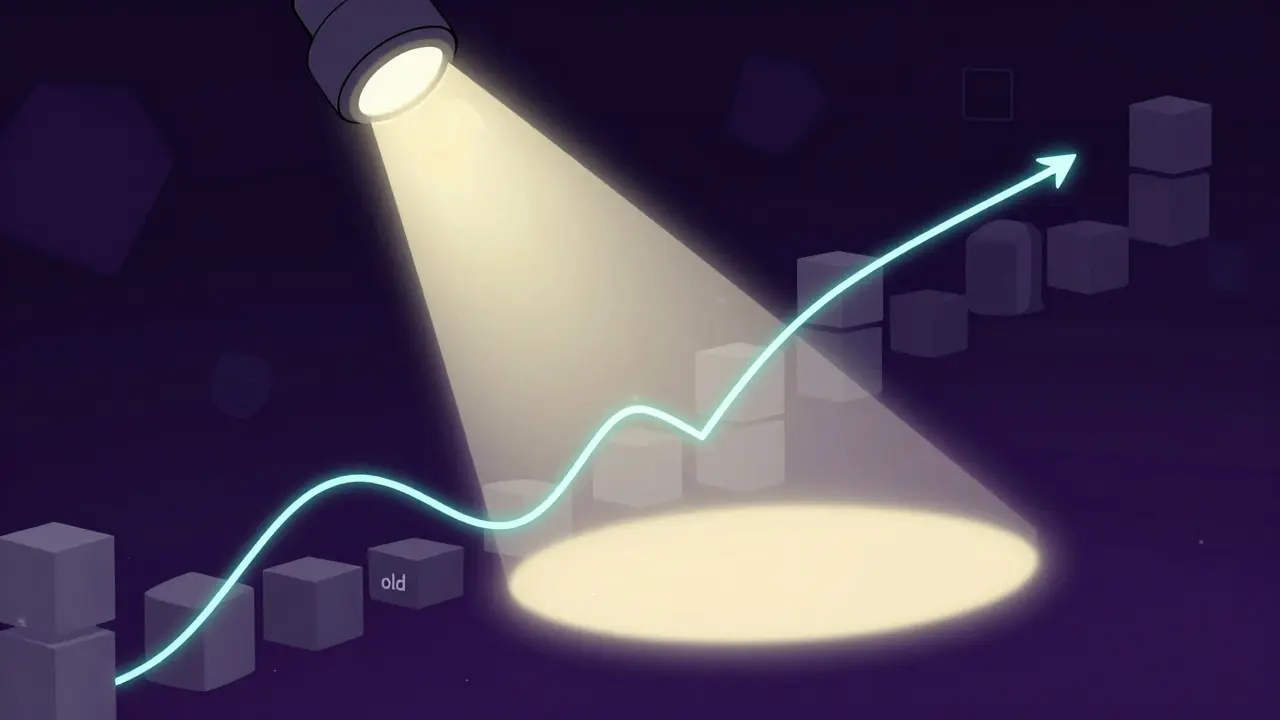
To understand MAV, you have to compare it to the "old way" of doing things. Most decentralized exchanges use a Constant Product Market Maker (CPMM). In that system, your money is spread across the entire price curve. If the price of a coin shoots up, your money is stuck in a range that is no longer relevant.
Maverick is different. It uses a directionally shifted liquidity model. Think of it like a spotlight that follows the price. As the price of an asset moves, the liquidity "follows" it, which means the people providing the money get more fees and suffer less loss. This makes it a direct competitor to platforms like Uniswap V3, although Maverick aims to automate the manual "rebalancing" that Uniswap users usually have to do themselves.
Is MAV a safe coin to hold?
Like most DeFi tokens, MAV is high-risk. While it has a functional use case in liquidity management and is listed on reputable exchanges like Binance, it suffers from high volatility and a lack of detailed public security audits. You should only invest what you are willing to lose.
What happens if the price of MAV drops suddenly?
Since MAV is used for incentives in the Reward Program, a price drop might make the protocol less attractive for new projects to integrate with. However, because it's traded on over 175 markets, there is usually enough liquidity for you to sell your position quickly.
How does Maverick Protocol differ from Uniswap?
Uniswap (specifically V3) allows concentrated liquidity, but the user must manually move their funds if the price changes. Maverick Protocol automates this process, allowing the liquidity to shift dynamically to stay efficient without constant manual intervention.
Where can I find the most accurate price for MAV?
Because of the variance between sources like Coinbase and CoinGecko, the best way to find the "real" price is to check the order book of the exchange where you actually intend to trade. For example, if you use Binance, trust the Binance price over a third-party aggregator.
What is the total supply of MAV tokens?
There is some disagreement between data providers. CoinGecko reports around 680 million tokens in circulation, while Kraken and Pluang suggest it is closer to 843 million. This variance is likely due to how they track locked tokens versus circulating ones.
Next Steps for New Users
If you're just starting out, don't jump in with a huge sum. Start by observing the price action on a high-liquidity exchange like Binance or MEXC to get a feel for the volatility. If you are a liquidity provider, explore the Maverick Protocol's official site to see how the Reward Program works before committing your assets.
For those who are more technical, try to find the community forums or Discord channels. Since official documentation on the roadmap is thin, the community is often the only place where you'll find a real sense of where the project is headed in 2026 and beyond.
concentrated liquidity is a pain to manage manually so the automated shift in maverick is a decent play for delta neutral strategies or just basic yield farming without the constant babysitting
I agree with the point about the spread. Using a high-volume exchange is essential for mid-cap tokens because slippage can eat your profits quickly.
definitelly need to watch out for the supply discrepency mentioned here!! its scary how different the sites are reportin the token count
How quaint that people actually believe "dynamic liquidity" is a revolutionary concept rather than a slight iteration of existing AMM logic. It is simply a marketing term for those who cannot grasp basic calculus.
Oh sure, because we all know that a "lack of transparency" in a crypto whitepaper is totally unexpected and not a massive red flag at all. Truly shocking!
Purely from a macroeconomic perspective, the lack of a rigorous audit is an absolute disgrace. This is why the British markets maintain a standard of integrity that these DeFi protocols simply cannot emulate with their chaotic reward programs and haphazard liquidity shifting.
Interesting point about the price gaps!!! Could this be an arbitrage opportunity, or just bad data reporting???
typical western analysis focusing on numbers while ignoring the deeper spiritual evolution of finance... in india we understand the flow of wealth far better than these cold calculators who cant even spell the essence of decentralization corectly
It is truly fascinating to contemplate the duality of risk and reward in such a volatile space. One must tread carefully and respect the boundaries of their own financial safety while embracing the curiosity of new technology!
Imagine actually holding this in 2026 🙄 The lack of a roadmap is basically a neon sign saying "run away" 💅
Slay with those gains!! we are all going to the moon together and this tech is just the rocket fuel we needed OMG
The implementation of a directionally shifted liquidity model represents a significant shift in how the US-led DeFi sector can dominate the global market by automating the inefficient manual rebalancing processes that plagued the earlier versions of Uniswap and other legacy AMMs which are essentially relics of a simpler time.
The discrepancy in circulating supply is a calculated deception by the globalist entities controlling the exchange APIs to manipulate retail investors into a false sense of scarcity while the real tokens are held by a shadow cabal
I concur with the assessment regarding the necessity of utilizing primary exchange order books for price verification... it is the only prudent approach!!