

You’ve probably heard the hype around metaverse projects promising to redefine digital ownership. But have you ever looked under the hood of a project that launched with big dreams and now trades for fractions of a cent? Metagalaxy Land, known by its ticker MEGALAND, is one such case study in the volatile world of blockchain gaming. It’s not just another token; it’s the fuel for a space-themed simulation where you can own planets as NFTs. But before you throw your money at it, you need to understand what this token actually does, why its price has plummeted, and whether the "Space Cowboy" lifestyle is worth the risk in 2026.
The Core Concept: More Than Just Pixels
At its heart, Metagalaxy Land isn't just a game; it's an ecosystem built on the Binance Smart Chain (BSC). The project aims to blend decentralized finance (DeFi), non-fungible tokens (NFTs), and play-to-earn mechanics into a cohesive virtual universe. Think of it as a digital real estate market set in deep space. You don’t just buy land; you acquire a planet NFT. These aren't static images. They are functional assets within the game that generate resources.
The platform operates on a dual-role system designed to cater to different types of players:
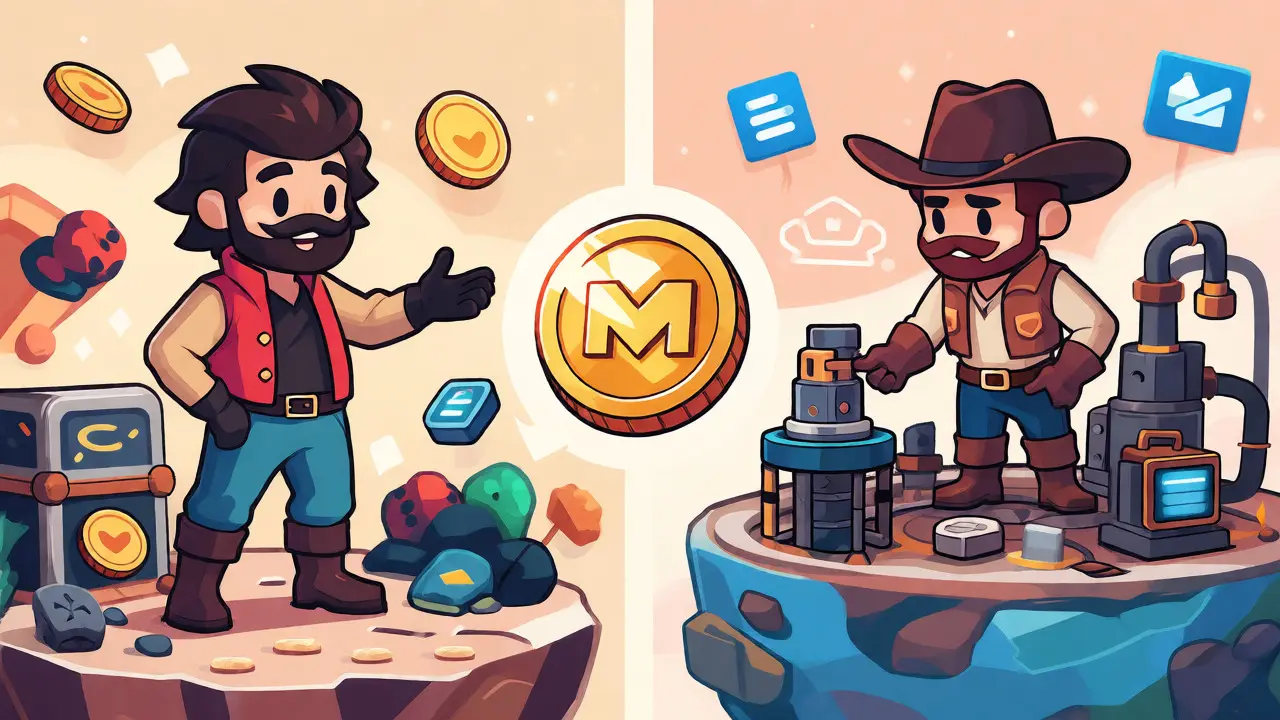
- Space Cowboys: These are the planet owners. If you hold a planet NFT, you’re in the driver’s seat. You can build structures, upgrade facilities, and trade resources. Your goal is to optimize your planet’s output to become the strongest entity in the universe.
- Space Pirates: This is the freemium tier. You don’t need to buy a planet to participate. Instead, you engage in activities that support the economy, perhaps raiding or trading, without the heavy upfront investment of owning a high-tier planet.
This structure creates a circular economy. Resources gathered by players feed into the broader market, while the MEGALAND token serves as the primary currency for all transactions-whether you’re leveling up a building, forming alliances, or swapping assets on their internal exchange.
Technical Specs and Tokenomics
If you’re looking at the raw data, MEGALAND is a BEP-20 token. That means it lives exclusively on the Binance Smart Chain, making transactions cheaper and faster than Ethereum-based competitors like Decentraland or The Sandbox. However, this also limits its interoperability with other major networks unless cross-chain bridges are used, which the project promised but struggled to deliver consistently.
Let’s look at the hard numbers, because they tell a stark story about the project's current health.
| Metric | Value | Context |
|---|---|---|
| Token Standard | BEP-20 | Runs on Binance Smart Chain |
| Total Supply | 1,000,000,000 | All tokens are already in circulation |
| Market Cap | ~$107,908 | Extremely low compared to top metaverse coins |
| 24h Volume | ~$32,628 | Low liquidity indicates high slippage risk |
| All-Time High | $0.000370 | Price has dropped over 70% from peak |
Notice the fixed supply. There are no new tokens being minted to dilute value, which is good. But the market cap tells a different story. At roughly $100k, MEGALAND is a micro-cap asset. For context, established giants like The Sandbox (SAND) or Decentraland (MANA) boast market caps in the billions. MEGALAND represents a tiny fraction of the total crypto market, highlighting its niche status.
The Ecosystem: Staking and Swapping
The utility of MEGALAND goes beyond simple speculation. The project introduced Metagalactic Swap, a decentralized exchange (DEX) specific to their ecosystem. Here, users can stake both MEGALAND tokens and Planet NFTs to earn passive income. This mechanism was designed to reduce selling pressure by locking up tokens and encouraging long-term holding.
However, the effectiveness of this staking model depends entirely on user adoption. In late 2023, data showed only about 1,842 unique wallet addresses held MEGALAND. With fewer than 30 active traders daily, the staking rewards might look attractive on paper, but the actual yield in dollar terms remains negligible for most investors due to the low token price.
Why Has the Price Dropped?
It’s easy to blame general market trends, but MEGALAND’s decline is more specific. The project launched during the height of the metaverse bubble in late 2021. When the hype cycle cooled in 2022 and 2023, smaller projects suffered disproportionately. Unlike larger platforms with robust development teams and marketing budgets, Metagalaxy Land struggled to maintain visibility.
Community feedback highlights two main issues:
- Lack of Development Updates: Many users noted that the official website and social channels went quiet after mid-2022. Roadmap items like mobile app integration and cross-chain compatibility remained unfulfilled.
- Liquidity Crisis: With trading volume hovering around $30k per day, buying or selling large amounts causes significant price slippage. A $100 trade might see a 5% shift in price, making it difficult for serious investors to enter or exit positions without losing value.
Reddit users and forum posters have described the project as "dead" or "abandoned," citing a lack of communication from the team. While the technology still functions, the community momentum that drives crypto prices has largely evaporated.
Is MEGALAND Worth Buying in 2026?
If you’re considering adding MEGALAND to your portfolio, you need to treat it as a high-risk speculative bet, not a safe investment. Here’s how to weigh the pros and cons:
The Case For Buying
- Low Entry Cost: Trading at fractions of a cent means you can buy thousands of tokens for very little money. If the project revives, even a small percentage increase yields massive ROI percentages.
- Niche Appeal: The space theme and planet-building mechanics offer something distinct from generic fantasy RPGs in the metaverse space.
- Staking Potential: If you believe in a revival, staking early could lock in higher reward rates before potential inflation or changes in emission schedules.
The Case Against Buying
- Abandonment Risk: Without regular updates, the game risks becoming obsolete as newer, better-funded metaverse projects launch.
- Liquidity Traps: You might find it hard to sell when you want to. Low volume means you’re often the buyer or seller moving the market yourself.
- Competitive Disadvantage: Competitors like Axie Infinity or Illuvium have stronger communities and more polished gameplay loops.

How to Buy MEGALAND
Since MEGALAND isn’t listed on major exchanges like Coinbase or Kraken, you’ll need to use smaller platforms. MEXC Global and Bitget are common venues. The process is straightforward but requires caution:
- Create an account on a supported exchange (e.g., MEXC).
- Verify your identity (KYC) to enable fiat deposits via credit card or PayPal.
- Purchase USDT or BNB.
- Trade your stablecoin for MEGALAND on the spot market.
- Withdraw to a self-custody wallet like MetaMask if you plan to interact with the dApp directly.
Be mindful of withdrawal fees and network congestion on the BSC. Always double-check the contract address to avoid scam tokens with similar names.
Final Verdict
Metagalaxy Land is a fascinating relic of the 2021 metaverse boom. It offers a unique blend of DeFi and gaming, but its current state reflects the harsh reality of cryptocurrency markets: innovation alone doesn’t guarantee survival. The token suffers from low liquidity, stagnant development, and fading community interest.
For the casual gamer, the fun factor might still justify a small purchase. For the investor, however, MEGALAND presents a classic "moonshot" scenario. It’s cheap enough to ignore losses, but risky enough to warrant extreme caution. Don’t invest money you can’t afford to lose, and keep an eye on developer activity before committing further.
What is the current price of MEGALAND?
As of recent data, MEGALAND trades at approximately $0.00007168 USD. Prices fluctuate rapidly due to low liquidity, so always check live charts on aggregators like CoinGecko or CoinMarketCap before trading.
Which blockchain does Metagalaxy Land use?
Metagalaxy Land operates on the Binance Smart Chain (BSC). The MEGALAND token follows the BEP-20 standard, which allows for fast and low-cost transactions compared to Ethereum-based tokens.
Can I stake MEGALAND tokens?
Yes, through the Metagalactic Swap decentralized exchange. Users can stake MEGALAND tokens and Planet NFTs to earn passive income. However, yields vary based on total staked amount and platform usage.
Is MEGALAND a good investment for beginners?
Generally, no. Due to its extremely low market cap, high volatility, and limited liquidity, MEGALAND is better suited for experienced traders who understand the risks of micro-cap cryptocurrencies. Beginners should start with more established assets.
Where can I buy MEGALAND?
MEGALAND is primarily traded on smaller exchanges like MEXC Global, Bitget, and LBank. It is not currently available on major centralized exchanges like Binance or Coinbase.