

Imagine being an architect who just finished designing a stunning sustainable home. You want to protect that design, sell it to buyers worldwide, and maybe even show it off in a virtual gallery. Now imagine doing all that on the blockchain. That is the promise behind STELSI, a project using its native token, STLS, to build what it calls an "architectural metaverse."
If you are looking at the ticker STLS on your screen right now, you probably have one main question: Is this a legitimate investment opportunity for the niche world of digital architecture, or is it another volatile micro-cap coin with thin liquidity? The answer is complicated. STELSI sits at the intersection of real-world assets (RWA), non-fungible tokens (NFTs), and artificial intelligence, but its market performance tells a story of high volatility and low trading volume.
The Core Concept: An Architectural Metaverse
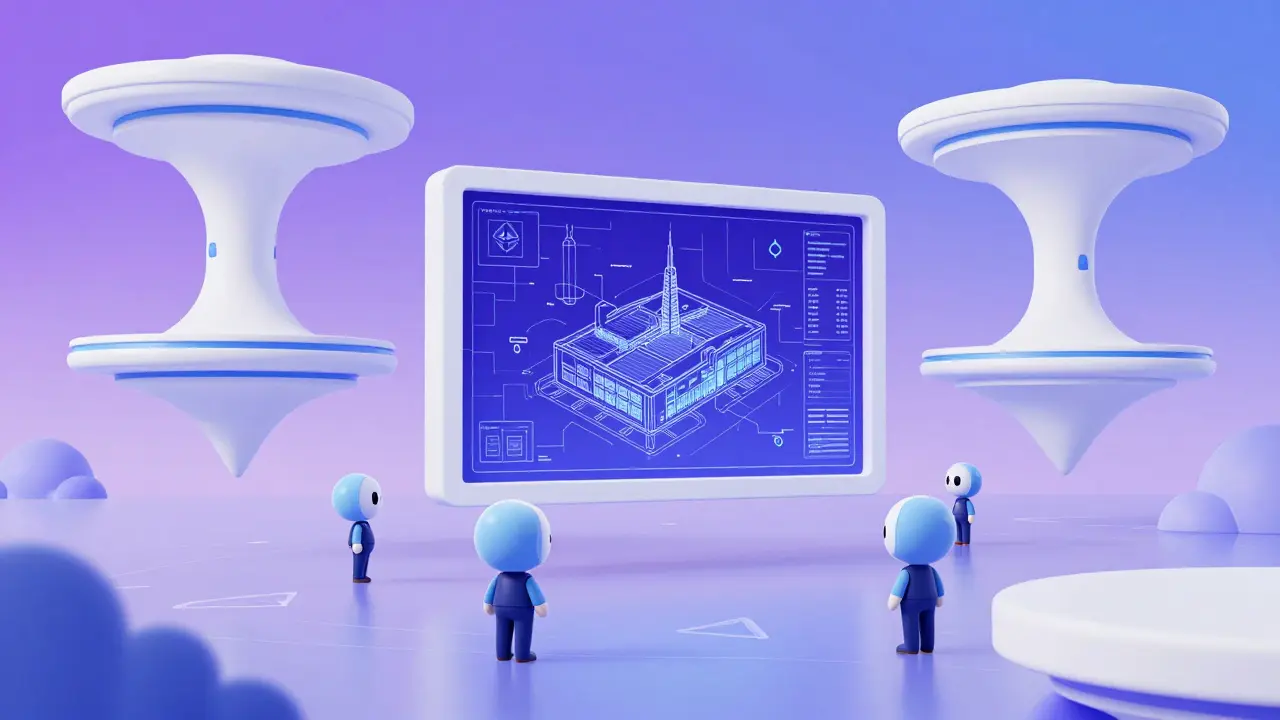
At its heart, STELSI is not just a currency; it is a utility token for a specific ecosystem. The platform aims to help architects and real estate creators monetize their intellectual property. How? By registering designs as NFTs and displaying them in immersive virtual galleries.
This isn't about buying land in a generic gaming world like Decentraland or The Sandbox. Instead, STELSI focuses specifically on the built environment. Think of it as a LinkedIn meets OpenSea for architects. Designers can upload their projects, use AI tools to visualize them better, and potentially license or sell these digital blueprints. The STLS token acts as the fuel for this engine-used for transactions, governance, or accessing premium features within the platform.
The project positions itself as a "Web3 lifestyle platform." This means they aren't just trying to digitize blueprints; they want to create a community where architectural aesthetics and digital ownership merge. It is a narrow focus, which can be both a strength and a weakness. A narrow focus attracts a dedicated niche audience but limits mainstream appeal compared to broader DeFi or gaming tokens.
Tokenomics and Supply Details
Understanding the numbers behind STLS is crucial before you consider buying any amount. Here is how the supply works:
- Total Supply: Fixed at 200,000,000 STLS tokens. There will never be more than this.
- Circulating Supply: This number is messy. Early data from launch showed only about 1.8 million tokens circulating. However, later reports suggest the full supply may have unlocked, meaning nearly 200 million could be in play. Always check live on-chain data because aggregators often lag behind.
- Blockchain: STLS is an ERC-20 token on the Ethereum network. This means you need an Ethereum-compatible wallet (like MetaMask) to hold it securely.
The initial distribution happened via an Initial DEX Offering (IDO) in December 2024. During that sale, the price was set at $0.115 per token. If you bought back then, you would have paid significantly more than the current market value, highlighting the steep drop this asset has experienced since its debut.
| Metric | Value / Detail |
|---|---|
| Ticker Symbol | STLS |
| Blockchain Network | Ethereum (ERC-20) |
| Total Supply | 200,000,000 |
| Launch Year | 2024 |
| IDO Price (Dec 2024) | $0.115 |
| All-Time High (ATH) | $0.08096 (May 17, 2025) |
| All-Time Low (ATL) | $0.002049 (Jan 18, 2026) |
Market Performance and Volatility
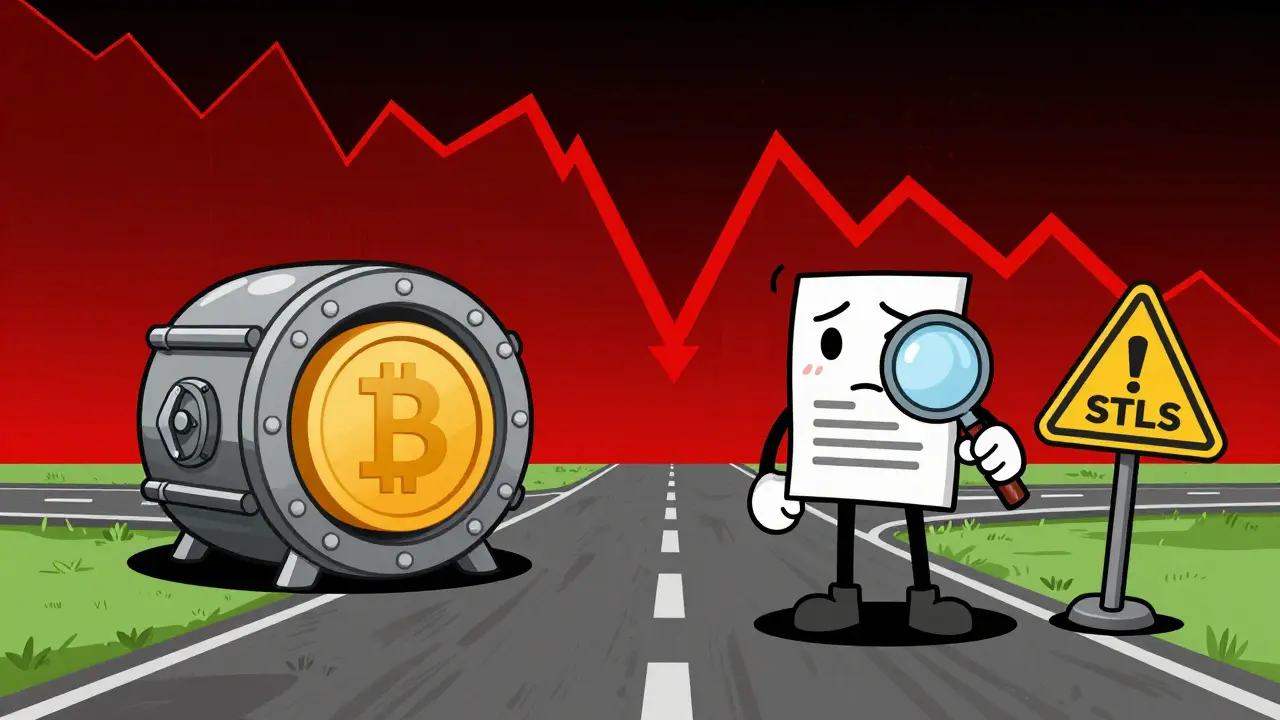
Let’s talk about the elephant in the room: the price action. Since launching in late 2024, STLS has seen significant turbulence. The token hit its peak price of roughly $0.08 in May 2025. Fast forward to early 2026, and the price plummeted to lows around $0.002. That is a drawdown of over 90% from its highs.
Why does this matter? Because STLS is classified as a micro-cap cryptocurrency. Its market capitalization hovers around $2.6 million. In the grand scheme of crypto, this is tiny. Large caps like Bitcoin or Ethereum move based on global macro trends. Micro-caps like STLS move based on sentiment, small trades, and liquidity events.
You might see different prices on different exchanges. One tracker might show $0.05 while another shows $0.001. This discrepancy happens because there is very little trading volume. When volume is low (sometimes under $100 in a single day), a single large buy or sell order can swing the price wildly. This is known as slippage risk. If you try to sell a large amount of STLS, you might not find enough buyers at the current price, forcing you to accept a much lower rate.
Risks Every Investor Must Know
Investing in niche Web3 projects carries unique dangers. Here are three specific risks associated with STELSI:
- Ticker Confusion: The symbol "STLS" is not unique. There is a completely unrelated, worthless token with the same ticker on the Binance Smart Chain (BSC). It has a market cap of less than $100. If you accidentally send funds to the wrong contract address, you could lose everything. Always verify the contract address on Etherscan before interacting.
- Liquidity Traps: With daily volumes often dipping below $100, exiting your position can be difficult. You might see a price on CoinMarketCap, but when you place a sell order on an exchange like LBank, the actual execution price could be drastically lower due to lack of depth in the order book.
- Adoption Uncertainty: STELSI relies on architects actually using the platform. While the concept is innovative, there is limited public data showing widespread adoption by major firms. Without active users creating and buying NFTs, the utility of the token remains theoretical rather than practical.
How to Buy and Store STLS
If you decide the risk-reward ratio makes sense for your portfolio, here is how you generally go about getting STLS:
First, you need a centralized exchange that lists it. As of mid-2026, platforms like LBank offer trading pairs for STLS. You will need to complete KYC (Know Your Customer) verification, deposit fiat currency or another crypto like USDT, and then trade for STLS.
Second, do not leave your tokens on the exchange if you plan to hold long-term. Transfer them to a self-custody wallet. Since STLS is on Ethereum, wallets like MetaMask, Trust Wallet, or Ledger work perfectly. Make sure you add the correct ERC-20 contract address to your wallet interface so the token displays correctly.
Note that major US-based platforms like Coinbase list STELSI for informational purposes but do not allow direct spot trading. This limits accessibility for some retail investors in regulated markets.
Is STELSI Legit?
Yes, in the sense that it is a registered project with a clear team backing, a strategic investment from NGC Ventures (a firm with a $100M fund focused on Web3 lifestyle brands), and a functioning website and gallery. It is not a scam in the traditional "rug pull" sense where developers vanish immediately after raising money.
However, "legit" does not mean "safe" or "profitable." The fact that NGC Ventures invested suggests institutional belief in the *concept* of an architectural metaverse. But venture capital investments are long-term plays. They do not guarantee short-term token appreciation. In fact, VCs often lock their tokens for months or years, which can suppress price growth initially.
The project also lacks extensive independent reviews from major crypto rating agencies. Community sentiment is quiet, with few discussions on forums like Reddit. This silence can be a red flag for hype-driven traders, but it might just reflect the niche nature of the target audience-architects are not necessarily active on crypto Twitter.
Final Thoughts on STELSI
STELSI represents a bold attempt to bring professional creative industries onto the blockchain. If you believe that architects will increasingly use NFTs to protect IP and that Web3 galleries will become standard for showcasing real estate designs, STLS offers exposure to that thesis.
But you must enter with eyes wide open. The token has lost most of its value since launch, liquidity is extremely thin, and the ticker symbol is prone to confusion. Treat this as a high-risk speculative asset, not a stable store of value. Only invest what you can afford to lose entirely, and always double-check contract addresses to avoid the BSC impostor token.
What is the difference between STELSI and other metaverse tokens?
Unlike general metaverse tokens like MANA (Decentraland) or SAND (The Sandbox) which focus on gaming and social interaction, STELSI (STLS) focuses exclusively on architecture and real estate. It aims to help professionals protect intellectual property and showcase designs, rather than providing a platform for casual users to play games or hang out in virtual spaces.
Is STLS available on Coinbase?
No, you cannot directly buy or sell STLS on Coinbase. Coinbase lists the token for price tracking and information purposes, but it does not support spot trading pairs for STELSI. Users typically need to use other exchanges like LBank or decentralized platforms to acquire the token.
Why is the STLS price so volatile?
STLS is a micro-cap token with very low trading volume. When daily volume is under $100, even small buy or sell orders can cause massive percentage swings in price. Additionally, discrepancies in circulating supply data across different trackers contribute to confusion and price instability.
How do I avoid the fake STLS token?
Always verify the contract address. The legitimate STELSI token is an ERC-20 token on the Ethereum network. There is a separate, unrelated token with the same ticker (STLS) on the Binance Smart Chain (BSC) that has negligible value. Never trust the ticker symbol alone; check the underlying blockchain and contract hash on Etherscan.
Who backs the STELSI project?
NGC Ventures, a firm with a $100 million themed investment vehicle for Web3 lifestyle brands, announced a strategic investment in STELSI in August 2023. This indicates institutional interest in the project's vision of revolutionizing architecture through blockchain technology.